

- New
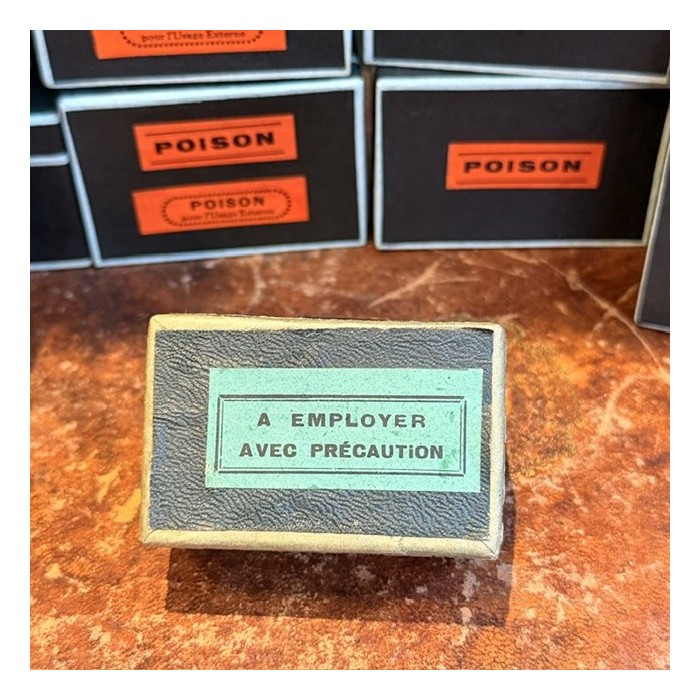
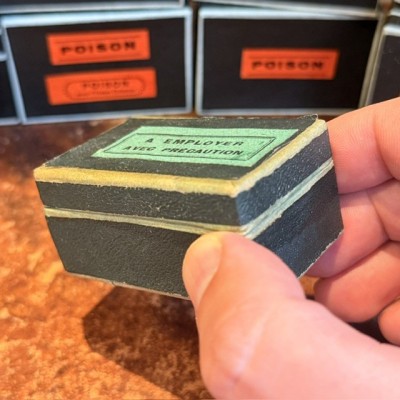
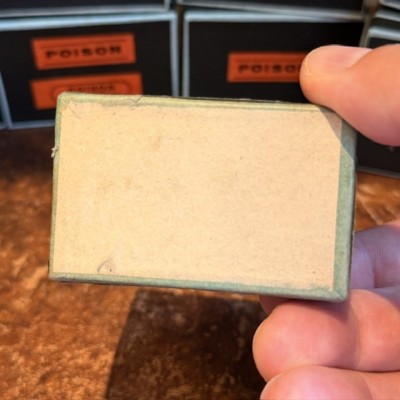
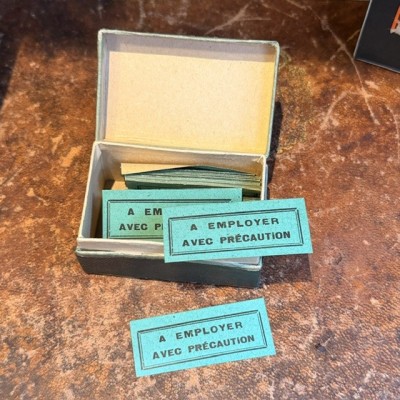
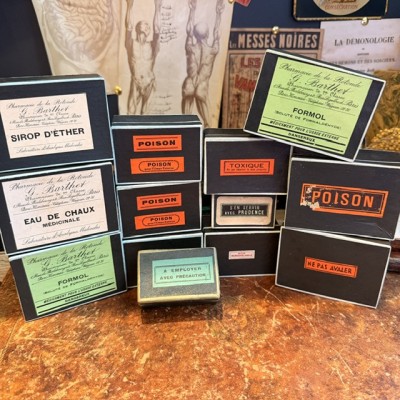
Antique labels in a pharmacy box for cures made of canvas cardboard
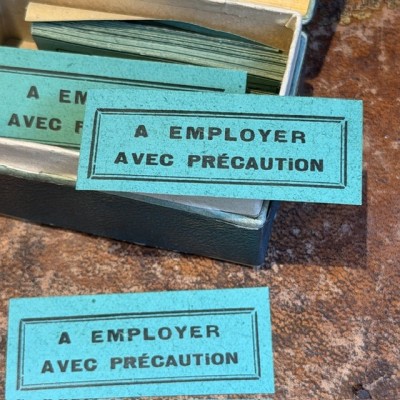
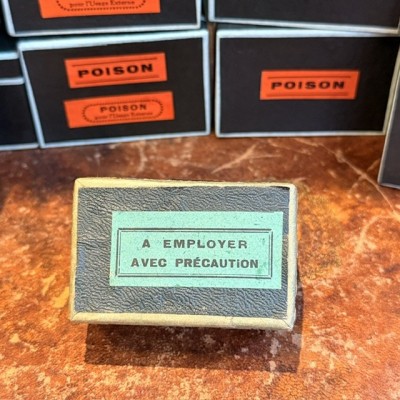
To be used with care label
The pharmacist used his boxes of medicine to put away the labels he would then put on the bottles that he would resell to his customers.
Antique labels in a pharmacy box for cures made of canvas cardboard
To be used with care label
The pharmacist used his boxes of medicine to put away the labels he would then put on the bottles that he would resell to his customers.
Comes from an old cellar-laboratory of a Parisian pharmacy. The bottles and other products had not moved since the late 1950s on the shelves. The cellar had served as a laboratory for medical analyses and a laboratory for magistral preparations of the pharmacy from 1900 until around 1950.
Box dimensions: 6x4cm Height: 3cm
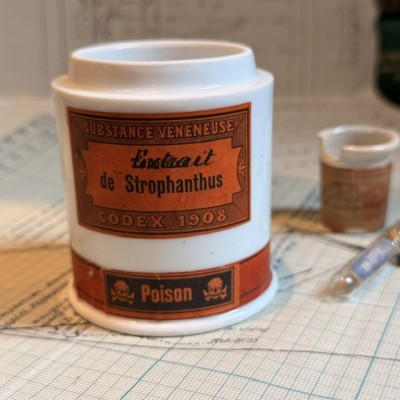
Strophanthus extract - Codex 1908
Early/ mid-20th century pharmacy jar in white earthenware
Beautiful labels: Red POISON label with the famous skull and crossbones and the Poisonous Substances label
Signaling to the pharmacist that it is imperative to keep apart the other substances in the cabinet of toxic substances, the famous poison cabinet.
It comes from an old cellar-laboratory in a Parisian pharmacy. The bottles had not moved since the late 1950s on the shelves. The cellar had served as a laboratory for medical analyses and a laboratory for magistral preparations of the pharmacy from 1900 until around 1950.
EMPTY
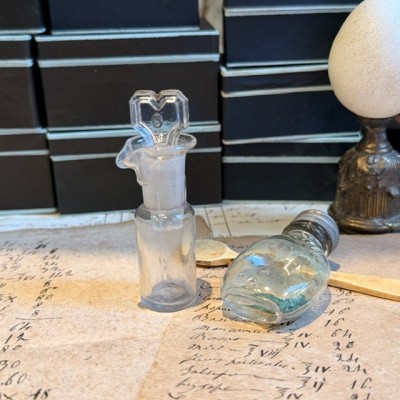
Dropper bottle
Antique pharmacy bottle - 1920-30's
Glass stopper honed in the shape of a heart for better grip
EMPTY
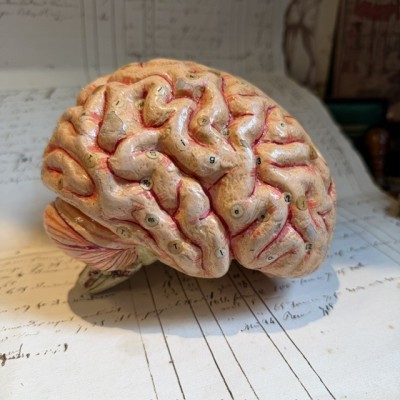
Painted papier-mâché anatomical model of the brain
Produced by Établissements Auzoux
Model No. 12 from the 1874 catalogue
Dismantlable, numbered model, used for medical teaching.
A rare item in excellent working condition
This is a 1:1 scale model of the brain, sold separately at the time as a demonstration model; it is not a brain that was found inside anatomical manikins.
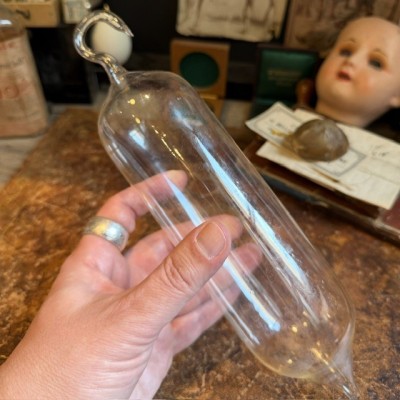
Antique sodium chloride infusion bulb
500cm3
in its original box - Still full
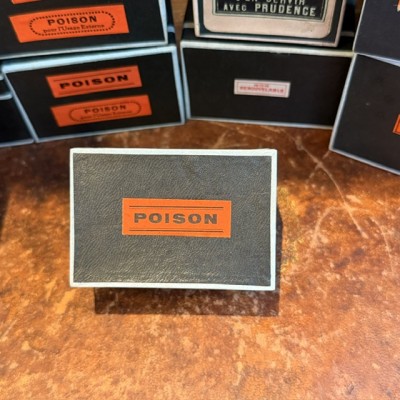
Antique labels in a pharmacy box for cures made of canvas cardboard
Poison label - Ref B
The pharmacist used his boxes of medicine to put away the labels he would then put on the bottles that he would resell to his customers.
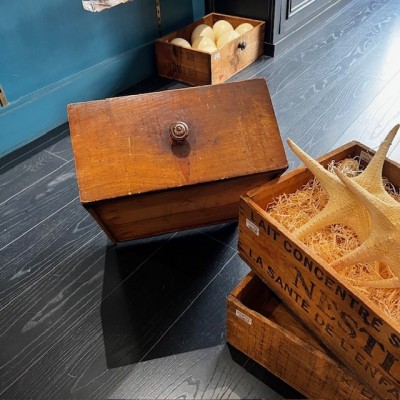
Large antique wooden pharmacy drawer with compartments - From a pharmacy or herbalist's cabinet
4 compartments
Ref A - 39.5x50cm
Can be used as a storage box
Weight: 4.1kg !
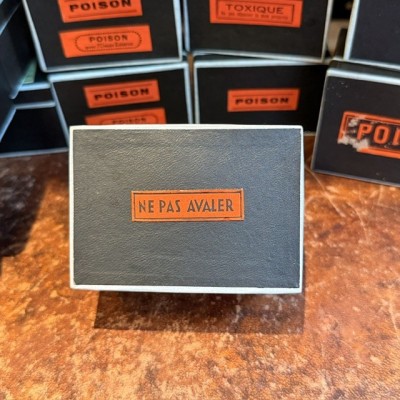
Antique labels in a pharmacy box for cures made of canvas cardboard
Do not swallow label
The pharmacist used his boxes of medicine to put away the labels he would then put on the bottles that he would resell to his customers.
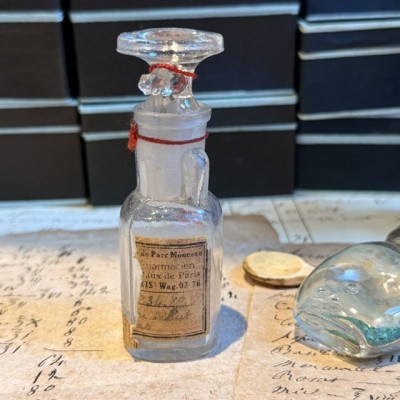
Dropper bottle
Antique pharmacy bottle - 1920-30's
Remains of a label from the Parc du Monceau Pharmacy
Is there any bluish residue left inside, and the bottle may have served as an inkwell at one time?
EMPTY
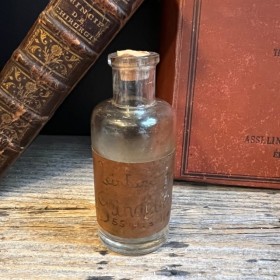
Grindelia Tincture
Antique medicine bottle
Apothecary
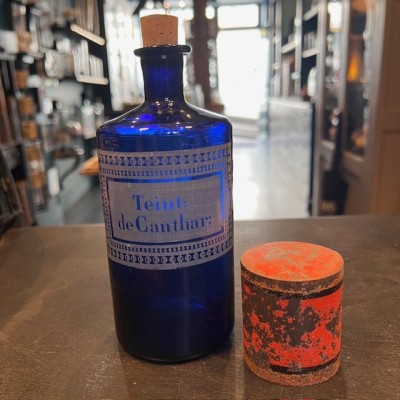
Teinture de Cantharides - POISON
Lytta vesicatoria - Spanish fly
Antique blue glass pharmacy bottle - Apothecary
Early 20th century - Blown glass.
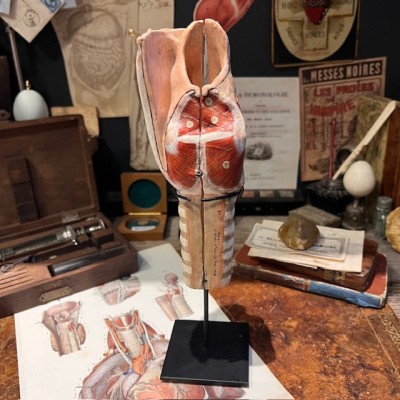
Antique anatomical model of the larynx and trachea made of painted papier-mâché.
Produced by Établissements Auzoux and manually dated 1938.
Model can be dismantled lengthwise, numbered, used for medical teaching.
Please note: one removable side piece is missing. The model remains stable and highly decorative. Authentic piece.
Handwritten inscription from the period: Larynx - Auzoux à St-Aubin-d’Écrosville Eure 1938
Placed in a metal base, it can be easily removed to hold it in your hand.
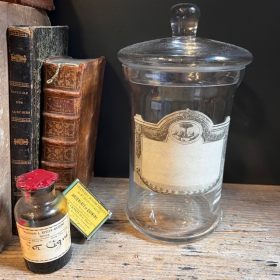
Herbalist's or Pharmacist's jar
Antique blank label of the XVIIIth century
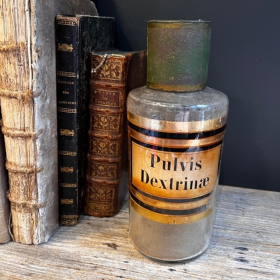
Dextrin powder - Starch - Pulvis Dextrinae
Antique pharmacy bottle
Blown glass
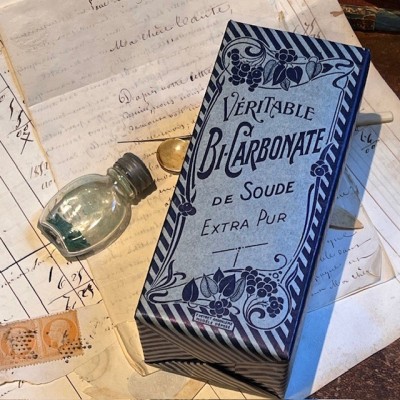
Bi-Carbonate de Soude - Sodium bicarbonate
Antique cardboard pharmacy box
Beautiful typography typical of the Belle Époque: circa 1910-1920
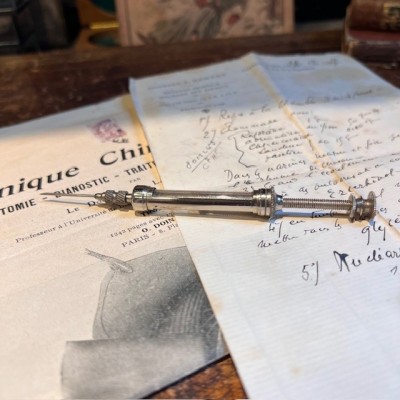
Pravaz hypodermic injection syringe
Early 20th century
Non-functional
SOLD ALONE WITHOUT CASE
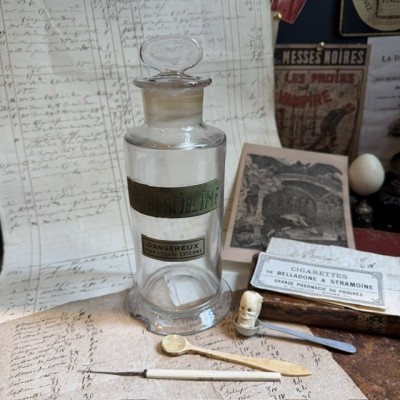
Iode Bi-Sublimé - Bi-Sublimated Iodine
Antique 19th-century blown-glass pharmacy jar
EMPTY
Antique labels in a pharmacy box for cures made of canvas cardboard
To be used with care label
The pharmacist used his boxes of medicine to put away the labels he would then put on the bottles that he would resell to his customers.