

- New
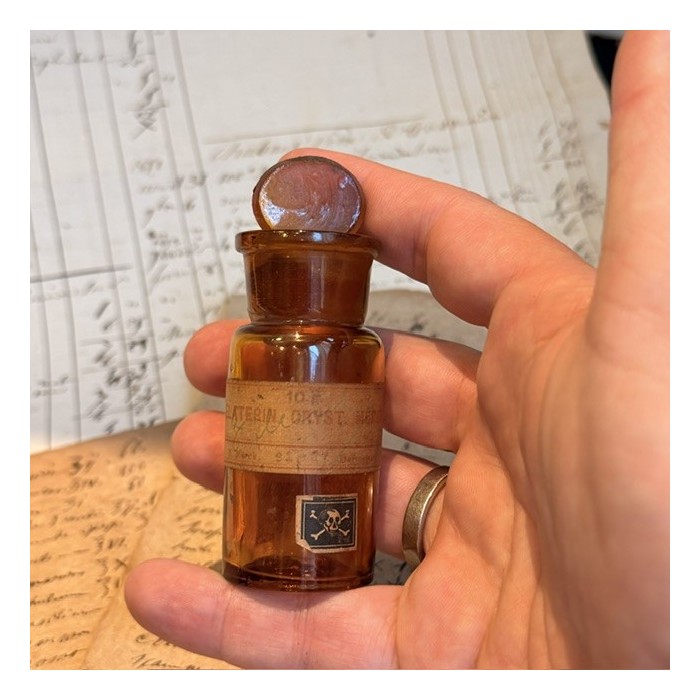
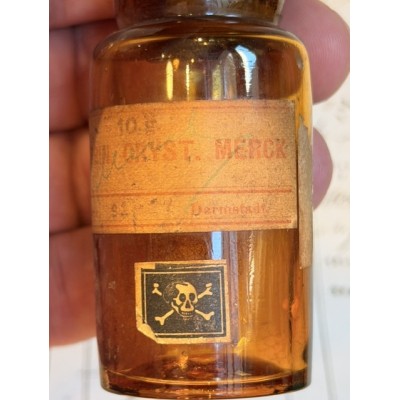
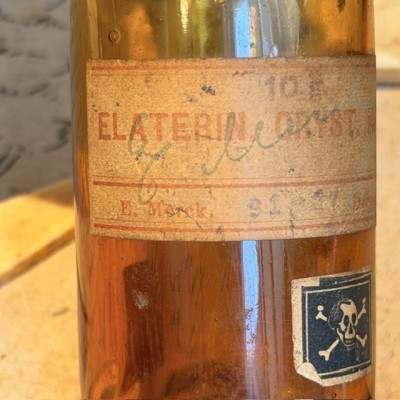
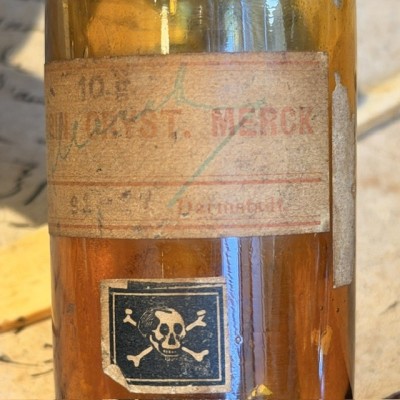
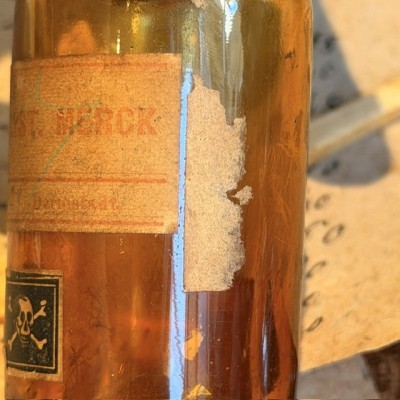
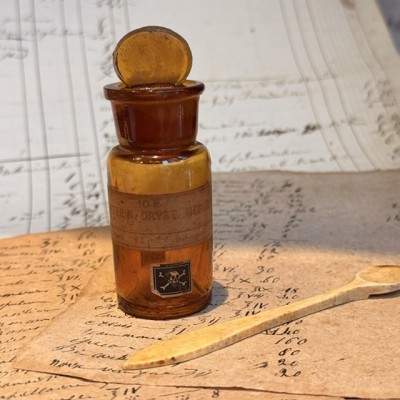
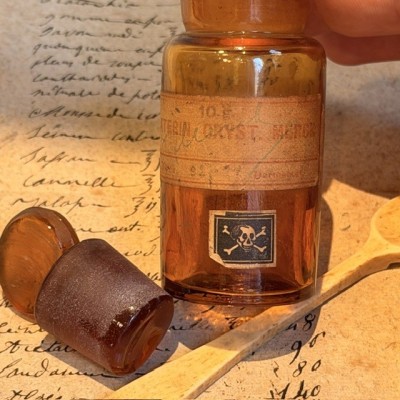
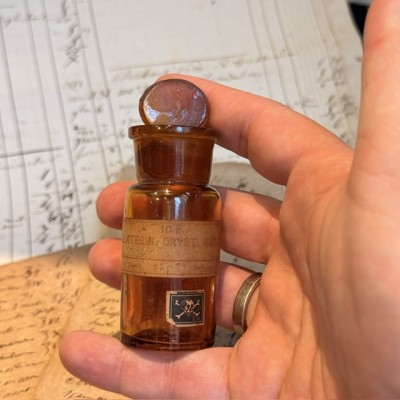
Crystallized Elaterin by Merck
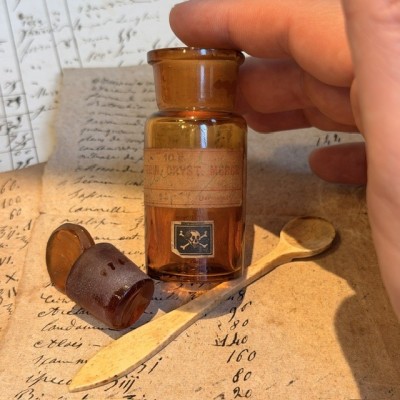
Antique pharmacy bottle
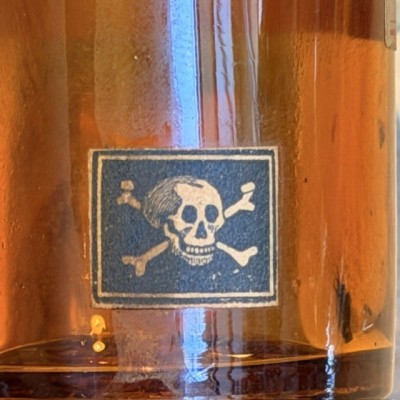
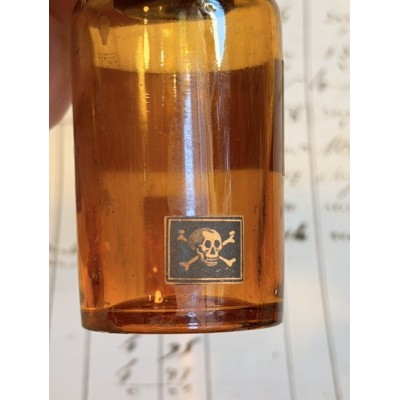
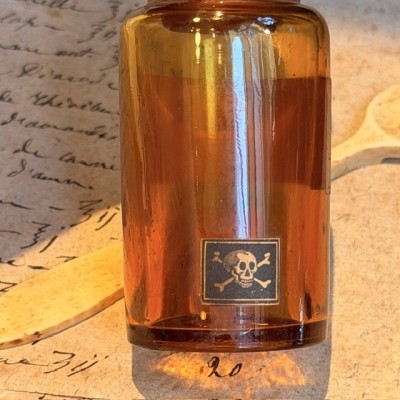
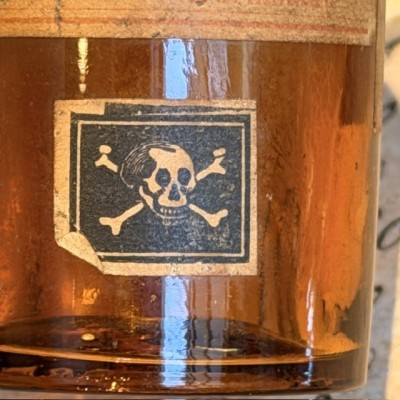
POISON label with the famous skull and crossbones
Signaling to the pharmacist that it is imperative to keep apart the other substances in the cabinet of toxic substances, the famous poison cabinet.
It comes from an old cellar-laboratory in a Parisian pharmacy. The bottles had not moved since the late 1950s on the shelves. The cellar had served as a laboratory for medical analyses and a laboratory for magistral preparations of the pharmacy from 1900 until around 1950.
Dating: 20th century
EMPTY
Crystallized Elaterin by Merck
Antique pharmacy bottle
POISON label with the famous skull and crossbones
This bottle has retained its original label from the prestigious German company E. Merck Darmstadt, as well as its rare French danger sticker from that time.
Signaling to the pharmacist that it is imperative to keep apart the other substances in the cabinet of toxic substances, the famous poison cabinet.
It initially contained 10 grams of crystallized Élatérine (Elaterinum), a plant-based active ingredient extracted from the famous Ecballium elaterium (Donkey cucumber or Squirter cucumber). Known for its explosive dispersal mechanism, this fruit provided one of the most violent, toxic and dangerous drastic purgatives in ancient pharmacopoeia.
Small feature of this bottle: it has retained its original German label for the product name, but when it arrived at the French pharmacy, the pharmacist added the skull and crossbones label to comply with the strict French legislation on poisonous substances.
Laterine was such a devastating purgative that at the slightest overdose it destroyed the intestinal walls, causing deadly blood diarrhea, rapid dehydration and collapse of vital functions within hours.
That is why doctors eventually abandoned the use of this plant altogether during the 20th century, deeming it far too dangerous for patients.
It comes from an old cellar-laboratory in a Parisian pharmacy. The bottles had not moved since the late 1950s on the shelves. The cellar had served as a laboratory for medical analyses and a laboratory for magistral preparations of the pharmacy from 1900 until around 1950.
Height of the bottle: 9.5cm with cap
Dating: 20th century
EMPTY
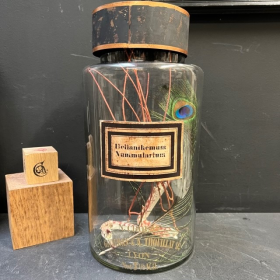
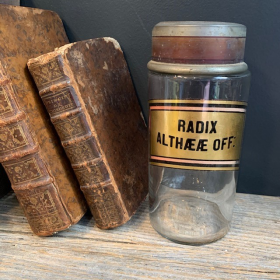
Antique 19th century pharmacy bottle
Radix althaeae Off - Marshmallow
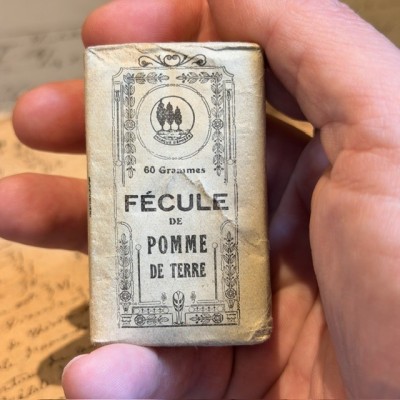
Packet of Potato Starch
Circa 1920
New old stock
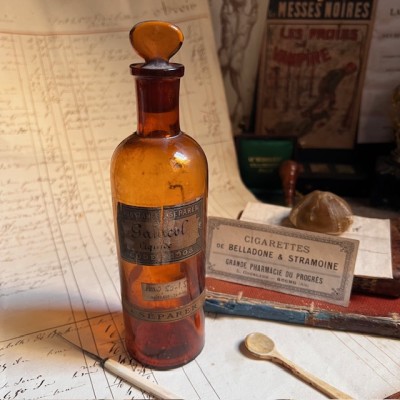
Gaïacol liquide
Antique pharmacy bottle
Green label: SUBSTANCE TO BE SEPARATED - CODEX 1908
This means that this bottle had to be kept separate from the others because it was dangerous in high doses
EMPTY
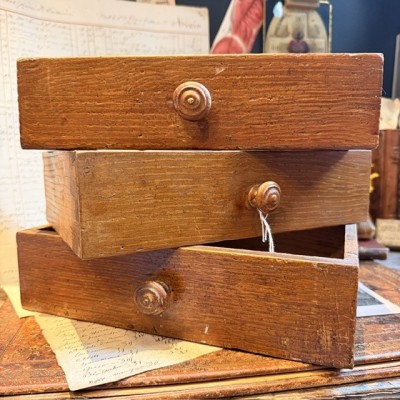
The Apothecary’s Little Drawer
Small antique wooden apothecary’s drawer that can be used as a storage box – Trade drawer
Handcrafted using traditional methods, with dovetail joints and a turned wooden handle
Width: 26cm - Length: 15.5cm - Height: 5.5cm
All the drawers are different, with stains and varying signs of age on each one
Sold empty, without accessories
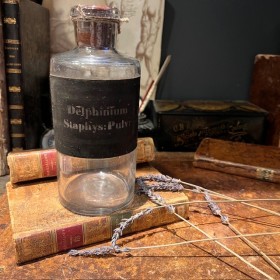
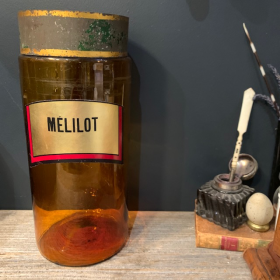
Delphinium staphisagria - Stavesacre
Pharmacy jar - Herbalism - Apothecary bottle
Late 19th century, early 20th century.
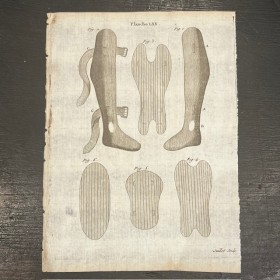
Antique surgical board
From Benjamin Bell's Complete Course in Surgery, published in 1796
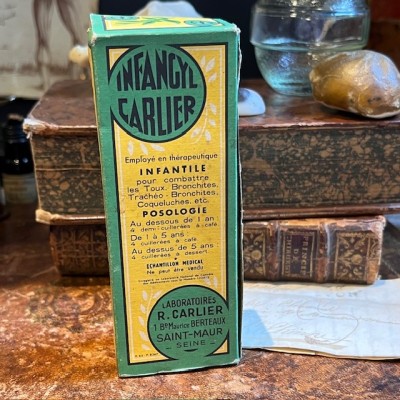
Infangyl Carlier
Antique pharmacy bottle - Apothecary
The box still contains its full, sealed bottle and instructions
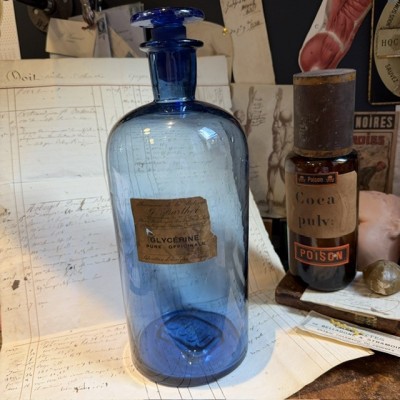
Glycérine pure officinale
Pure pharmaceutical-grade glycerine
Antique BLUE glass pharmacy bottle
EMPTY
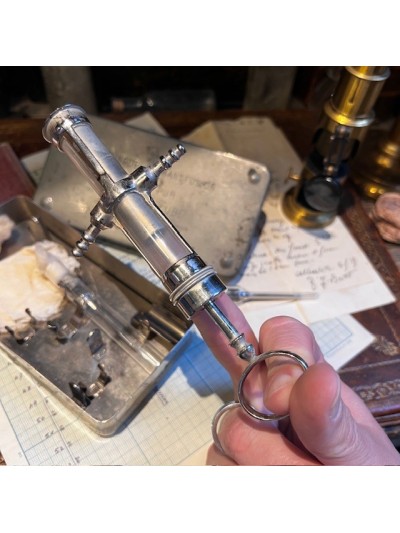
Doctor Louis Jubé pure blood transfusion syringe
For arm-to-arm transfusions
In its metal box
Around 1925/1930

Dry sodium iodide
Antique pharmacy bottle - drugstore - apothecary
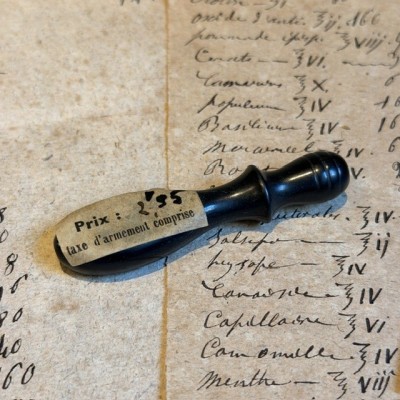
Ebonite cannula tip
Tips for enema or medical irrigation cannulas. New Old Stock
Marketed between May 1939 and sometime in 1940
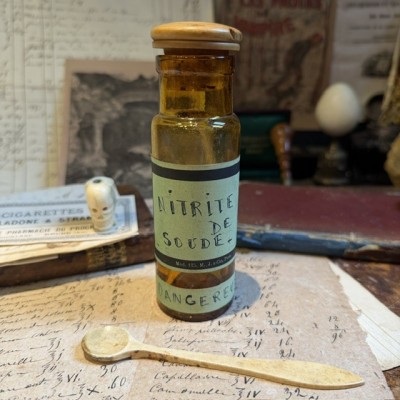
Sodium Nitrite
Antique amber glass bottle, with a boxwood and cork stopper.
Label: DANGEROUS
Indicating to the pharmacist that it must be stored separately from other substances in the cabinet for toxic substances, the famous ‘poison cabinet’.
It comes from the former cellar-laboratory of a Parisian pharmacy. The bottles had not been moved from the shelves since the late 1950s. The cellar had served as a medical analysis laboratory and a laboratory for the pharmacy’s compounded preparations from 1900 until around 1950.
EMPTY
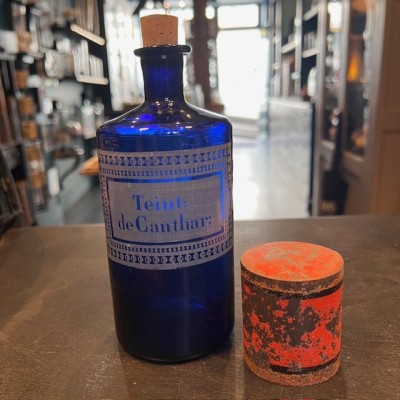
Teinture de Cantharides - POISON
Lytta vesicatoria - Spanish fly
Antique blue glass pharmacy bottle - Apothecary
Early 20th century - Blown glass.
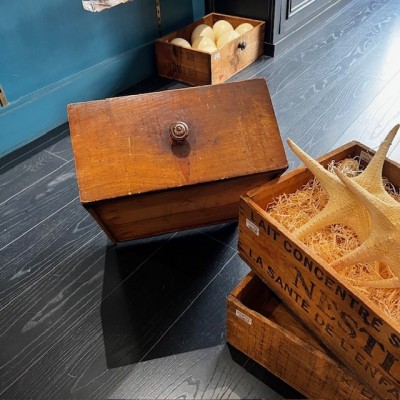
Large antique wooden pharmacy drawer with compartments - From a pharmacy or herbalist's cabinet
4 compartments
Ref A - 39.5x50cm
Can be used as a storage box
Weight: 4.1kg !
Crystallized Elaterin by Merck
Antique pharmacy bottle
POISON label with the famous skull and crossbones
Signaling to the pharmacist that it is imperative to keep apart the other substances in the cabinet of toxic substances, the famous poison cabinet.
It comes from an old cellar-laboratory in a Parisian pharmacy. The bottles had not moved since the late 1950s on the shelves. The cellar had served as a laboratory for medical analyses and a laboratory for magistral preparations of the pharmacy from 1900 until around 1950.
Dating: 20th century
EMPTY