

- New
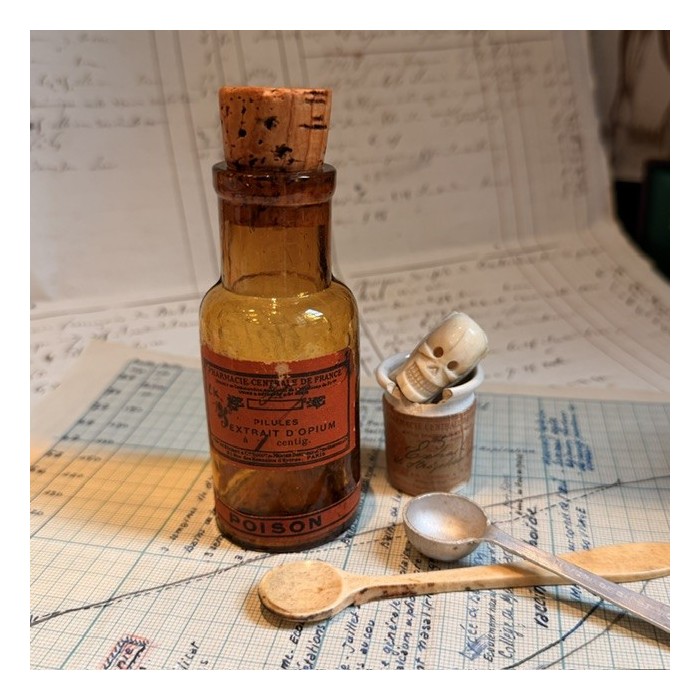
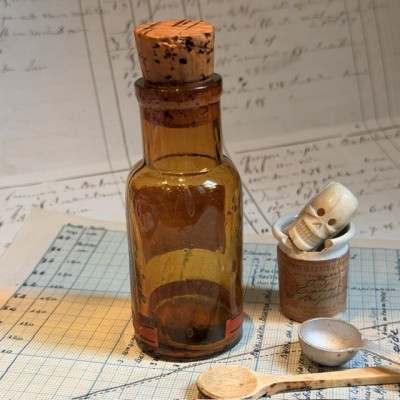
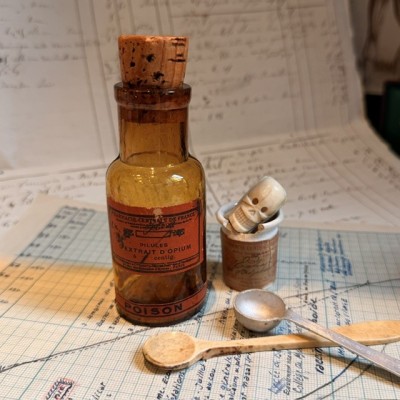
Opium extract pills
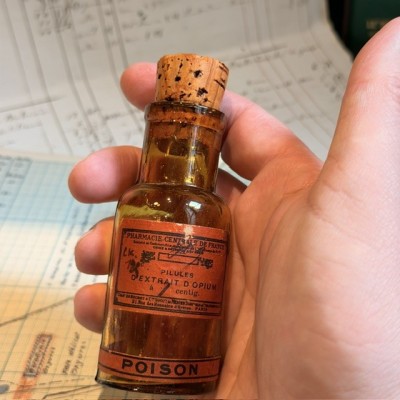
Antique pharmacy bottle.
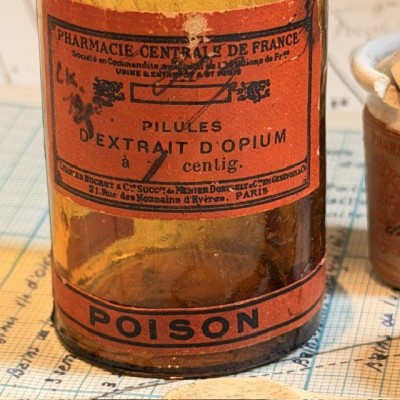
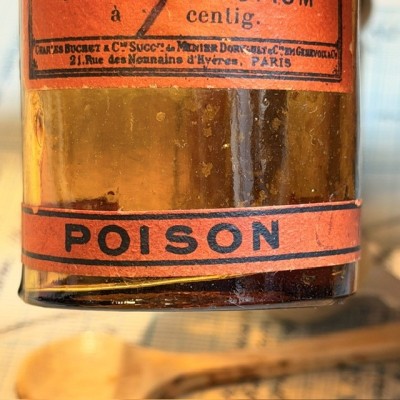
Red POISON label
Signaling to the pharmacist that it is imperative to keep apart the other substances in the cabinet of toxic substances, the famous poison cabinet.
It comes from an old cellar-laboratory in a Parisian pharmacy. The bottles had not moved since the late 1950s on the shelves. The cellar had served as a laboratory for medical analyses and a laboratory for magistral preparations of the pharmacy from 1900 until around 1950.
Dating: Early 20th century
EMPTY
Opium extract pills
Antique pharmacy bottle.
Red POISON label
Signaling to the pharmacist that it is imperative to keep apart the other substances in the cabinet of toxic substances, the famous poison cabinet.
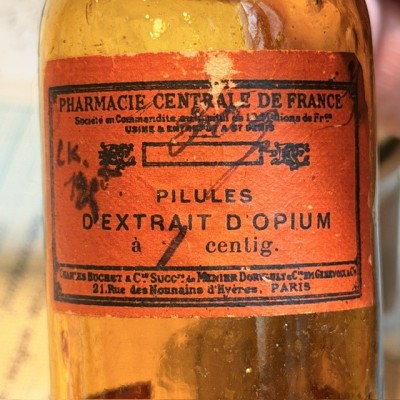
This bottle initially contained "Opium Extract Pills at 1 centigram", prepared by the famous Central Pharmacy of France, located at 21, Rue des Nonnains d'Hyères in Paris.
In the early twentieth century, opium extract was a pillar of pharmacopoeia.
Administered in the form of strictly dosed pills, it served mainly as a powerful analgesic to calm acute pain, as a major sedative to soothe the nervous system, and as a radical treatment against severe intestinal conditions such as diarrhea.
If its therapeutic virtues were unavoidable, its border with the poison was tiny: a too high dose caused a fatal respiratory depression, and its prolonged use led to a destructive dependence: opiomania.
The pharmacist’s handwritten annotations in black ink on the label recall the rigorous control that surrounded its delivery.
It comes from an old cellar-laboratory in a Parisian pharmacy. The bottles had not moved since the late 1950s on the shelves. The cellar had served as a laboratory for medical analyses and a laboratory for magistral preparations of the pharmacy from 1900 until around 1950.
Height of the bottle: 11cm with cap - Diameter: 4cm
Dating: Early 20th century
EMPTY
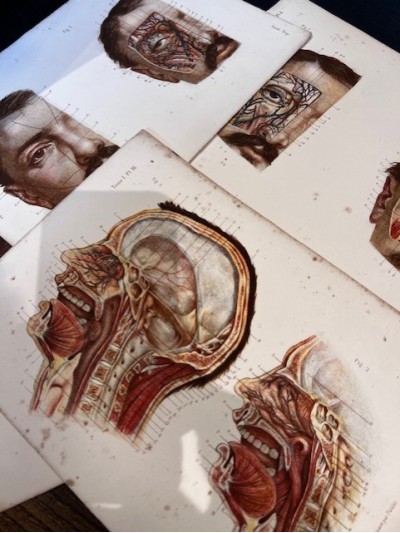
Anatomical chart by Paulet and Sarazin
From the Traité d'anatomie topographique (Treatise on topographical anatomy)
Published in 1867-1870
Chromolithography
You buy 1 plate, not the whole set
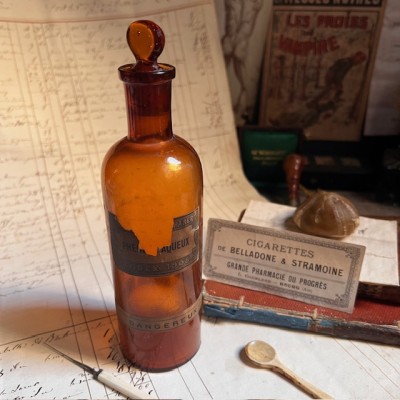
Phénol Aqueux
Antique pharmacy bottle
Green label: SUBSTANCE TO BE SEPARATED - CODEX 1908
This means that this bottle had to be kept separate from the others because it was dangerous - POISON
EMPTY
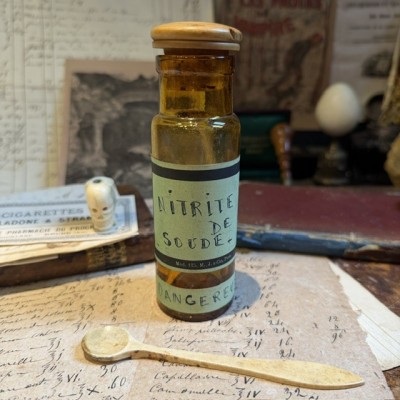
Sodium Nitrite
Antique amber glass bottle, with a boxwood and cork stopper.
Label: DANGEROUS
Indicating to the pharmacist that it must be stored separately from other substances in the cabinet for toxic substances, the famous ‘poison cabinet’.
It comes from the former cellar-laboratory of a Parisian pharmacy. The bottles had not been moved from the shelves since the late 1950s. The cellar had served as a medical analysis laboratory and a laboratory for the pharmacy’s compounded preparations from 1900 until around 1950.
EMPTY
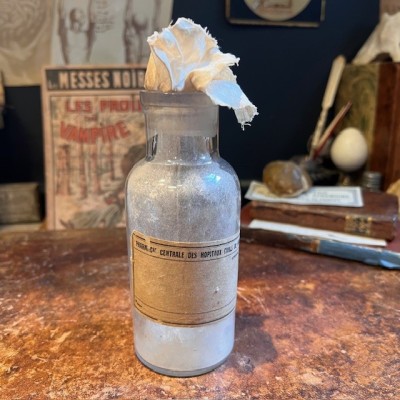
Central Pharmacy of the Civil Hospitals of Paris
Antique pharmacy bottle
Apothecary
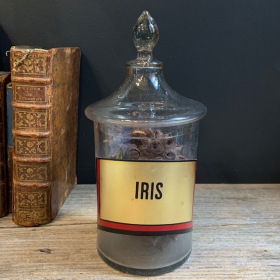
19th century Herbalist's or Pharmacy crystal jar
Iris
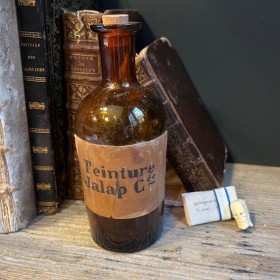
Tincture of Jalap Compound also known as German brandy
A purgative powder is extracted from the Jalap plant.
Antique pharmacy bottle
Apothecary vial
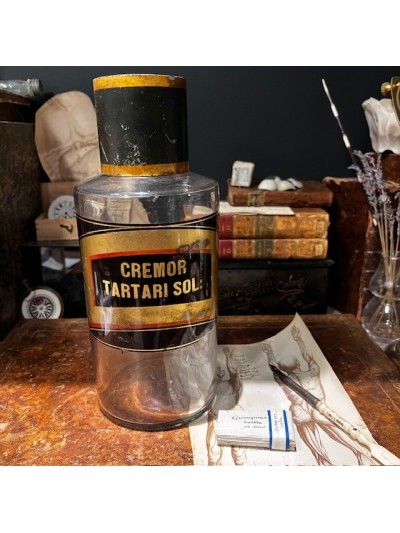
Cremor tartari sol - Cream of tartar
Potassium bitartrate
Pharmacy jar - Herbalism - Apothecary bottle
Late 19th century
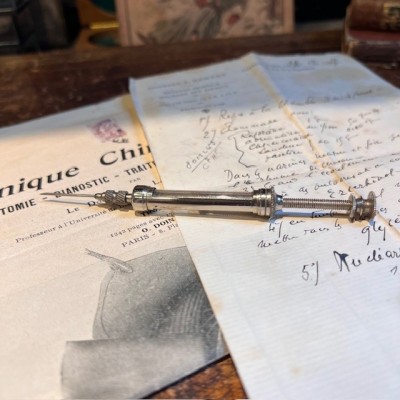
Pravaz hypodermic injection syringe
Early 20th century
Non-functional
SOLD ALONE WITHOUT CASE

Cours d'opérations de chirurgie, démontrées au Jardin Royal
Course of surgical operations, demonstrated in the Royal Garden
Published in 1751 in Paris, by d'Houry, sole printer and bookseller to Monseigneur le Duc d'Orléans
Fourth edition
Illustrated with numerous plates and engravings in the text, including the famous plate of Poor Malabou and her scrotal elephantiasis on page 112/113, which the author mentions on page 373.

Human jaws in porcelain mounted on a blackened wooden base
Anatomical dental model for dentists
19th century

Essence of star anise
Antique pharmacy bottle
Apothecary vial
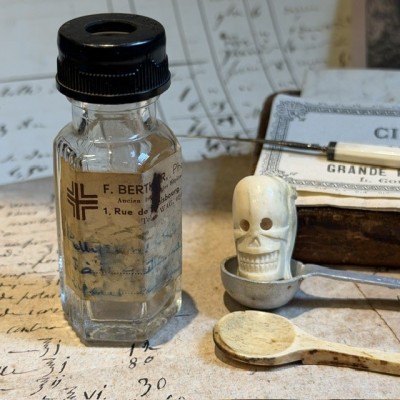
Dropper No. xx05
Antique pharmacy bottle
He's lost his rubber duck
EMPTY
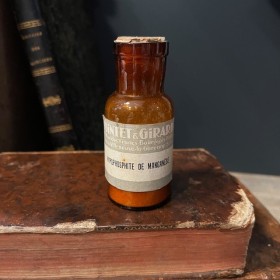
Hypophosphite de Manganèse
Antique pharmacy bottle
Apothecary vial
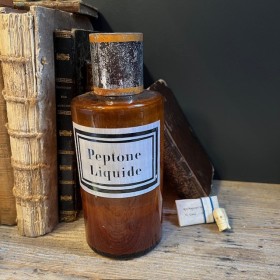
Antique pharmacy jar
Liquid Peptone
Raw meat product very fashionable in the first half of the 20th century.
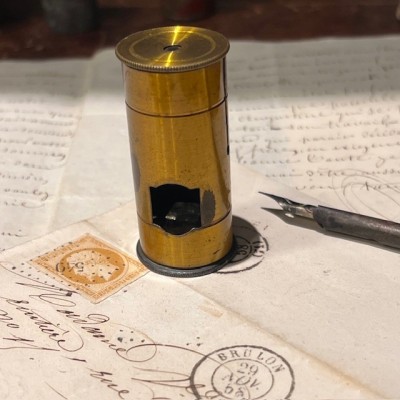
Floroscope
Botanist's microscope
Pocket microscope Late 19th - early 20th century
Warning: Here composed of 2 Stanhope lenses
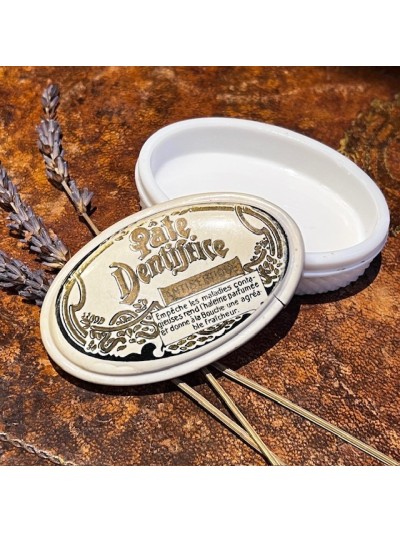
Toothpaste - Antique apothecary
Porcelain pot with illustrated plastic lid
Antiseptic
Early 20th century - Caution the lid is cracked
Opium extract pills
Antique pharmacy bottle.
Red POISON label
Signaling to the pharmacist that it is imperative to keep apart the other substances in the cabinet of toxic substances, the famous poison cabinet.
It comes from an old cellar-laboratory in a Parisian pharmacy. The bottles had not moved since the late 1950s on the shelves. The cellar had served as a laboratory for medical analyses and a laboratory for magistral preparations of the pharmacy from 1900 until around 1950.
Dating: Early 20th century
EMPTY