
- New
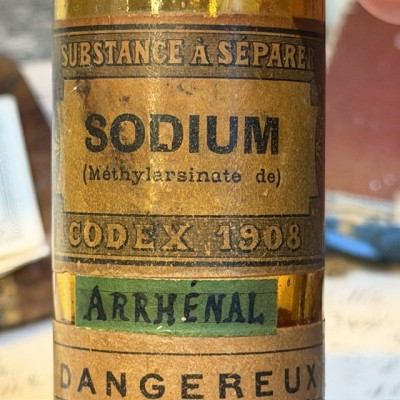
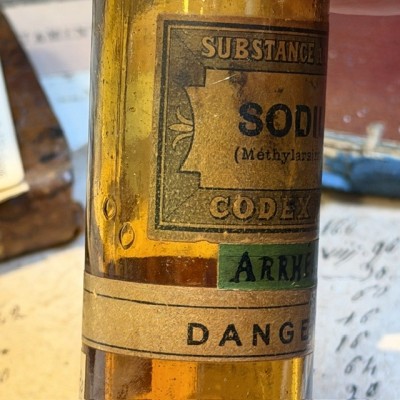
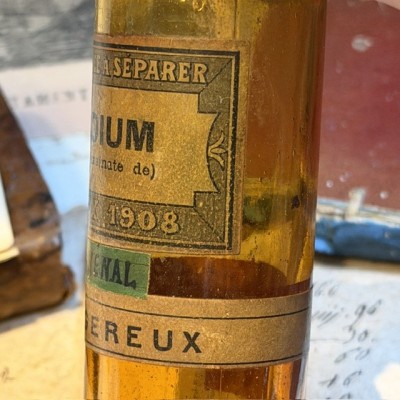
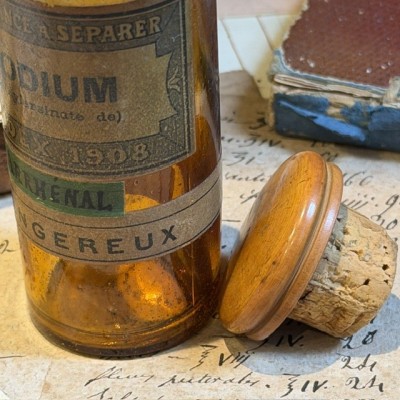
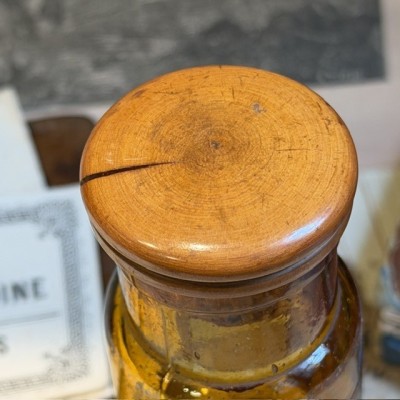
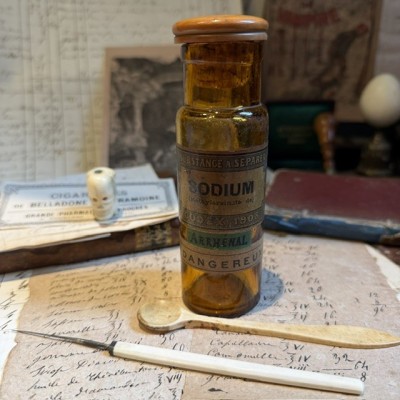
Arrhénal - Sodium methylarsinate - Arsenic
Antique amber glass bottle, with a boxwood and cork stopper.
Green label: SUBSTANCE TO BE STORED SEPARATELY – CODEX 1908
Indicating to the pharmacist that it must be stored separately from other substances in the cabinet for toxic substances, the famous ‘poison cabinet’.
It comes from the former cellar-laboratory of a Parisian pharmacy. The bottles had not been moved from the shelves since the late 1950s. The cellar had served as a medical analysis laboratory and a laboratory for the pharmacy’s compounded preparations from 1900 until around 1950.
EMPTY
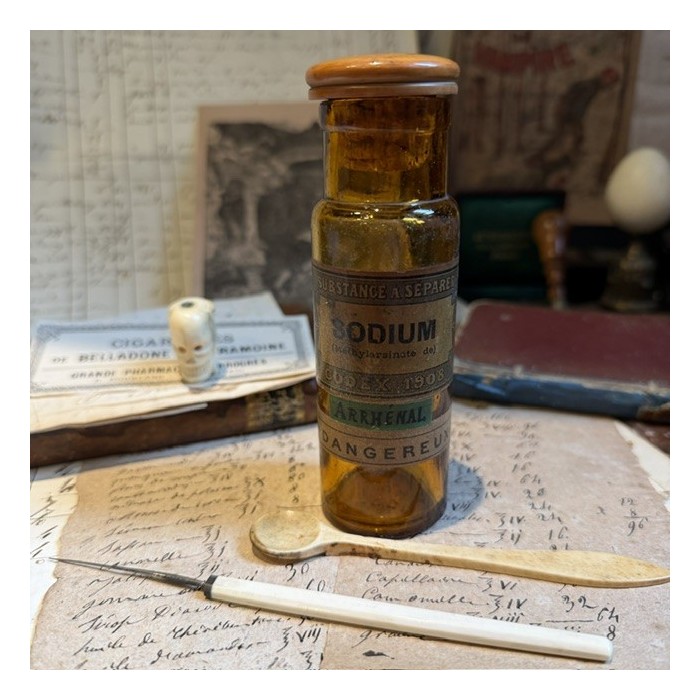
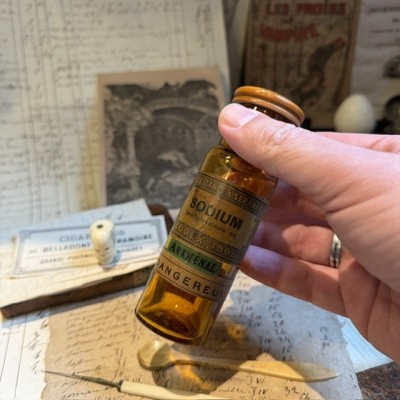
Arrhénal - Sodium methylarsinate - Arsenic
Antique amber glass bottle, with a boxwood and cork stopper.
Green label: SUBSTANCE TO BE STORED SEPARATELY – CODEX 1908
Indicating to the pharmacist that it must be stored separately from other substances in the cabinet for toxic substances, the famous ‘poison cabinet’.
In very small doses, Arrhénal was used at the time as a general tonic, particularly to treat anaemia, malaria and tuberculosis.
However, at higher doses or with prolonged use, it led to severe chronic poisoning (arsenic poisoning), causing skin lesions, digestive disorders, nerve damage and irreversible damage to the liver and kidneys.
It comes from the former cellar-laboratory of a Parisian pharmacy. The bottles had not been moved from the shelves since the late 1950s. The cellar had served as a medical analysis laboratory and a laboratory for the pharmacy’s compounded preparations from 1900 until around 1950.
Height of the bottle: 12cm with stopper
EMPTY
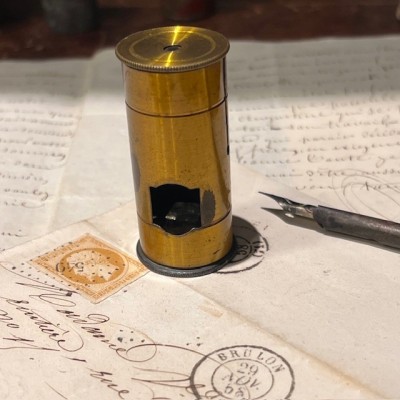
Floroscope
Botanist's microscope
Pocket microscope Late 19th - early 20th century
Warning: Here composed of 2 Stanhope lenses
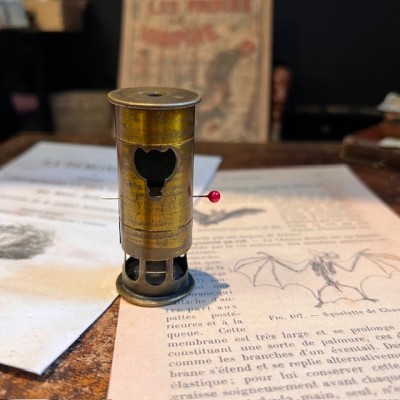
Pocket microscope
Floroscope - Insectoscope in brass
1850's - 1930's
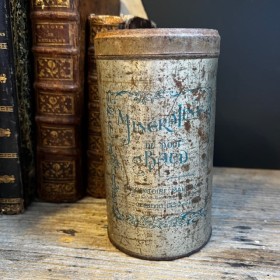
Mineraline by Dr C. Baud
Antique tin pharmacy box
Powder or talcum powder for children's toiletries

Antique and large drum microscope
In it's mahogany wooden box
For botanist, entomologist
This is a larger model than those usually found on the market
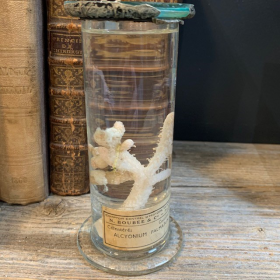
Museum jar - Wet specimen
Soft coral Alcyonium palmatum
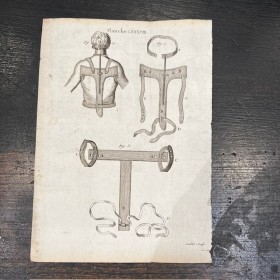
Antique surgical board
From Benjamin Bell's Complete Course in Surgery, published in 1796
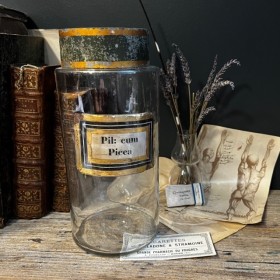
Cumin Epicea Pill - Pil: Cum Picea
Antique blown glass pharmacy jar
Apothecary
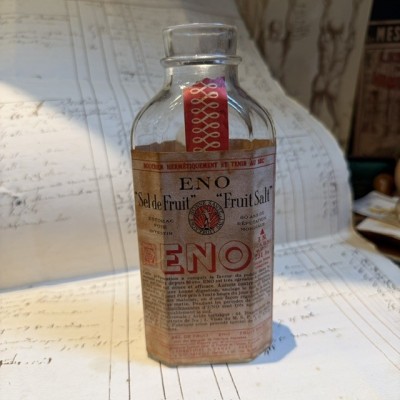
Sel de Fruit ENO - ENO Fruit Salt
Antique pharmacy bottle
EMPTY
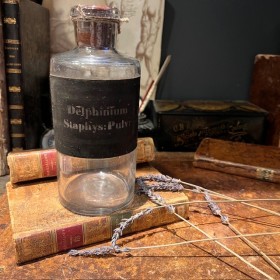
Delphinium staphisagria - Stavesacre
Pharmacy jar - Herbalism - Apothecary bottle
Late 19th century, early 20th century.
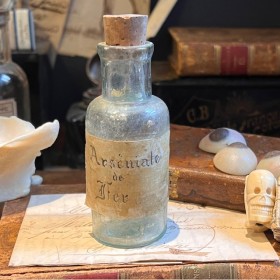
Arséniate de Fer
Antique pharmacy bottle
Apothecary vial
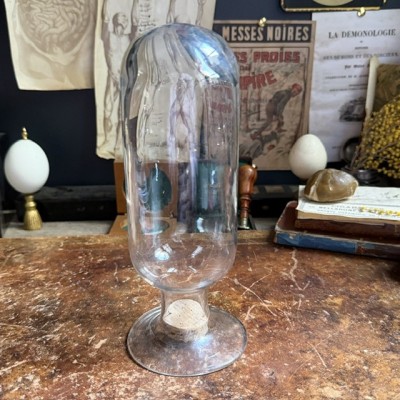
Specimen jar in blown glass – Inverted apothecary jar
Size M
A vintage laboratory or conservatory container designed for the display and preservation of biological or botanical specimens
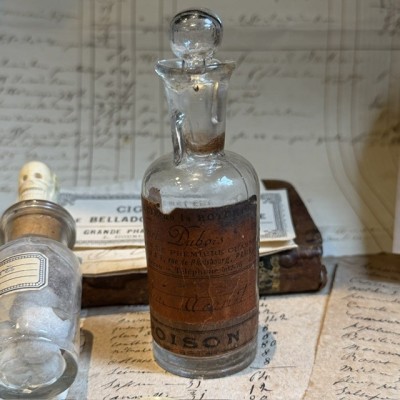
Aconite tincture
Antique pharmacy dropper bottle
Dangerous and lethal product – POISON
It comes from the former laboratory cellar of a Parisian pharmacy. The bottles had not been moved from the shelves since the late 1950s. The cellar had served as a medical analysis laboratory and a laboratory for the pharmacy’s compounded preparations from 1900 until around 1950.
This is a Lamprecht dropper bottle, as can be seen from the embossing on the back of the glass; to be more precise, it is model 36537, a patented design. Lamprecht was known for having invented these bottles around 1882. And as the owner of the Pharmacie de la Rotonde changed in 1900, the bottle therefore dates from the 19th century.
EMPTY
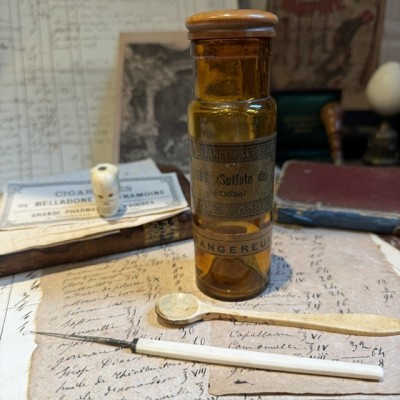
Pharmaceutical zinc sulphate
Antique amber glass bottle, with a boxwood and cork stopper.
Green label: SUBSTANCE TO BE STORED SEPARATELY – CODEX 1908
Indicating to the pharmacist that it must be stored separately from other substances in the cabinet for toxic substances, the famous ‘poison cabinet’.
It comes from the former cellar-laboratory of a Parisian pharmacy. The bottles had not been moved from the shelves since the late 1950s. The cellar had served as a medical analysis laboratory and a laboratory for the pharmacy’s compounded preparations from 1900 until around 1950.
EMPTY
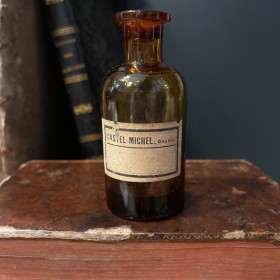
Castel - Michel perfumers
Antique perfume bottle
Apothecary vial
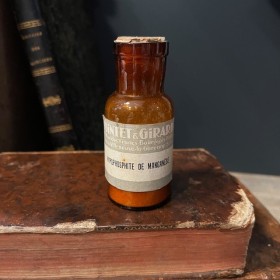
Hypophosphite de Manganèse
Antique pharmacy bottle
Apothecary vial
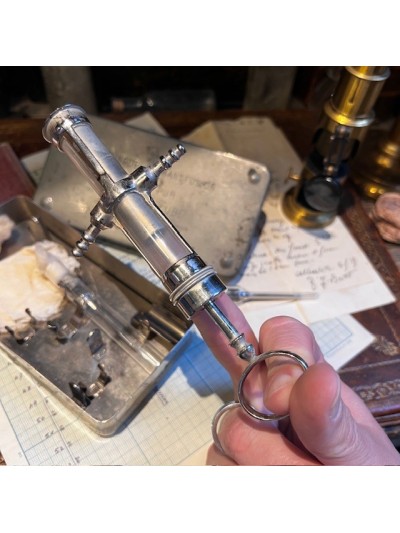
Doctor Louis Jubé pure blood transfusion syringe
For arm-to-arm transfusions
In its metal box
Around 1925/1930
Arrhénal - Sodium methylarsinate - Arsenic
Antique amber glass bottle, with a boxwood and cork stopper.
Green label: SUBSTANCE TO BE STORED SEPARATELY – CODEX 1908
Indicating to the pharmacist that it must be stored separately from other substances in the cabinet for toxic substances, the famous ‘poison cabinet’.
It comes from the former cellar-laboratory of a Parisian pharmacy. The bottles had not been moved from the shelves since the late 1950s. The cellar had served as a medical analysis laboratory and a laboratory for the pharmacy’s compounded preparations from 1900 until around 1950.
EMPTY