
- New
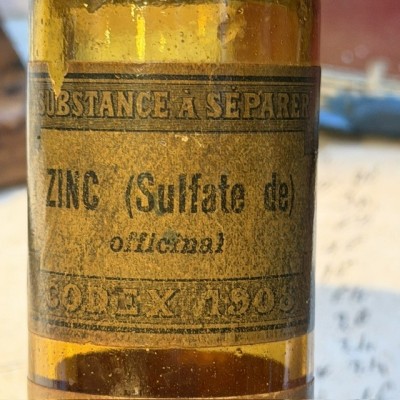
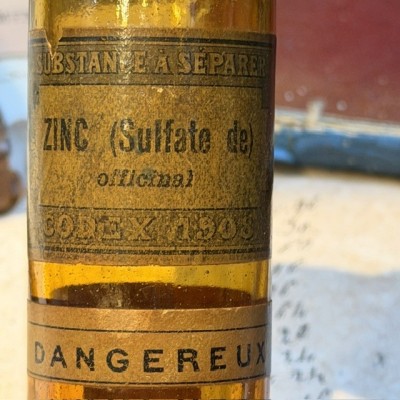
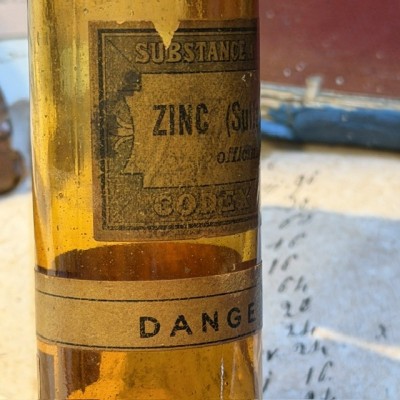
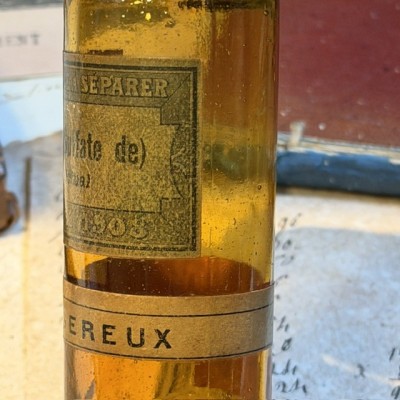
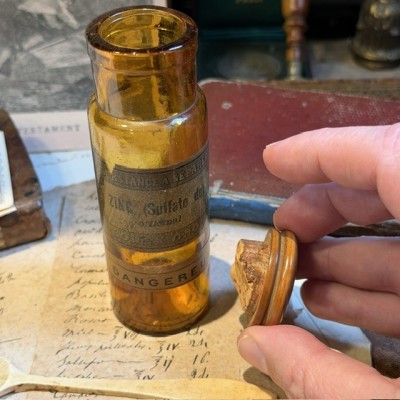
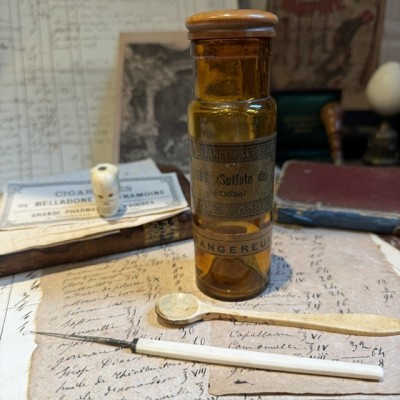
Pharmaceutical zinc sulphate
Antique amber glass bottle, with a boxwood and cork stopper.
Green label: SUBSTANCE TO BE STORED SEPARATELY – CODEX 1908
Indicating to the pharmacist that it must be stored separately from other substances in the cabinet for toxic substances, the famous ‘poison cabinet’.
It comes from the former cellar-laboratory of a Parisian pharmacy. The bottles had not been moved from the shelves since the late 1950s. The cellar had served as a medical analysis laboratory and a laboratory for the pharmacy’s compounded preparations from 1900 until around 1950.
EMPTY
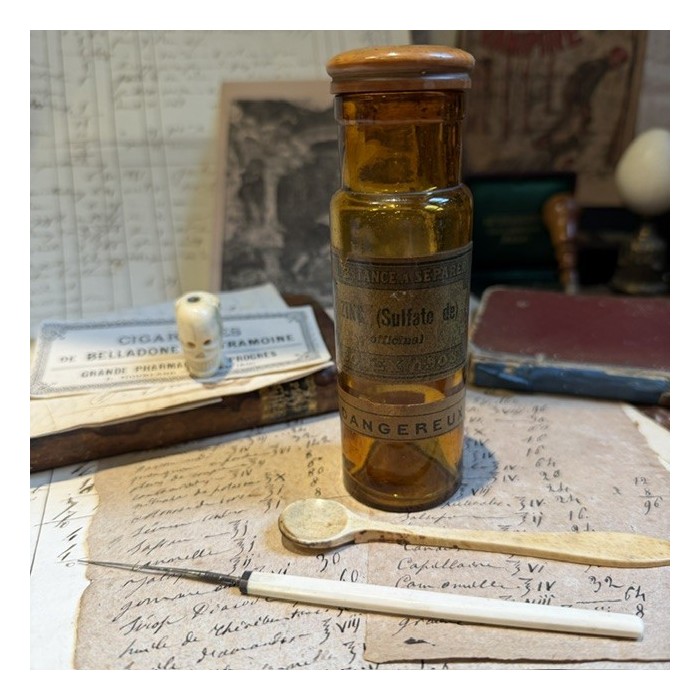
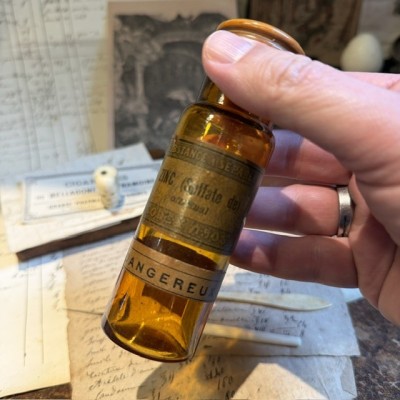
Pharmaceutical zinc sulphate
Antique amber glass bottle, with a boxwood and cork stopper.
Green label: SUBSTANCE TO BE STORED SEPARATELY – CODEX 1908
Indicating to the pharmacist that it must be stored separately from other substances in the cabinet for toxic substances, the famous ‘poison cabinet’.
Zinc sulphate is a powerful emetic (it causes violent vomiting) and can be corrosive to the digestive mucosa in high doses.
It was used either:
External Use (main): As an antiseptic and astringent, particularly in eye drops (in very dilute doses) or to treat skin problems and ulcers.
Internal use: Prescribed in minute doses for certain nervous disorders such as epilepsy or, paradoxically, to induce vomiting in cases of poisoning by other substances.
It comes from the former cellar-laboratory of a Parisian pharmacy. The bottles had not been moved from the shelves since the late 1950s. The cellar had served as a medical analysis laboratory and a laboratory for the pharmacy’s compounded preparations from 1900 until around 1950.
Height of the bottle: 12cm with stopper
EMPTY
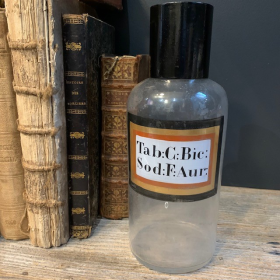
Antique pharmacy jar: Sodium bicarbonate and Gold Flower tablets
Glass pharmacy bottle - XIXth century
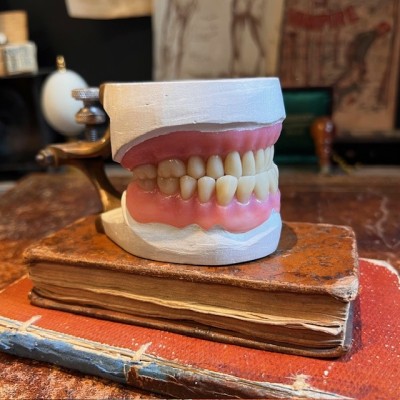
Collector’s bronze dental articulator
Circa 1920 for the bronze frame
The plaster and resin forming the gums and teeth are modern.
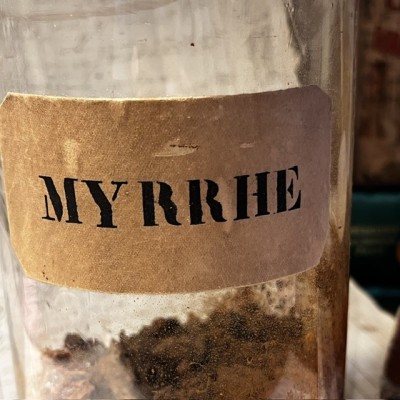
Myrrh
Antique pharmacy bottle - Wide-mouth apothecary jar.
19th-century mouth-blown glass
There is still some product left inside
A fascinating artifact from the history of pharmacology

Cours d'opérations de chirurgie, démontrées au Jardin Royal
Course of surgical operations, demonstrated in the Royal Garden
Published in 1751 in Paris, by d'Houry, sole printer and bookseller to Monseigneur le Duc d'Orléans
Fourth edition
Illustrated with numerous plates and engravings in the text, including the famous plate of Poor Malabou and her scrotal elephantiasis on page 112/113, which the author mentions on page 373.
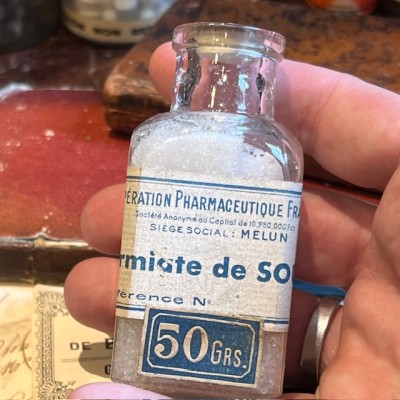
Sodium formate
Antique pharmacy bottle - Apothecary
There is still some product left inside
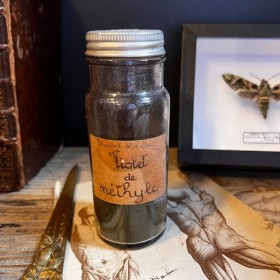
Violet de Méthyle
Antique pharmacy bottle - Droguerie - Apothicaire
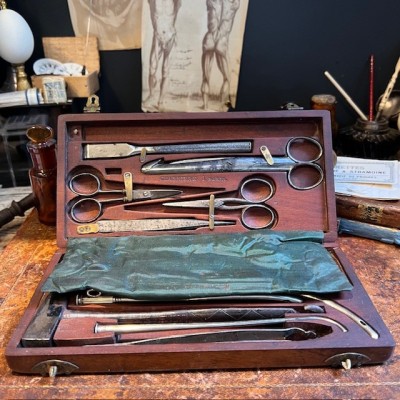
Portable autopsy kit from the mid-19th century
Maison Charrière in Paris, circa 1845–1870
Mahogany case for autopsy and dissection
Small portable mahogany case containing a set of autopsy instruments: hook hammer, bone chisel, enterotome scissors, probes, hooks and suture needles. Used by forensic scientists and anatomists for opening and examining bodies.
Charrière, a major 19th-century Parisian manufacturer, was a pioneer in the design of high-precision surgical and anatomical instruments.
Mahogany and polished steel: 23 × 11 cm
Please note: crack in the wood under the case
A beautiful object, very rare to find
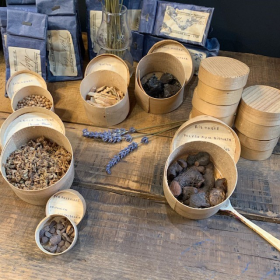
Antique wooden box for herbal medicine - Samples of plants, seeds, bark etc.

Grams / Tablespoons - Graduated bottle
in French: Grammes / Cuillères à soupe
Antique medicine bottle
Apothecary
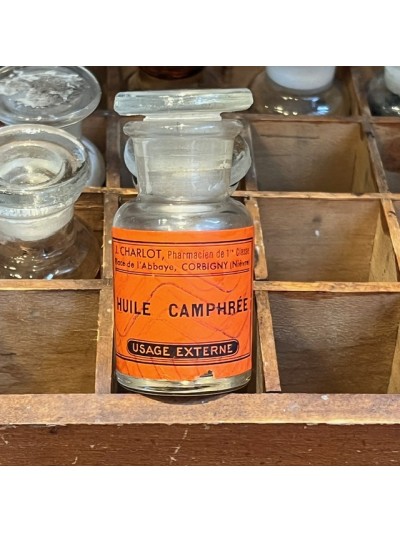
Camphorated oil
Antique pharmacy bottle
Apothecary vial
EMPTY but cap is blocked and bottle will not open
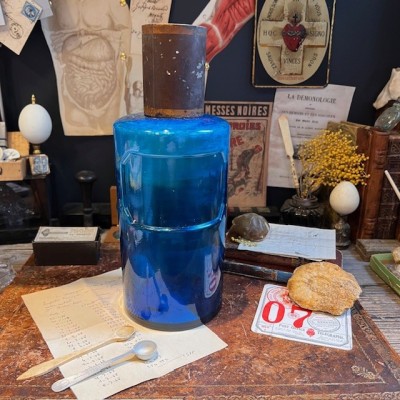
Very Large cobalt blue glass pharmacy bottle - Apothecary - Shouldered - H27.5cm - 19th century
Shouldered apothecary bottle - Antique pharmacy bottle
Mouth-blown glass - Cobalt blue color tinted throughout
This large-capacity jar was a storage jar intended for stockpiling
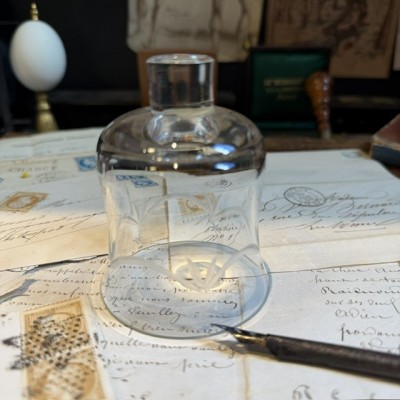
Small antique engraved glass bell
I believe these are antique glass pieces that were originally intended to be placed on a stand.
Repurpose them as small bells to showcase your small objects, such as a small skull, as shown here.
Sold individually
EMPTY
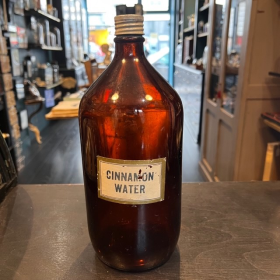
Cinnamon Water
Antique and large brown English pharmacy bottle
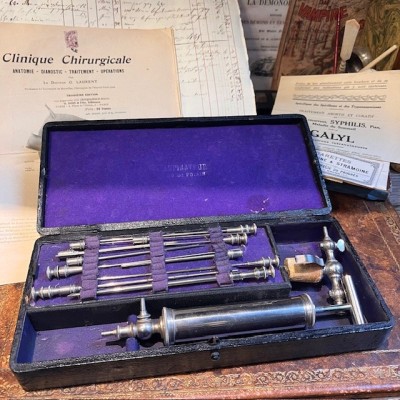
Dr Potain vacuum cleaner in its case
Late 19th century - 1870-1895
Antique medical instrument
However, the box comes from the Hôpital de la Charité in Paris, as indicated by the inscription on the top of the box, from the Bouillaud ward of the hospital.
non-functional
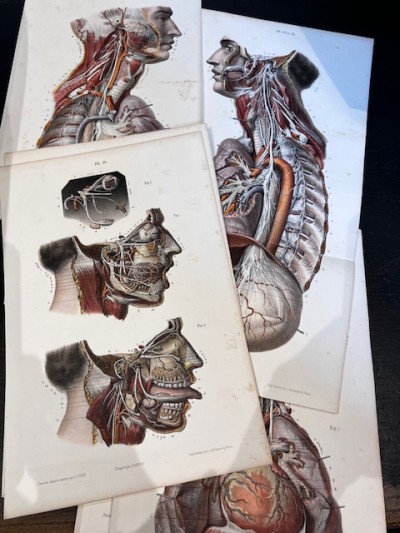
Anatomical chart by Ludovic Hirschfeld drawn by Léveillé
From Traité et iconographie du système nerveux et des organes des sens de l'homme avec leur mode de préparation
Published in 1866
Lithography
You buy 1 plate, not the whole set
Pharmaceutical zinc sulphate
Antique amber glass bottle, with a boxwood and cork stopper.
Green label: SUBSTANCE TO BE STORED SEPARATELY – CODEX 1908
Indicating to the pharmacist that it must be stored separately from other substances in the cabinet for toxic substances, the famous ‘poison cabinet’.
It comes from the former cellar-laboratory of a Parisian pharmacy. The bottles had not been moved from the shelves since the late 1950s. The cellar had served as a medical analysis laboratory and a laboratory for the pharmacy’s compounded preparations from 1900 until around 1950.
EMPTY