

- New
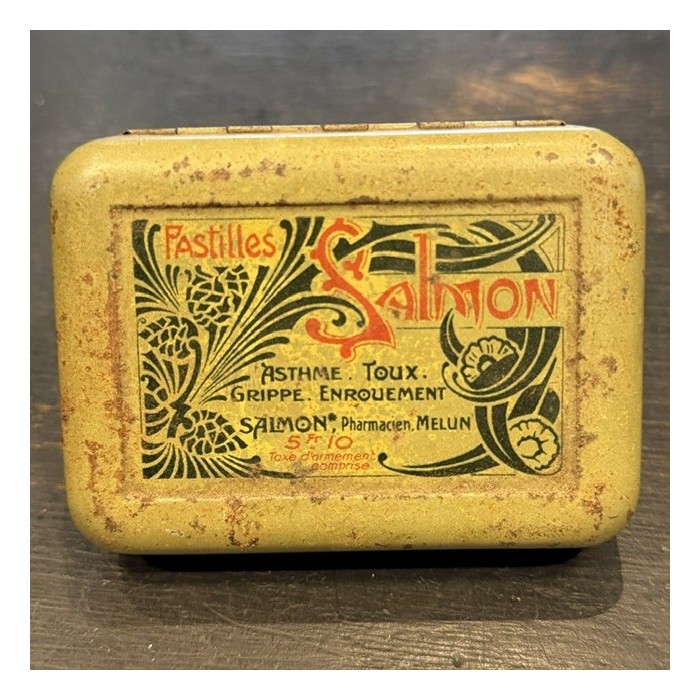
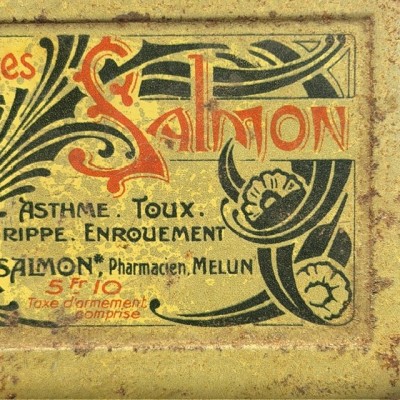
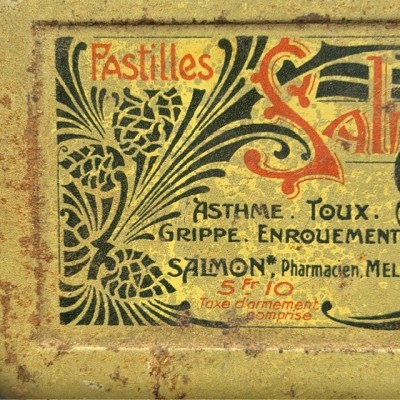
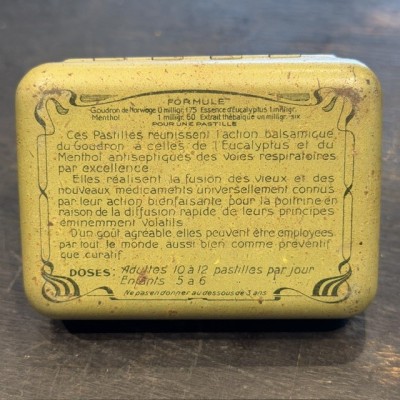
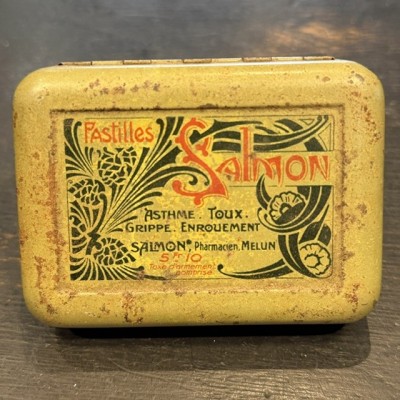
Salmon Opium Cough Lozenges
Vintage tin medicine box - Pharmacy - Apothecary
1918/1920
Opium and morphine at nearly 20mg per day!!
EMPTY
Salmon Opium Cough Lozenges
Antique tin medicine box - Pharmacy - Apothecary
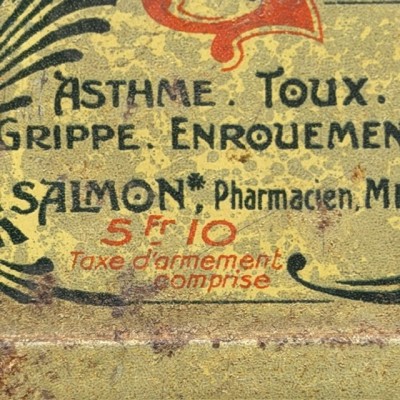
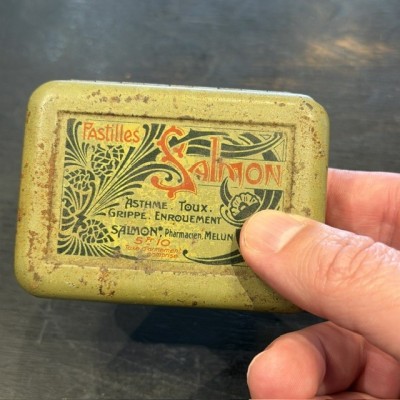
This box of Salmon Lozenges (Pharmacist in Melun) combines the aesthetics of the Belle Époque and the rigour of the Great War with a touch of opium!
Indeed, the tin specifies ‘Arms tax included’, which allows this item to be precisely dated between the law of 30 June 1918 and the year 1920. This tax was introduced to support the national war effort and subsequent reconstruction.
Aesthetics: Art Nouveau-style metal lithography (what was known as the “noodle” style) with stylised plant motifs, typical of the turn of the century.
The box’s special feature: Opium!
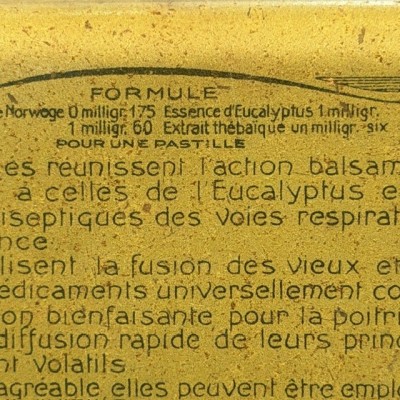
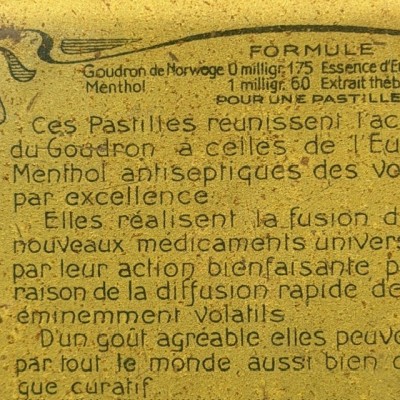
“Thebaic extract”: The ingredients list mentions the use of Thebaic extract (1.6 mg), a scientific term for opium. At the time, it was used for its cough-suppressing and calming properties before regulations on narcotics were tightened. Pharmacists used this term to refer to opium, a powerful drug, without alarming their customers. Marketing ahead of its time!
It also contains Norwegian tar, eucalyptus oil and menthol, intended to treat asthma, flu and hoarseness.
Origin: Salmon’s Pharmacy in Melun.
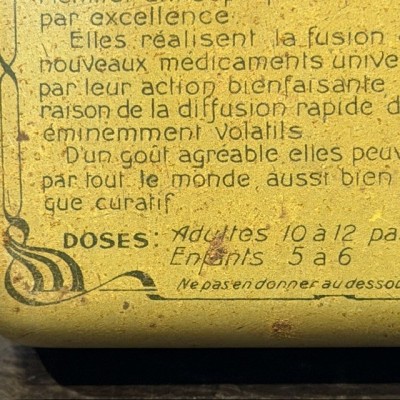
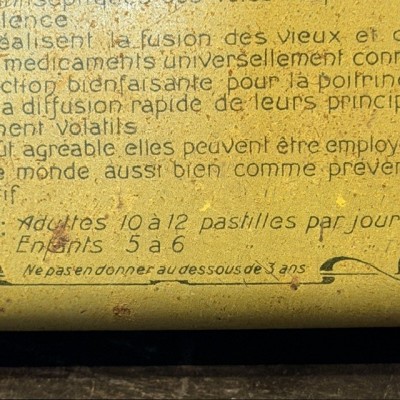
Let’s take a closer look at the opium dosage, as it is recommended to take 12 lozenges containing 1.6 mg of opium per day.
Consuming 12 lozenges a day equates to 19.2 mg of opium, which was at the upper limit of the standard therapeutic doses of the time for pain relief. Such a dosage inevitably induced a sedative effect and a mild sense of euphoria in the patient.
However, the Thebaic extract also contained around 10% morphine, meaning the patient was ingesting nearly 2 mg of pure morphine daily. Although not fatal, this dose was sufficient to create a genuine dependency if treatment was prolonged beyond a few days.
Despite the 1916 law regulating narcotics, opium remained ubiquitous in folk remedies. Its effectiveness as the world’s best cough suppressant justified, according to the standards of the time, the patient’s drowsiness, which was considered a secondary benefit promoting rest.
However, the dosage for children, of 5 to 6 lozenges, represented an intake of 8 to 10 mg of opium. This dosage, now considered extremely dangerous for young people, illustrates the radical nature of old pharmaceutical formulations that were eventually banned.
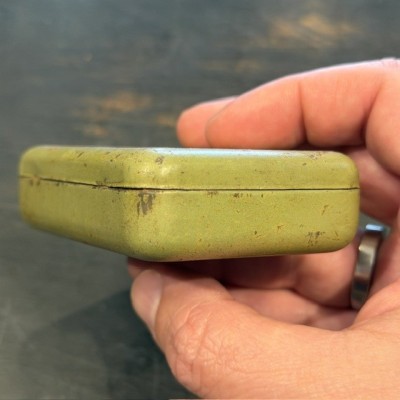
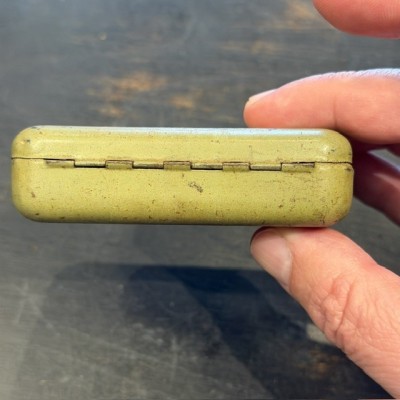
Dimensions: 8.5x6cm
EMPTY
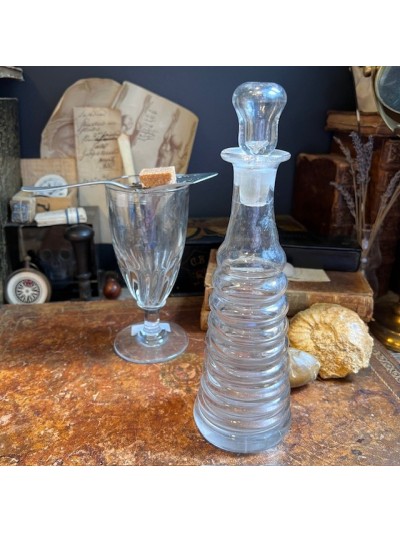
An antique absinthe topette (decanter)
10 Beaded Topette
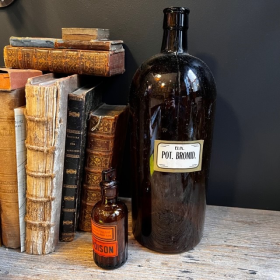
Potassium Bromide Elixir
Antique and large brown English pharmacy bottle
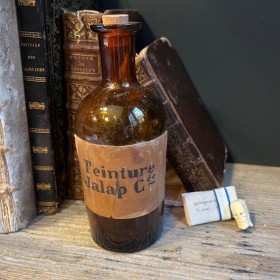
Tincture of Jalap Compound also known as German brandy
A purgative powder is extracted from the Jalap plant.
Antique pharmacy bottle
Apothecary vial
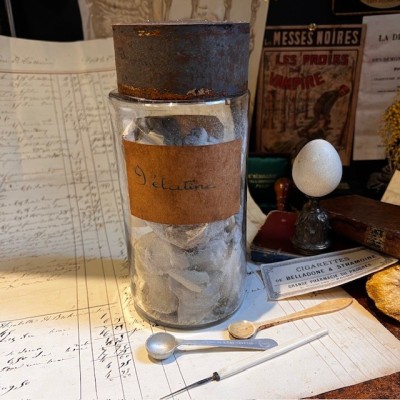
Gelatine
Antique pharmacy bottle - Wide-mouth apothecary jar.
19th-century mouth-blown glass
There is still some product left inside
A fascinating artifact from the history of pharmacology
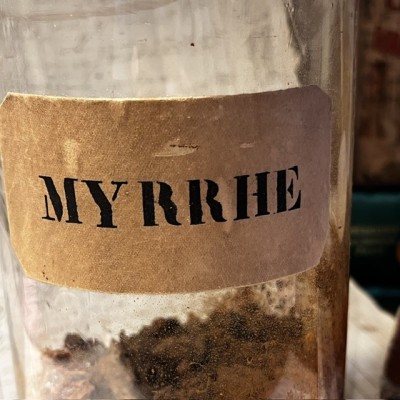
Myrrh
Antique pharmacy bottle - Wide-mouth apothecary jar.
19th-century mouth-blown glass
There is still some product left inside
A fascinating artifact from the history of pharmacology
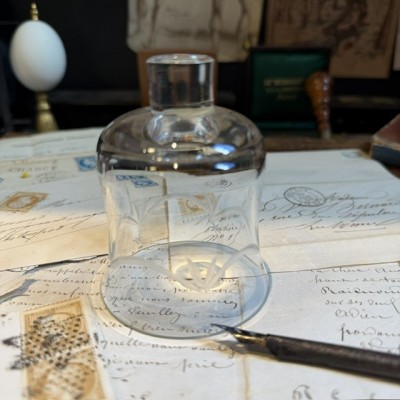
Small antique engraved glass bell
I believe these are antique glass pieces that were originally intended to be placed on a stand.
Repurpose them as small bells to showcase your small objects, such as a small skull, as shown here.
Sold individually
EMPTY
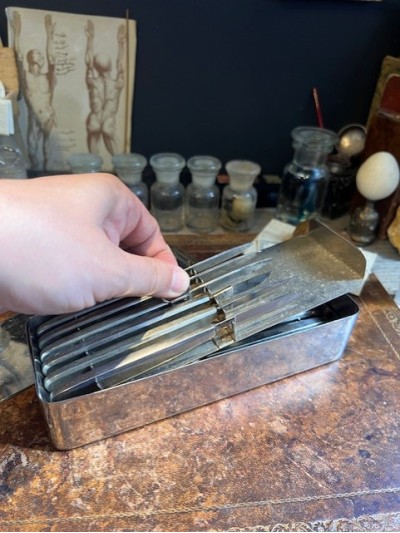
Antique box of scalpels - Surgery from Collin Manufacturer
Late 19th/early 20th century
11 instruments
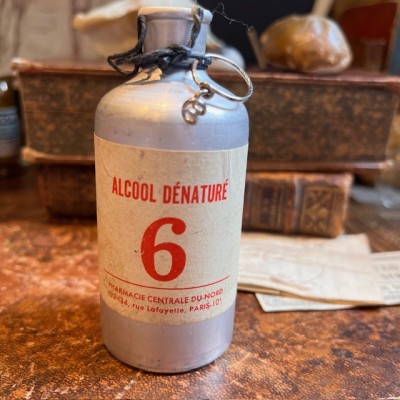
Alcool dénaturé - Alcool à brûler
Denatured alcohol - Methylated spirits
Antique pharmacy bottle - Apothecary
Empty
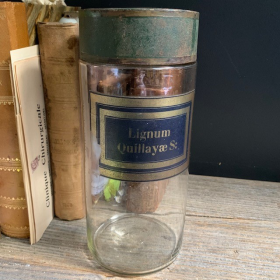
Antique pharmacy jar: Lignum Quillayae Saponaria - Panama wood - 19th century
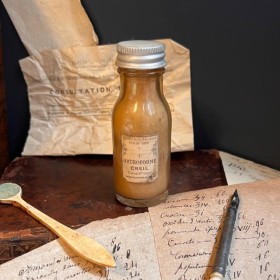
Orthoforme
Antique pharmacy bottle - Droguerie - Apothicaire
Silver medal at Paris 1889
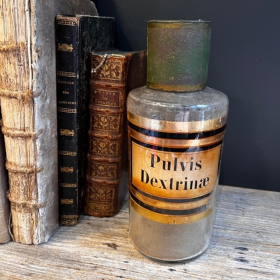
Dextrin powder - Starch - Pulvis Dextrinae
Antique pharmacy bottle
Blown glass
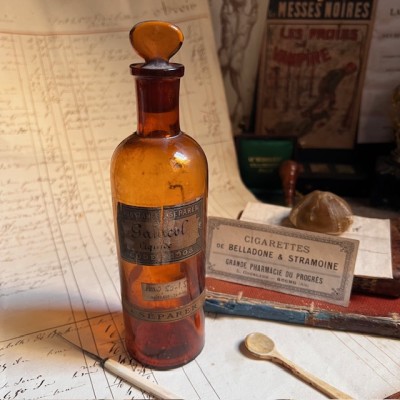
Gaïacol liquide
Antique pharmacy bottle
Green label: SUBSTANCE TO BE SEPARATED - CODEX 1908
This means that this bottle had to be kept separate from the others because it was dangerous in high doses
EMPTY
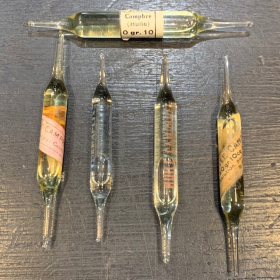
Bulb for hypodermic injection - Camphor (circa 1920)
various manufacturers
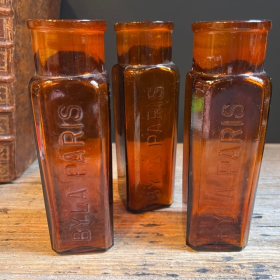
BYLA - Antique Pharmacy bottle in amber glass
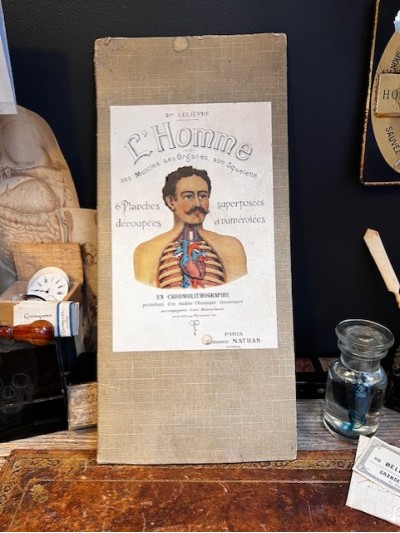
Man - Anatomical chart that can be disassembled
By Fernand Nathan Editeur publisher
Coloured chart with movable, cut-out and superimposed leaves
There are defects on the superimposed boards; the outer board, which was the man's torso, is missing, as are the lungs, which were above the heart. The left hand is missing, the arm being torn.
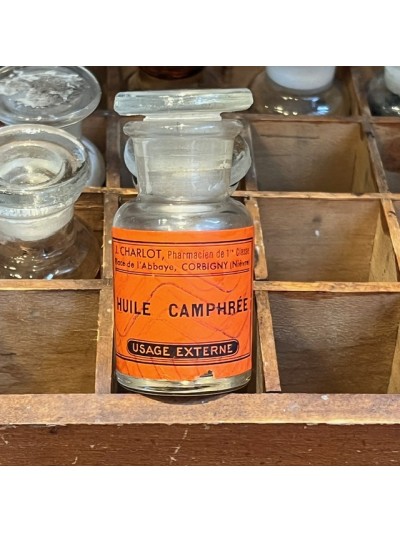
Camphorated oil
Antique pharmacy bottle
Apothecary vial
EMPTY but cap is blocked and bottle will not open
Salmon Opium Cough Lozenges
Vintage tin medicine box - Pharmacy - Apothecary
1918/1920
Opium and morphine at nearly 20mg per day!!
EMPTY