
- New
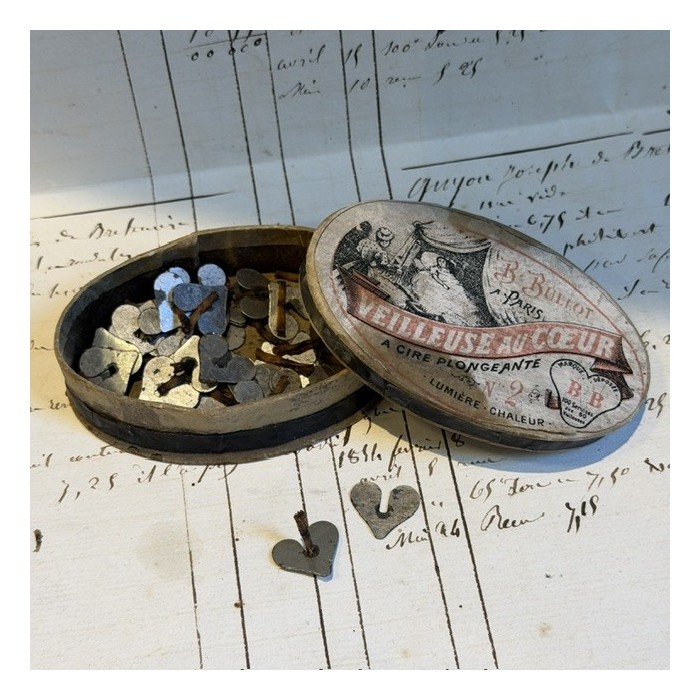
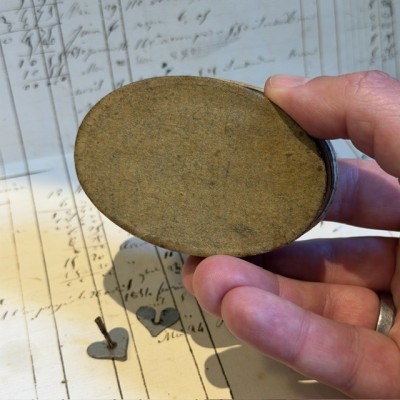
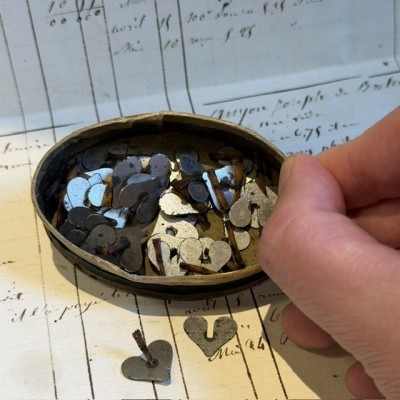
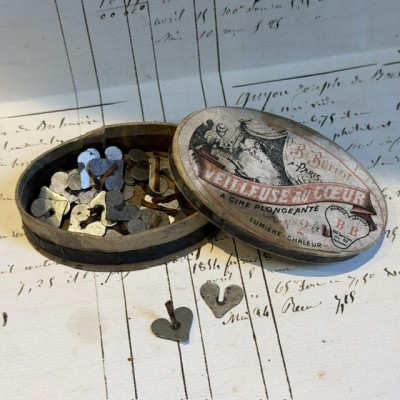
Veilleuse au Cœur – Maison B. Bullot Paris
Wick night light
Late 19th century
Cardboard box
Veilleuse au Cœur – Maison B. Bullot Paris
Wick night light
Late 19th century – Cardboard box
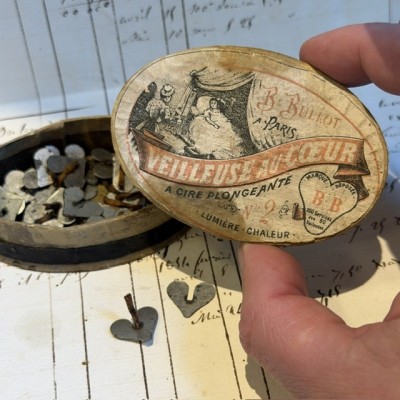
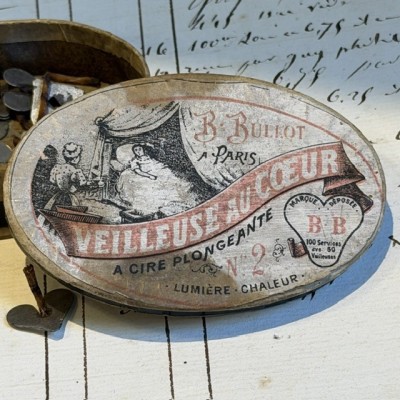
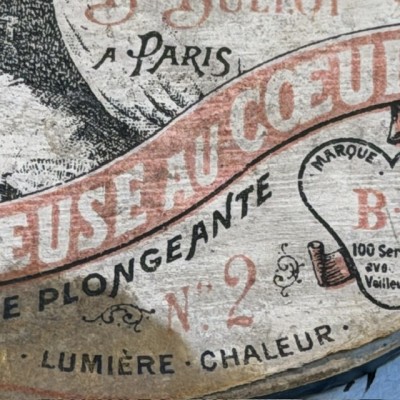
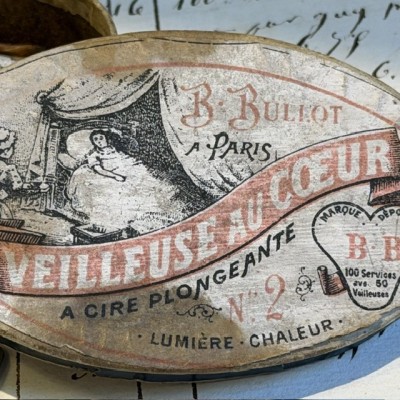
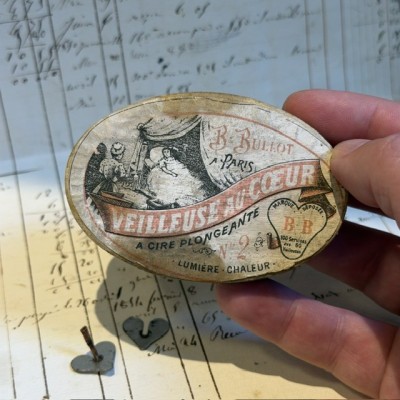
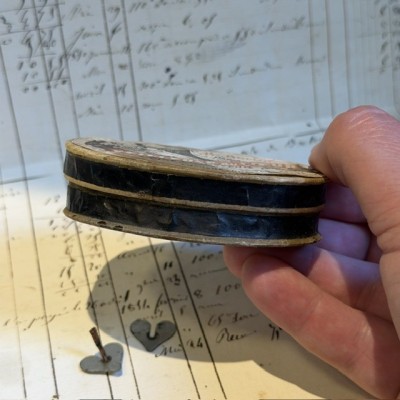
Step back in time to the intimate atmosphere of 19th-century Parisian bedrooms with this authentic “Veilleuses au Cœur” box. Manufactured by B. Bullot in Paris, this oval-shaped cardboard box contained the essential accessories for night-time lighting in the pre-electricity era.
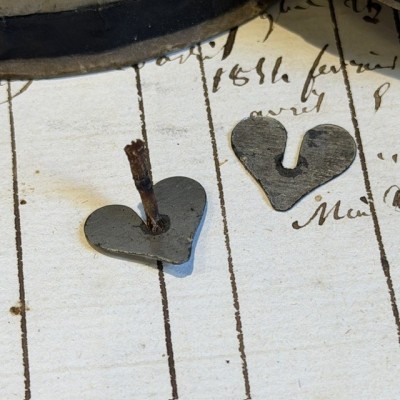
It consists of a weathered cardboard box and a set of floating tinplate holders cut into the shape of a heart. Each holder comes with its original wick made of plant fibres impregnated with wax.
The night light was an ingenious and economical system: the metal holder floated on a thin layer of oil, which in turn rested on water.
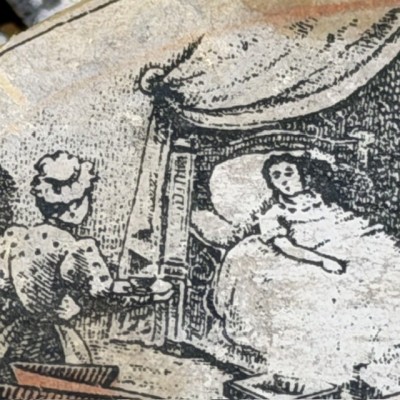
A single small wick provided a soft, reassuring glow for around 10 hours, ideal for keeping watch over a sick person or reassuring a child, as illustrated by the lithograph on the lid.
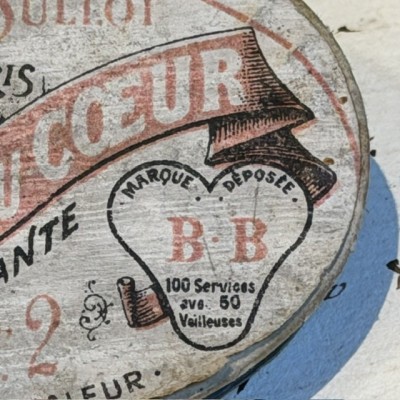
Marked ‘100 Services’ with 50 Night Lights on the lid:
The Service: At the time, a ‘service’ referred to the unit of consumption for one night’s lighting. The box therefore contained 100 ready-to-use wicks. Each evening, the user would prepare a ‘new service’ by fitting a fresh wick onto its holder.
The Nightlight: This is the floating heart-shaped metal holder. The box contains 50 of them because, although reusable, these holders would eventually rust on contact with water or become clogged. The manufacturer, Bullot, thus ensured there was enough material to use up all 100 wicks.
Whilst the glow of these night lights may seem feeble by today’s standards, it was perfectly suited to the 19th century, a time accustomed to twilight and darkness.
In the deep darkness of homes of yesteryear, this subtle glow was enough to outline the contours of a room without disturbing sleep. It was a reassuring presence, a luminous sentinel designed to ‘banish the shadows’ at the bedside of the sick and children.
Stains on the cardboard box

Human jaws in porcelain mounted on a blackened wooden base
Anatomical dental model for dentists
19th century
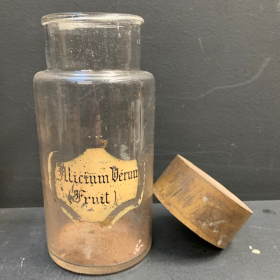
Antique pharmacy jar: Illicium verum (Fruit) / Star anise
Glass pharmacy bottle - XIXth century
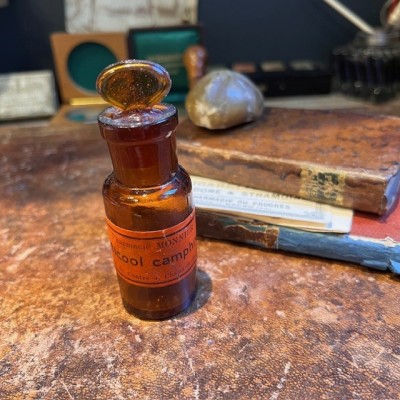
Alcool camphré
Antique pharmacy bottle - Apothecary
empty - The plug is stuck
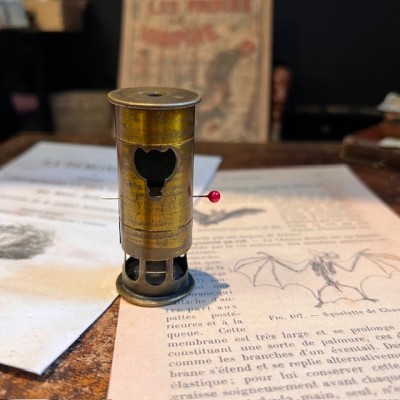
Pocket microscope
Floroscope - Insectoscope in brass
1850's - 1930's
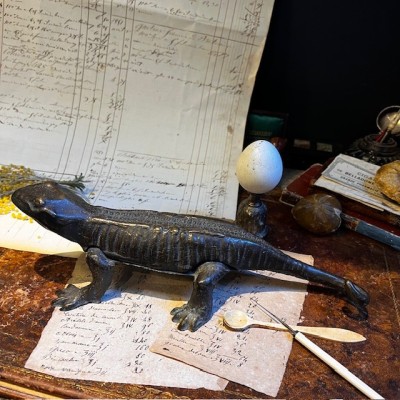
Salamander - Pharmacy corkscrew in bronze
XIXth century

Crin de Florence - Antique suture thread
Catgut
Natural suture thread obtained from the caterpillar of the Bombyx mori butterfly.
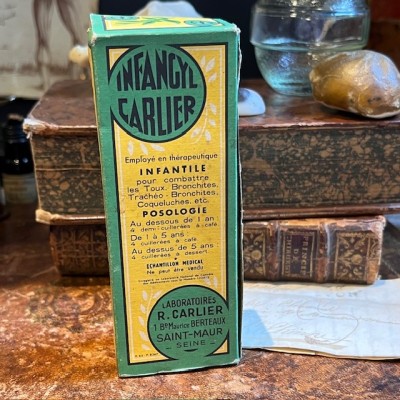
Infangyl Carlier
Antique pharmacy bottle - Apothecary
The box still contains its full, sealed bottle and instructions
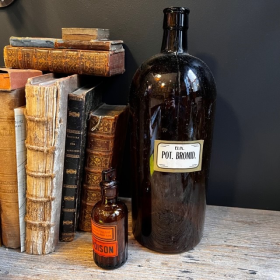
Potassium Bromide Elixir
Antique and large brown English pharmacy bottle
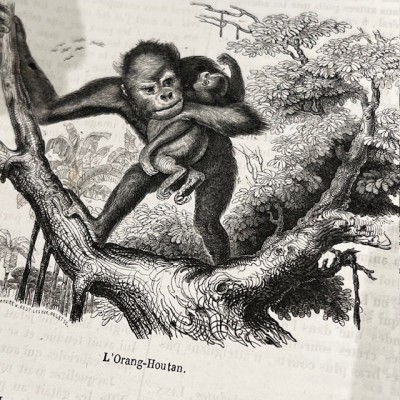
Le Jardin des Plantes
Description and habits of the mammals in the menagerie and the Natural History Museum
By Boitard - Antique book circa 1851
A beautiful snapshot of the museum and its garden in the mid-19th century, featuring interiors of the museum that no longer exist today.
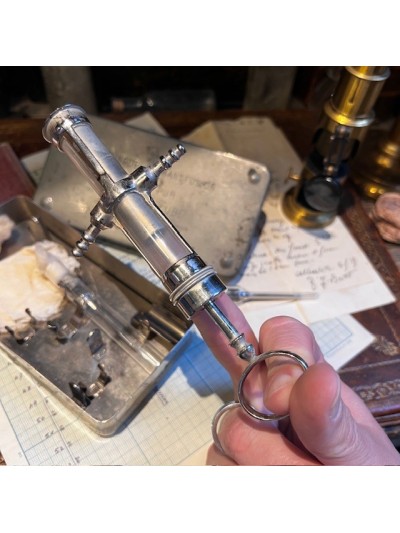
Doctor Louis Jubé pure blood transfusion syringe
For arm-to-arm transfusions
In its metal box
Around 1925/1930

Essence of star anise
Antique pharmacy bottle
Apothecary vial
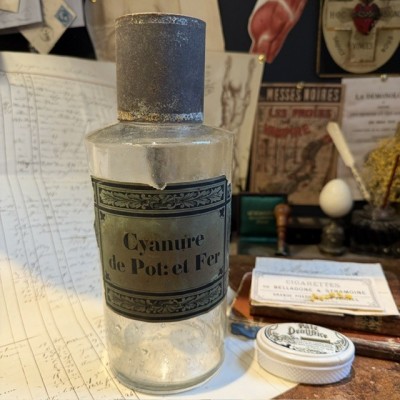
Potassium Cyanide and Iron
Also known as yellow potassium prussiate
Antique 19th-century pharmacy bottle
EMPTY
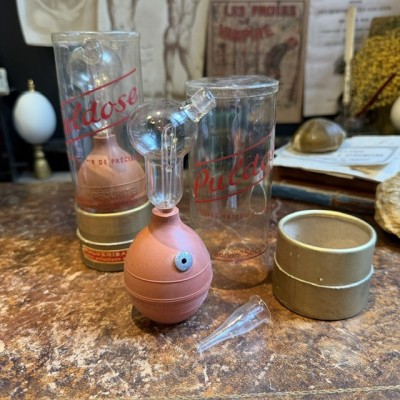
Puldose Nasal Spray for aqueous solutions - Antique remedy
In its Plastic box
Used in otolaryngology, it was intended for nasal or oral sprays in the treatment of colds and antiseptic treatment of the respiratory tract.
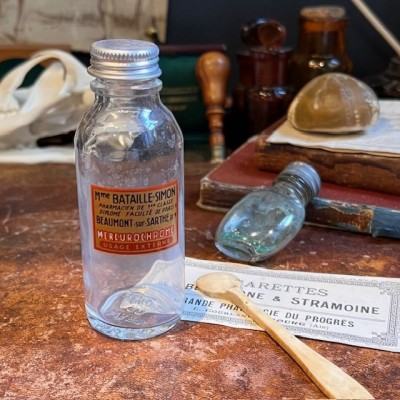
Mercurochrome
Antique pharmacy bottle - Apothecary
Mrs Bataille-Simon, First Class Pharmacist in Beaumont sur Sarthe - Tel 9
Veilleuse au Cœur – Maison B. Bullot Paris
Wick night light
Late 19th century
Cardboard box