

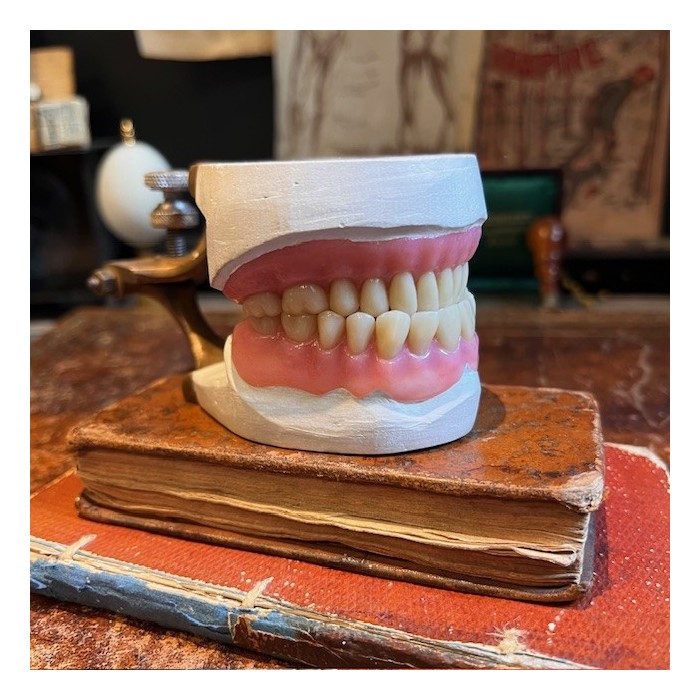
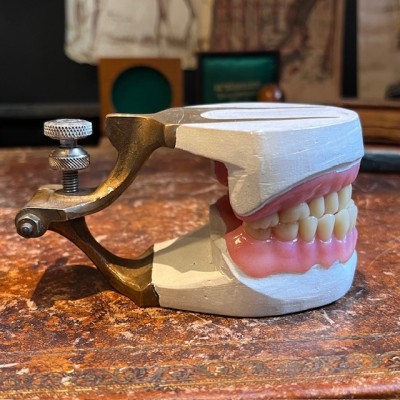
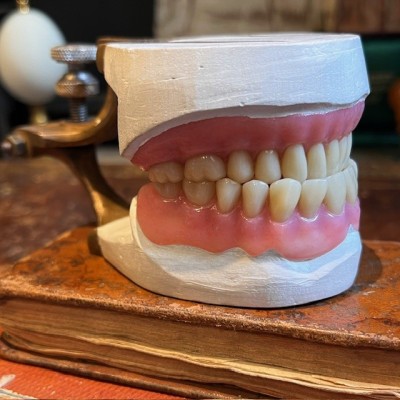
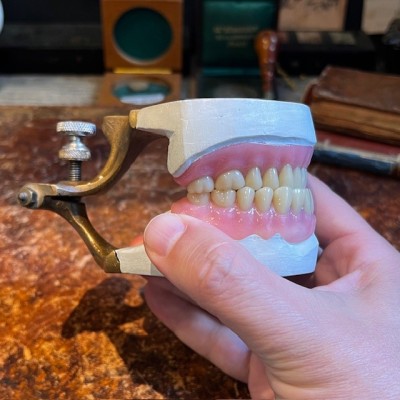
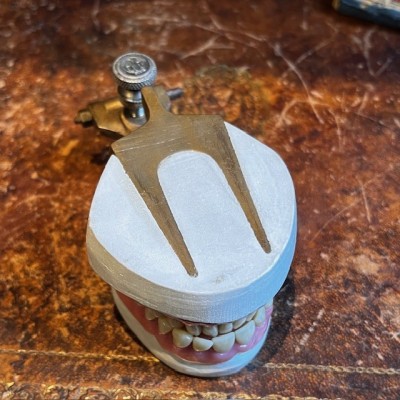
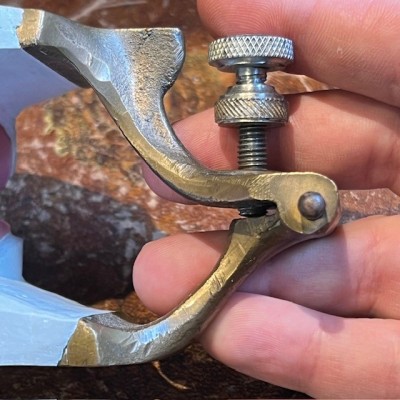
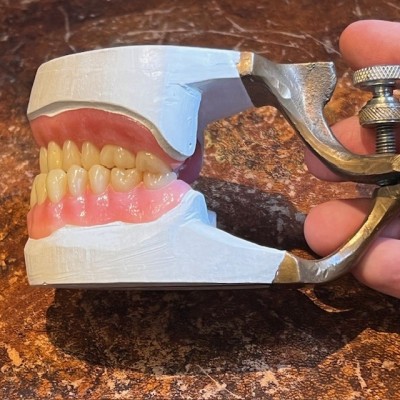
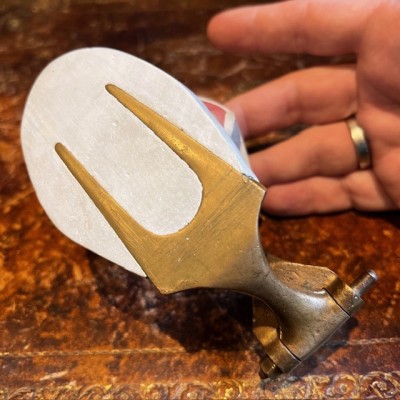
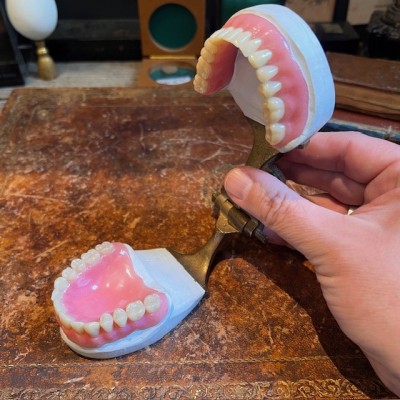
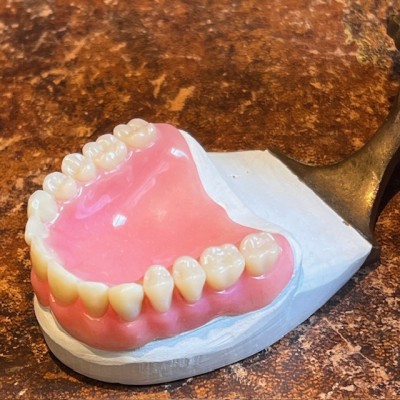
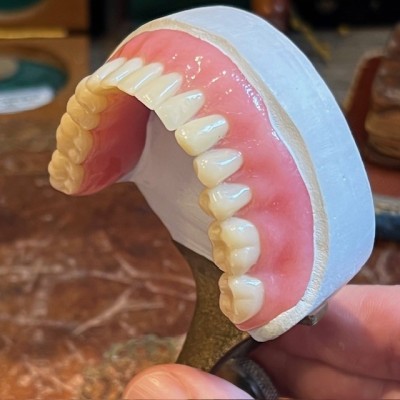
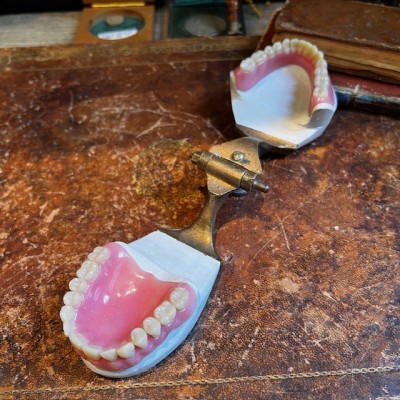
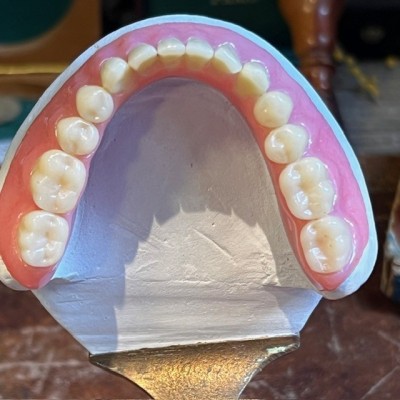
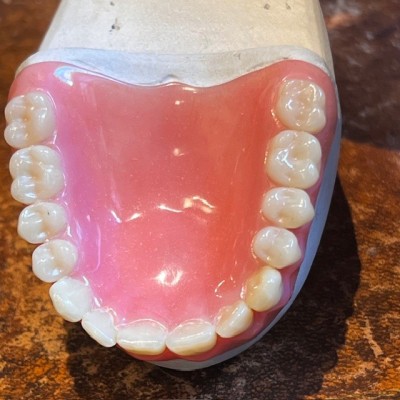
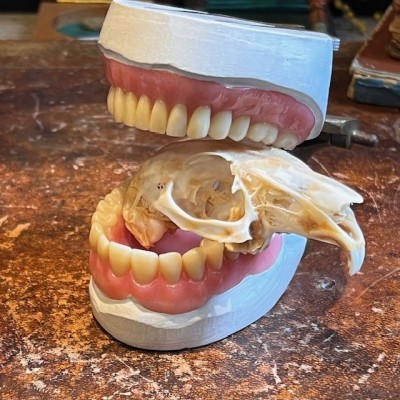
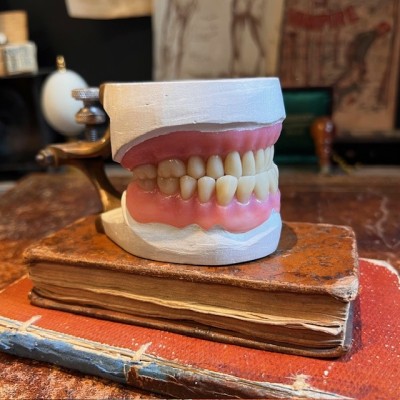
Collector’s bronze dental articulator
Circa 1920 for the bronze frame
The plaster and resin forming the gums and teeth are modern.
Collectible bronze dental articulator
Circa 1920 for the bronze mount
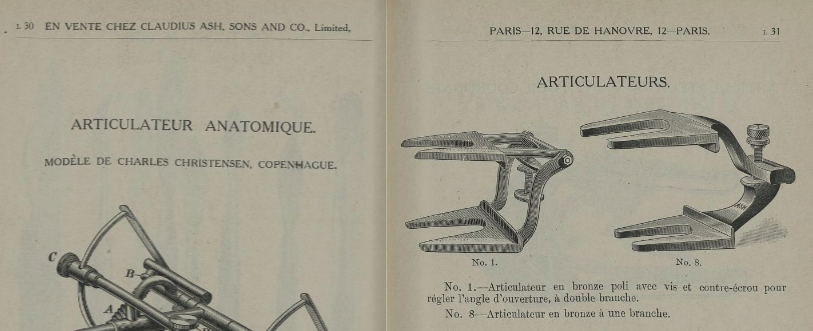
An articulator is a mechanical device used in dentistry to which models of the upper and lower teeth are attached; it reproduces the recorded positions and aids in the manufacture of removable devices such as dentures, as well as fixed prosthetic restorations such as crowns.
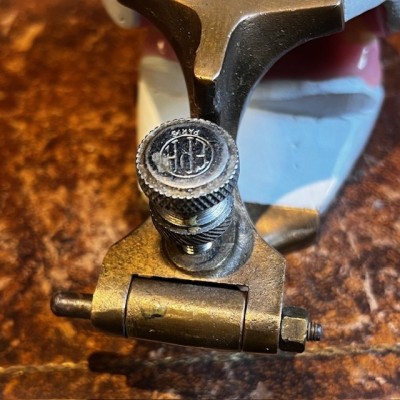
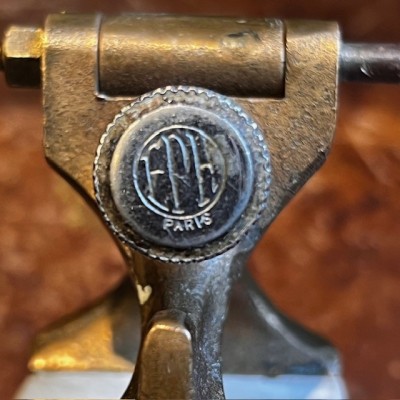
This example bears the stamp ‘E.P.A. Paris’ (or E.P.H.) on its adjustment knob, the mark of a small Parisian precision engineering workshop that no longer exists. In an era when plastic did not exist, these instruments were designed to last the practitioner’s entire career.
The plaster and resin forming the gums and teeth are recent.
These indestructible bronze models can still be used for practical work in dental studies.
Dimensions: 12x7cm Height: 6.5cm
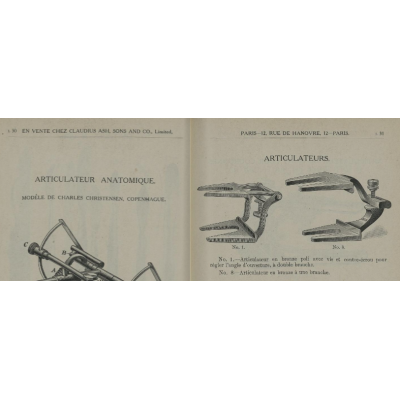
This type of model with an adjustable knob can be found in the 1921 catalogue of Claudius Ash Sons, and Co.

Human jaws in porcelain mounted on a blackened wooden base
Anatomical dental model for dentists
19th century
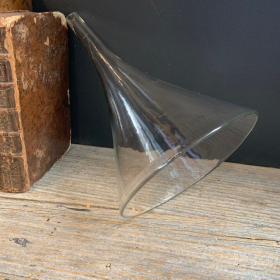

Grams / Tablespoons - Graduated bottle
in French: Grammes / Cuillères à soupe
Antique medicine bottle
Apothecary
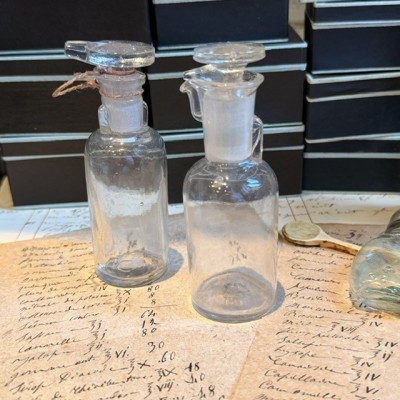
Dropper Bottle
Antique pharmacy bottle - 1920-30's
EMPTY
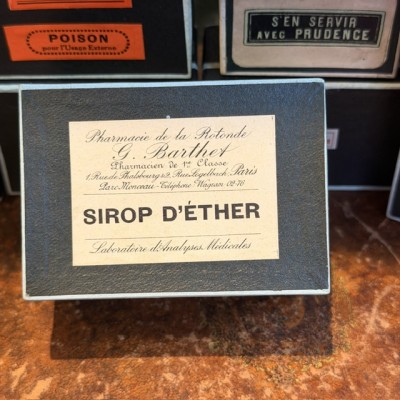
Antique labels in a pharmacy box for cures made of canvas cardboard
Label: Sirop d'Ether
The pharmacist used his boxes of medicine to put away the labels he would then put on the bottles that he would resell to his customers.
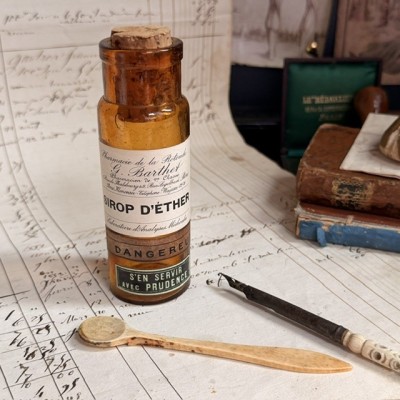
Ether syrup
Antique pharmacy bottle
EMPTY
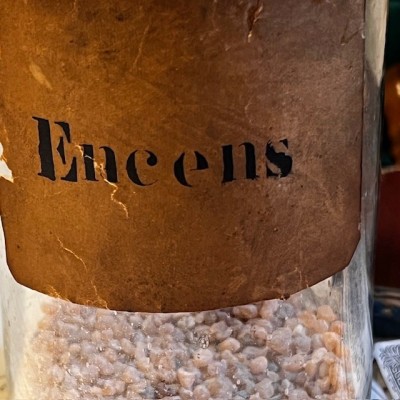
Incense
Antique pharmacy bottle - Wide-mouth apothecary jar.
19th-century mouth-blown glass
There are still some product inside.
A fascinating artifact from the history of pharmacology
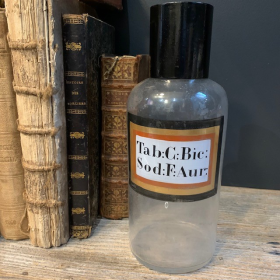
Antique pharmacy jar: Sodium bicarbonate and Gold Flower tablets
Glass pharmacy bottle - XIXth century
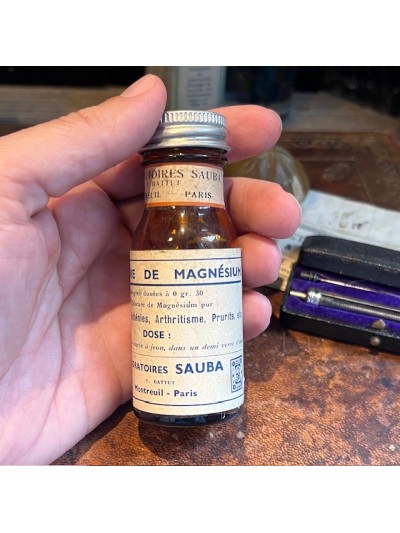
Chlorure de magnésium
Antique pharmacy bottle
Apothecary vial
EMPTY
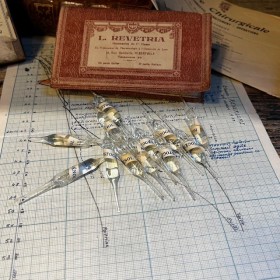
Antique ampoule for hypodermic injection
Histogénol - (circa 1900)
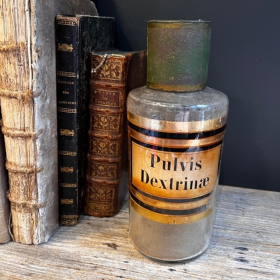
Dextrin powder - Starch - Pulvis Dextrinae
Antique pharmacy bottle
Blown glass
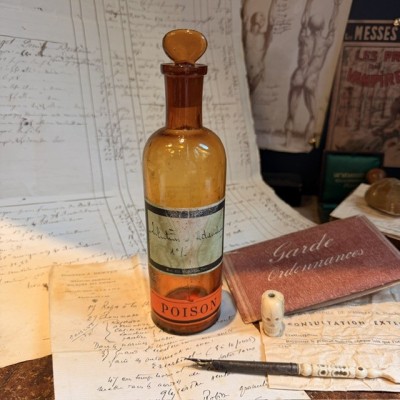
Adrenaline Solution at 1‰
Antique pharmacy bottle
Label leftovers: TO BE SEPARATED and POISON label
This means that this bottle had to be kept separate from the others because it was dangerous - POISON
EMPTY
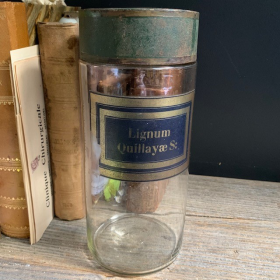
Antique pharmacy jar: Lignum Quillayae Saponaria
Panama wood - 19th century jar
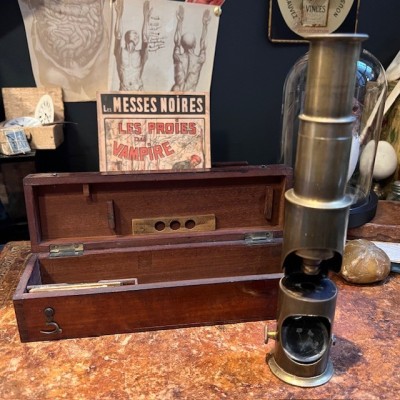
Antique and large drum microscope
In it's mahogany wooden box
For botanist, entomologist - XIXth century
This is a larger model than those usually found on the market
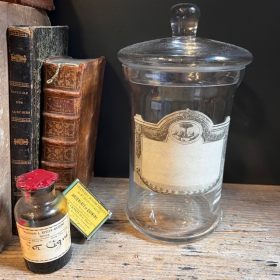
Herbalist's or Pharmacist's jar
Antique blank label of the XVIIIth century
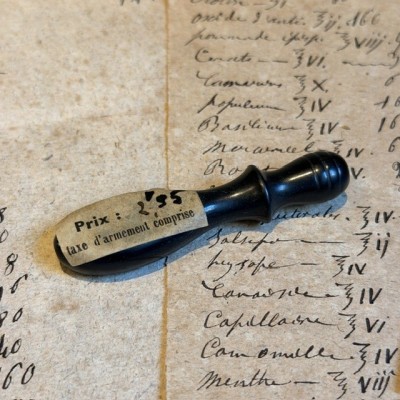
Ebonite cannula tip
Tips for enema or medical irrigation cannulas. New Old Stock
Marketed between May 1939 and sometime in 1940
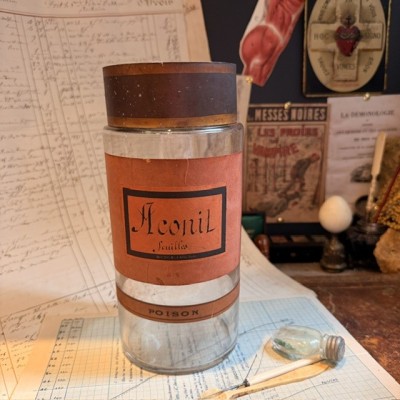
Aconit leaves - POISON
Antique pharmacy bottle - Wide-mouth apothecary jar.
19th-century mouth-blown glass
Red POISON label
Signaling to the pharmacist that it is imperative to keep apart the other substances in the cabinet of toxic substances, the famous poison cabinet.
A fascinating testimony to pharmacology
It comes from an old cellar-laboratory in a Parisian pharmacy. The bottles had not moved since the late 1950s on the shelves. The cellar had served as a laboratory for medical analyses and a laboratory for magistral preparations of the pharmacy from 1900 until around 1950.
Collector’s bronze dental articulator
Circa 1920 for the bronze frame
The plaster and resin forming the gums and teeth are modern.