
- New
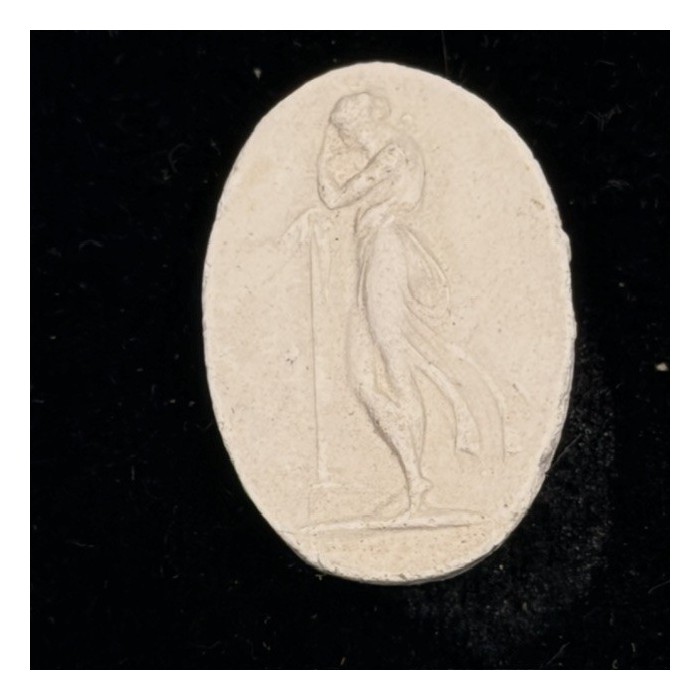
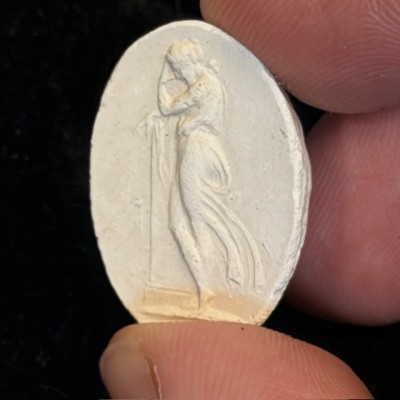
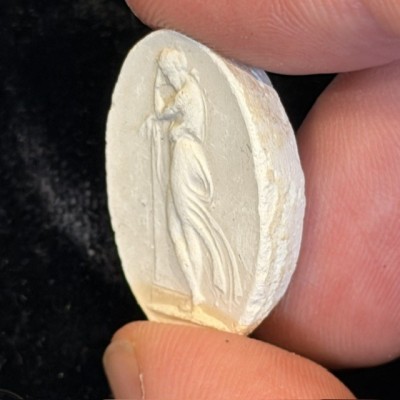
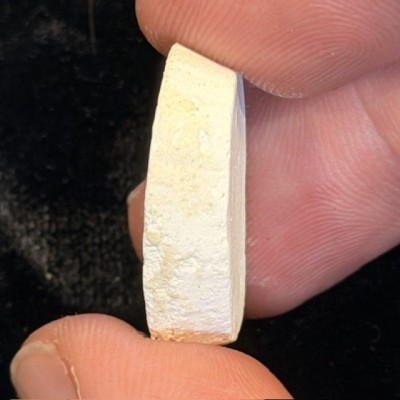
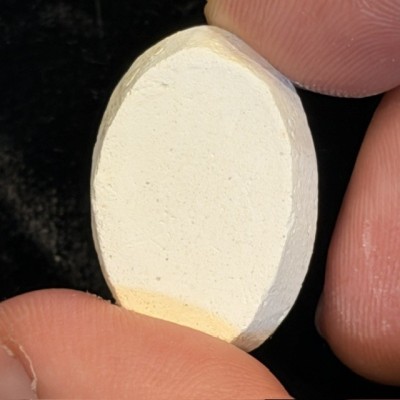
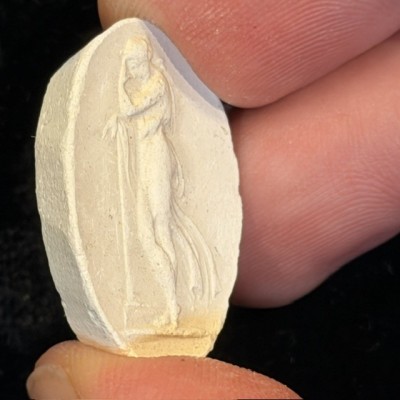
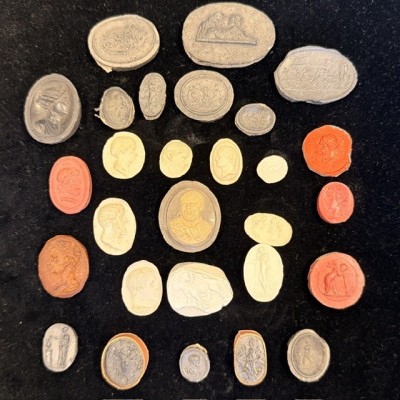
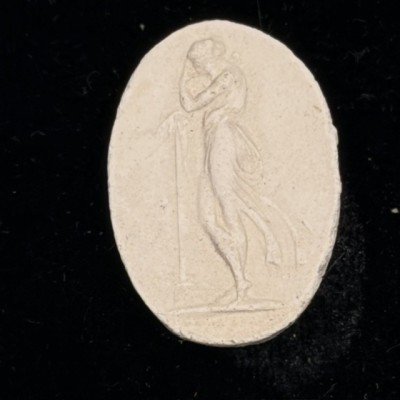
Antique intaglio and cameo print from the Grand Tour of the 19th century
White plaster
True testimony of the Grand Tour carried out by the aristocrats in the 19th century
Profiles in the antique style, mythological scenes or Greco-Roman deities
Antique intaglio and cameo print from the Grand Tour of the 19th century
White plaster
A true testimony of the Grand Tour, this journey of aristocratic education undertaken by the enlightened European youth from the 18th century and the beginnig of the 19th century (travel which also gave rise to the word "tourist").
During their stay in Italy, these wealthy travelers acquired, according to their means, pieces of art and antiques or reproductions such as here these prints, medals and cameos in the antique style being very popular.
These prints were part of dactyliothèques: collections of prints that reproduce the most beautiful engraved gems of antiquity.
White cast plaster was the classic, academic material par excellence. It offered a perfect and clear restitution of the details sculpted by the glypticians (stone engravers) of Antiquity.
Intaglio or Cameo:
The Intaglio is an engraved fine stone. When plaster is poured inside, the material fills the cavity: the resulting print therefore emerges in relief. This is the case of these prints, which allow you to admire the original design of the gem.
The Cameo: A gem sculpted in relief. An impression taken from a cameo will, on the contrary, give a debossed print.
The prints were often lined with a thin strip of two-tone paper enhanced by a golden border on the edge. This banding was intended to protect by holding the edge of the plaster to prevent chipping.
The prints presented here no longer have this banding.
Subject: Profiles in the antique style, mythological scenes or Greco-Roman deities.
Prices range from €15 to €35 (The Gryphon slaying a snake)
The fingerprints are all in very different sizes, from 1.5cm to 3cm
A:2.6cm B:3cm C:2.5cm D:2.6cm E:2.2cm F:1.5cm G:2.1cm H:1.9cm I:2.2cm
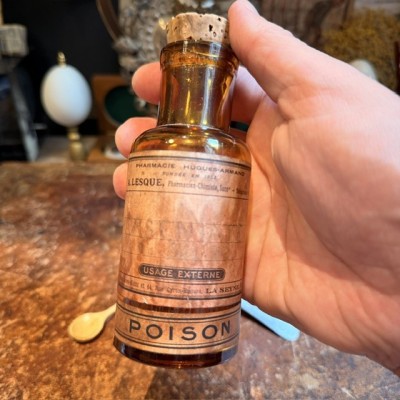
Arséniate de Soude
Antique pharmacy bottle.
Red ‘POISON’ label
Indicating to the pharmacist that it must be stored separately from other substances in the cabinet for toxic substances, the famous ‘poison cabinet’.
It comes from the former cellar-laboratory of a Parisian pharmacy. The bottles had not been moved from the shelves since the late 1950s. The cellar had served as a medical analysis laboratory and a laboratory for the pharmacy’s compounded preparations from 1900 until around 1950.
Date: Begining of 20th century
EMPTY
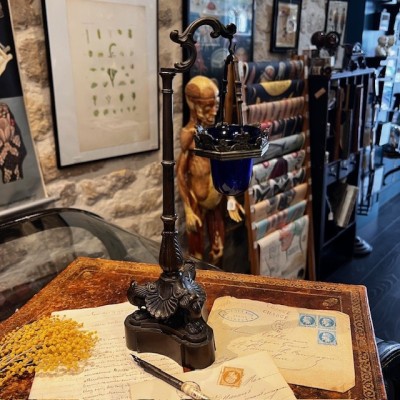
Louis Philippe period hanging table lamp
Period: July Monarchy around 1835-1845, still in transition from Rococo to the previous Restoration period.
Bronze with medal patina and cobalt blue blown glass.
Former oil night lamp.
Beautiful presence and intact patina, complete system.
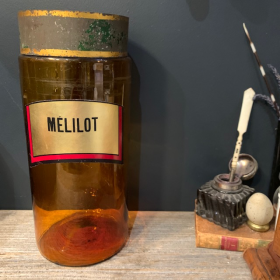
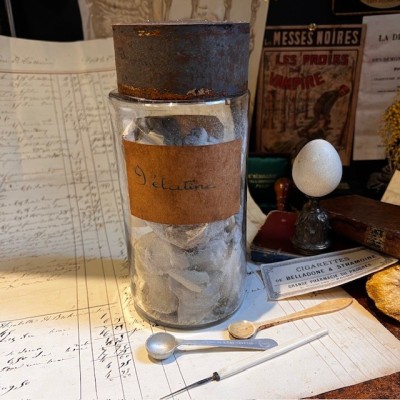
Gelatine
Antique pharmacy bottle - Wide-mouth apothecary jar.
19th-century mouth-blown glass
There is still some product left inside
A fascinating artifact from the history of pharmacology
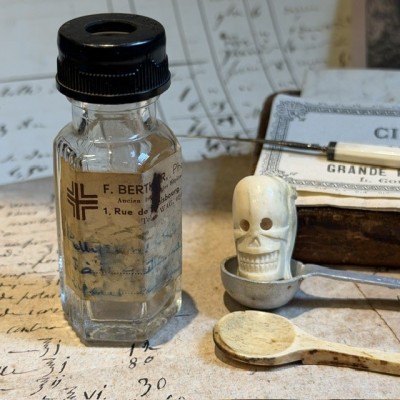
Dropper No. xx05
Antique pharmacy bottle
He's lost his rubber duck
EMPTY
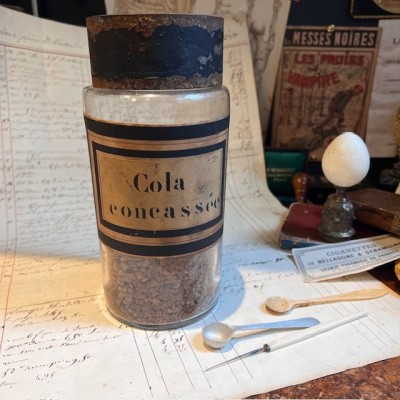
Crushed cola nuts
Antique pharmacy bottle - Wide-mouth apothecary jar.
19th-century mouth-blown glass
There is still some product left inside
A fascinating artifact from the history of pharmacology
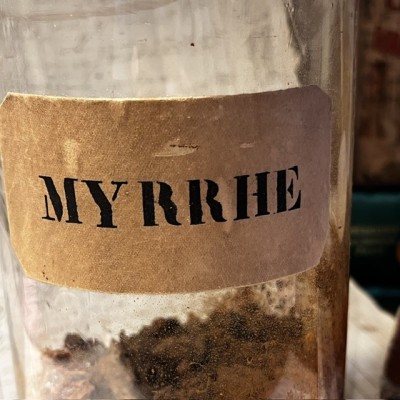
Myrrh
Antique pharmacy bottle - Wide-mouth apothecary jar.
19th-century mouth-blown glass
There is still some product left inside
A fascinating artifact from the history of pharmacology

Iodine dye
Antique pharmacy bottle
With the inscription Teinture d'Iode molded in glass
EMPTY
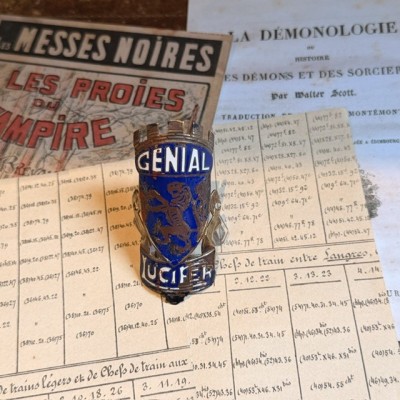
"Génial Lucifer"- Vintage bicycle headbadge
Brass & Blue Enamel to be placed on the bicycle tube at the front
The 1930s
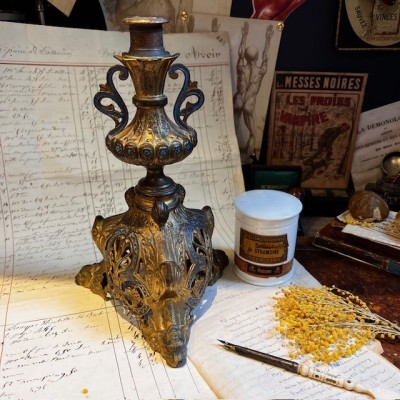
Tripod Torch Holder with Coat of Arms - Napoleon III-era Troubadour style in brass
This style, known as ‘Troubadour style’, reintroduced fantastical animals and medieval imagery into the decorative arts.
19th century
Sold without candle
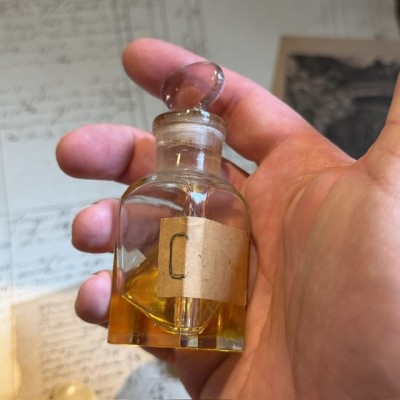
Cèdre - Cedarwood Oil
Antique pharmacy bottle
There is some product left, but the stopper is stuck
The writing has faded, but in oblique light one can make out CEDRE

Tétra-chlorure de Carbone - Carbon Tetrachloride
Antique pharmacy bottle with old label POULENC FRERES circa 1928
It comes from an old cellar-laboratory in a Parisian pharmacy. The bottles had not moved since the late 1950s on the shelves. The cellar had served as a laboratory for medical analyses and a laboratory for magistral preparations of the pharmacy from 1900 until around 1950.
EMPTY
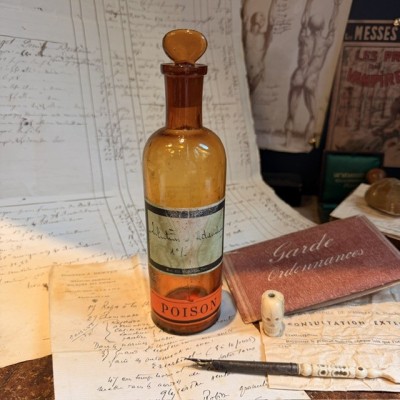
Adrenaline Solution at 1‰
Antique pharmacy bottle
Label leftovers: TO BE SEPARATED and POISON label
This means that this bottle had to be kept separate from the others because it was dangerous - POISON
EMPTY
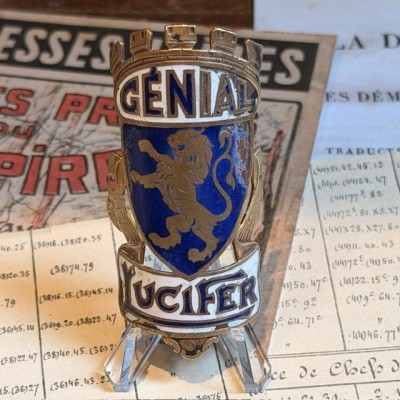
"Génial Lucifer"- Vintage bicycle headbadge
Brass & Blue Enamel to be placed on the bicycle tube at the front
The 1930s
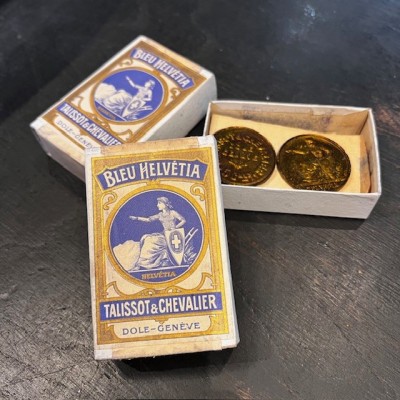
Antique Laundry blue box - Helvetia Blue from Talissot & Chevalier in Dôle and Geneva
Period: 1890-1905
Box containing 6 gold-plated “coins” made of blue wash, resembling the iconography of Swiss coins and medals from the late 19th and early 20th centuries.
Beautiful blue and gold illustration on the box.
Your box will be sealed: never opened in 120 years
UNOBTAINABLE
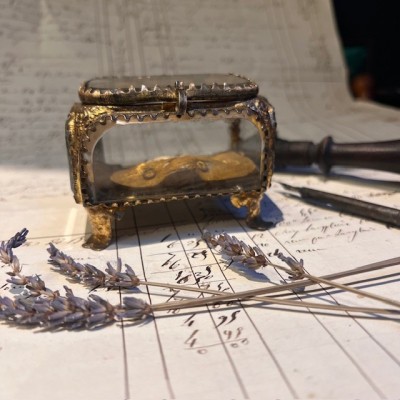
Reliquary box - 19th century
Jewelry box
Antique intaglio and cameo print from the Grand Tour of the 19th century
White plaster
True testimony of the Grand Tour carried out by the aristocrats in the 19th century
Profiles in the antique style, mythological scenes or Greco-Roman deities