

- New
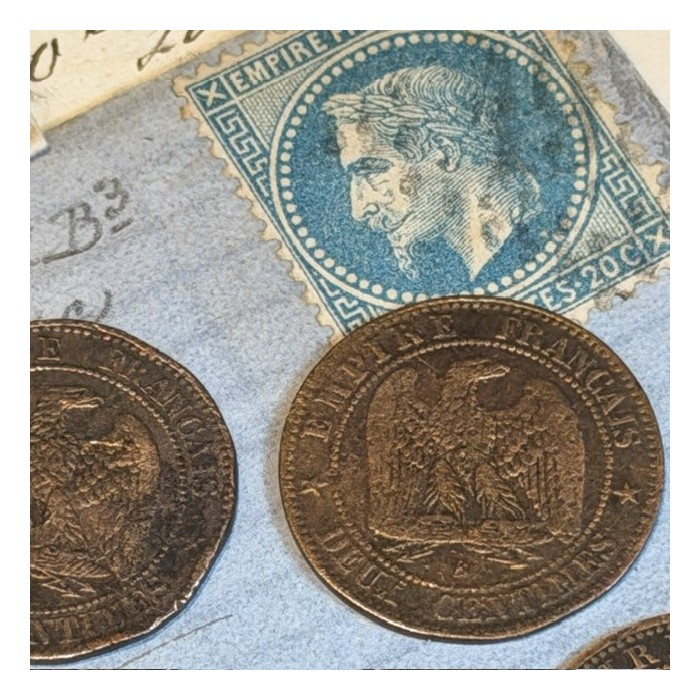
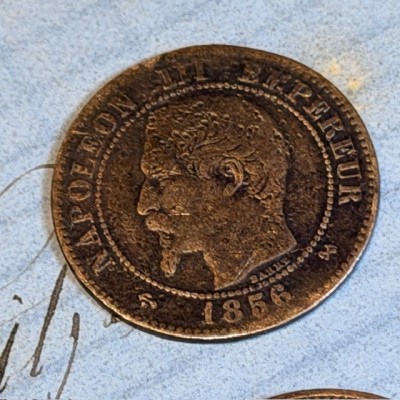
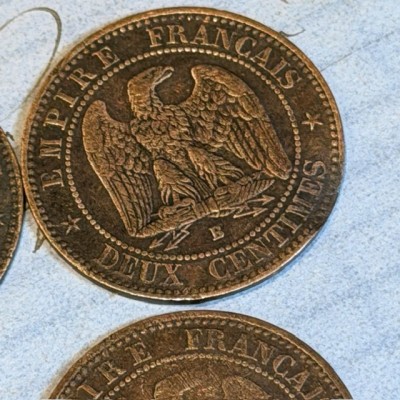
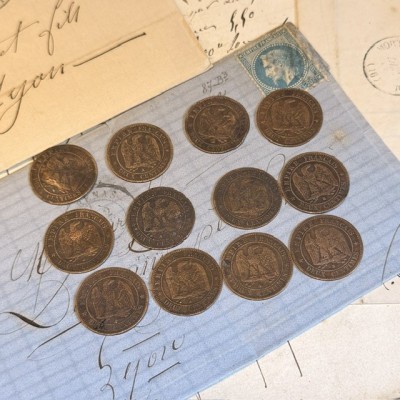
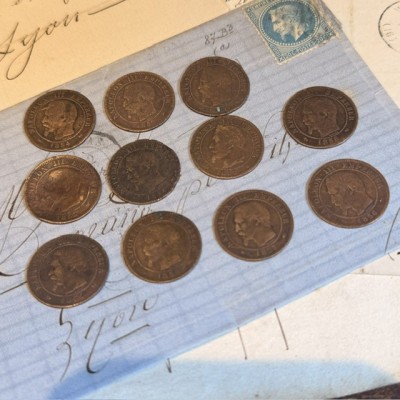
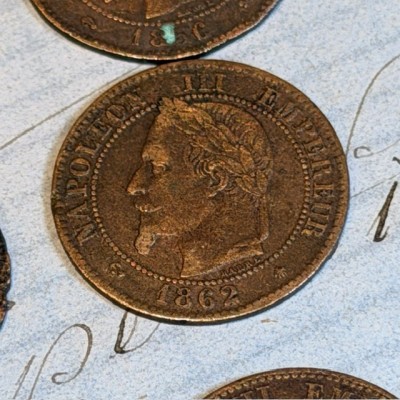
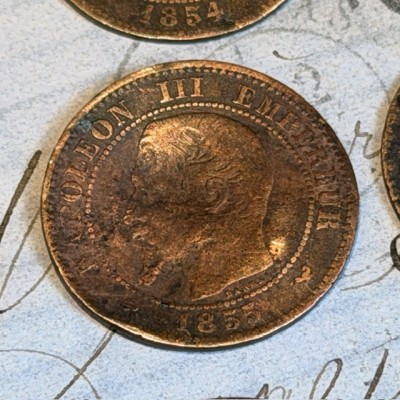
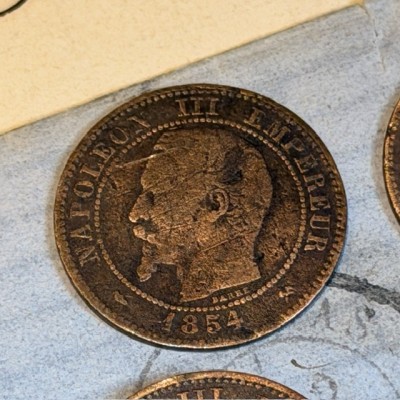
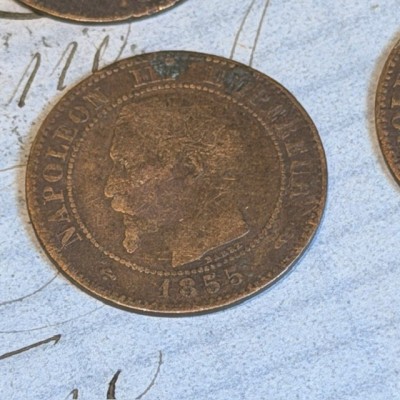
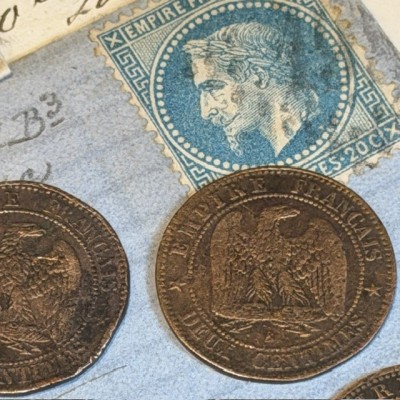
Emperor Napoleon III coin - Second Empire - 2 cents
2-cent coin - Dated 1852 - 1870
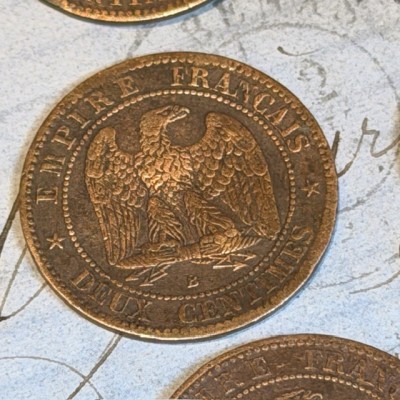
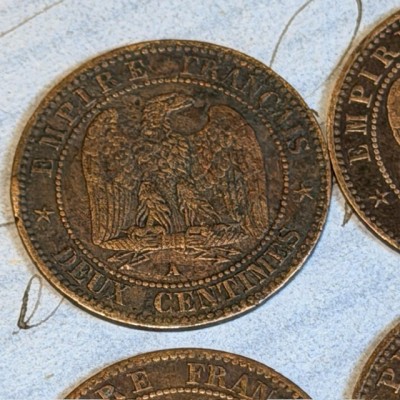
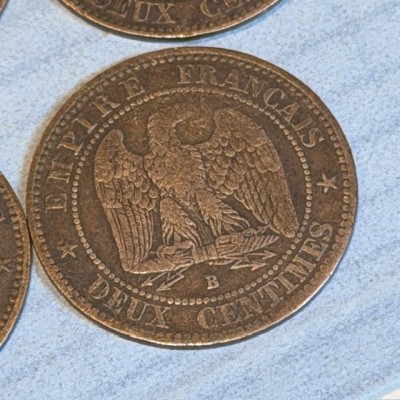
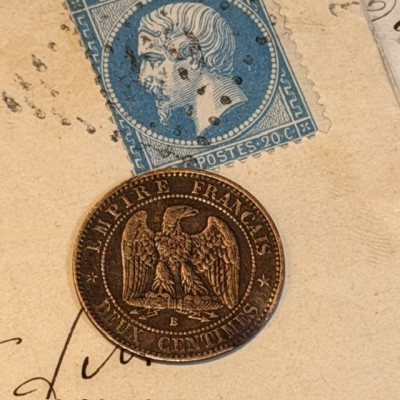
Authentic bronze period coin from the Second Empire, minted during the reign of Emperor Napoleon III. It features the profile of the Emperor on the obverse (bareheaded or gilt-plated) and the imperial eagle on the reverse. Each copy has a unique historical patina and original reliefs preserved from the 19th century.
All coins are different
Emperor Napoleon III coin - Second Empire - 2 cents
2-cent coin - Dated 1852 - 1870
Authentic bronze coin of 2 cents minted during the reign of Napoleon III.
Major symbol of daily life under the Second Empire.
Each piece bears the unique traces of its history and the passage of time, offering a natural patina of the period, ranging from golden bronze to dark chocolate.
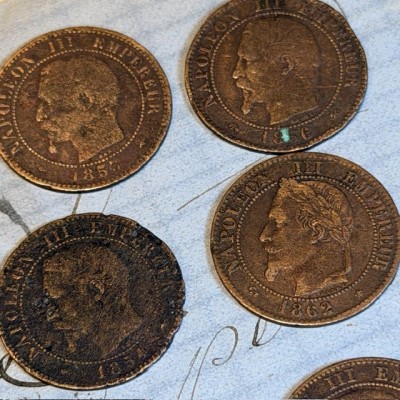
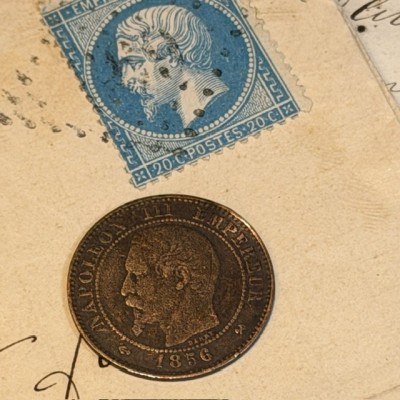
Front panel: Obverse of the coin
Profile of the Emperor: Portrait of Napoleon III facing left, engraved after the original work by Jean-Jacques Barre (Engraver general coins).
Circular mention "NAPOLEON III EMPEREUR"
Variant: The coins can be either bareheaded of the Emperor or crowned with laurels.
Presents, according to the arrivals, the Bare head model (struck from 1853 to 1861) or the Laureate head (adopted from 1862 on bronze coins).
The laurel wreath is inspired by the Roman tradition to celebrate the military victories of the Emperor, notably the Italian Campaign of 1859 (victories of Magenta and Solferino) as well as the annexation of Savoy and Nice to France in 1860.
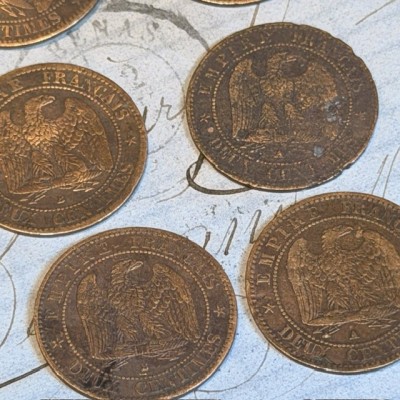
Back side: Reverse of the coin
The Imperial Eagle: Central motif representing the Roman eagle with outstretched wings, resting on the lightning of Jupiter, emblem of power, sovereignty and victory of the Napoleonic regime.
Legends: Surrounded by the mention "FRENCH EMPIRE" and the face value "TWO CENTS".
Various minting workshops: Monetary workshop letters visible at the base (e.g., A for Paris, B for Rouen)
Material: Bronze (Alloy of copper, tin and zinc established by the reform of 1852)
Diameter: 20 mm (2 cm)
Weight: About 2 g
Engraver: Jean-Jacques Barre
Attention: As these are old period coins, each copy is unique, all the pieces are different and have their own nuances of patina and circulation marks.
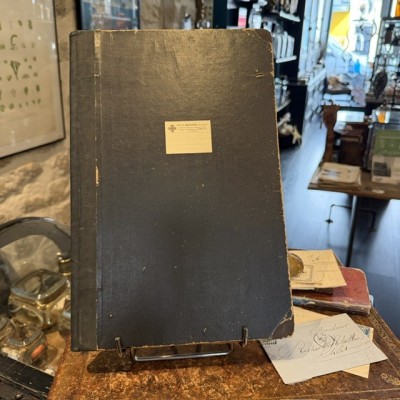
Notebook – Order book from the Berthier Pharmacy in Paris
Writing on the first four pages only; the rest is blank
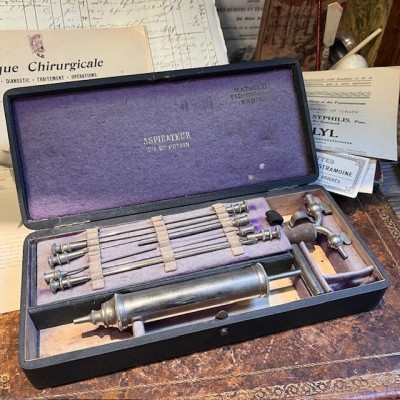
Dr Potain vacuum cleaner in its case
Late 19th century - 1885-1894
Antique medical instrument from manufacturer MATHIEU in Paris
non-functional
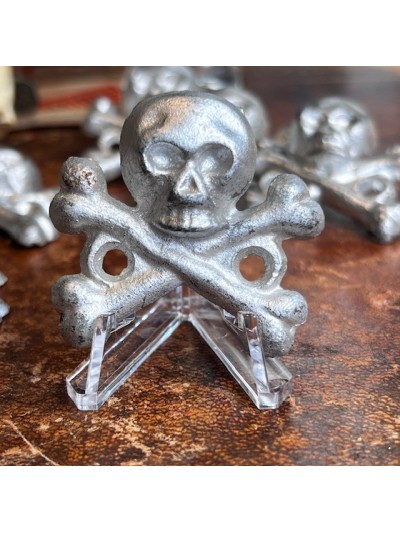
Antique Skull and crossbones - Accessory for coffin handle
1900-1930 period
Skull and crossbones
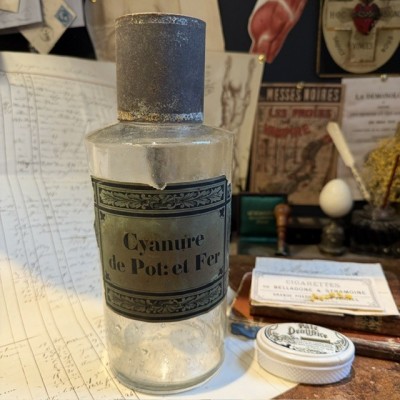
Potassium Cyanide and Iron
Also known as yellow potassium prussiate
Antique 19th-century pharmacy bottle
EMPTY
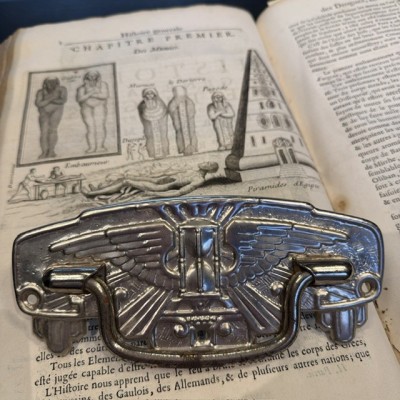
Antique Chrome-plated metal coffin handle
Winged hourglass motif
Art Deco period – 1925–1935
Some signs of oxidation on the handles
Brand new from the period; it has never been installed
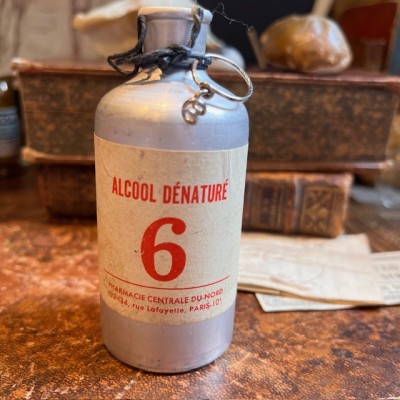
Alcool dénaturé - Alcool à brûler
Denatured alcohol - Methylated spirits
Antique pharmacy bottle - Apothecary
Empty
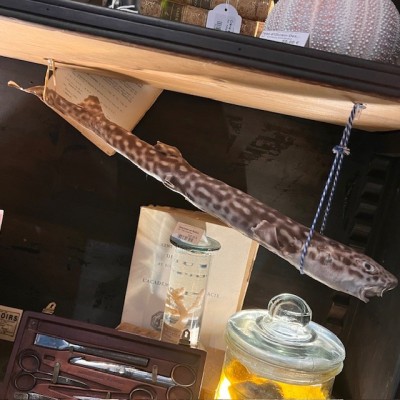
Naturalized Small-spotted catshark
Scyliorhinus canicula
Unprotected species - Old taxidermy: visible suture under the belly and on the left side near the mouth
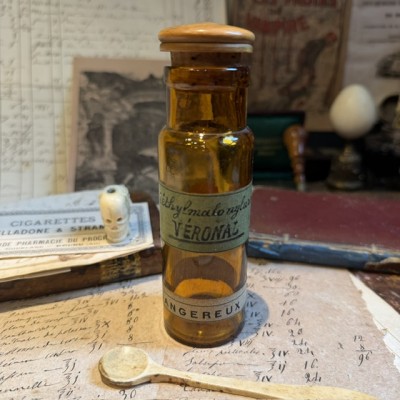
Veronal - Barbiturates - Diethylmalonylurea
Antique amber glass bottle, with a boxwood and cork stopper.
Label: DANGEROUS
Indicating to the pharmacist that it must be stored separately from other substances in the cabinet for toxic substances, the famous ‘poison cabinet’.
It comes from the former cellar-laboratory of a Parisian pharmacy. The bottles had not been moved from the shelves since the late 1950s. The cellar had served as a medical analysis laboratory and a laboratory for the pharmacy’s compounded preparations from 1900 until around 1950.
EMPTY
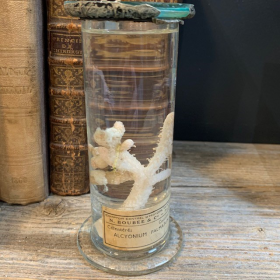
Museum jar - Wet specimen
Soft coral Alcyonium palmatum
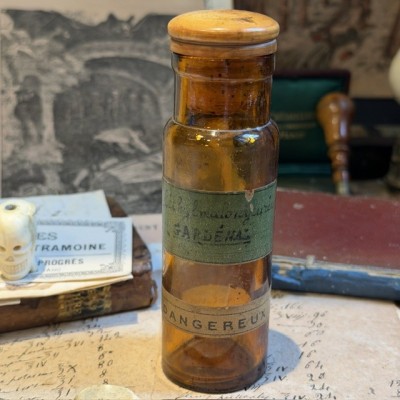
Gardénal - Phenobarbital - Barbiturates
Phényléthylmalonylurée
Antique amber glass bottle, with a boxwood and cork stopper.
Label: DANGEROUS
Indicating to the pharmacist that it must be stored separately from other substances in the cabinet for toxic substances, the famous ‘poison cabinet’.
It comes from the former cellar-laboratory of a Parisian pharmacy. The bottles had not been moved from the shelves since the late 1950s. The cellar had served as a medical analysis laboratory and a laboratory for the pharmacy’s compounded preparations from 1900 until around 1950.
EMPTY
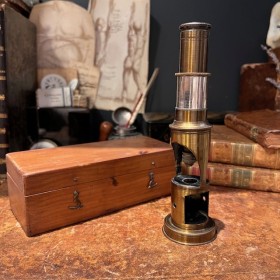
Antique drum microscope for botanist, entomologist
Mirror missing
Late 19th century, early 20th century
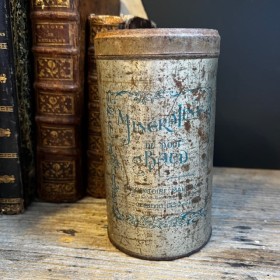
Mineraline by Dr C. Baud
Antique tin pharmacy box
Powder or talcum powder for children's toiletries
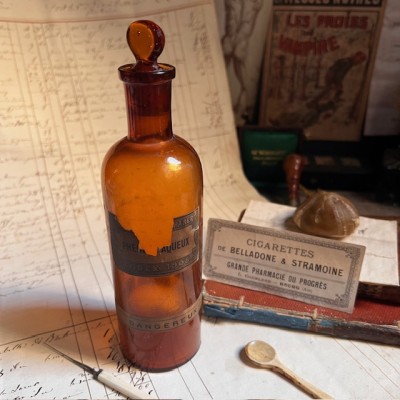
Phénol Aqueux
Antique pharmacy bottle
Green label: SUBSTANCE TO BE SEPARATED - CODEX 1908
This means that this bottle had to be kept separate from the others because it was dangerous - POISON
EMPTY

Lower part of the lower mandible of a horse jaw
Antique model from Maison Auzoux in Paris
Paper-mâché pedagogical model
Model A - 9 months
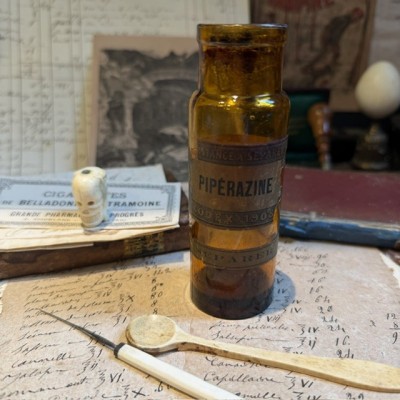
Piperazine
Antique amber glass bottle. The cap is missing
Green label: SUBSTANCE TO BE STORED SEPARATELY – CODEX 1908
Indicating to the pharmacist that it must be stored separately from other substances in the cabinet for toxic substances, the famous ‘poison cabinet’.
It comes from the former cellar-laboratory of a Parisian pharmacy. The bottles had not been moved from the shelves since the late 1950s. The cellar had served as a medical analysis laboratory and a laboratory for the pharmacy’s compounded preparations from 1900 until around 1950.
EMPTY
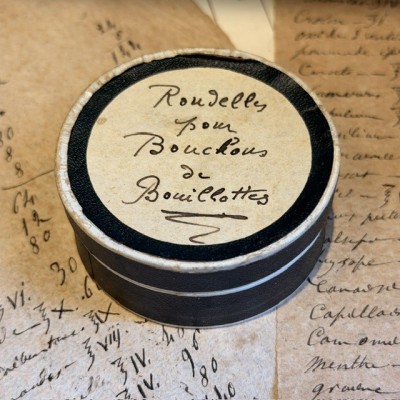
Box of rubber washers for hot water bottles
In its original cardboard box
1939/1940
New Old Stock
Emperor Napoleon III coin - Second Empire - 2 cents
2-cent coin - Dated 1852 - 1870
Authentic bronze period coin from the Second Empire, minted during the reign of Emperor Napoleon III. It features the profile of the Emperor on the obverse (bareheaded or gilt-plated) and the imperial eagle on the reverse. Each copy has a unique historical patina and original reliefs preserved from the 19th century.
All coins are different