

- New
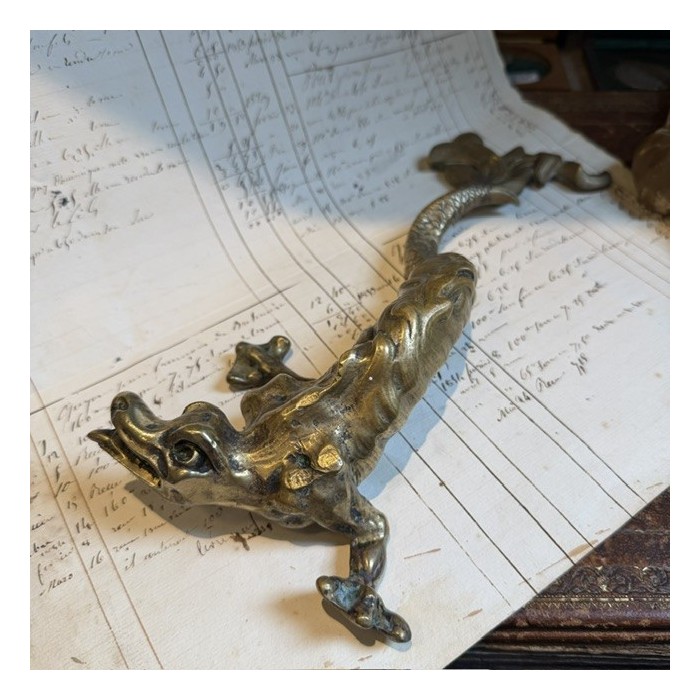
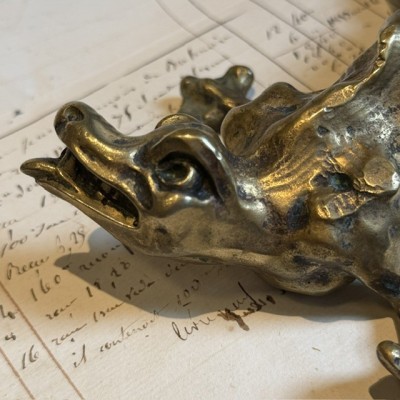
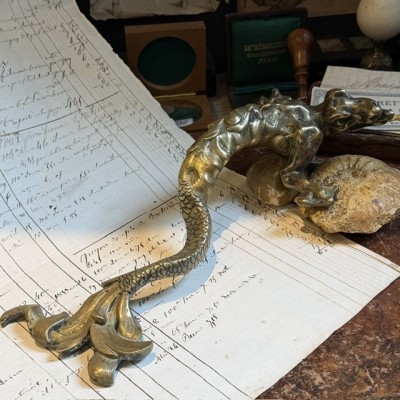
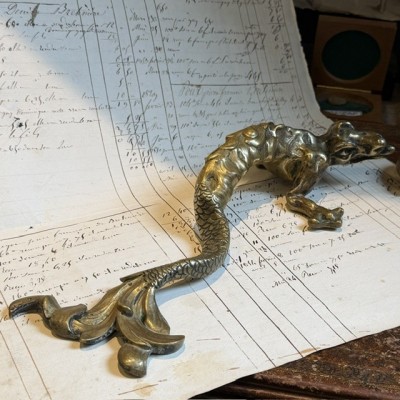
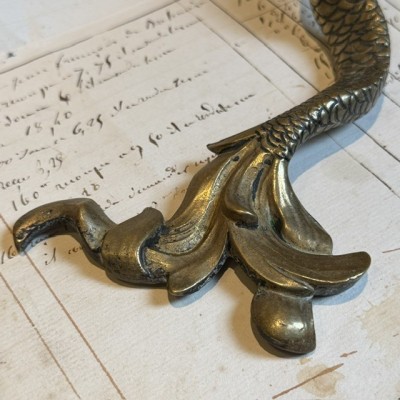
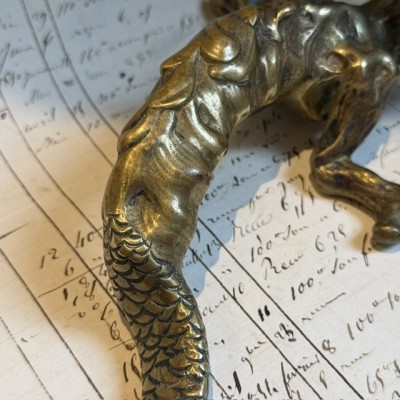
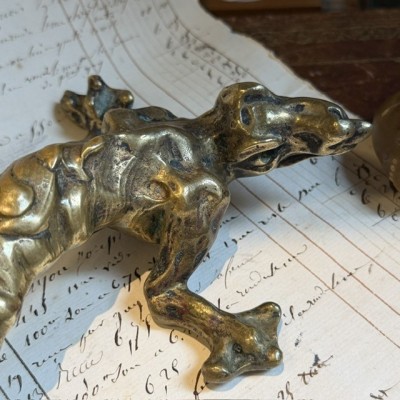
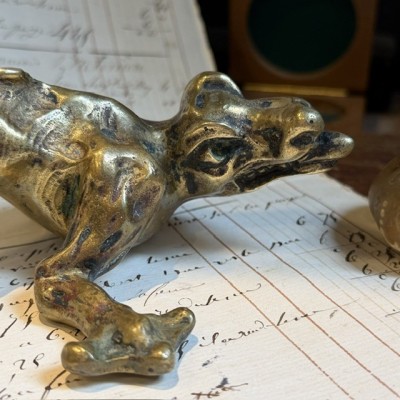
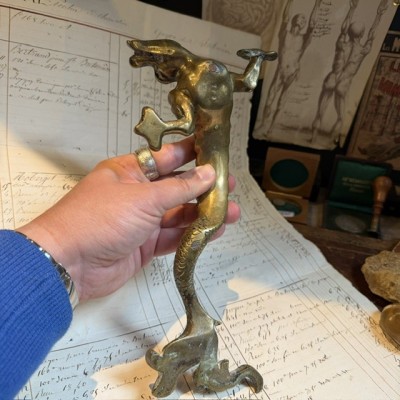
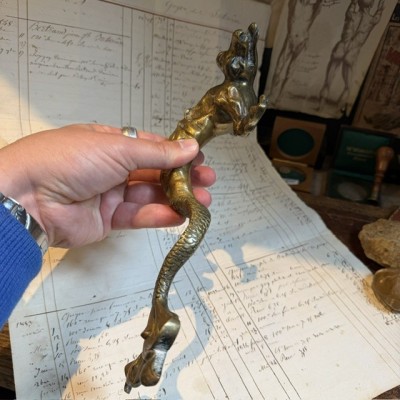
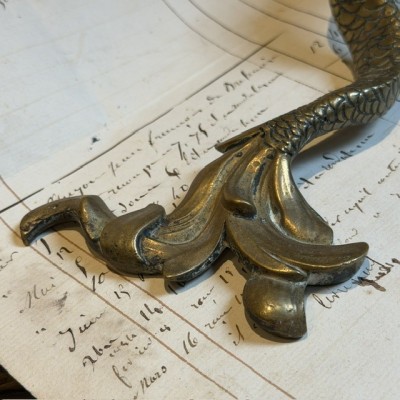
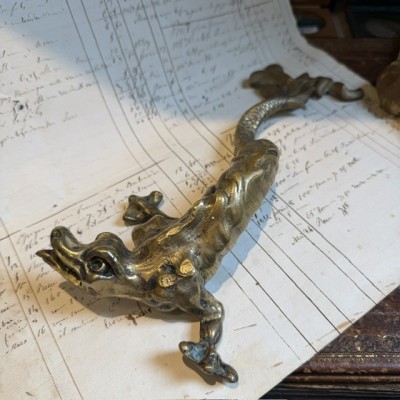
19th-century bronze chimera – Beautiful decorative Napoleon III-style bronze
Second half of the 19th century, in a fantastical Neo-Renaissance style
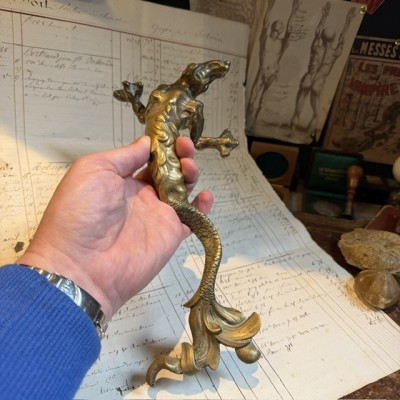
Antique monumental door pull in solid bronze
19th-century bronze chimera – Beautiful decorative Napoleon III-style bronze
From the 19th century
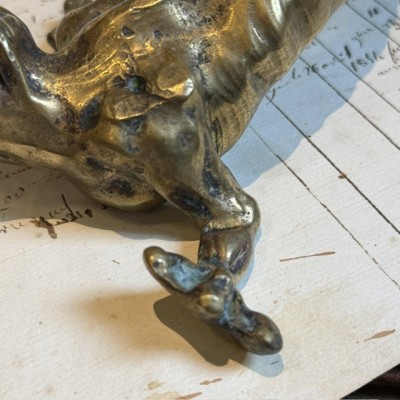
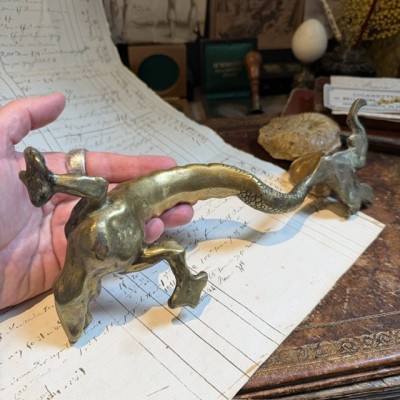
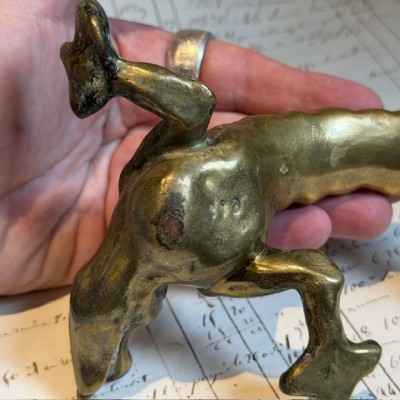
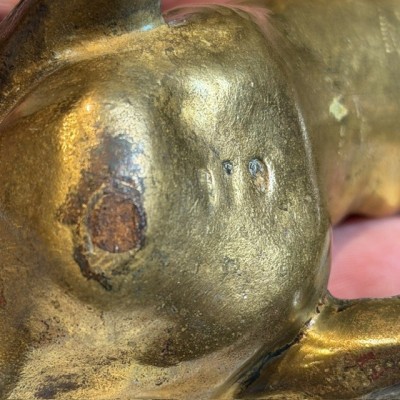
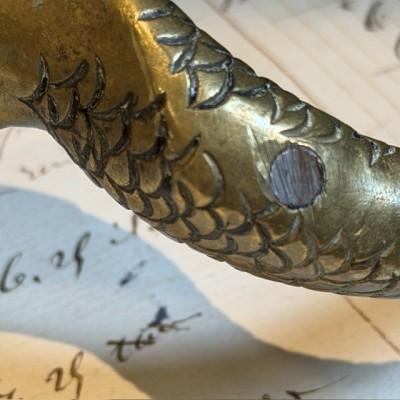
I believe this was originally a large, antique door handle; two old fixings, cut flush with the surface, can be seen beneath the piece.
This monumental solid bronze door pull embodies the 19th-century aesthetic for chimeras and fantastical creatures.
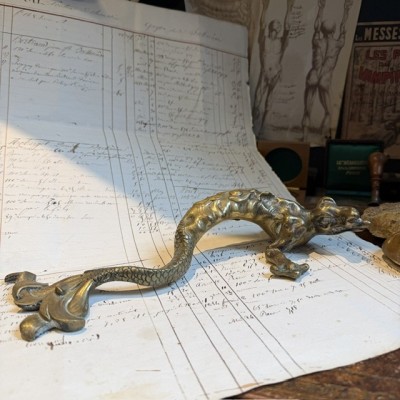
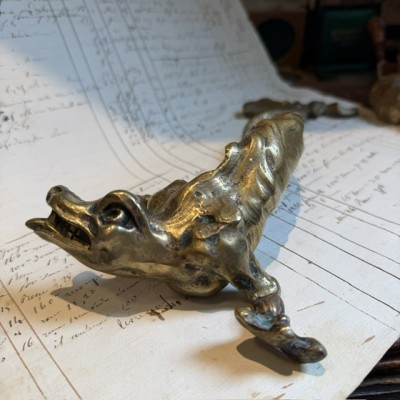
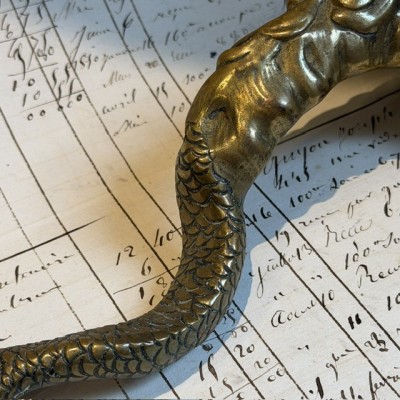
Far removed from the classic dolphins, this object depicts a rare hybrid creature: a reptilian bust with crocodile-like features, endowed with muscular, clawed forelimbs, metamorphosing into a long, scaly serpentine tail in the manner of a mermaid.
The creature’s head, with its low profile and elongated jaws, exudes raw power.
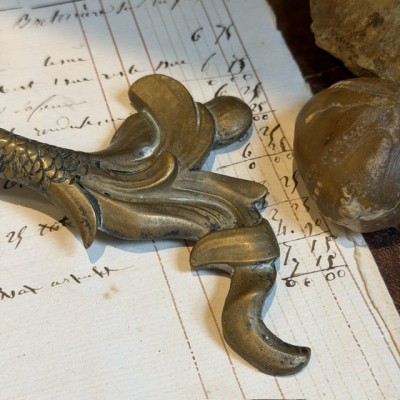
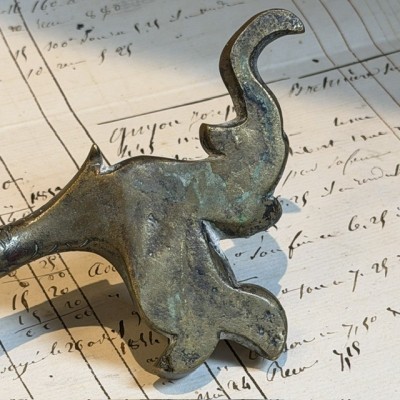
The body, of great density, is very heavy and has been designed for an ergonomic and sturdy grip. The tail ends in a scroll of acanthus leaves, allowing for a stable and elegant wall mounting.
Material: Solid bronze
Length: 28 cm
Weight: 1.2 kg (A particularly heavy and robust piece)
Period: Second half of the 19th century, in the Fantastic Neo-Renaissance style under Napoleon III
This piece is a fine example of the eclecticism of the Second Empire.
It moves away from the traditional mythological repertoire towards a wilder, more naturalistic bestiary.
Its density and the quality of the cast iron suggest it was commissioned for a carriage entrance, for example.
Having lost its original function, this piece has become a true sculpture in its own right.
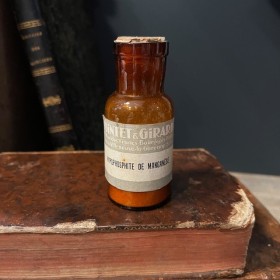
Hypophosphite de Manganèse
Antique pharmacy bottle
Apothecary vial
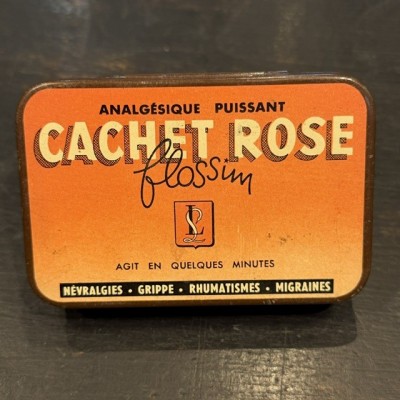
Le Cachet Rose Flossim - Flossim Pink Tablets
Vintage tin medicine box - Pharmacy - Apothecary
EMPTY
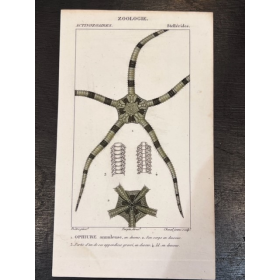
Plate - Antique natural history engraving in color
XIXth century
botany - mushroom - snake - bird

Botany plate by Michel Etienne Descourtilz
From the Flore pittoresque et médicale des Antilles ou histoire naturelle des plantes usuelles des colonies françaises, anglaises, espagnoles et portugaises.
Published in 1827/1833
Painted engraving from the 19th century
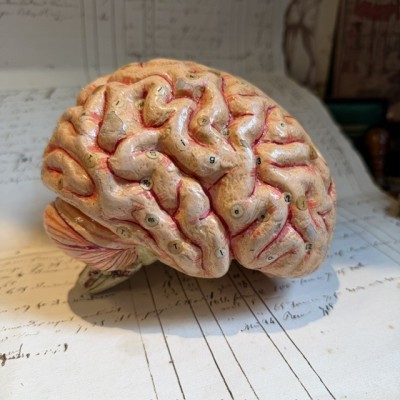
Painted papier-mâché anatomical model of the brain
Produced by Établissements Auzoux
Model No. 12 from the 1874 catalogue
Dismantlable, numbered model, used for medical teaching.
A rare item in excellent working condition
This is a 1:1 scale model of the brain, sold separately at the time as a demonstration model; it is not a brain that was found inside anatomical manikins.
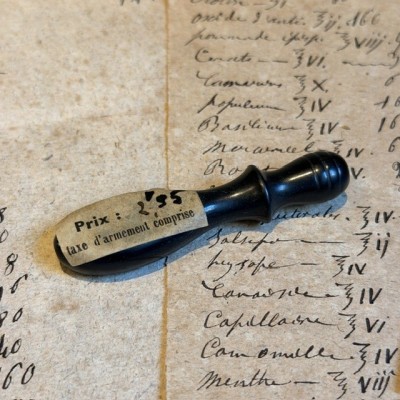
Ebonite cannula tip
Tips for enema or medical irrigation cannulas. New Old Stock
Marketed between May 1939 and sometime in 1940
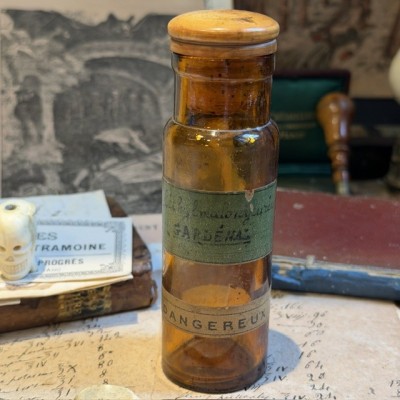
Gardénal - Phenobarbital - Barbiturates
Phényléthylmalonylurée
Antique amber glass bottle, with a boxwood and cork stopper.
Label: DANGEROUS
Indicating to the pharmacist that it must be stored separately from other substances in the cabinet for toxic substances, the famous ‘poison cabinet’.
It comes from the former cellar-laboratory of a Parisian pharmacy. The bottles had not been moved from the shelves since the late 1950s. The cellar had served as a medical analysis laboratory and a laboratory for the pharmacy’s compounded preparations from 1900 until around 1950.
EMPTY
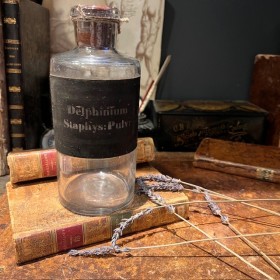
Delphinium staphisagria - Stavesacre
Pharmacy jar - Herbalism - Apothecary bottle
Late 19th century, early 20th century.
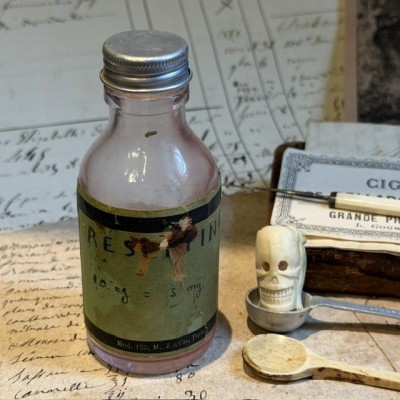
Reseptine
Antique pharmacy bottle
EMPTY
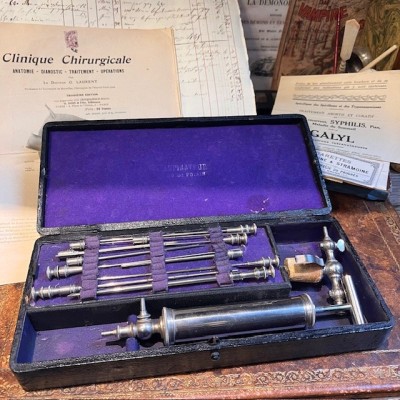
Dr Potain vacuum cleaner in its case
Late 19th century - 1870-1895
Antique medical instrument
However, the box comes from the Hôpital de la Charité in Paris, as indicated by the inscription on the top of the box, from the Bouillaud ward of the hospital.
non-functional
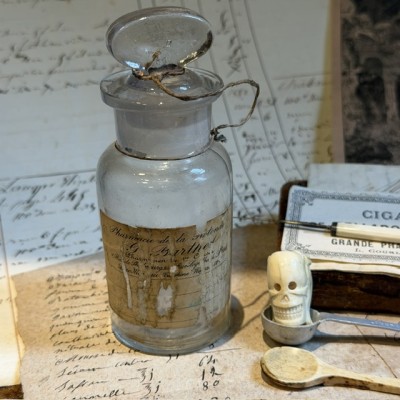
Berthet - Pharmacie de la Rotonde
Antique pharmacy bottle
EMPTY
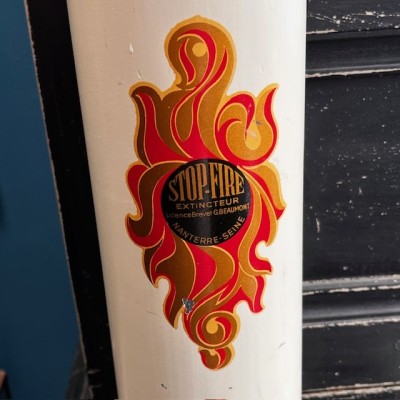
Antique ‘Stop-Fire’ fire extinguisher - Circa 1925
Unlike standard painted sheet metal models, this enamelled steel ‘Stop-Fire’ fire extinguisher is an industrial design piece from the Roaring Twenties, between the two world wars.
It features a magnificent logo with stylised flames, whose shades of yellow and red have retained all their vibrancy.
Height: 54.5cm - Diameter: 12cm - Weight: 6.5kg - STILL FULL
DO NOT USE - FOR DECORATIVE PURPOSES ONLY
No shipping - Pick-up in store
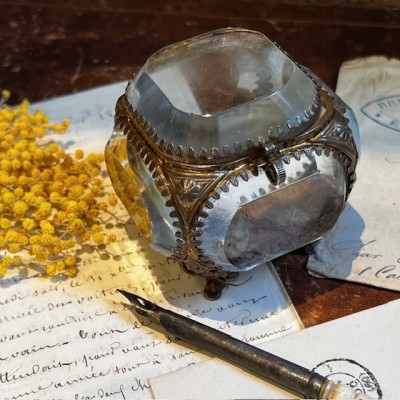
Reliquary box - 19th century
Jewelry box
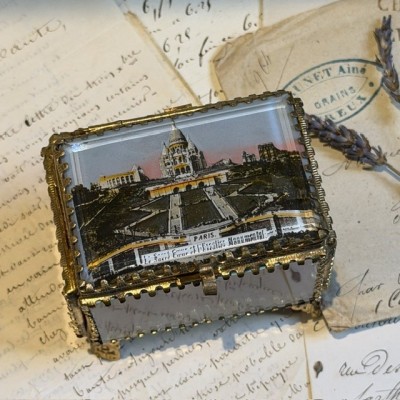
Souvenir of Montmartre 1900 – Sacré-Cœur
Glass and brass reliquary box
Jewellery box
A chance find at a flea market allowed us to bring this jewellery box back from Ardèche (south of France), more than a century later, it returns to where it all began.
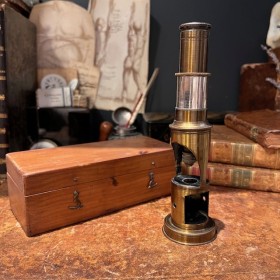
Antique drum microscope for botanist, entomologist
Mirror missing
Late 19th century, early 20th century
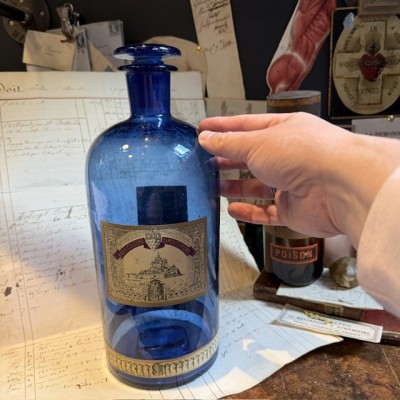
Eau de Cologne du Mont St Michel
Antique BLUE glass pharmacy bottle
EMPTY
19th-century bronze chimera – Beautiful decorative Napoleon III-style bronze
Second half of the 19th century, in a fantastical Neo-Renaissance style
Antique monumental door pull in solid bronze