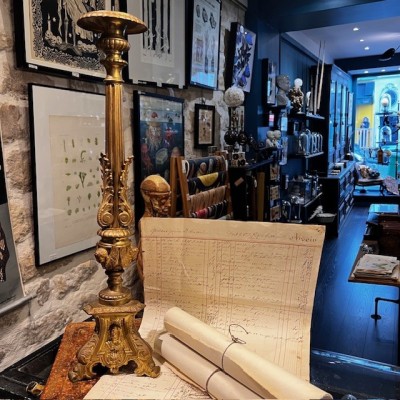

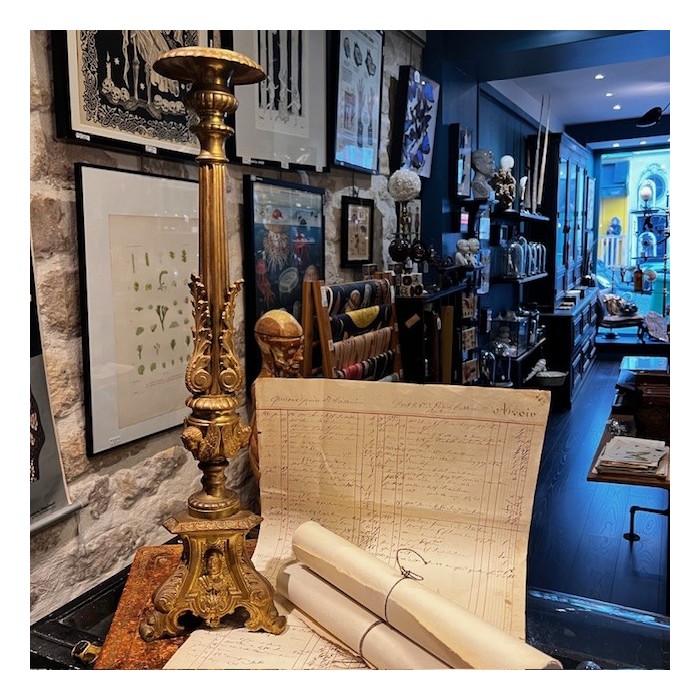
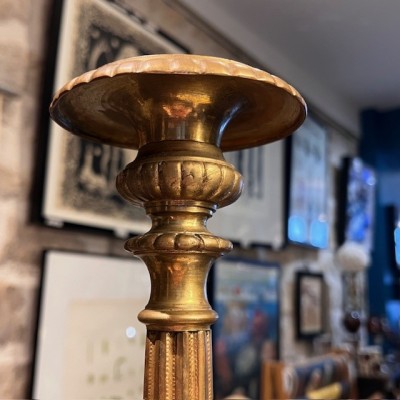
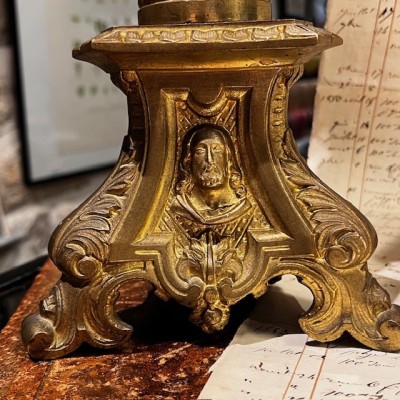
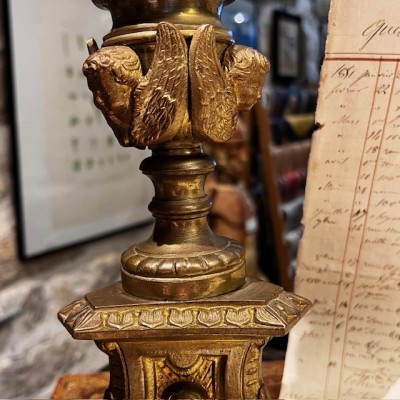
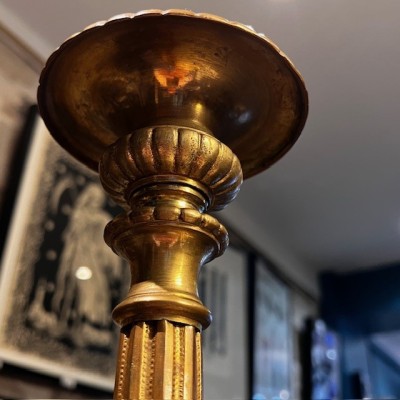
Large Neo-Renaissance chased brass altar candle holder from the 19th century
Candelabra 59cm - Candle holder
Height 59cm Weight: 2.4kg
Large Neo-Renaissance chased brass altar candle holder from the 19th century
Candelabra 59cm - Candle holder
19th century - Chased brass
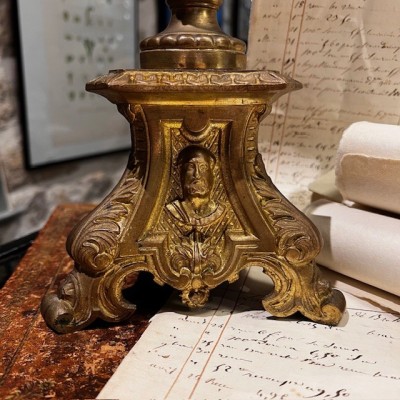
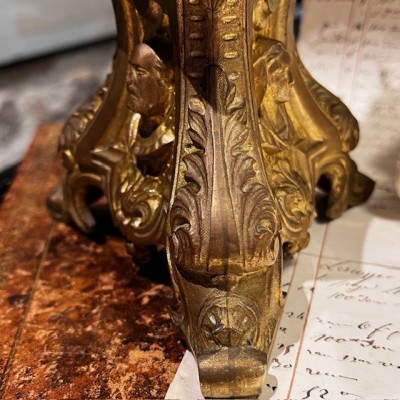
A true centrepiece due to its size, this monumental 59 cm torch is a remarkable example of the French Neo-Renaissance style of the second half of the 19th century.
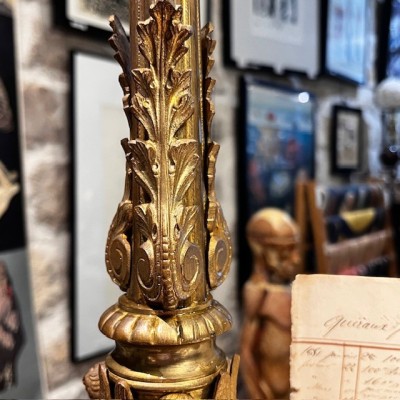
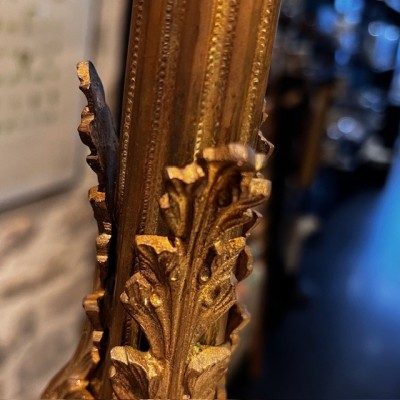
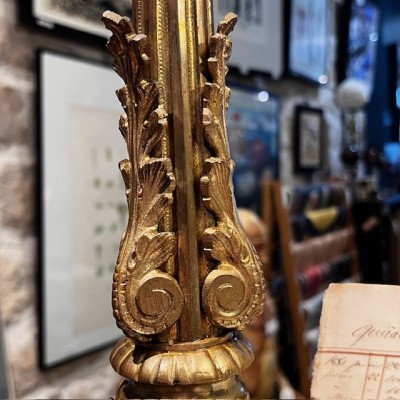
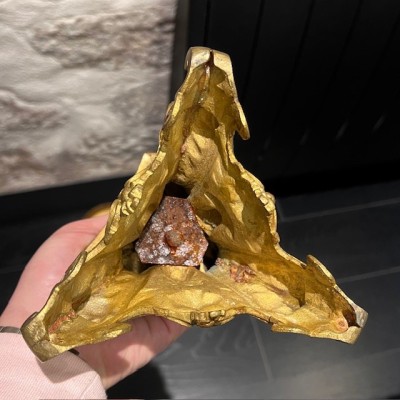
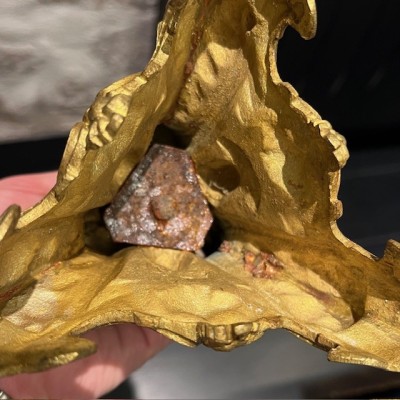
Combining the liturgical solemnity of the base with exceptionally fine chiselling, it features a slender, richly decorated shaft resting on a tripod base.
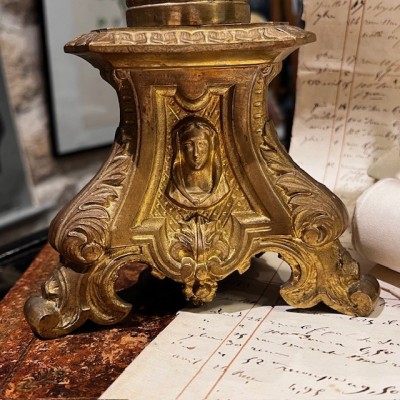
The three-sided base features three finely crafted religious medallion busts representing the pillars of the Christian faith:
• Christ with long hair and a neat beard.
• The veiled Virgin Mary in a contemplative pose.
• Saint Peter (identifiable by his short beard and bare forehead), founder of the Church.
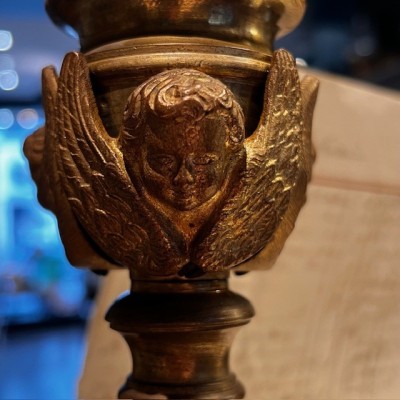
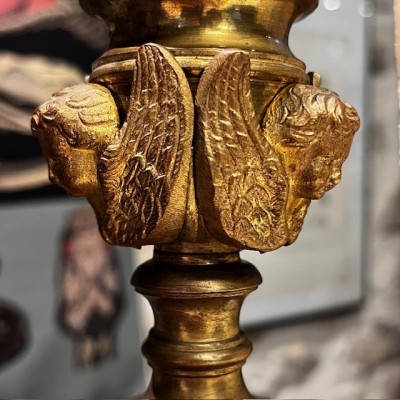
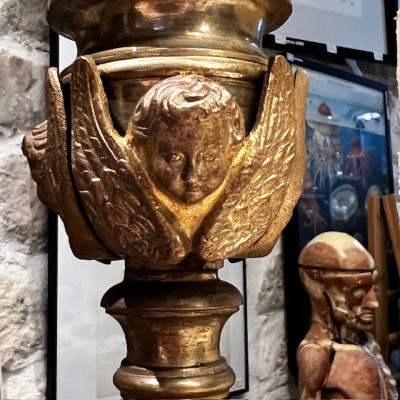
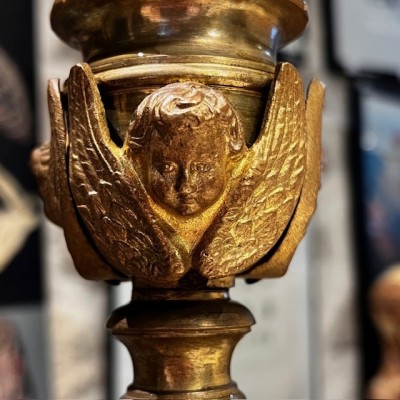
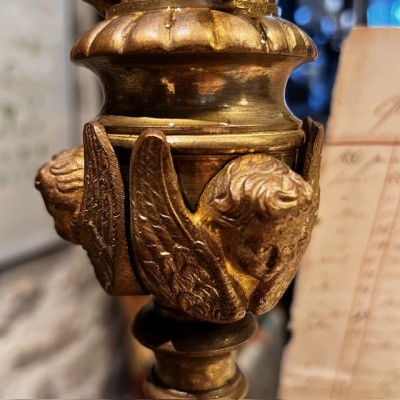
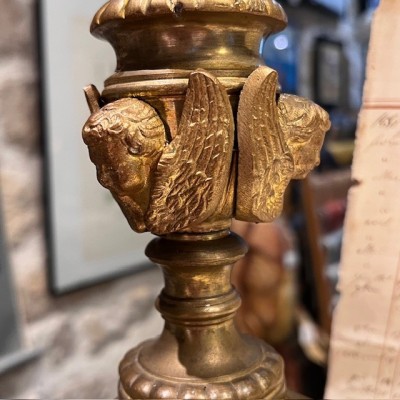
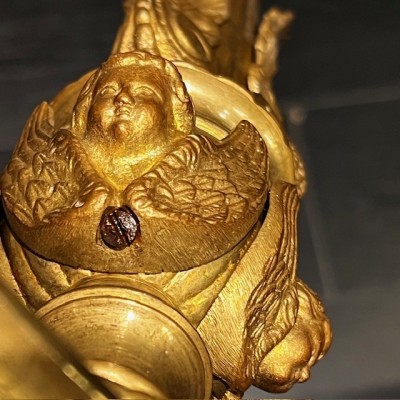
The central knot is decorated with three winged cherub heads, adding a heavenly dimension to the whole.
- Material: 19th-century chiselled brass.
- Dimensions: Height 59 cm, stable weight 2.4 kg.
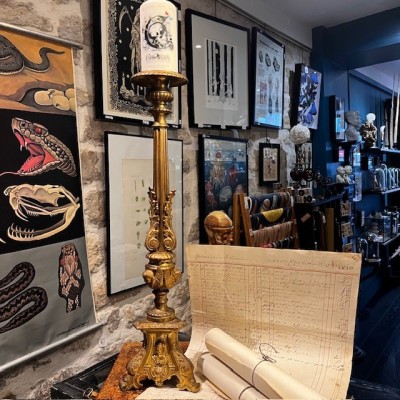
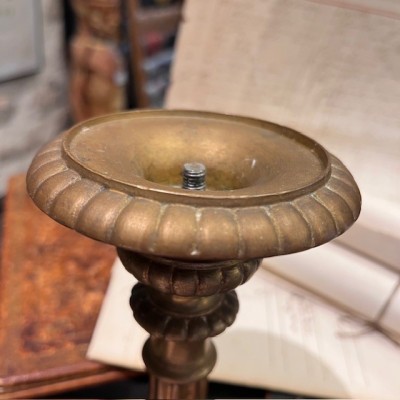
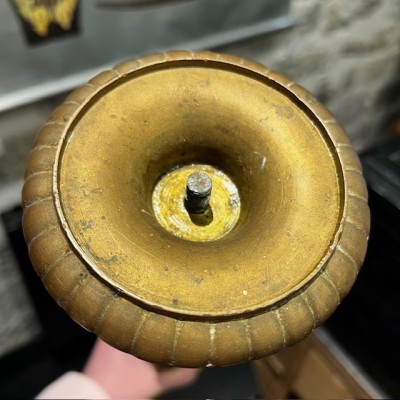
- Assembly: Antique structure with original iron threaded rod and nut under the base. The tip of the original candle holder has disappeared, but the screw at the bottom of the bobèche remains.
A candle can therefore be placed on it as shown in the photo, but not a ball due to the screw.
Height 59cm Weight: 2.4kg
Sold without candle
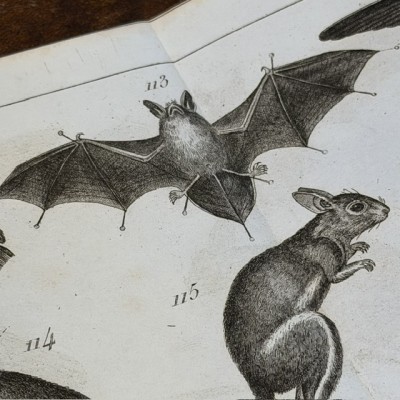
Manual of the Naturalist Preparer followed by a Treaty of Embalmings
by BOITARD - Book of 1853
5 fold-out plates at the end of the volume with beautiful engravings
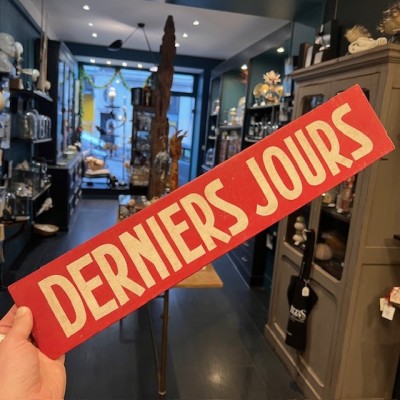
DERNIERS JOURS - LAST DAYS
Antique Cinema painted plywood sign
Cinema sign announcing the final days of a film's run
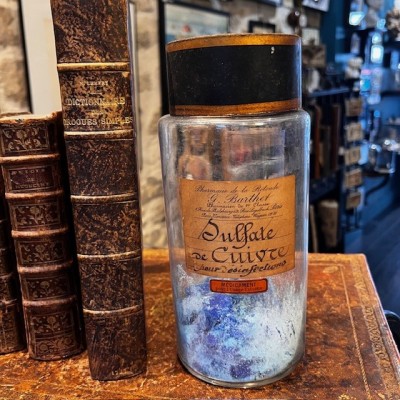
Copper Sulfate
Antique pharmacy bottle - Wide-mouth apothecary jar.
19th-century mouth-blown glass
There are still some beautiful blue crystals inside.
A fascinating artifact from the history of pharmacology
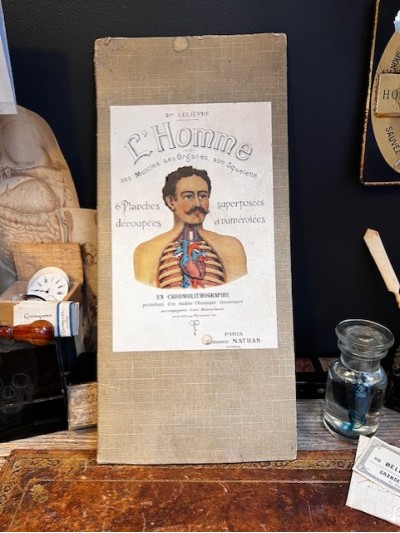
Man - Anatomical chart that can be disassembled
By Fernand Nathan Editeur publisher
Coloured chart with movable, cut-out and superimposed leaves
There are defects on the superimposed boards; the outer board, which was the man's torso, is missing, as are the lungs, which were above the heart. The left hand is missing, the arm being torn.
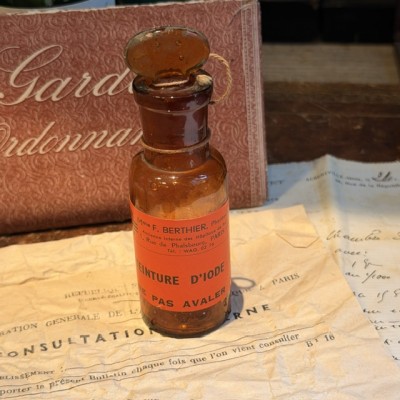
Iodine dye
Antique pharmacy bottle
With the inscription Teinture d'Iode molded in glass
EMPTY
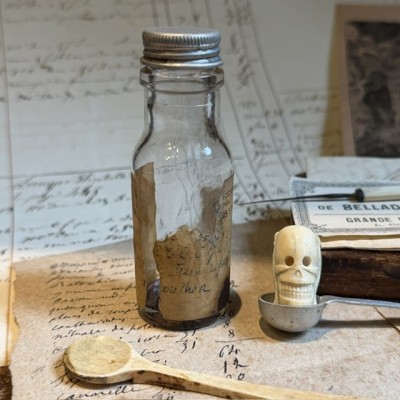
A avaler aux repas To be taken with meals (as far as can be made out from the torn label)
Antique pharmacy bottle
Torn label
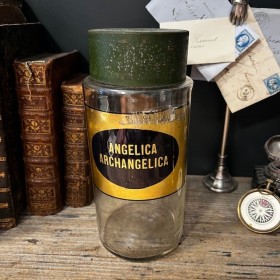
Angelica Archangelica
Pharmacy jar - Herbalism - Apothecary bottle
Late 19th century, early 20th century
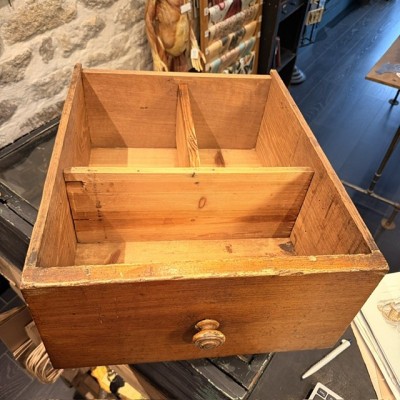
Large antique wooden pharmacy drawer with compartments - From a pharmacy or herbalist's cabinet
3 compartments
Ref C - 39.5x50cm
Can be used as a storage box
Weight: 4.1kg !
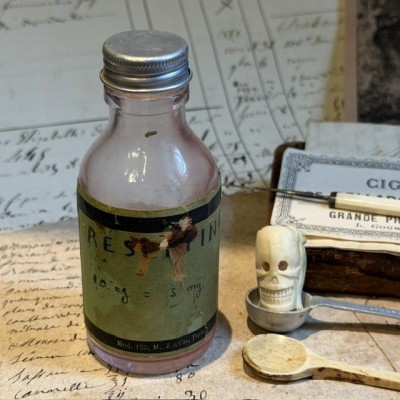
Reseptine
Antique pharmacy bottle
EMPTY
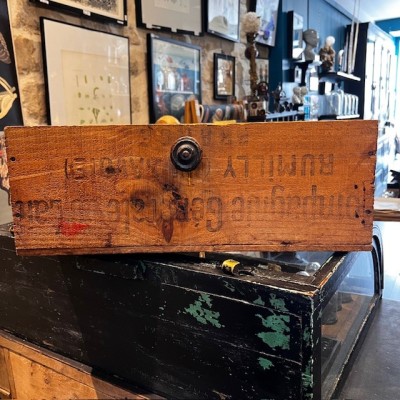
Antique wooden advertising case for Mont Blanc - Rumilly condensed milk - Drawer
Found in Parisian cellars that served as laboratories and storage rooms for pharmacists preparing their masterful concoctions from 1900 to 1950.
It was used to store products, glass bottles, etc.
This box is no longer just a transport container, it has been adopted as a piece of furniture.
Period: Circa 1920–1940
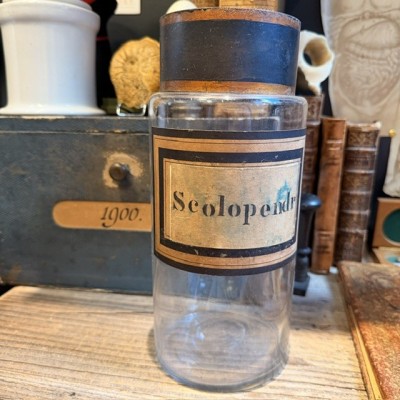
Scolopendre
Pharmacy jar - Herbalism - Apothecary Mouth-blown glass bottle
Late 19th century - Beginning of the 20th
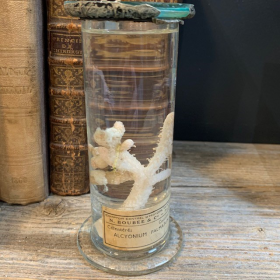
Museum jar - Wet specimen
Soft coral Alcyonium palmatum
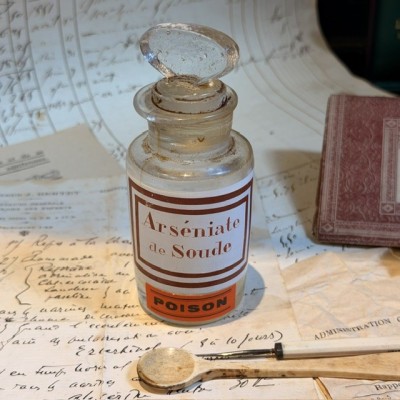
Arsenic - Sodium arsenate
Antique pharmacy bottle made of blown glass and enameled painted label. Yes, it is indeed the arsenic you know!
Red POISON label
Signaling to the pharmacist that it is imperative to keep apart the other substances in the cabinet of toxic substances, the famous poison cabinet.
Dating: 19th century
EMPTY but the cap is blocked and does not open.
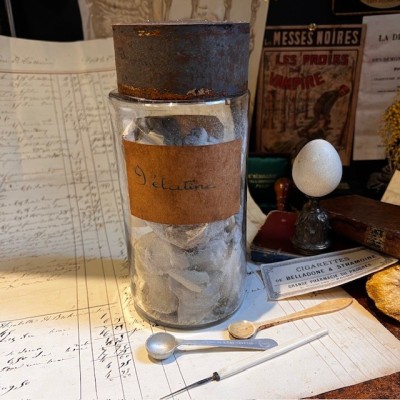
Gelatine
Antique pharmacy bottle - Wide-mouth apothecary jar.
19th-century mouth-blown glass
There is still some product left inside
A fascinating artifact from the history of pharmacology
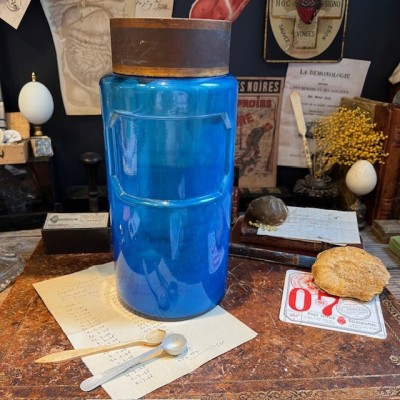
Cobalt blue glass pharmacy jar - Apothecary - Wide neck - H26cm - 19th
Apothecary jar with wide opening. Antique pharmacy bottle
Mouth-blown glass - Cobalt blue color tinted throughout
This large-capacity jar was a storage jar intended for stockpiling
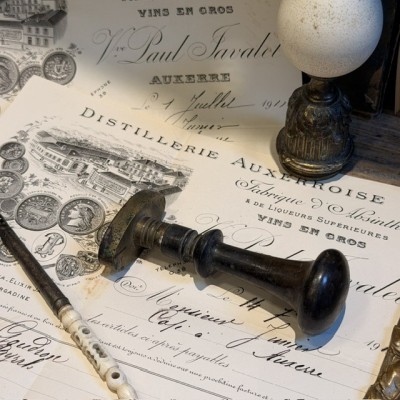
Antique "Magasin de Nouveautés" Store Stamp
The raised rubber die reads: "NOUVEAUTÉS BLANC - GAUTHIER".
Sturdy metal frame and ergonomic handle made from turned blackened wood
Large Neo-Renaissance chased brass altar candle holder from the 19th century
Candelabra 59cm - Candle holder
Height 59cm Weight: 2.4kg