
- New
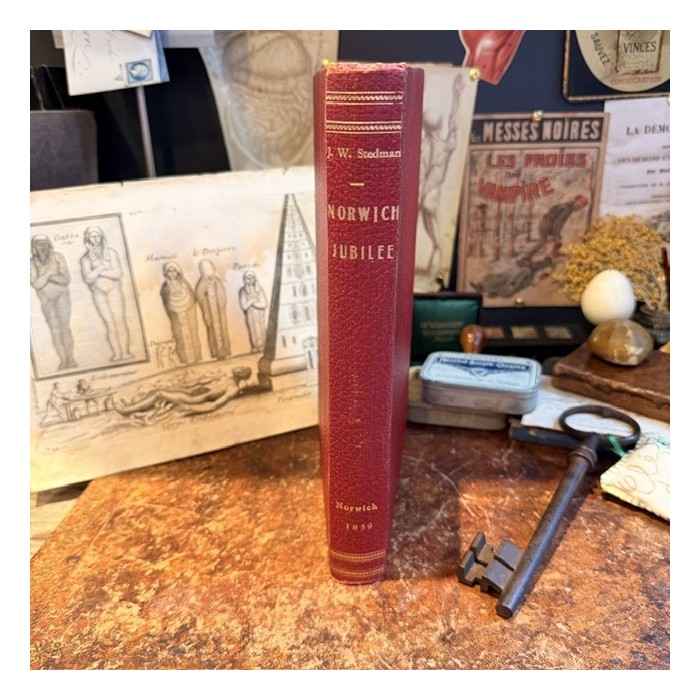

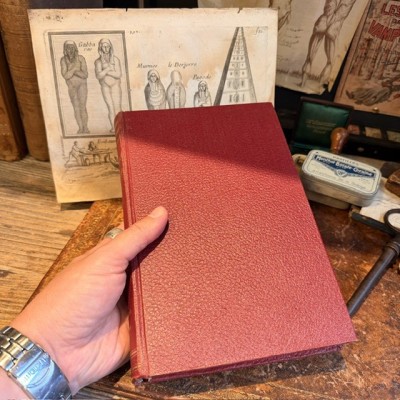
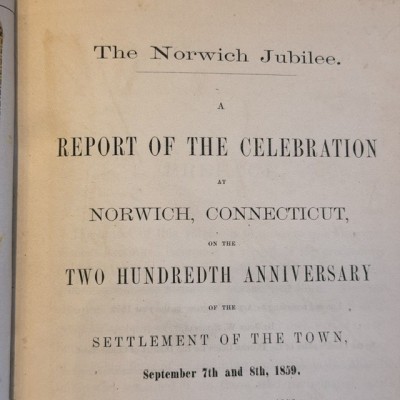
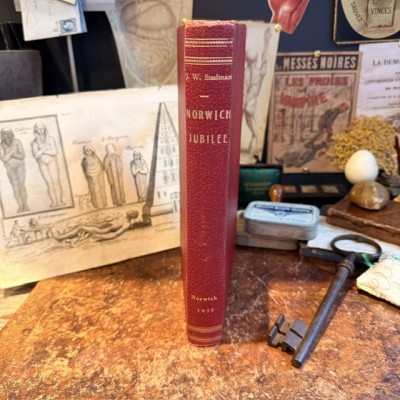
The Norwich Jubilee (1859) – First Edition Printed on Mummy Paper
A book printed on pages made from Egyptian mummy wrappings
First edition (1859) of The Norwich Jubilee printed on mummy paper.
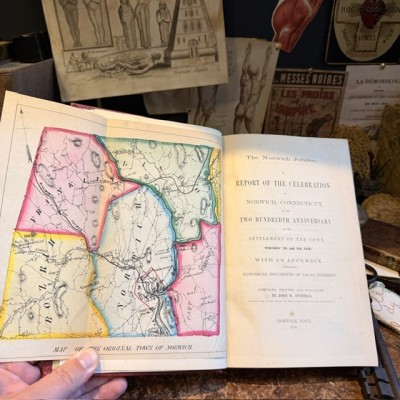
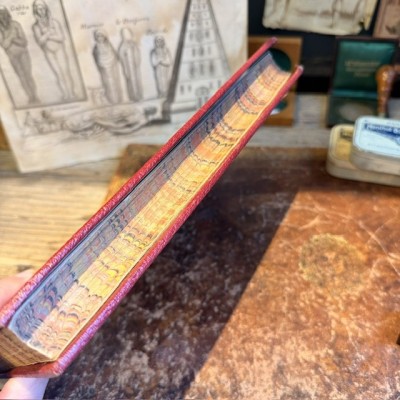
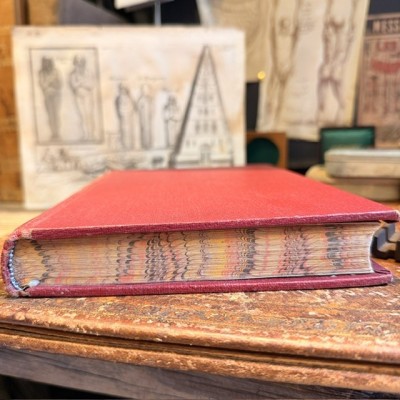
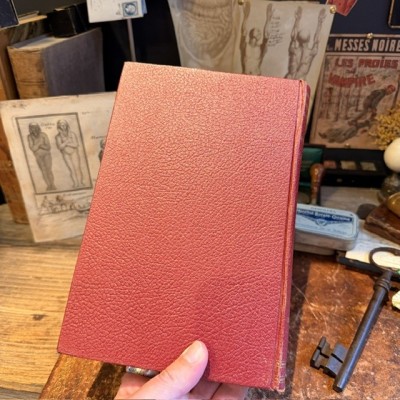
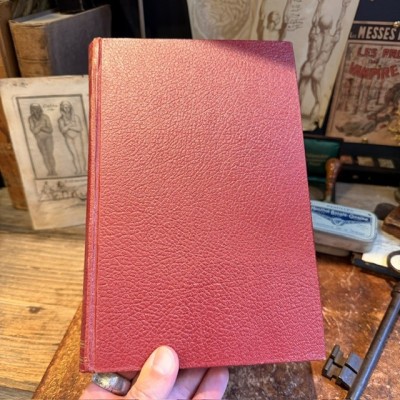
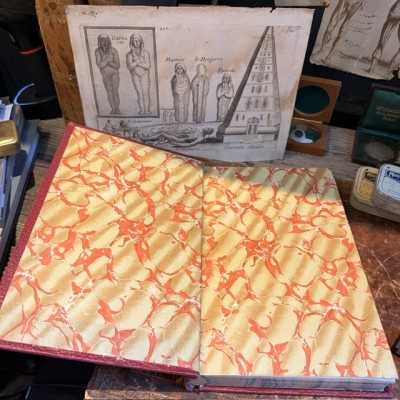
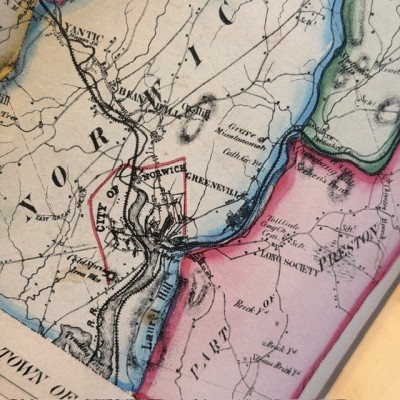
Re-bound at a later date in full red cloth (percaline), complete with its folding color map and lithographs. With marbled edges. Originally issued in leather, cloth, or paper covers/wrappers.
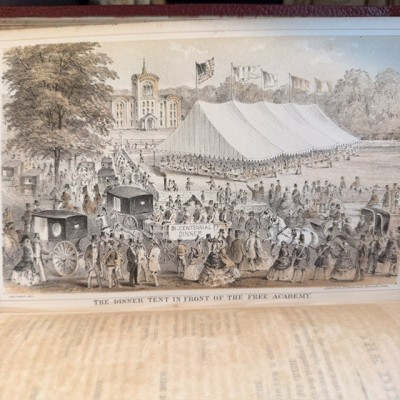
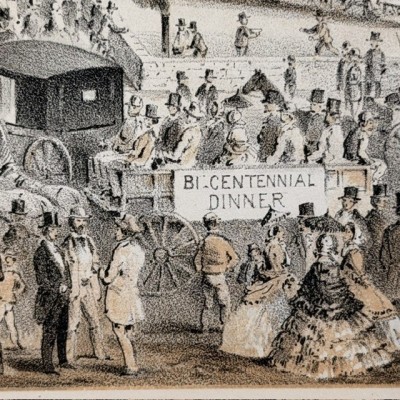
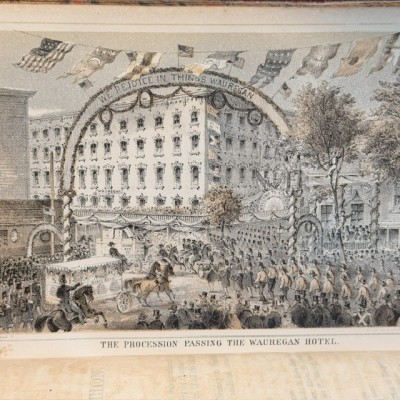
This book traces the festivities of the bicentenary of Norwich in 1859 through its speeches, parades and local archives.
A 19th-century bibliophilic curiosity
The Norwich Jubilee (1859) – First Edition Printed on Mummy Paper
A book printed on pages made from Egyptian mummy wrappings
A 19th-century bibliophilic and industrial curiosity.
This book traces the festivities of the bicentenary of Norwich in 1859 through its speeches, parades and local archives.
Published in Norwich (Connecticut, USA) in 1859 by John W. Stedman, this work commemorates the bicentennial of the town's founding. Beyond its local historical interest, this volume serves as a witness to an unusual 19th-century papermaking practice: printing on paper manufactured from Egyptian mummy wrappings (mummy paper).
During the 19th century, faced with a shortage of linen and cotton rags in North America, paper mills such as the Chelsea Manufacturing Company in Norwich imported Egyptian mummy wrappings to recycle into paper pulp. The Norwich Jubilee is one of the few documented printed witnesses of this production.
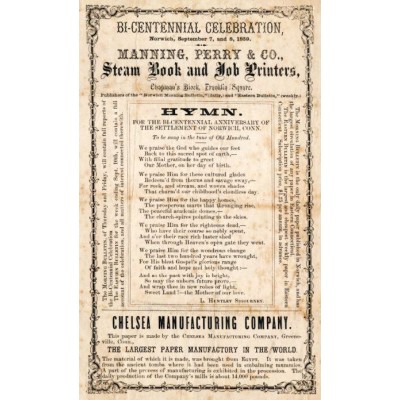
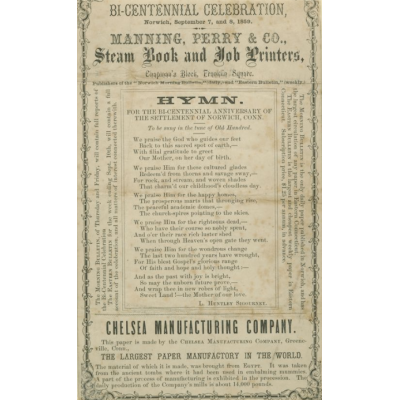
Mummy paper is made from the linen used for funerary wrappings. The earliest record of printing on genuine "mummy paper" appears on a broadside published in 1858 in Norwich to announce the town's 200th jubilee.
A period document, the paper mill's promotional broadside, explicitly confirms this unusual origin:
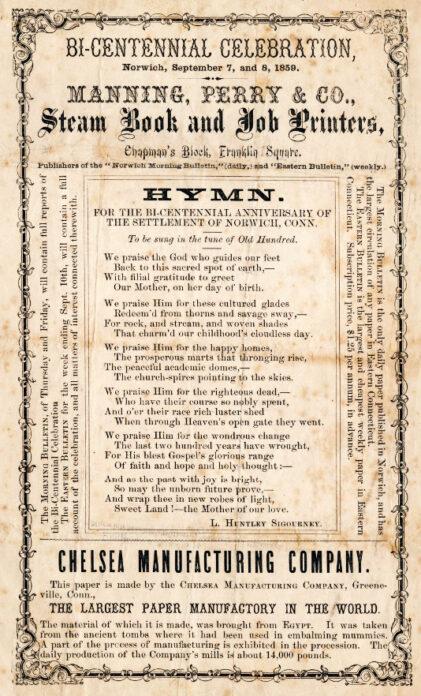
"This paper is manufactured by the Chelsea Manufacturing Company, Greenville, Connecticut, the largest paper mill in the world. The raw material used in its manufacture comes from Egypt, having been taken from ancient tombs where it served to embalm mummies."
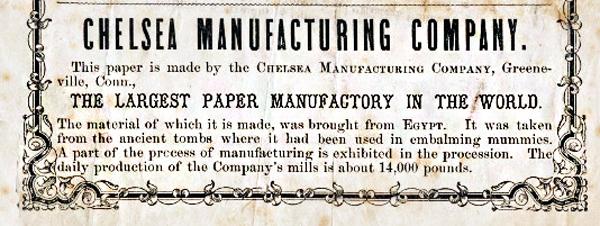
Copies of this broadside were printed and distributed during the parade on September 7, 1859, celebrating Norwich's 200th anniversary, by members of the Chelsea Manufacturing Company.
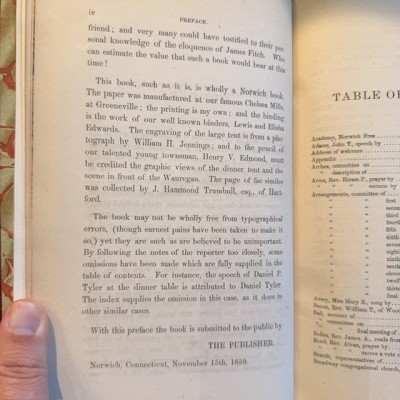
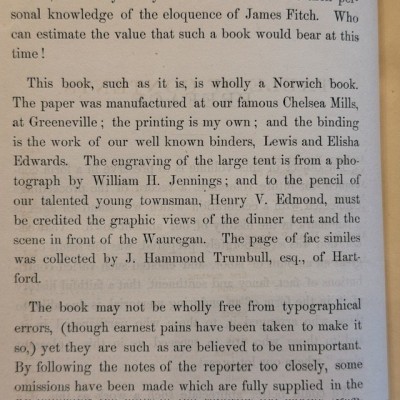
For its part, The Norwich Jubilee, a souvenir book published by John W. Stedman in 1859, boasted of being a product entirely made in Norwich and specified that the paper on which it was printed came directly from the Chelsea mills.
Since the book was printed by the same printer (John W. Stedman) during the exact same period as the broadside, it is certain that it was also printed on mummy paper.
This book is more likely than any other to have been printed on this type of paper, constituting one of the very few surviving printed testimonies of this practice.
It is the only book whose paper origin from Egyptian mummy wrappings is historically proven.
Binding Variants at Publication
Upon its release in 1859, the book was issued in three distinct bindings:
A deluxe gilt leather binding (crafted by binders Lewis and Elisha Edwards) for subscribers seeking a prestigious volume (only two copies known).
A publisher's cloth binding (embossed cloth) for general sale and use.
A more limited distribution in paper covers/wrappers.
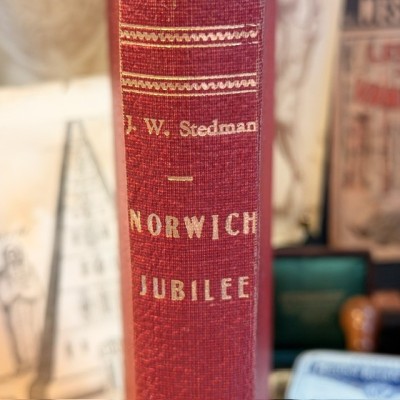
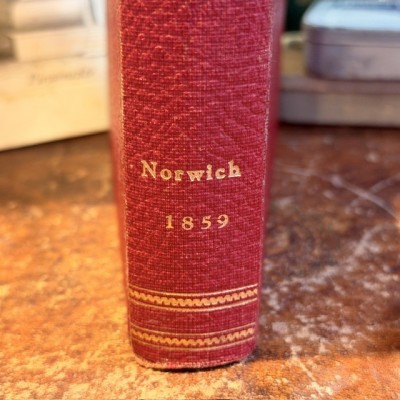
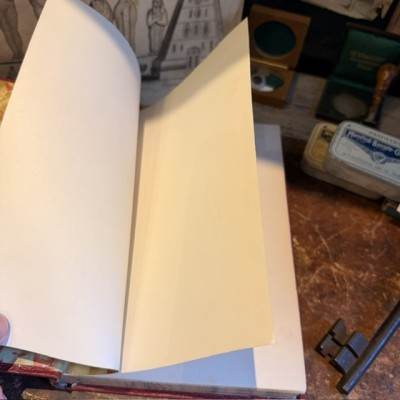
This copy features the original 1859 text block re-bound at a later date in a sturdy full red cloth (percaline) binding with gilt lettering on the spine, retaining its original marbled edges and reinforced with modern endpapers at the front and back.
Technical Specifications & Condition
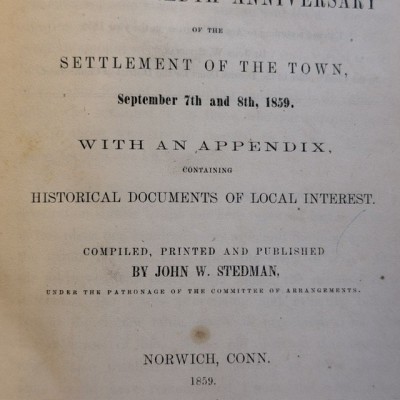
Author / Publisher: Compiled, printed and published by John W. Stedman
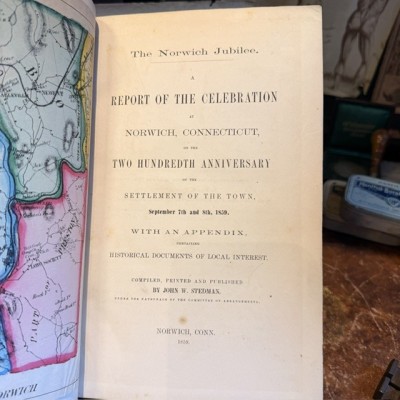
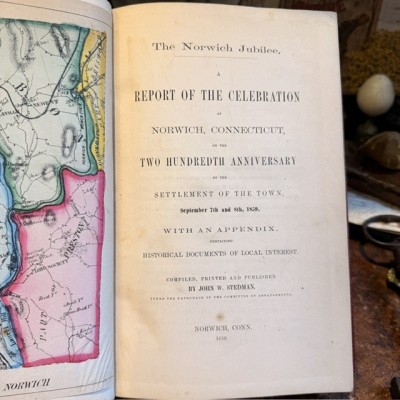
Full Title: The Norwich Jubilee. A Report of the Celebration at Norwich, Connecticut, on the Two Hundredth Anniversary of the Settlement of the Town, September 7th and 8th, 1859
Place and Date of Publication: Norwich, Conn., 1859
Edition: First edition in a later binding
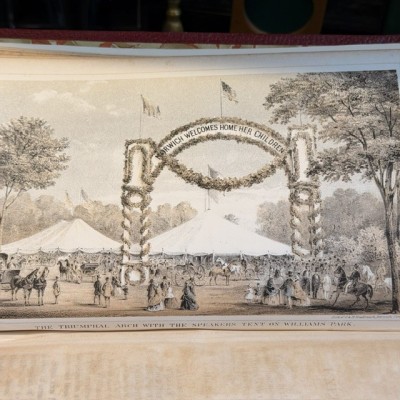
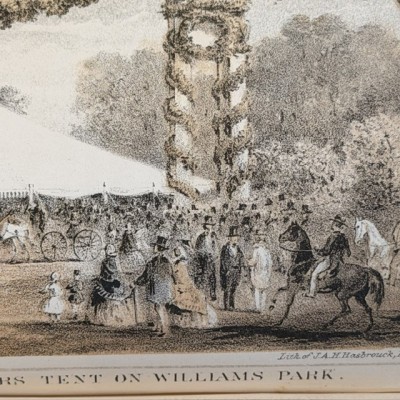
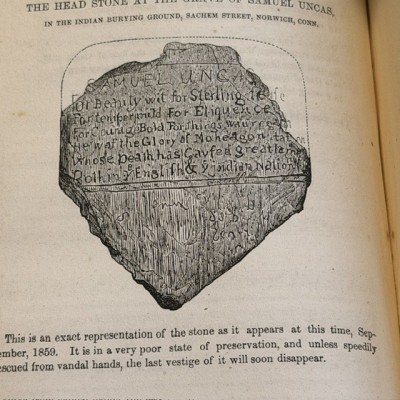
Interior Condition: Excellent state of preservation. Very fresh interior. Contains the original folding color map in perfect condition, as well as all full-page lithographs and engravings.
Binding: Full red publisher's cloth (percaline), later binding, gilt title on spine, original marbled edges.
Paper Particularity: Original paper made from rag pulp and Egyptian mummy wrappings (natural cream/off-white tone), offering a sharp visual contrast with the modern white restoration endpapers.
I slipped a copy of the poster from that time into the book.
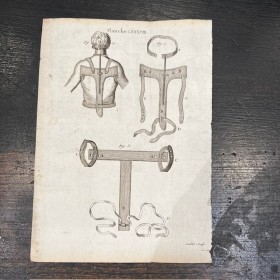
Antique surgical board
From Benjamin Bell's Complete Course in Surgery, published in 1796
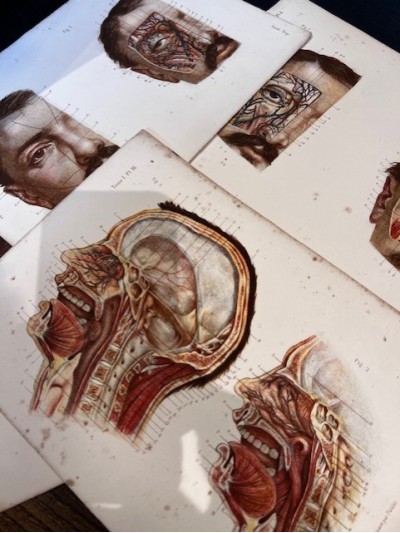
Anatomical chart by Paulet and Sarazin
From the Traité d'anatomie topographique (Treatise on topographical anatomy)
Published in 1867-1870
Chromolithography
You buy 1 plate, not the whole set
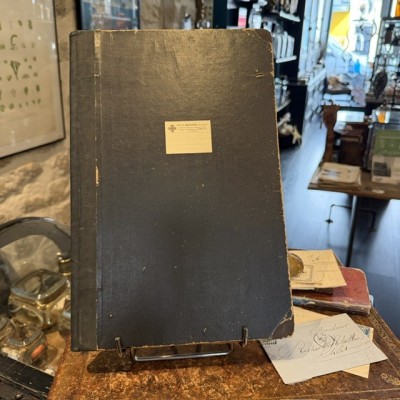
Notebook – Order book from the Berthier Pharmacy in Paris
Writing on the first four pages only; the rest is blank
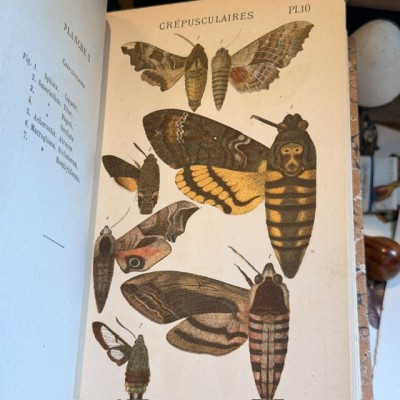
Butterflies - Natural History of France
Musée scolaire DEYROLLE - Original Edition of 1886 by Berce
Illustrated with 27 plates including 26 in colors - By Berce
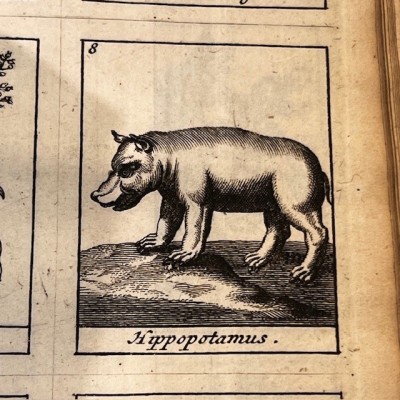
Dictionnaire Universel des Drogues Simples
Universal dictionnary of Simple Drugs
By Nicolas Lemery
An antique illustrated pharmacopoeia from 1727 - A Dutch pirated edition

Bibliothèque Choisie de Médecine - Volume 8
Selected Library of Medicine
By François PLANQUE - 1750
Complete original edition with 10 fold-out plates
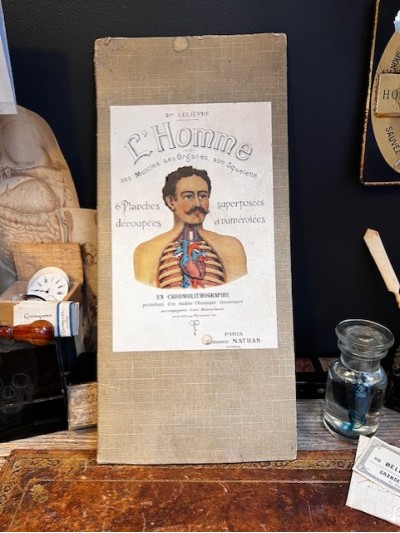
Man - Anatomical chart that can be disassembled
By Fernand Nathan Editeur publisher
Coloured chart with movable, cut-out and superimposed leaves
There are defects on the superimposed boards; the outer board, which was the man's torso, is missing, as are the lungs, which were above the heart. The left hand is missing, the arm being torn.
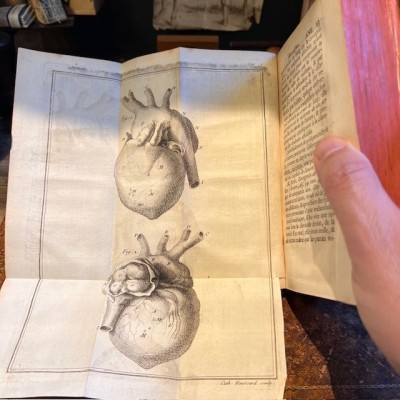
Bibliothèque Choisie de Médecine - Volume 6
Selected Library of Medicine
By François PLANQUE - 1749
Complete original edition with 5 fold-out plates

Cours d'opérations de chirurgie, démontrées au Jardin Royal
Course of surgical operations, demonstrated in the Royal Garden
Published in 1751 in Paris, by d'Houry, sole printer and bookseller to Monseigneur le Duc d'Orléans
Fourth edition
Illustrated with numerous plates and engravings in the text, including the famous plate of Poor Malabou and her scrotal elephantiasis on page 112/113, which the author mentions on page 373.
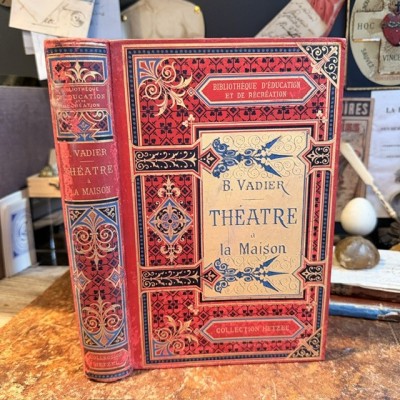
Théâtre à la maison (Theatre at home) by B. Vadier
Circa 1880
Splendid publisher’s binding with cardboard plates from the Hetzel Collection
De l'Homme et de la Femme (Of Man and Woman)
By M. de Lignac - Volume 3
Anatomy of procreation - 1779
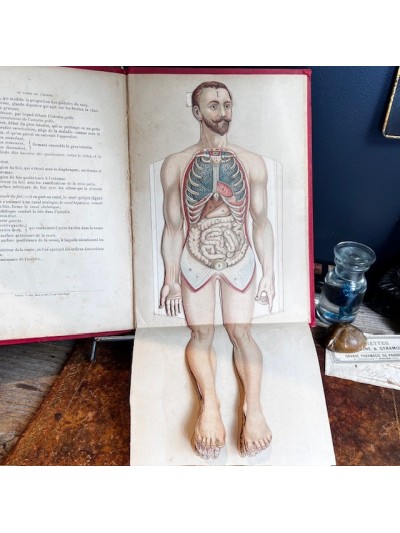
Le corps de l'Homme
Anatomical colour plates with cut-out superimposed leaves
By Edmond Perrier - Schleicher Frères & Cie Editeurs
No date, circa 1900
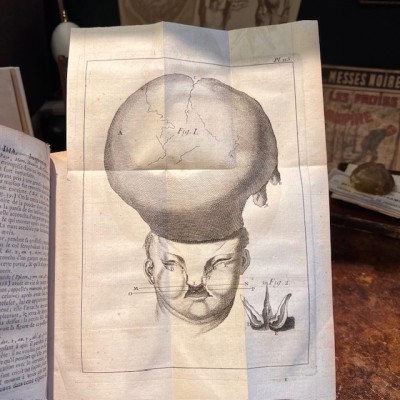
Bibliothèque Choisie de Médecine - Volume 16
Selected Library of Medicine
By François PLANQUE - 1761
Complete original edition with 10 fold-out plates
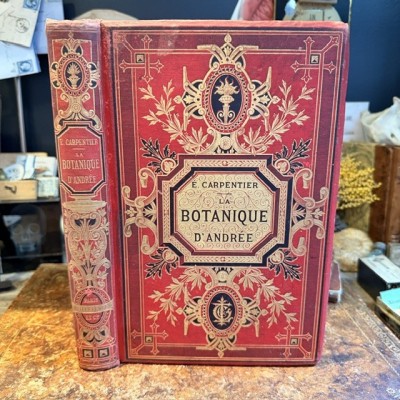
La Botanique d'Andrée by Émilie Carpentier
Circa 1885
Splendid publisher’s binding with plates by Albert Souze
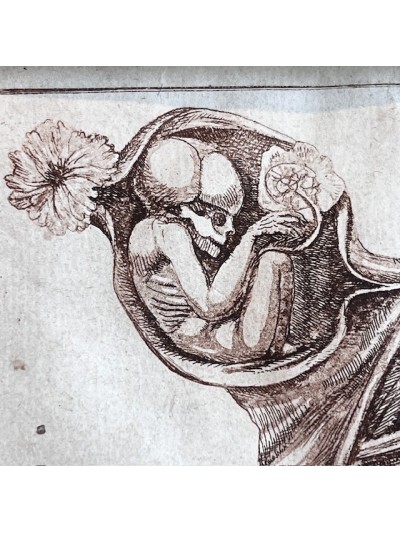
L'art de procréer les sexes à volonté - The art of procreating sexes at will
By Millot - With illustrated plates
Antique book from 1802 (Year X of the Republic) - Third edition
The author explains how to procreate boys and girls, and gives his recipes for treating sterility and malformations...
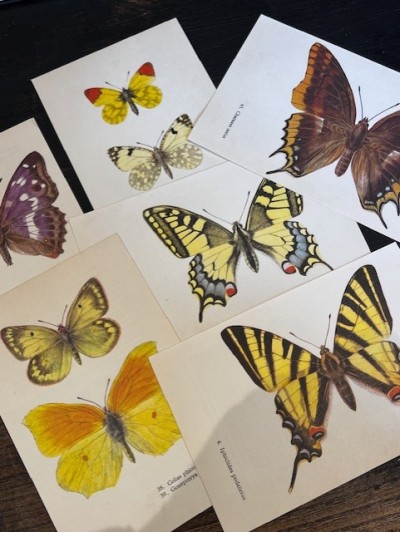
Butterfly - Natural History color plate
Entomology
You buy 1 plate, not the whole set
The Norwich Jubilee (1859) – First Edition Printed on Mummy Paper
A book printed on pages made from Egyptian mummy wrappings
First edition (1859) of The Norwich Jubilee printed on mummy paper.
Re-bound at a later date in full red cloth (percaline), complete with its folding color map and lithographs. With marbled edges. Originally issued in leather, cloth, or paper covers/wrappers.
This book traces the festivities of the bicentenary of Norwich in 1859 through its speeches, parades and local archives.
A 19th-century bibliophilic curiosity