

- New
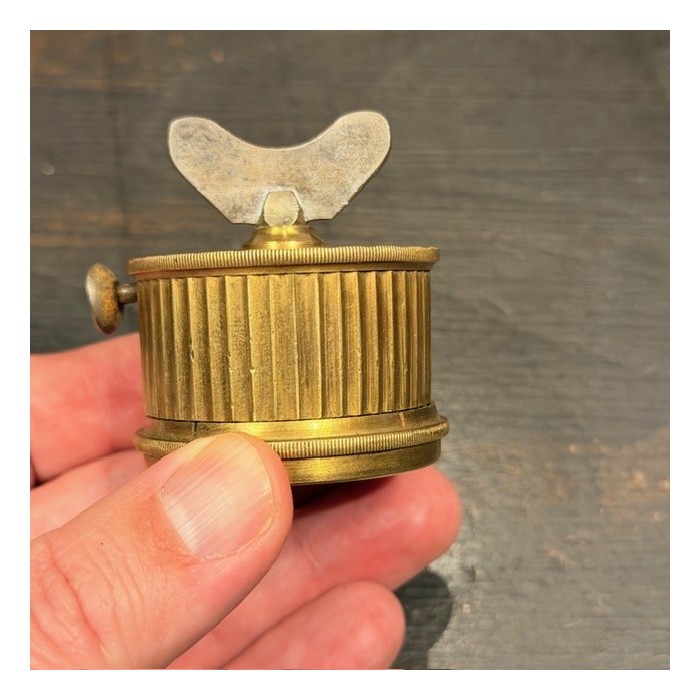
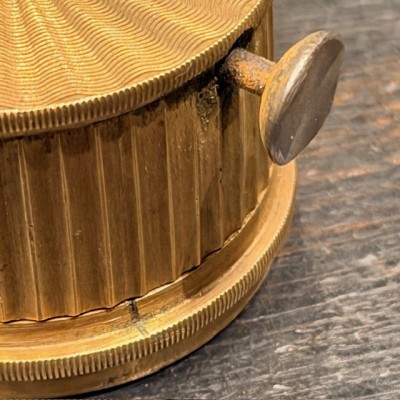
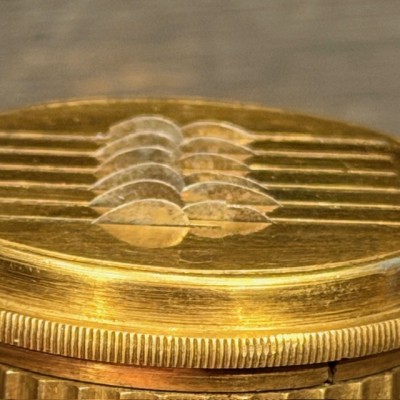
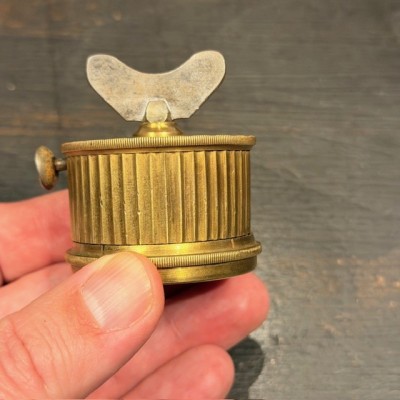
12-blade gilded brass scarificator by Maison Collin et Cie
Antique medical instrument
Late 19th century: Circa 1875-1895
Still working, not jammed
12-blade gilded brass medical scarificator – Maison Collin et Cie (Paris - 1875 / 1895)
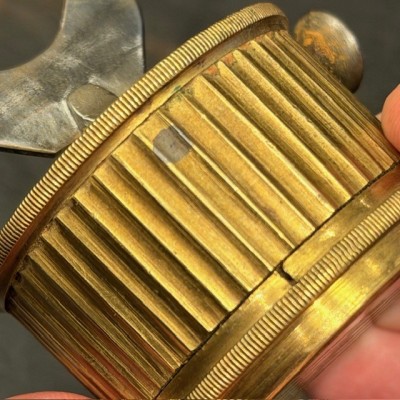
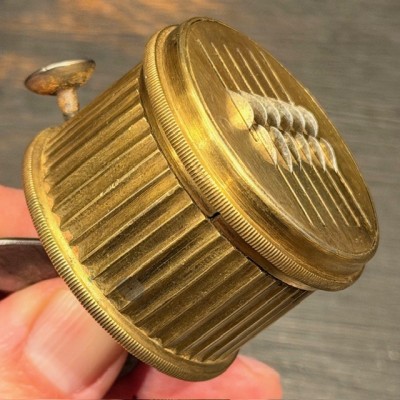
Cylindrical medical instrument in a so-called barrel shape in gilded brass.
What was this instrument used for and when was it used?
This scarificator was intended to perform local bloodletting (as opposed to general bloodletting performed at the vein with a single lancet or phlebotome). It was almost systematically associated with the application of cupping glasses:
The practitioner first placed a heated cupping glass on the skin (back, chest, nape of the neck, temples, or around a joint) to induce a local rush of blood (congestion).
They removed the cupping glass, applied the sole of the scarificator against the congested skin, and released the blades.
They immediately placed a cupping glass back over the twelve small incisions so the vacuum would draw out the blood.
This practice, inherited from humoral theory yet still very common throughout the 19th century, was prescribed to treat local inflammations, pulmonary congestion, pleurisy, neuralgia, headaches, or rheumatic pain.
How did the Scarificator work?
The internal mechanism relies on a clockwork spring driving two parallel shafts each carrying six curved steel lancets:
Cocking: By turning the upper butterfly key, the internal spring is tensioned and the twelve blades are retracted inside the housing. The cutting depth can also be adjusted by slightly screwing or unscrewing the sole.
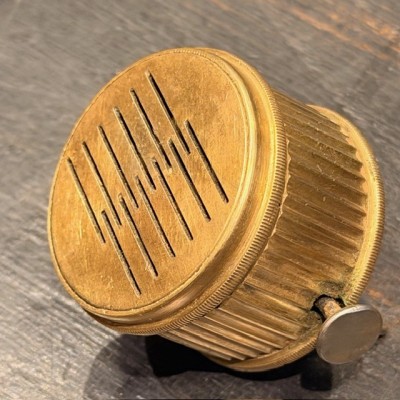
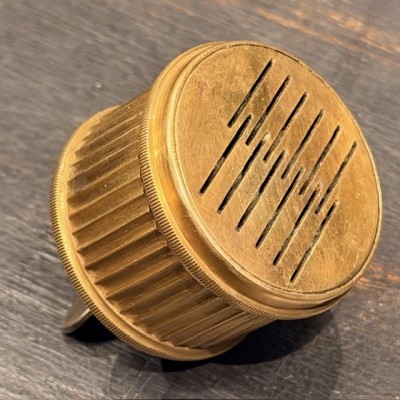
Release: A simple press on the side button releases the spring; the two rows of six lancets describe a lightning-fast arc through the slots in the sole, incising the skin in a fraction of a second before retracting.
Was it effective or useless and painful?
On the level of pain: The mechanical scarificator had been invented specifically in the 18th century (and perfected in the 19th) to limit the pain and apprehension of the patient.
Whereas a surgeon previously had to make a dozen small cuts one after another freehand with a lancet, the spring mechanism made all twelve incisions simultaneously in a fraction of a second. The speed of the movement made the prick sharp yet very brief, noticeably more bearable than manual scarification.
On the medical level: From a strictly modern physiological standpoint, extracting a few tens of milliliters of blood had no real curative effect on infections or internal diseases (pneumonia, pleurisy, etc.).
However, the cupping glass produced a temporary counter-irritant and local decongestant effect; by creating controlled skin inflammation and slightly reducing local tissue pressure, it could provide temporary relief from certain muscular or joint pains, while remaining overall ineffective, or even weakening, against the serious pathologies for which it was used at the time.
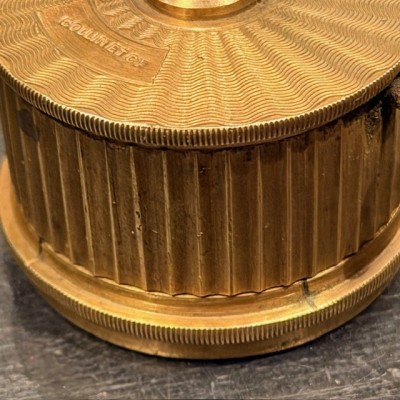
The body is decorated with fine vertical fluting framed by two knurled borders.
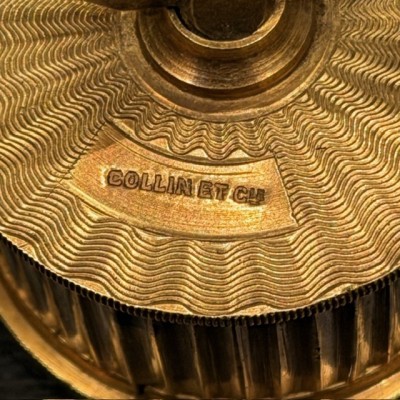
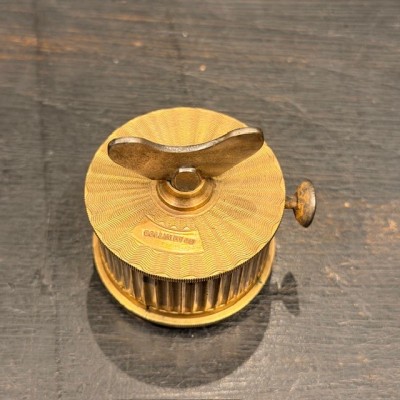
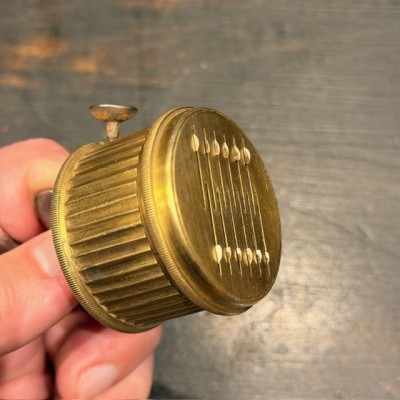
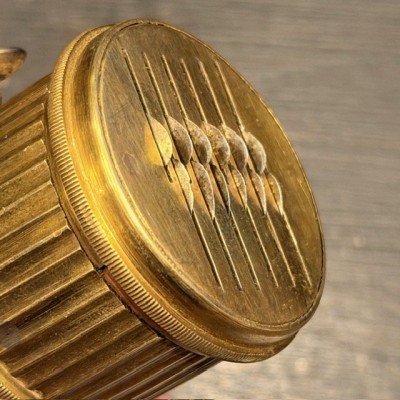
The upper plate features a fine radiating engine-turned (guilloché) pattern in which the maker's mark is set.
It is topped by a steel butterfly cocking key, while release is activated by a side push-button also in steel. The lower sole is pierced with twelve parallel slots arranged in two rows through which twelve small steel lancets emerge.
Condition: Good overall state of preservation with its original patina, light surface oxidation on the steel parts, and minor signs of use on the brass.
Dimensions: Diameter: 4.5 cm - Total height: 5 cm
Materials: Gilded brass, steel
Signature: "COLLIN ET CIE" engraved in a cartouche on the upper plate
Dating: Circa 1875 – 1895
Maison Collin and dating:
This instrument comes from the workshops of the famous Parisian firm Collin, one of the most prestigious surgical instrument manufacturers in the world in the late 19th century.
Successor to the workshop founded by Charrière in 1820, the company was taken over in 1866 by Robert and Anatole Collin (business name Robert et Collin), then run by Anatole Collin alone from 1874 under the business name "Collin et Cie" (before adopting the signature "Collin" alone at the turn of the 20th century).
The "COLLIN ET CIE" stamp thus makes it possible to date the manufacture of this scarificator precisely between 1874 and the 1890s.
Still working, not jammed
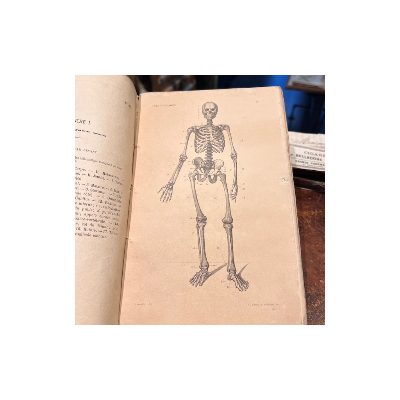
Anatomical Atlas by A. Bossu
Anthropology - End of the XIXth century
20 engravings of Anatomy by Léveillé
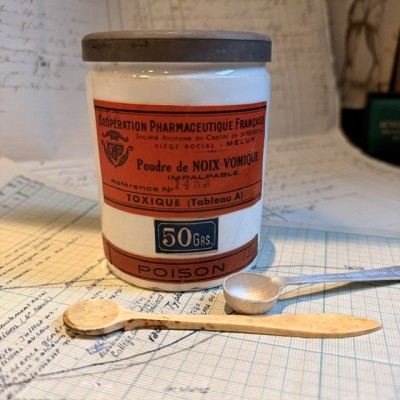
Impalpable Nux Vomica powder
White earthenware pot
Red POISON and TOXIC label
Signaling to the pharmacist that it is imperative to keep apart the other substances in the cabinet of toxic substances, the famous poison cabinet.
It comes from an old cellar-laboratory in a Parisian pharmacy. The bottles had not moved since the late 1950s on the shelves. The cellar had served as a laboratory for medical analyses and a laboratory for magistral preparations of the pharmacy from 1900 until around 1950.
EMPTY
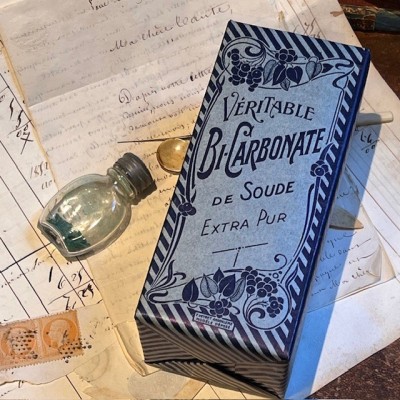
Bi-Carbonate de Soude - Sodium bicarbonate
Antique cardboard pharmacy box
Beautiful typography typical of the Belle Époque: circa 1910-1920
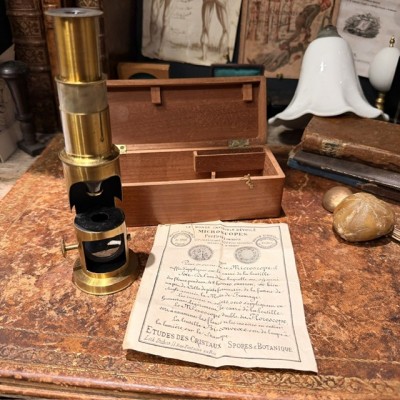
Antique drum microscope
In it's mahogany wooden box and its vintage brochure
For botanist, entomologist
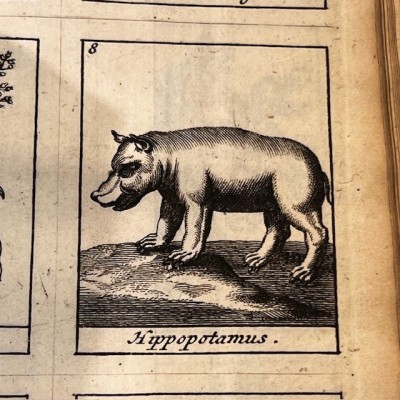
Dictionnaire Universel des Drogues Simples
Universal dictionnary of Simple Drugs
By Nicolas Lemery
An antique illustrated pharmacopoeia from 1727 - A Dutch pirated edition
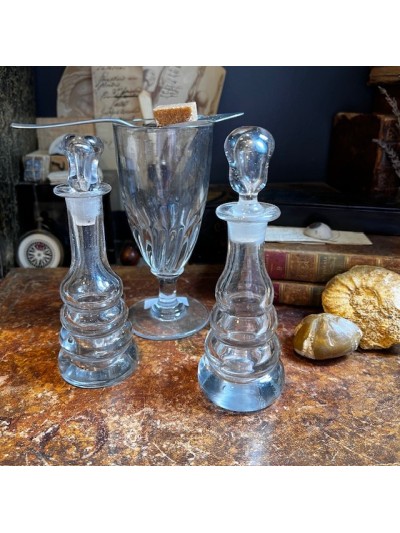
An antique absinthe topette (decanter)
4 Beaded Topette
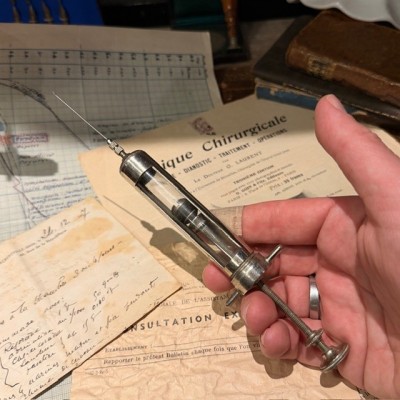
Syringe for antidiphtheria serum: Dr Roux's method
Without box
Early 20th century
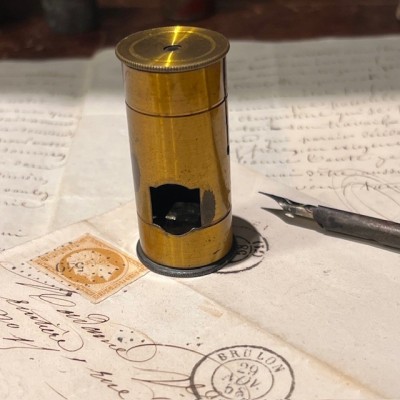
Floroscope
Botanist's microscope
Pocket microscope Late 19th - early 20th century
Warning: Here composed of 2 Stanhope lenses
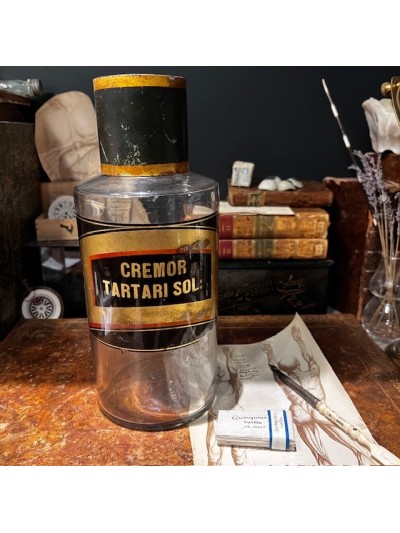
Cremor tartari sol - Cream of tartar
Potassium bitartrate
Pharmacy jar - Herbalism - Apothecary bottle
Late 19th century
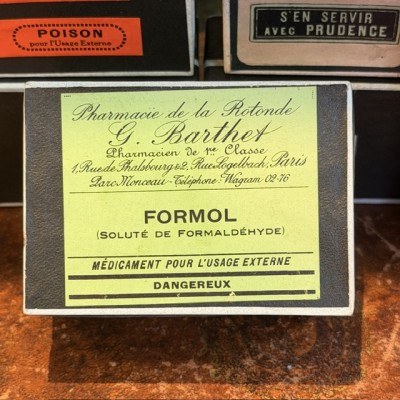
Antique labels in a pharmacy box for cures made of canvas cardboard
Formalin label
The pharmacist used his boxes of medicine to put away the labels he would then put on the bottles that he would resell to his customers.
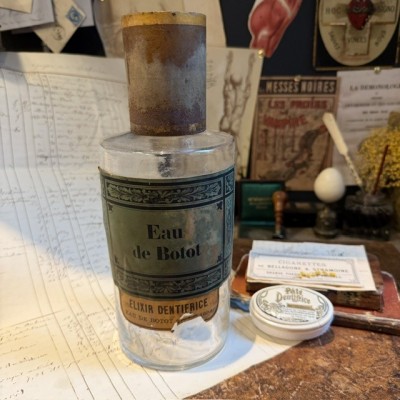
Eau de Botot - Tooth-cleansing Elixir
CODEX 1884
Antique 19th-century pharmacy bottle
EMPTY
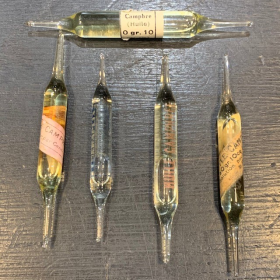
Bulb for hypodermic injection - Camphor (circa 1920)
various manufacturers
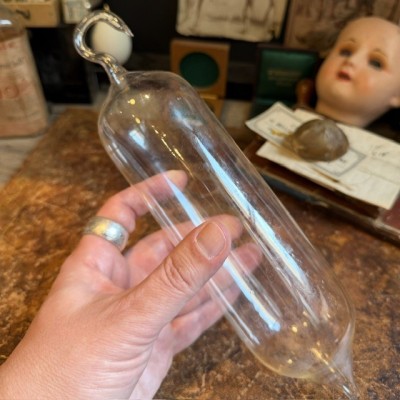
Antique sodium chloride infusion bulb
500cm3
in its original box - Still full
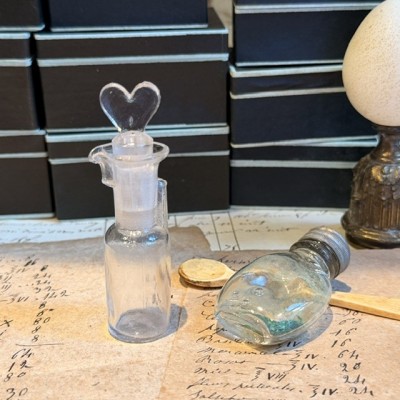
Dropper bottle
Antique pharmacy bottle - 1920-30's
Glass stopper honed in the shape of a heart for better grip
EMPTY
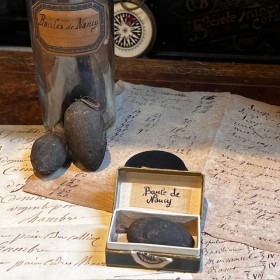
Boule de Nancy - Genuine Mars Vulnerary Ball - Steel Ball
This iron-containing ball was once considered a miracle cure for many ailments and injuries.
The Boule de Nancy is sold individually in a small antique drugstore box
Unavailable today
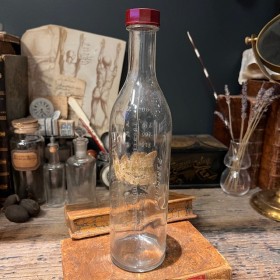
Horseradish syrup
Grams / Tablespoons - Graduated bottle
in French: Grammes / Cuillères à soupe
Antique medicine bottle
Apothecary
12-blade gilded brass scarificator by Maison Collin et Cie
Antique medical instrument
Late 19th century: Circa 1875-1895
Still working, not jammed