

- New
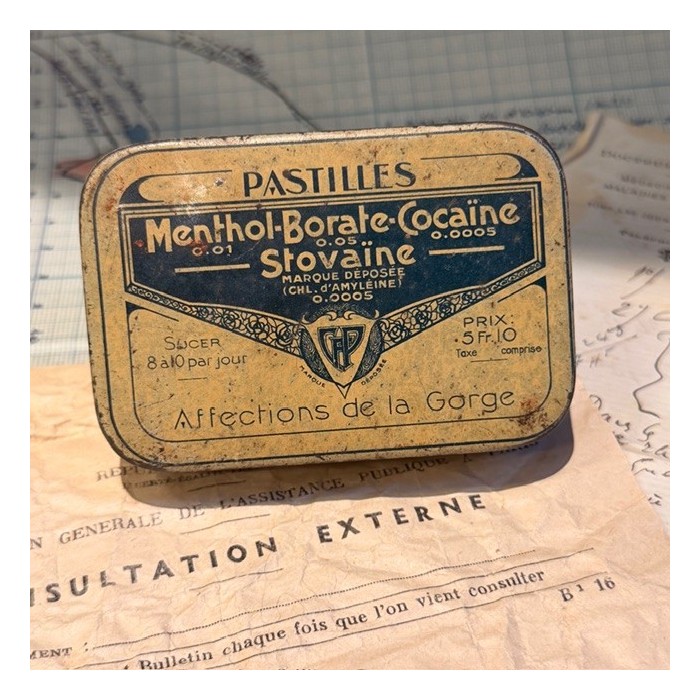
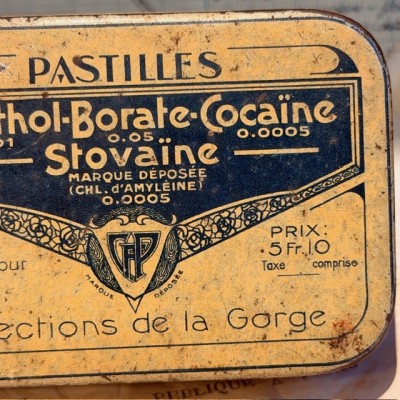
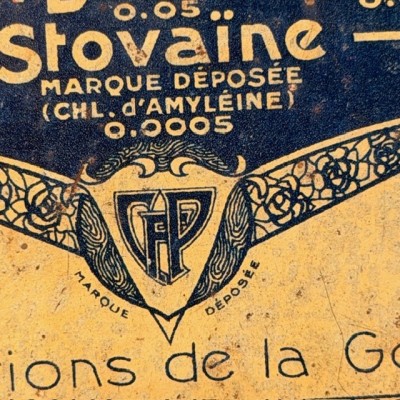
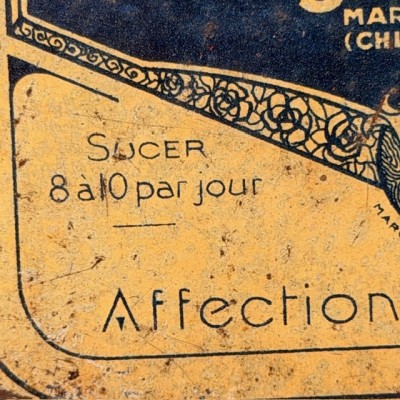
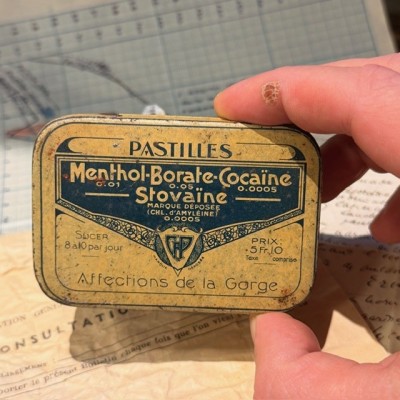
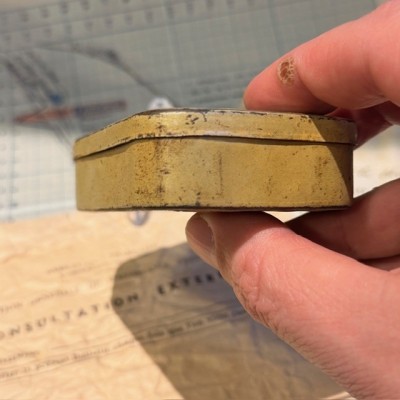
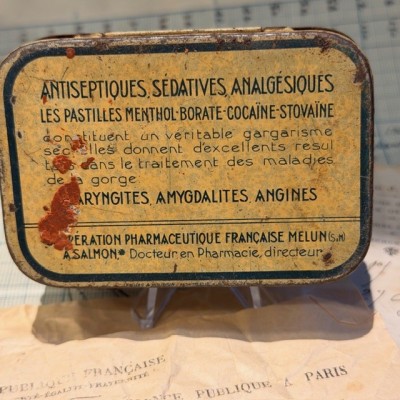
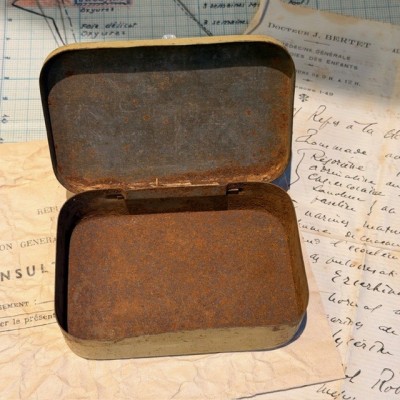
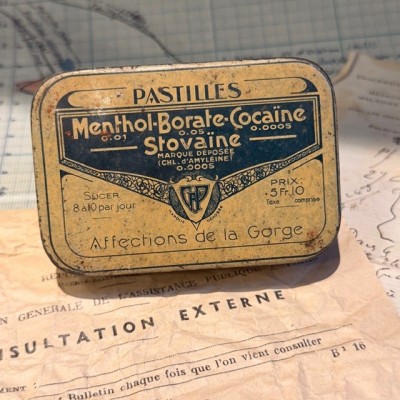
Metal box of breath mints with cocaine
Box of pastilles Menthol-Borate-Cocaïne-Stovaïne from CPF Laboratories
1920's
EMPTY
Metal box of breath mints with cocaine.
Box of pastilles Menthol-Borate-Cocaïne-Stovaïne of Dr Salmon of the CPF ( French Pharmaceutical Cooperation) so called The Cooper.
Between 1900s in 1950 it was not rare to see the cocaine as ingredient in tablets, particulary for the affections of the throat.
Here it's a 1920 box with a beautiful typical typography of this period.
It is recommended to you to suck 8 in 10 pastilles a day…
Dimensions: 8x5.5cm
EMPTY
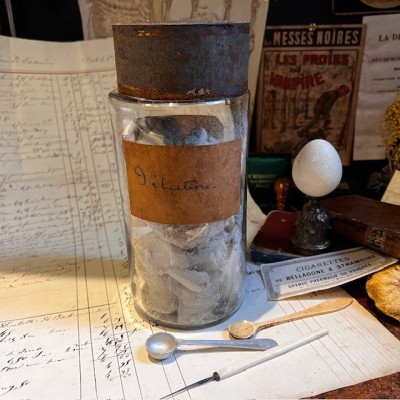
Gelatine
Antique pharmacy bottle - Wide-mouth apothecary jar.
19th-century mouth-blown glass
There is still some product left inside
A fascinating artifact from the history of pharmacology
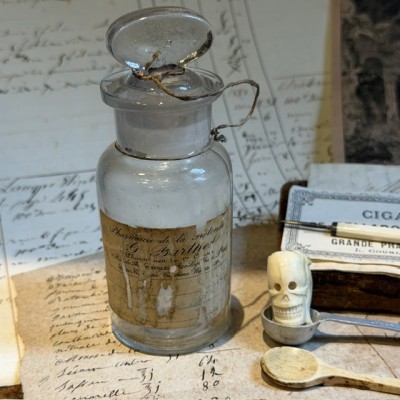
Berthet - Pharmacie de la Rotonde
Antique pharmacy bottle
EMPTY
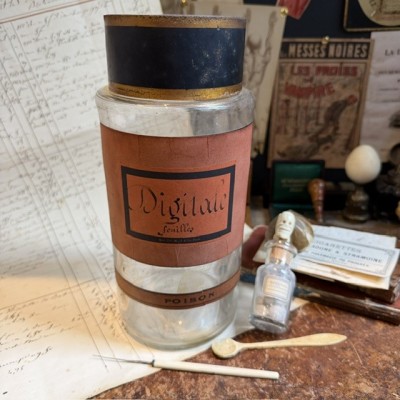
Foxglove leaves - POISON
Antique pharmacy bottle - 19th-century mouth-blown glass
Red POISON label
Signaling to the pharmacist that it is imperative to keep apart the other substances in the cabinet of toxic substances, the famous poison cabinet.
A fascinating testimony to pharmacology
It comes from an old cellar-laboratory in a Parisian pharmacy. The bottles had not moved since the late 1950s on the shelves. The cellar had served as a laboratory for medical analyses and a laboratory for magistral preparations of the pharmacy from 1900 until around 1950.
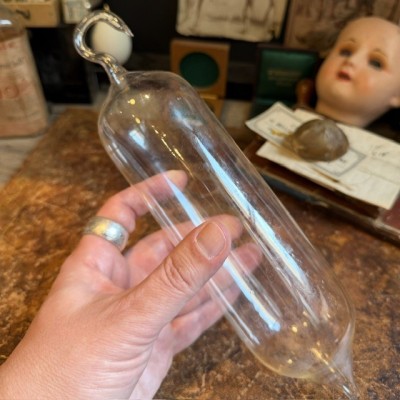
Antique sodium chloride infusion bulb
500cm3
in its original box - Still full
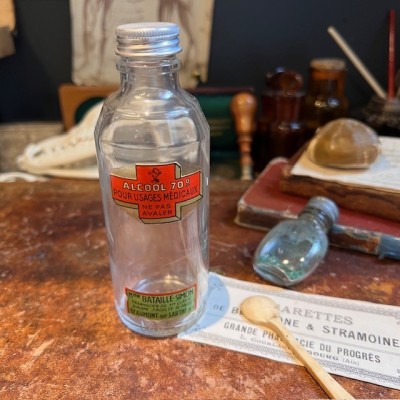
70° alcohol
Antique pharmacy bottle - Apothecary
Mrs Bataille-Simon, First Class Pharmacist in Beaumont sur Sarthe - Tel 9
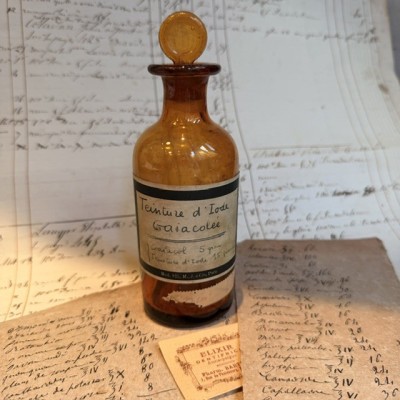
Gaiacolated Tincture of Iodine
Antique pharmacy bottle
EMPTY

Mercury Proto-Iodide - Syphilis Treatment
Antique pharmacy bottle.
Red ‘POISON’ label
Indicating to the pharmacist that it must be stored separately from other substances in the cabinet for toxic substances, the famous "poison cabinet".
It comes from the former cellar-laboratory of a Parisian pharmacy. The bottles had not been moved from the shelves since the late 1950s. The cellar had served as a medical analysis laboratory and a laboratory for the pharmacy’s compounded preparations from 1900 until around 1950.
Period: Late 19th century - Very early 20th century (circa 1890–1910)
EMPTY
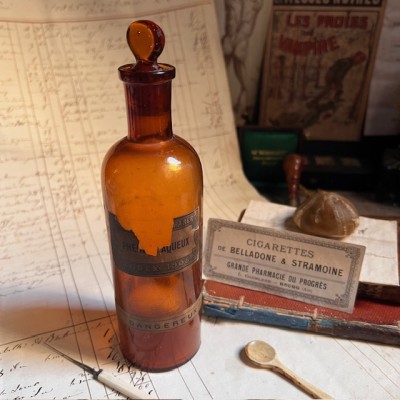
Phénol Aqueux
Antique pharmacy bottle
Green label: SUBSTANCE TO BE SEPARATED - CODEX 1908
This means that this bottle had to be kept separate from the others because it was dangerous - POISON
EMPTY
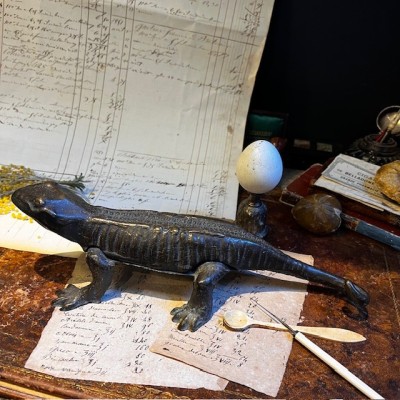
Salamander - Pharmacy corkscrew in bronze
XIXth century
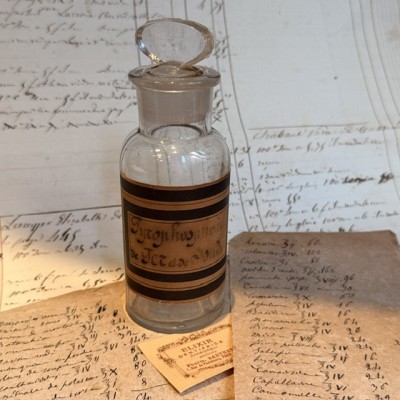
Iron & Soda Pyrophosphate
Antique pharmacy bottle
EMPTY
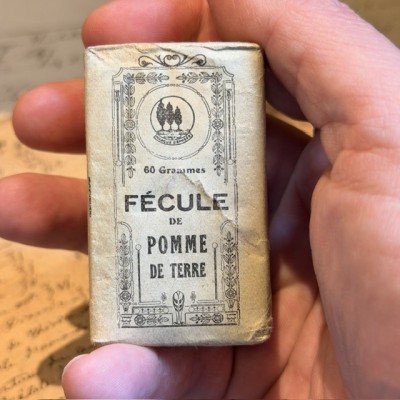
Packet of Potato Starch
Circa 1920
New old stock

Solution N°153
Antique pharmacy bottle
Apothecary vial
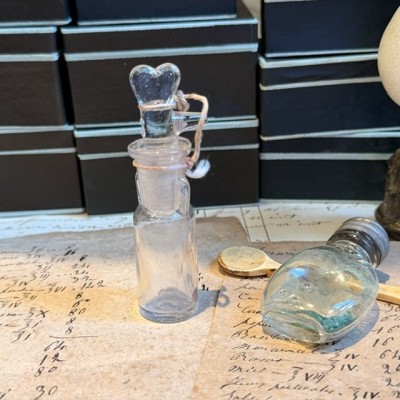
Dropper bottle
Antique pharmacy bottle - 1920-30's
Glass stopper honed in the shape of a heart for better grip
EMPTY
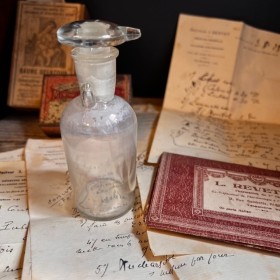
Antique glass dropper in white glass
Apothecary - Pharmacy
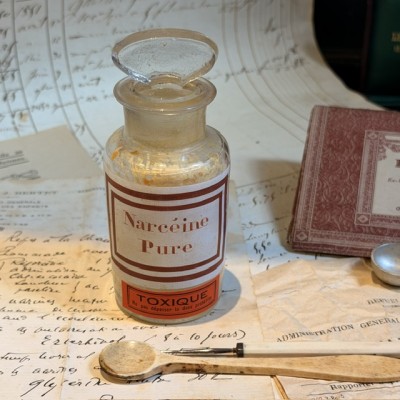
Narceine - Opium Derivative
Antique pharmacy bottle made of blown glass and enameled painted label.
Red TOXIC label
Signaling to the pharmacist that it is imperative to keep apart the other substances in the cabinet of toxic substances, the famous poison cabinet.
Dating: 19th century
EMPTY - The bottle is blocked and does not open, sealed by time
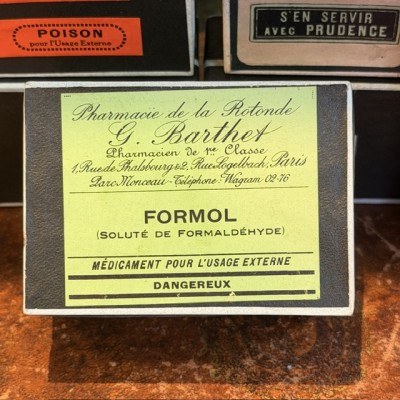
Antique labels in a pharmacy box for cures made of canvas cardboard
Formalin label
The pharmacist used his boxes of medicine to put away the labels he would then put on the bottles that he would resell to his customers.
Metal box of breath mints with cocaine
Box of pastilles Menthol-Borate-Cocaïne-Stovaïne from CPF Laboratories
1920's
EMPTY