

- New
Vincent’s Anti-Mucus Purifying Pills
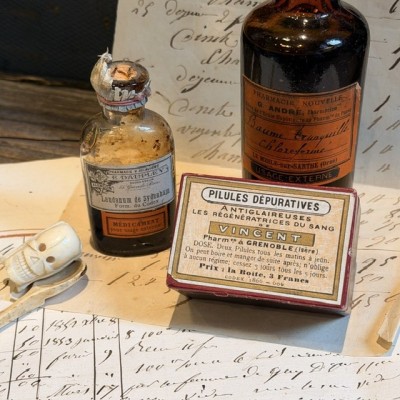
Antique pharmacy box for medicine, made of cardboard
Period: Late 19th century (circa 1885–1895)
Vincent’s Anti-Mucus Purifying Pills
Vintage cardboard pharmacy box for medicine
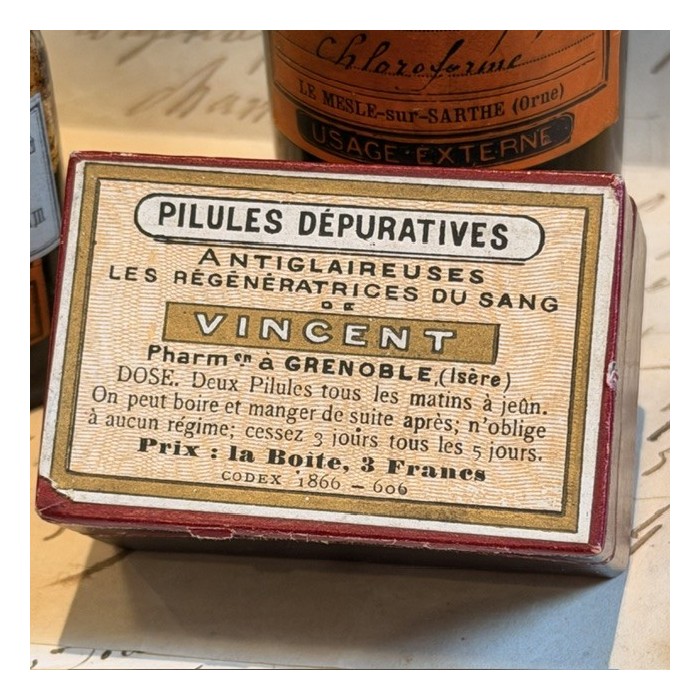
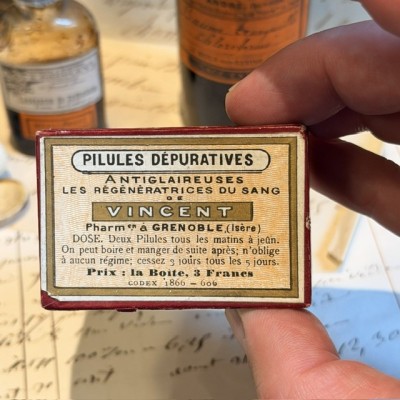
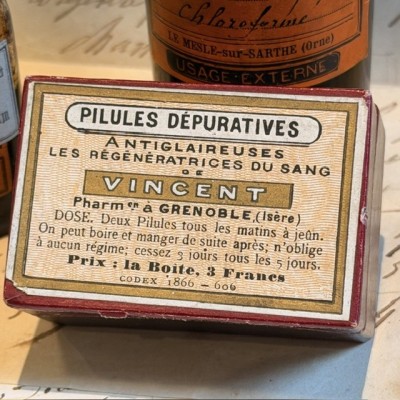
Cardboard pharmacy box for the Anti-Mucus Purifying Pills created by pharmacist Auguste Vincent, who practiced at 8 Place Victor-Hugo in Grenoble.
Auguste Vincent was a prominent figure in French pharmacy during the late 19th century. An innovator in marketing and mail-order sales, he widely distributed his *Treatise on Diseases* and published advertisements in the national press offering to ship his remedies by mail.
In 19th-century medicine, which was still rooted in humoral theory, these “purifying” and “mucus-dissolving” pills were prescribed to “purify the blood” and rid the body of toxic mucus believed to cause fatigue, skin conditions, or digestive disorders. The product was formulated using laxative plant resins (scammony, jalape, aloe) and extracts from depurative plants (burdock, wild pansy, sarsaparilla).
The label cites the CODEX 1866 reference. The mention of this official compendium of the French pharmacopoeia under Napoleon III provided legal and medical credibility in the face of the quack remedies of the time.
The explicit reference to the 1866 Codex (which remained the sole legal standard in France until the publication of the 1884 revision), combined with Auguste Vincent’s establishment on Place Victor-Hugo in the mid-1880s and the printed price of 3 francs, allows us to date this box to the late 19th century (circa 1885–1895).
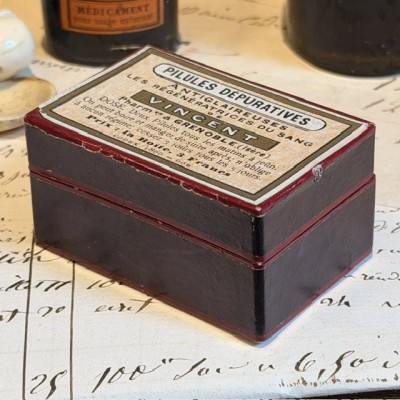
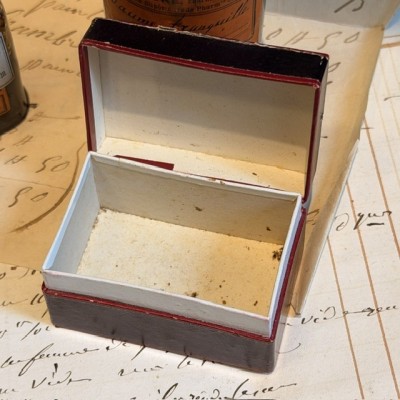
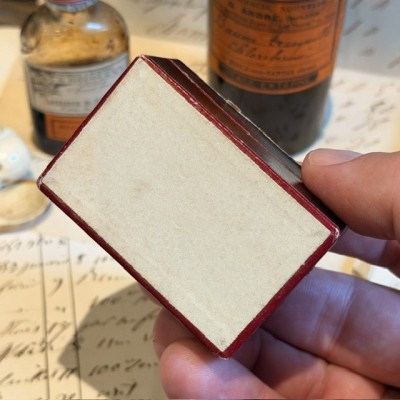
The box is made of stiff cardboard with red borders, a hinged lid, and its original printed label. The box is sold empty.
Period: Late 19th century (circa 1885–1895)
Dimensions: 5.6 cm x 3.8 cm - Height: 3 cm
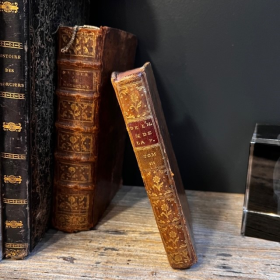
De l'Homme et de la Femme (Of Man and Woman)
By M. de Lignac - Volume 3
Anatomy of procreation - 1779
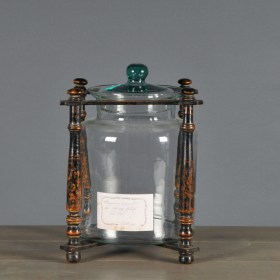
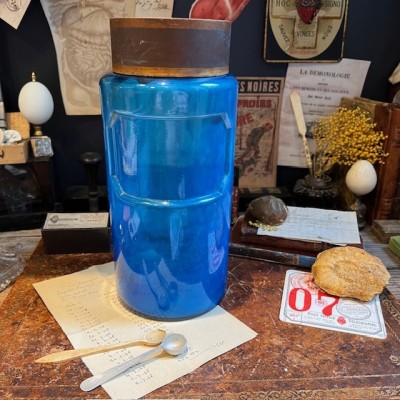
Cobalt blue glass pharmacy jar - Apothecary - Wide neck - H26cm - 19th
Apothecary jar with wide opening. Antique pharmacy bottle
Mouth-blown glass - Cobalt blue color tinted throughout
This large-capacity jar was a storage jar intended for stockpiling
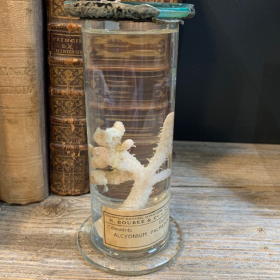
Museum jar - Wet specimen
Soft coral Alcyonium palmatum

Aqua Piris - Pear water
Antique pharmacy jar
Apothecary
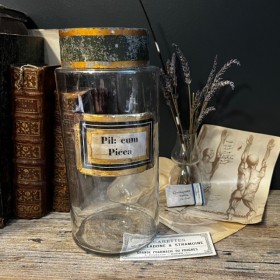
Cumin Epicea Pill - Pil: Cum Picea
Antique blown glass pharmacy jar
Apothecary
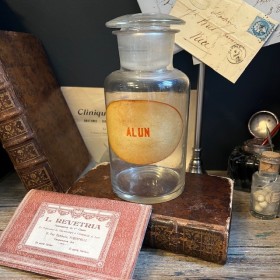
Alum
Antique pharmacy bottle
Apothecary vial
Color pigments have been added to the inside of the jar
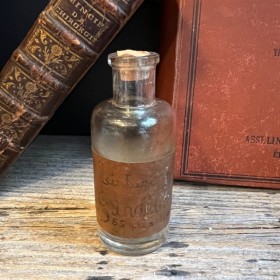
Grindelia Tincture
Antique medicine bottle
Apothecary
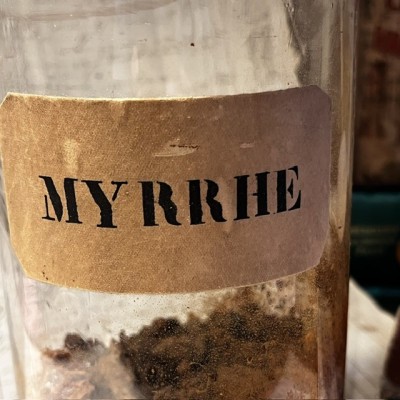
Myrrh
Antique pharmacy bottle - Wide-mouth apothecary jar.
19th-century mouth-blown glass
There is still some product left inside
A fascinating artifact from the history of pharmacology

Lower part of the lower mandible of a horse jaw
Antique model from Maison Auzoux in Paris
Paper-mâché pedagogical model
Model B - 1 year
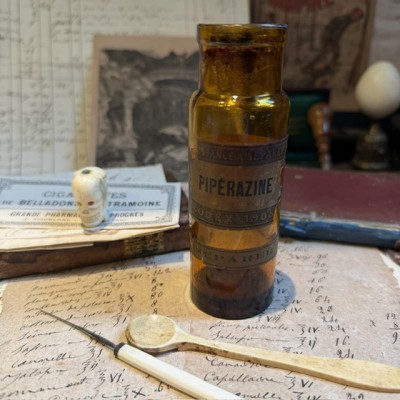
Piperazine
Antique amber glass bottle. The cap is missing
Green label: SUBSTANCE TO BE STORED SEPARATELY – CODEX 1908
Indicating to the pharmacist that it must be stored separately from other substances in the cabinet for toxic substances, the famous ‘poison cabinet’.
It comes from the former cellar-laboratory of a Parisian pharmacy. The bottles had not been moved from the shelves since the late 1950s. The cellar had served as a medical analysis laboratory and a laboratory for the pharmacy’s compounded preparations from 1900 until around 1950.
EMPTY
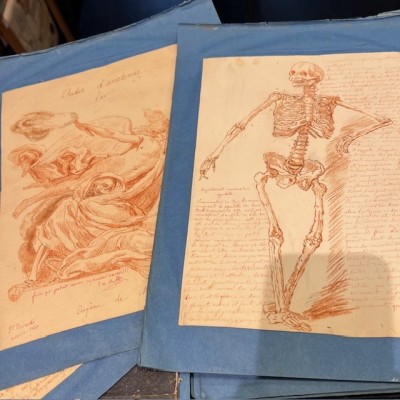
Red chalk drawing- Anatomical drawing
Anatomical study
Drawn by Eugène de Montchoisy in Saint-Brieuc in November 1840
These are not reproductions but original period drawings in red chalk.
You are purchasing one plate, not the entire set of plates
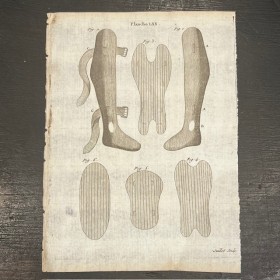
Antique surgical board
From Benjamin Bell's Complete Course in Surgery, published in 1796
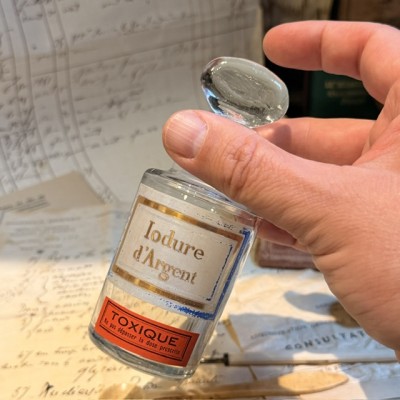
Silver iodide
Antique pharmacy bottle made of blown glass and enameled painted label with golden blue threads
Red TOXIC label
Signaling to the pharmacist that it is imperative to keep apart the other substances in the cabinet of toxic substances, the famous poison cabinet.
Dating: 19th century
EMPTY
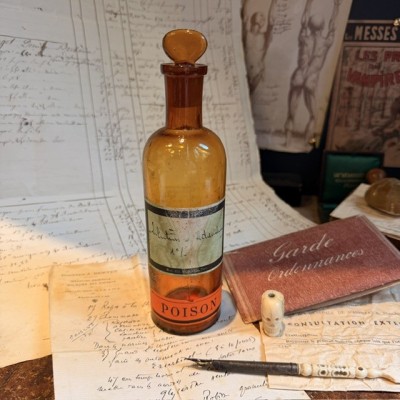
Adrenaline Solution at 1‰
Antique pharmacy bottle
Label leftovers: TO BE SEPARATED and POISON label
This means that this bottle had to be kept separate from the others because it was dangerous - POISON
EMPTY
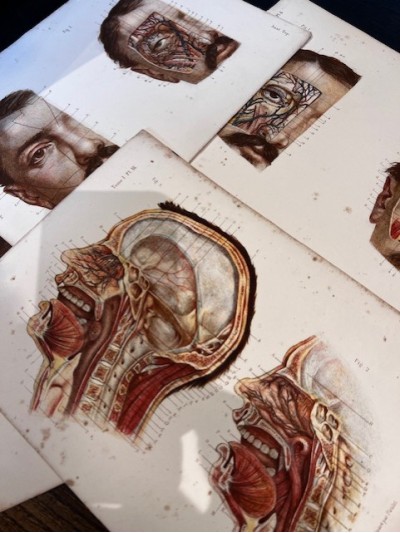
Anatomical chart by Paulet and Sarazin
From the Traité d'anatomie topographique (Treatise on topographical anatomy)
Published in 1867-1870
Chromolithography
You buy 1 plate, not the whole set
Vincent’s Anti-Mucus Purifying Pills
Antique pharmacy box for medicine, made of cardboard
Period: Late 19th century (circa 1885–1895)