
- New
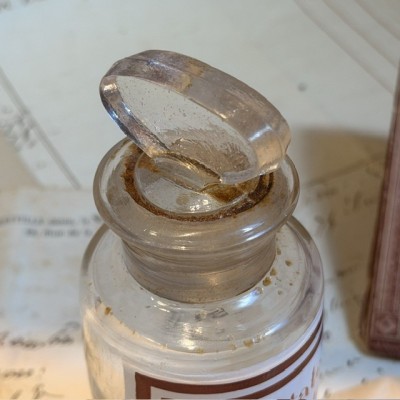
Silver nitrate
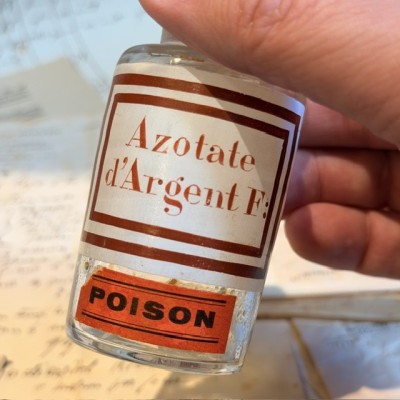
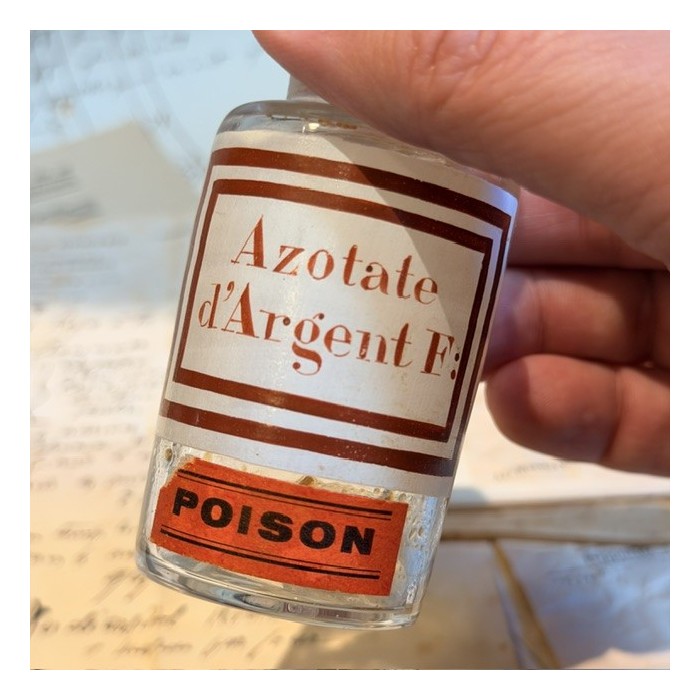
Antique pharmacy bottle made of blown glass and enameled painted label.
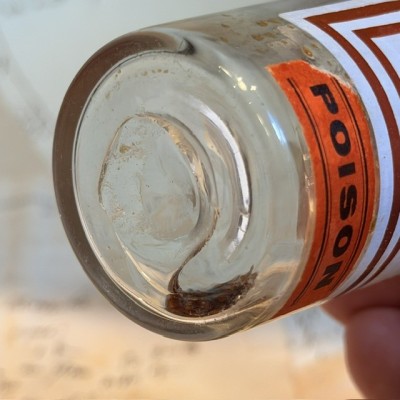
Red POISON label
Signaling to the pharmacist that it is imperative to keep apart the other substances in the cabinet of toxic substances, the famous poison cabinet.
Dating: 19th century
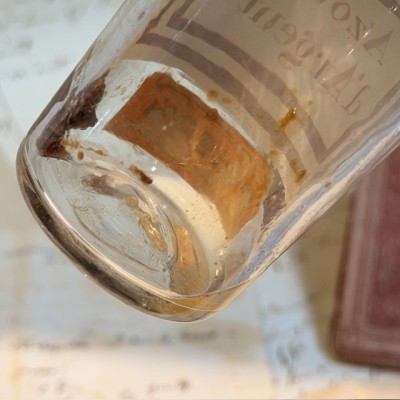
There is still some product inside but the cap is blocked and does not open.
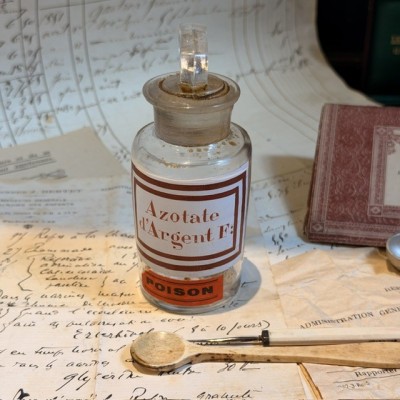
Silver nitrate
Antique pharmacy bottle made of blown glass and enameled painted label.
Red POISON label
Signaling to the pharmacist that it is imperative to keep apart the other substances in the cabinet of toxic substances, the famous poison cabinet.
Laboratory or pharmaceutical dispensary bottle, typical of the late nineteenth or early twentieth century.
Made of blown transparent glass, it has a trace of pontil visible on the bottom, reflecting traditional artisanal manufacturing. It has its original cap honed with emery BUT the bottle is blocked and does not open, sealed by time.
Beautiful enamelled label stenciled surrounded by a brown/red border. This baked enamel technique guaranteed great resistance to handling and chemicals in the pharmacy. A red regulatory label marked "POISON" is applied at the bottom, indicating the poisonous nature of the substance.
Silver nitrate in solution was a major antiseptic and caustic agent in 19th-century pharmacopeia.
Applied topically as a swab on mucous membranes or skin lesions, it was also used highly diluted as ophthalmic eye drops.
Highly corrosive and toxic, this silver salt caused severe chemical burns to the digestive system, leading to death by gastrointestinal perforation, while also exposing patients to the risk of argyria, a chronic toxicity that permanently stained the skin a slate-blue color in cases of overly frequent cutaneous use.
Height of the bottle: 11cm with blown glass cap - Diameter at the base: 4cm
Dating: 19th century
There is still some product inside but the cap is blocked and does not open.
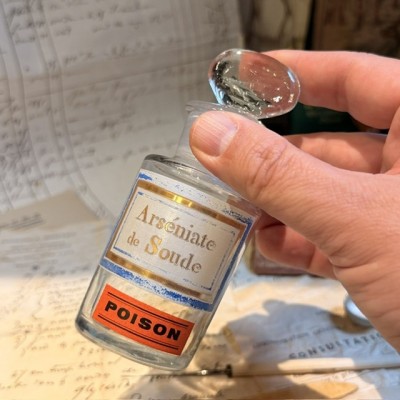
Arsenic - Sodium arsenate
Antique pharmacy bottle made of blown glass and enameled painted label with golden blue threads
Red POISON label
Signaling to the pharmacist that it is imperative to keep apart the other substances in the cabinet of toxic substances, the famous poison cabinet.
Dating: 19th century
EMPTY
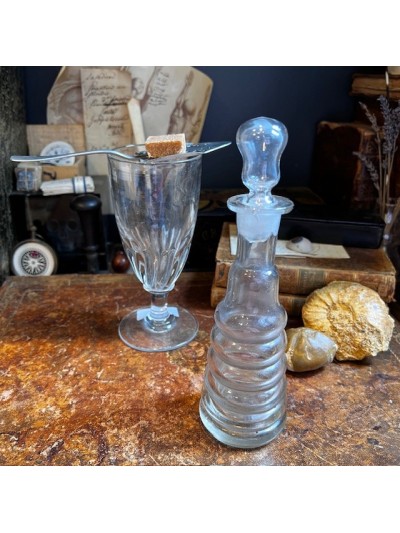
An antique absinthe topette (decanter)
6 Beaded Topette
Residue in the bottom of the carafe
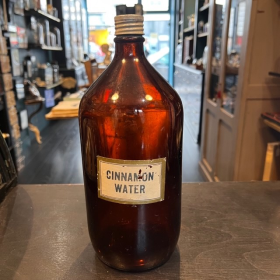
Cinnamon Water
Antique and large brown English pharmacy bottle

Solution N°153
Antique pharmacy bottle
Apothecary vial
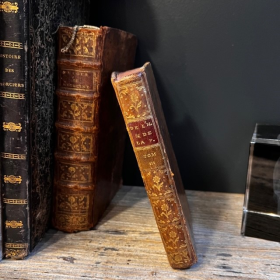
De l'Homme et de la Femme (Of Man and Woman)
By M. de Lignac - Volume 3
Anatomy of procreation - 1779
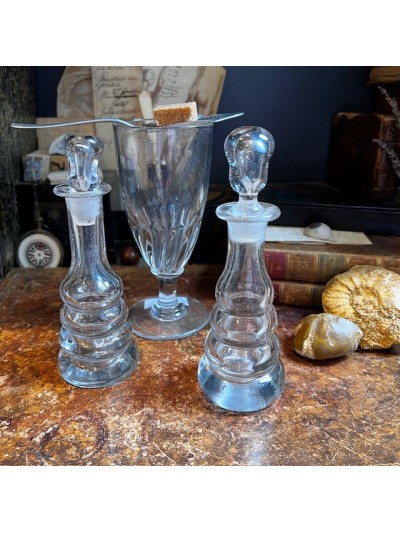
An antique absinthe topette (decanter)
4 Beaded Topette
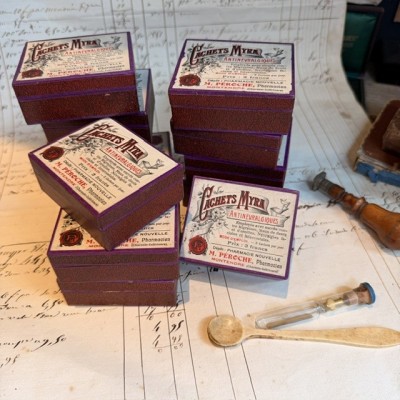
Antique pharmacy box for remedy made of canvas cardboard
Myra pills
Covering in sumptuous red maroquiné/chagrin paper, with edges and slices enhanced with a deep violet/purple very characteristic of the creations of the late nineteenth and early twentieth century: 1890/1910.
You buy 1 box but not the lot
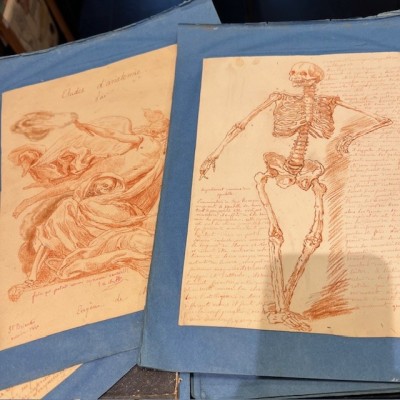
Red chalk drawing- Anatomical drawing
Anatomical study
Drawn by Eugène de Montchoisy in Saint-Brieuc in November 1840
These are not reproductions but original period drawings in red chalk.
You are purchasing one plate, not the entire set of plates
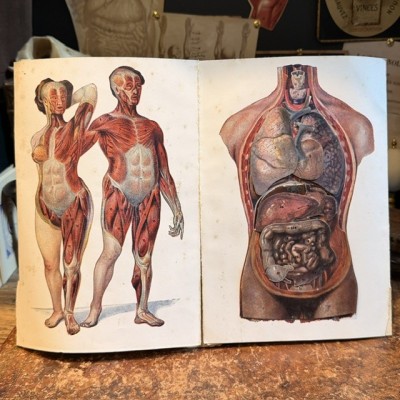
Man and Woman
Anatomy booklet with removable boards
Around 1930's
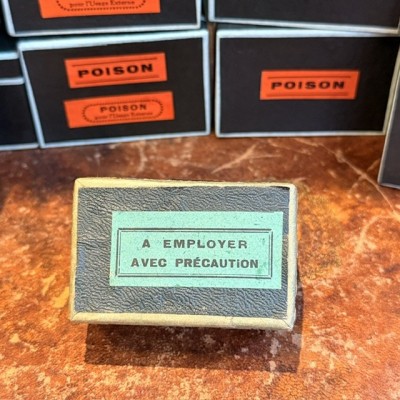
Antique labels in a pharmacy box for cures made of canvas cardboard
To be used with care label
The pharmacist used his boxes of medicine to put away the labels he would then put on the bottles that he would resell to his customers.
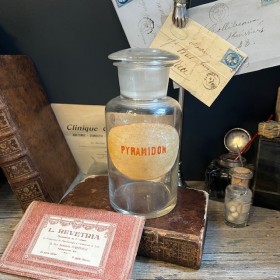
Pyramidon
Antique pharmacy bottle
Apothecary vial
Color pigments have been added to the inside of the jar
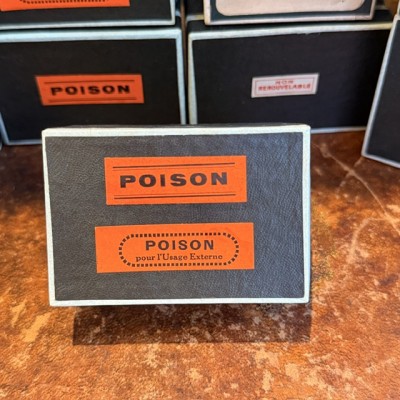
Antique labels in a pharmacy box for cures made of canvas cardboard
Poison label - Ref A
The pharmacist used his boxes of medicine to put away the labels he would then put on the bottles that he would resell to his customers.
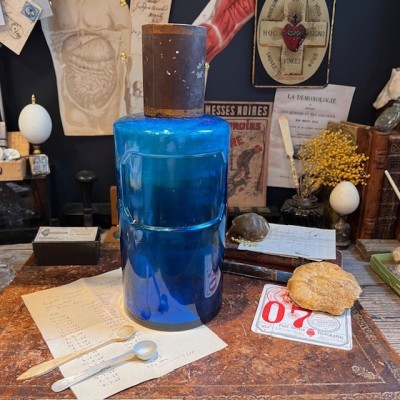
Large cobalt blue glass pharmacy bottle - Apothecary - Shouldered - H27.5cm - 19th century
Shouldered apothecary bottle - Antique pharmacy bottle
Mouth-blown glass - Cobalt blue color tinted throughout
This large-capacity jar was a storage jar intended for stockpiling
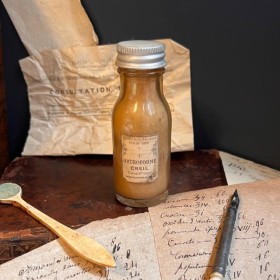
Orthoforme
Antique pharmacy bottle - Droguerie - Apothicaire
Silver medal at Paris 1889
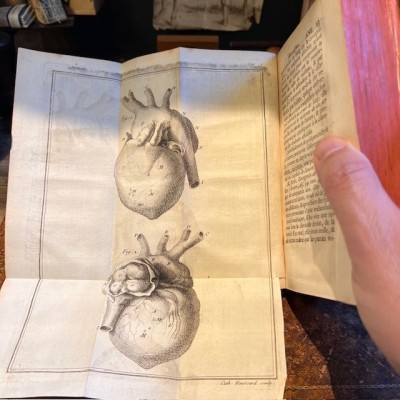
Bibliothèque Choisie de Médecine - Volume 6
Selected Library of Medicine
By François PLANQUE - 1749
Complete original edition with 5 fold-out plates
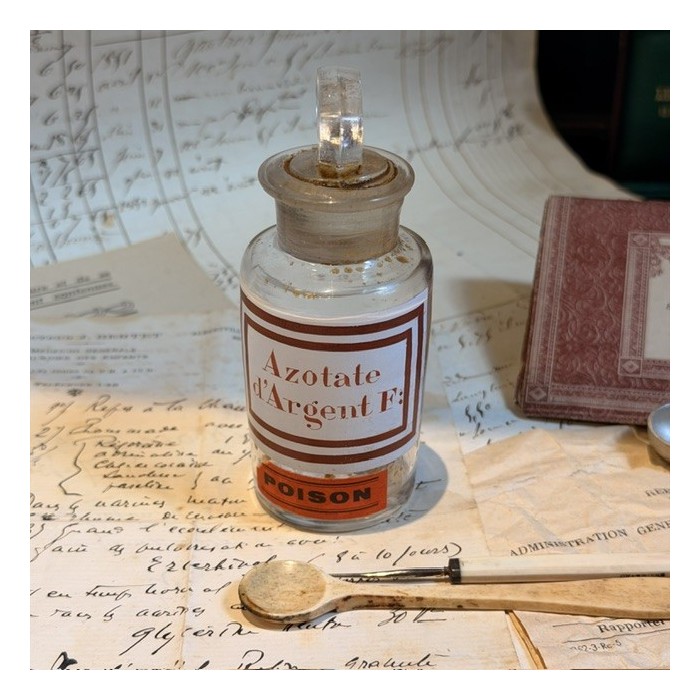
Silver nitrate
Antique pharmacy bottle made of blown glass and enameled painted label.
Red POISON label
Signaling to the pharmacist that it is imperative to keep apart the other substances in the cabinet of toxic substances, the famous poison cabinet.
Dating: 19th century
There is still some product inside but the cap is blocked and does not open.