
- New
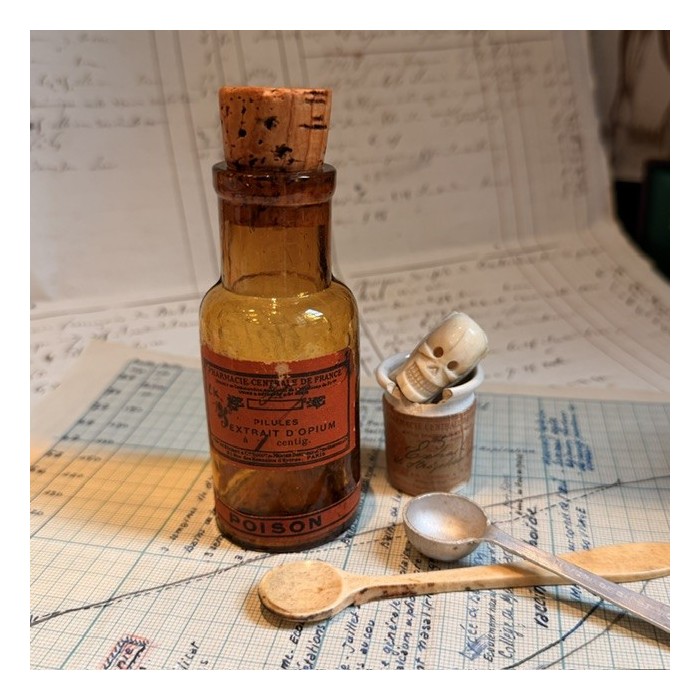
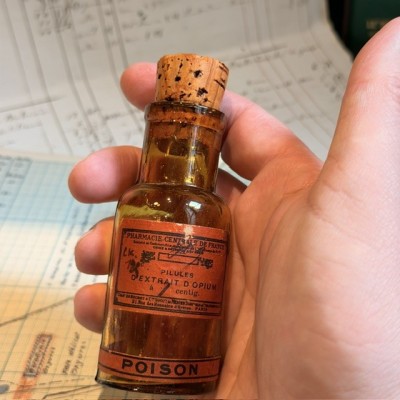
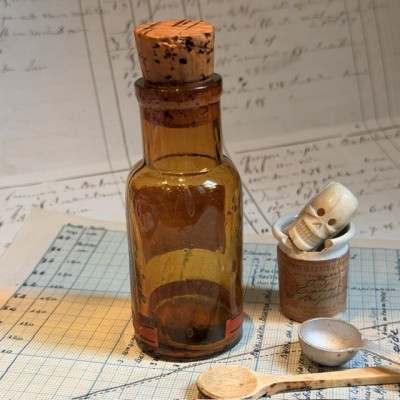
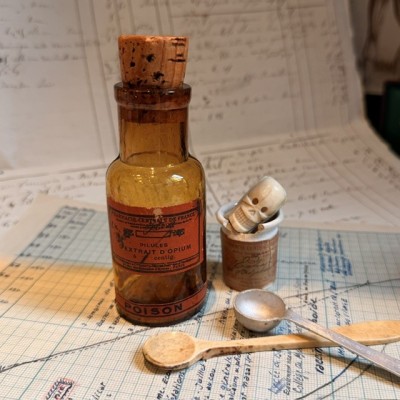
Opium extract pills
Antique pharmacy bottle.
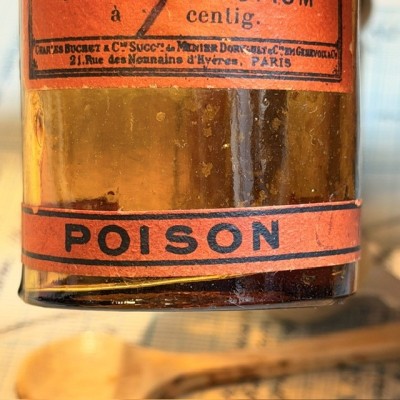
Red POISON label
Signaling to the pharmacist that it is imperative to keep apart the other substances in the cabinet of toxic substances, the famous poison cabinet.
It comes from an old cellar-laboratory in a Parisian pharmacy. The bottles had not moved since the late 1950s on the shelves. The cellar had served as a laboratory for medical analyses and a laboratory for magistral preparations of the pharmacy from 1900 until around 1950.
Dating: Early 20th century
EMPTY
Opium extract pills
Antique pharmacy bottle.
Red POISON label
Signaling to the pharmacist that it is imperative to keep apart the other substances in the cabinet of toxic substances, the famous poison cabinet.
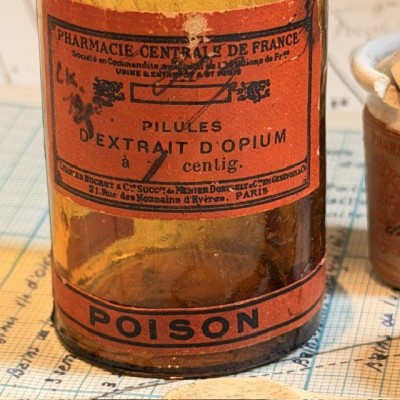
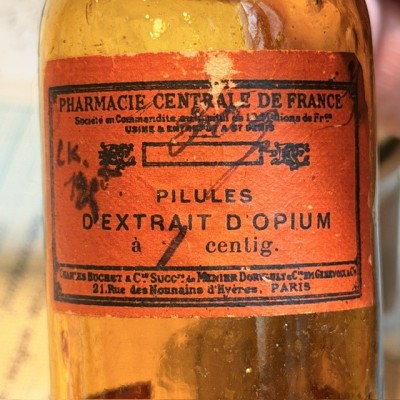
This bottle initially contained "Opium Extract Pills at 1 centigram", prepared by the famous Central Pharmacy of France, located at 21, Rue des Nonnains d'Hyères in Paris.
In the early twentieth century, opium extract was a pillar of pharmacopoeia.
Administered in the form of strictly dosed pills, it served mainly as a powerful analgesic to calm acute pain, as a major sedative to soothe the nervous system, and as a radical treatment against severe intestinal conditions such as diarrhea.
If its therapeutic virtues were unavoidable, its border with the poison was tiny: a too high dose caused a fatal respiratory depression, and its prolonged use led to a destructive dependence: opiomania.
The pharmacist’s handwritten annotations in black ink on the label recall the rigorous control that surrounded its delivery.
It comes from an old cellar-laboratory in a Parisian pharmacy. The bottles had not moved since the late 1950s on the shelves. The cellar had served as a laboratory for medical analyses and a laboratory for magistral preparations of the pharmacy from 1900 until around 1950.
Height of the bottle: 11cm with cap - Diameter: 4cm
Dating: Early 20th century
EMPTY
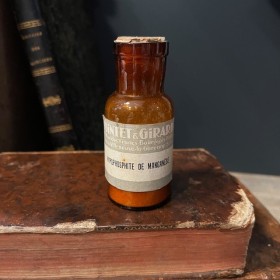
Hypophosphite de Manganèse
Antique pharmacy bottle
Apothecary vial
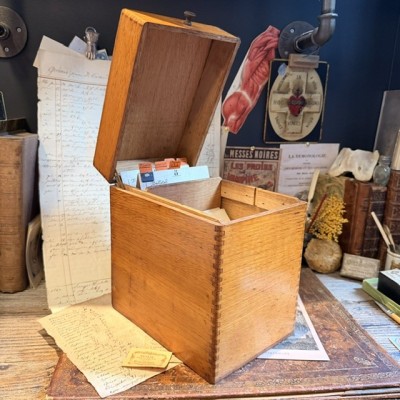
Oak desk card index cabinet - Antique pharmacy cabinet
Handcrafted
Period: 1910–1930
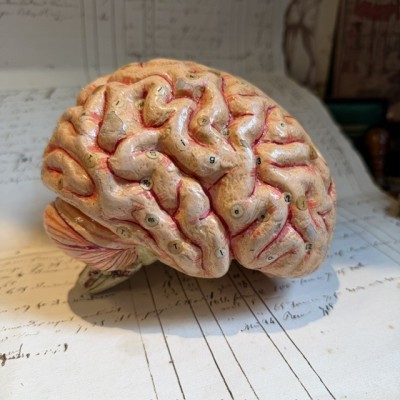
Painted papier-mâché anatomical model of the brain
Produced by Établissements Auzoux
Model No. 12 from the 1874 catalogue
Dismantlable, numbered model, used for medical teaching.
A rare item in excellent working condition
This is a 1:1 scale model of the brain, sold separately at the time as a demonstration model; it is not a brain that was found inside anatomical manikins.
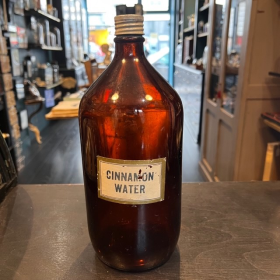
Cinnamon Water
Antique and large brown English pharmacy bottle
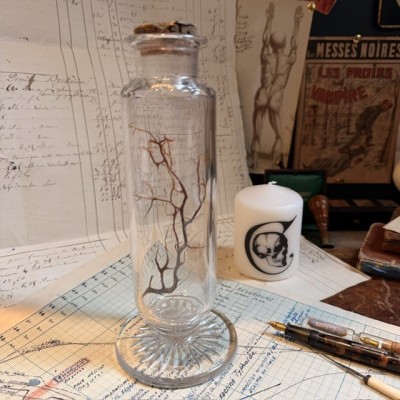
Antique pharmacy vase - Exhibition jar - Herbalist jar
Apothecary
Made of cut crystal and star-shaped base
Period: Late 19th century
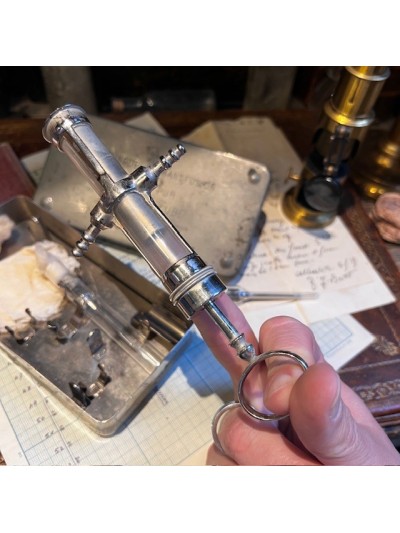
Doctor Louis Jubé pure blood transfusion syringe
For arm-to-arm transfusions
In its metal box
Around 1925/1930
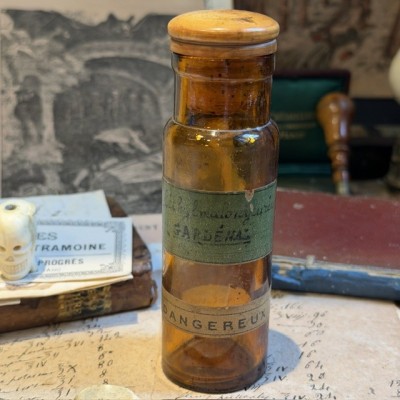
Gardénal - Phenobarbital - Barbiturates
Phényléthylmalonylurée
Antique amber glass bottle, with a boxwood and cork stopper.
Label: DANGEROUS
Indicating to the pharmacist that it must be stored separately from other substances in the cabinet for toxic substances, the famous ‘poison cabinet’.
It comes from the former cellar-laboratory of a Parisian pharmacy. The bottles had not been moved from the shelves since the late 1950s. The cellar had served as a medical analysis laboratory and a laboratory for the pharmacy’s compounded preparations from 1900 until around 1950.
EMPTY

Human jaws in porcelain mounted on a blackened wooden base
Anatomical dental model for dentists
19th century
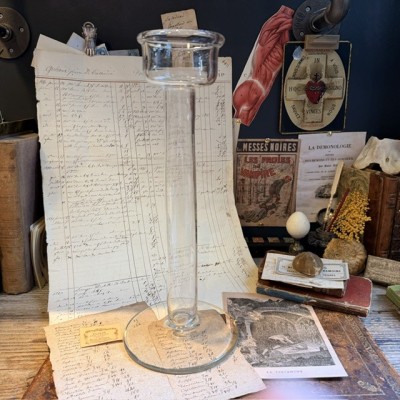
Test Tube with Special Bulb for Mercury Ureometer - 1900 - Pharmacy - Apothecary
Period: 1900 - Pharmacy - Apothecary
To be diverted into a soliflore vase
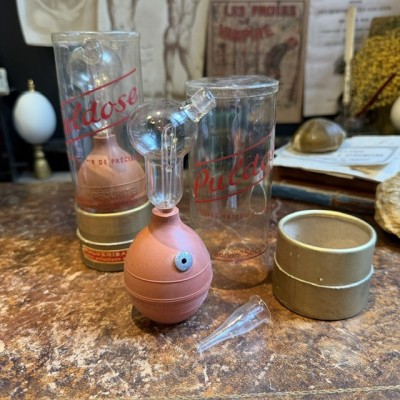
Puldose Nasal Spray for aqueous solutions - Antique remedy
In its Plastic box
Used in otolaryngology, it was intended for nasal or oral sprays in the treatment of colds and antiseptic treatment of the respiratory tract.
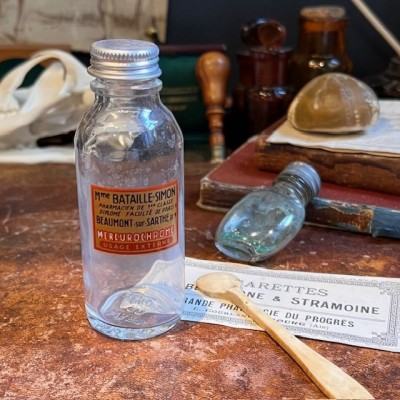
Mercurochrome
Antique pharmacy bottle - Apothecary
Mrs Bataille-Simon, First Class Pharmacist in Beaumont sur Sarthe - Tel 9
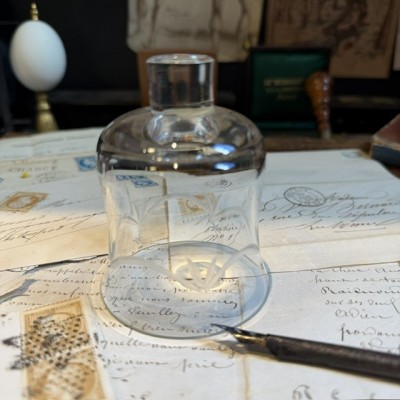
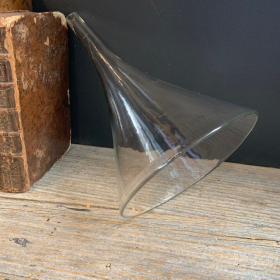
Small antique engraved glass bell
I believe these are antique glass pieces that were originally intended to be placed on a stand.
Repurpose them as small bells to showcase your small objects, such as a small skull, as shown here.
Sold individually
EMPTY
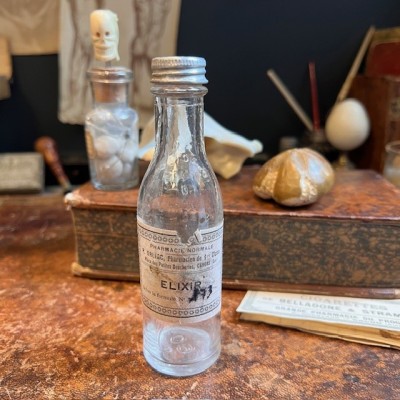
Elixir 173
Antique pharmacy bottle - Apothecary
Empty
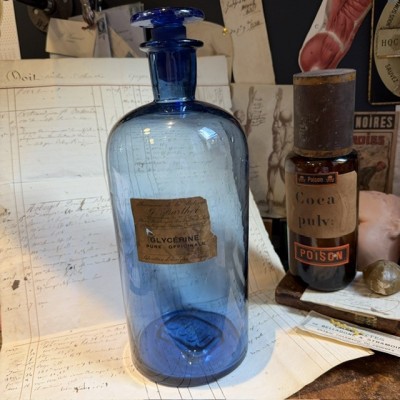
Glycérine pure officinale
Pure pharmaceutical-grade glycerine
Antique BLUE glass pharmacy bottle
EMPTY
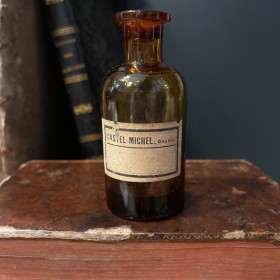
Castel - Michel perfumers
Antique perfume bottle
Apothecary vial
Opium extract pills
Antique pharmacy bottle.
Red POISON label
Signaling to the pharmacist that it is imperative to keep apart the other substances in the cabinet of toxic substances, the famous poison cabinet.
It comes from an old cellar-laboratory in a Parisian pharmacy. The bottles had not moved since the late 1950s on the shelves. The cellar had served as a laboratory for medical analyses and a laboratory for magistral preparations of the pharmacy from 1900 until around 1950.
Dating: Early 20th century
EMPTY