
- New
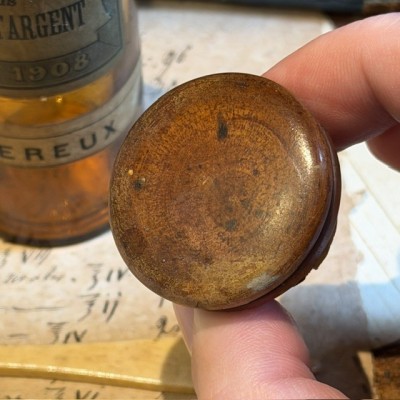
Silver Nitrate Sticks
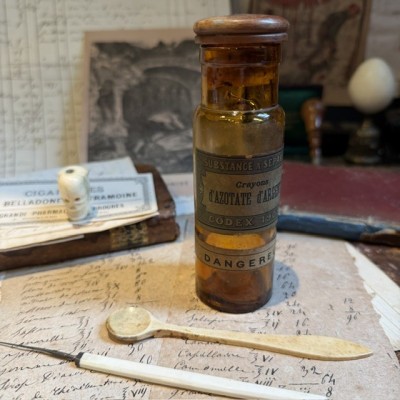
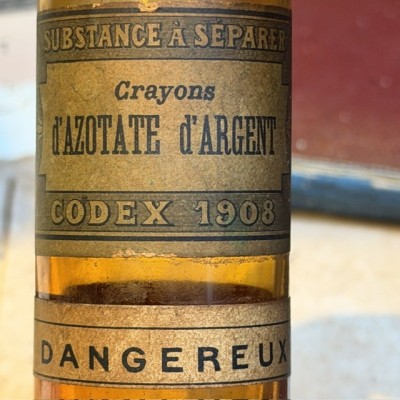
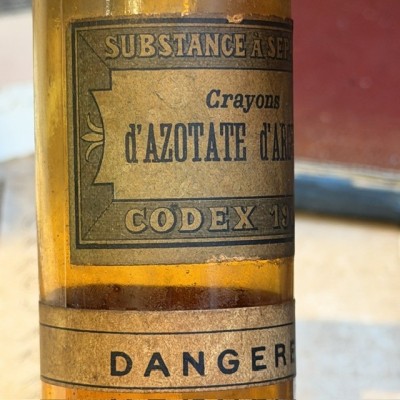
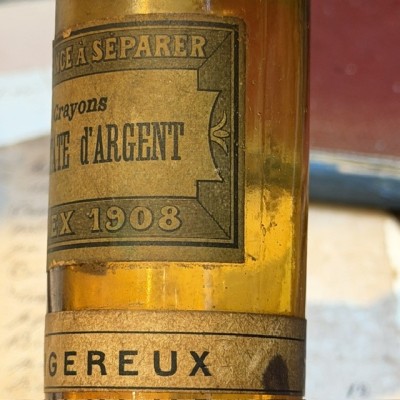
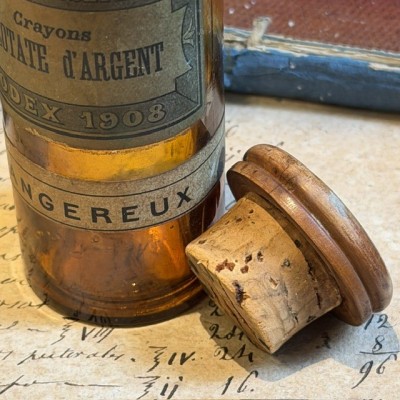
Antique amber glass bottle, with a boxwood and cork stopper.
Green label: SUBSTANCE TO BE STORED SEPARATELY – CODEX 1908
Indicating to the pharmacist that it must be stored separately from other substances in the cabinet for toxic substances, the famous ‘poison cabinet’.
It comes from the former cellar-laboratory of a Parisian pharmacy. The bottles had not been moved from the shelves since the late 1950s. The cellar had served as a medical analysis laboratory and a laboratory for the pharmacy’s compounded preparations from 1900 until around 1950.
EMPTY
Silver Nitrate Sticks
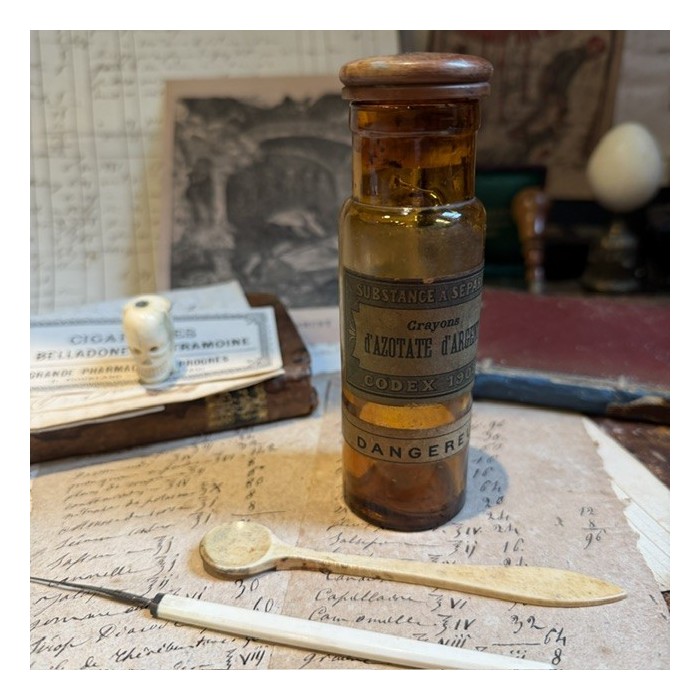
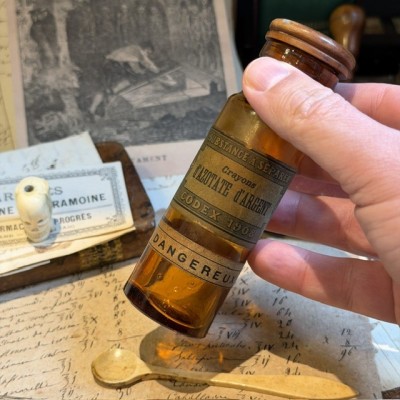
Antique amber glass bottle, with a boxwood and cork stopper.
Green label: SUBSTANCE TO BE KEPT SEPARATE – CODEX 1908
Indicating to the pharmacist that it must be stored separately from other substances in the cabinet for toxic substances, the famous ‘poison cabinet’.
Silver azotate (or silver nitrate) was presented in the form of small sticks (pencils) which were often fixed to a pencil holder for precise application.
These pencils were mainly used for their caustic and antiseptic properties. They were used to cauterise wounds, treat mouth ulcers and warts, or for neonatal ophthalmia.
Silver nitrate is a powerful corrosive agent. On contact with mucous membranes or damp skin, it causes immediate tissue destruction. Incorrect handling or confusion with a soothing balm could cause irreparable damage, particularly to the eyes.
Furthermore, it required particular care as it ‘marks’ everything it touches. A single drop can permanently stain a countertop, hands or other medicines, hence the importance of keeping it away from neutral substances. It contaminates the working environment due to its chemical properties.
It comes from the former cellar-laboratory of a Parisian pharmacy. The bottles had not been moved from the shelves since the late 1950s. The cellar had served as a medical analysis laboratory and a laboratory for the pharmacy’s compounded preparations from 1900 until around 1950.
Height of the bottle: 12cm with stopper
EMPTY
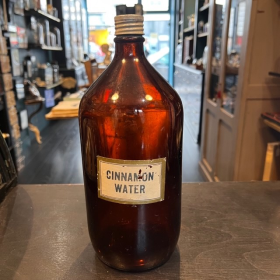
Cinnamon Water
Antique and large brown English pharmacy bottle
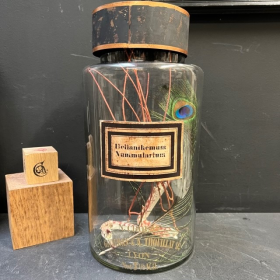

Dry sodium iodide
Antique pharmacy bottle - drugstore - apothecary
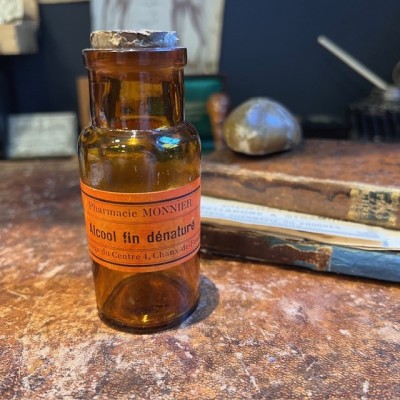
Alcool fin dénaturé
Antique pharmacy bottle - Apothecary
EMPTY
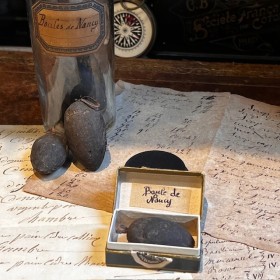
Boule de Nancy - Genuine Mars Vulnerary Ball - Steel Ball
This iron-containing ball was once considered a miracle cure for many ailments and injuries.
The Boule de Nancy is sold individually in a small antique drugstore box
Unavailable today
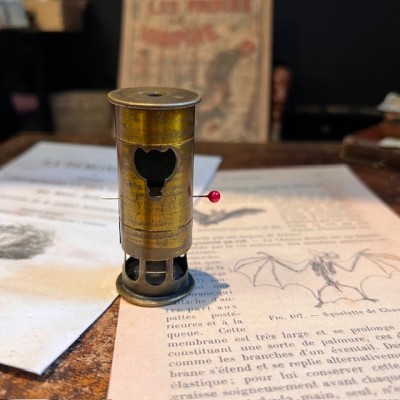
Pocket microscope
Floroscope - Insectoscope in brass
1850's - 1930's

Solution N°153
Antique pharmacy bottle
Apothecary vial
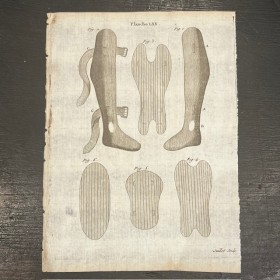
Antique surgical board
From Benjamin Bell's Complete Course in Surgery, published in 1796
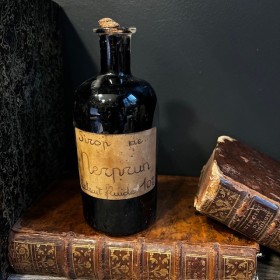
Buckthorns syrup
Antique pharmacy bottle
Apothecary vial
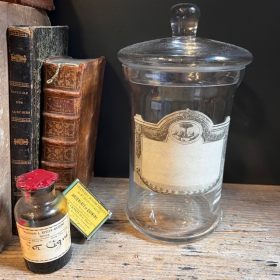
Herbalist's or Pharmacist's jar
Antique blank label of the XVIIIth century
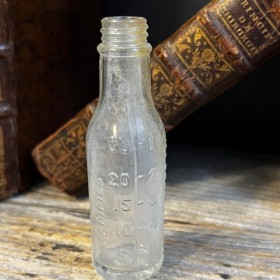
Grams / Teaspoons in French: Grammes / Cuillères à café
Antique medicine bottle
Apothecary
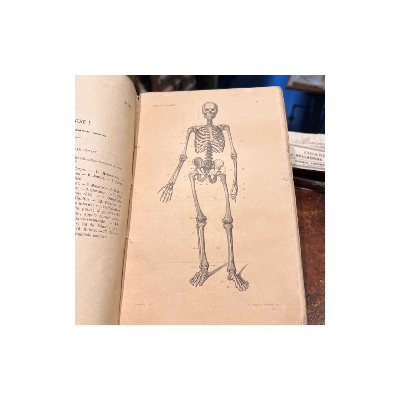
Anatomical Atlas by A. Bossu
Anthropology - End of the XIXth century
20 engravings of Anatomy by Léveillé
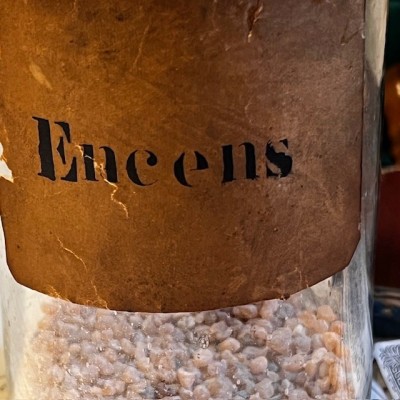
Incense
Antique pharmacy bottle - Wide-mouth apothecary jar.
19th-century mouth-blown glass
There are still some product inside.
A fascinating artifact from the history of pharmacology
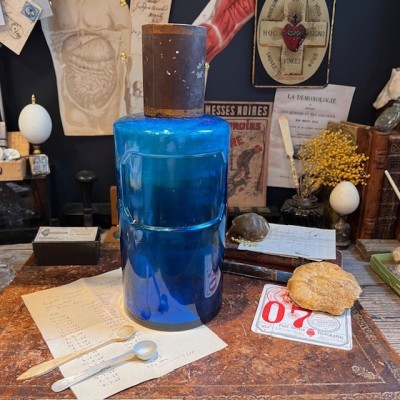
Large cobalt blue glass pharmacy bottle - Apothecary - Shouldered - H27.5cm - 19th century
Shouldered apothecary bottle - Antique pharmacy bottle
Mouth-blown glass - Cobalt blue color tinted throughout
This large-capacity jar was a storage jar intended for stockpiling
Silver Nitrate Sticks
Antique amber glass bottle, with a boxwood and cork stopper.
Green label: SUBSTANCE TO BE STORED SEPARATELY – CODEX 1908
Indicating to the pharmacist that it must be stored separately from other substances in the cabinet for toxic substances, the famous ‘poison cabinet’.
It comes from the former cellar-laboratory of a Parisian pharmacy. The bottles had not been moved from the shelves since the late 1950s. The cellar had served as a medical analysis laboratory and a laboratory for the pharmacy’s compounded preparations from 1900 until around 1950.
EMPTY