
- New
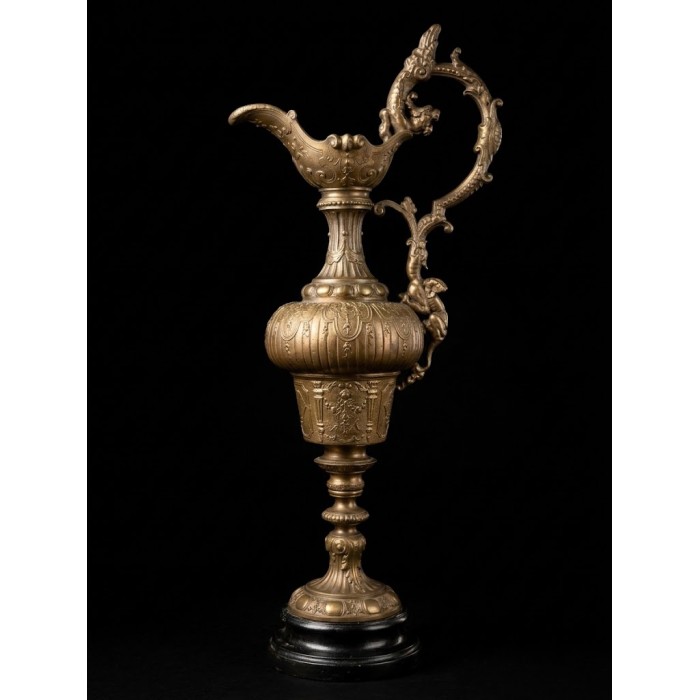
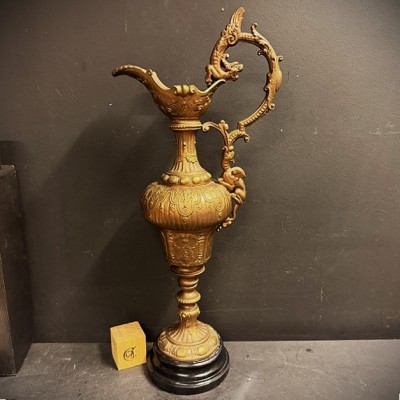
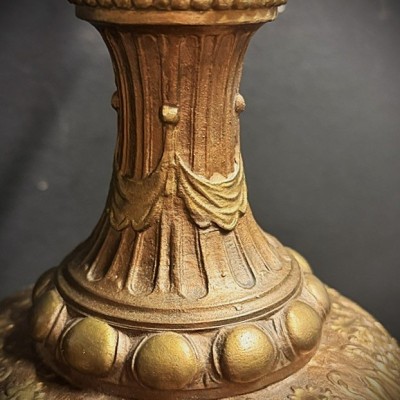
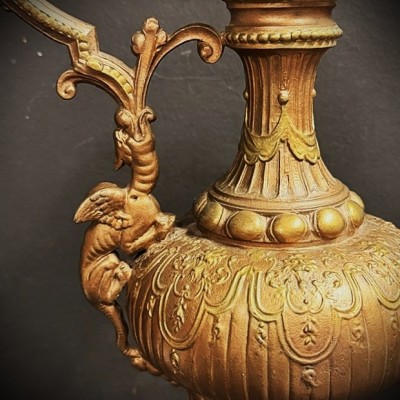
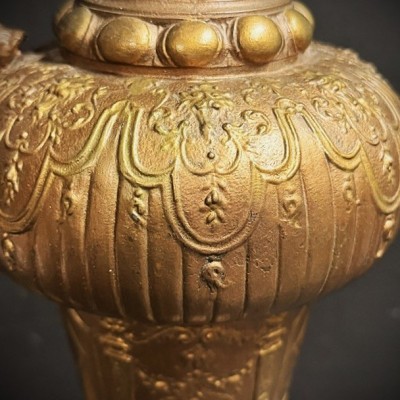
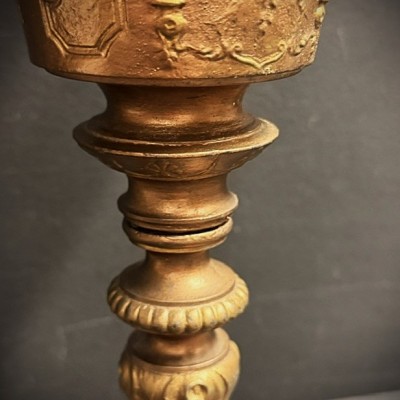
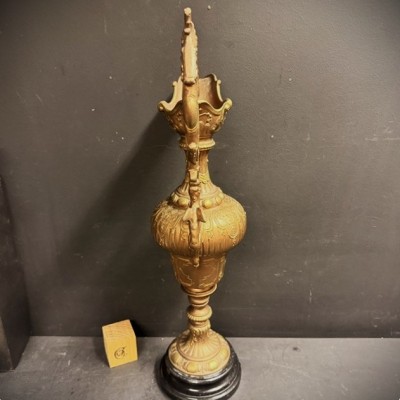
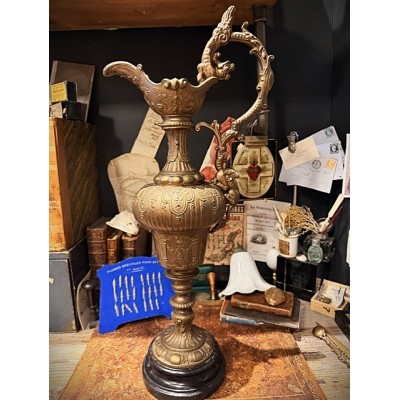
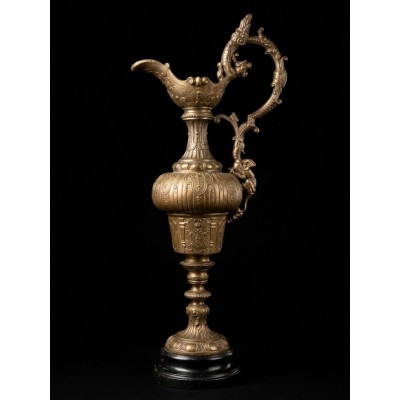
Large Neo-Renaissance ceremonial ewer in spelter with medal-bronze patination and gilt highlights
Napoleon III period - 19th century
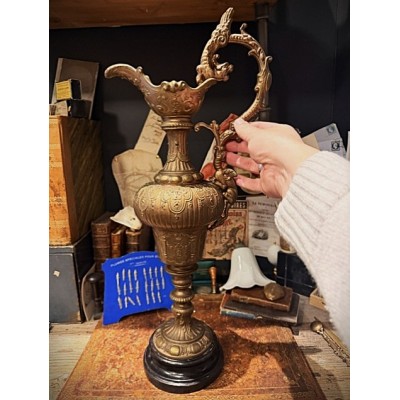
High: 56cm - It weighs 3.2Kg
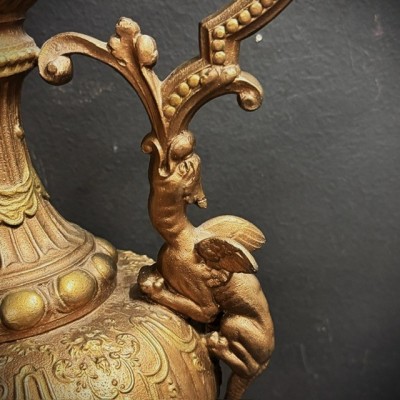
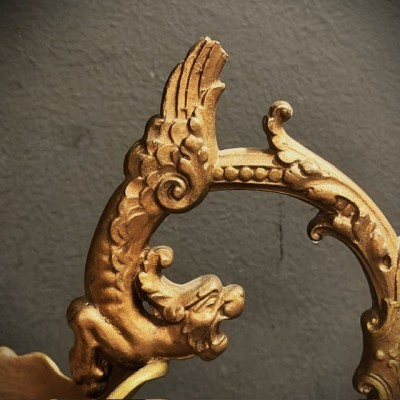
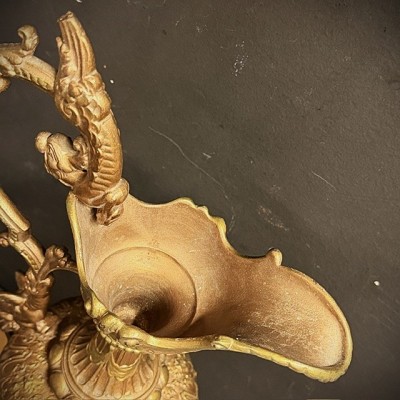
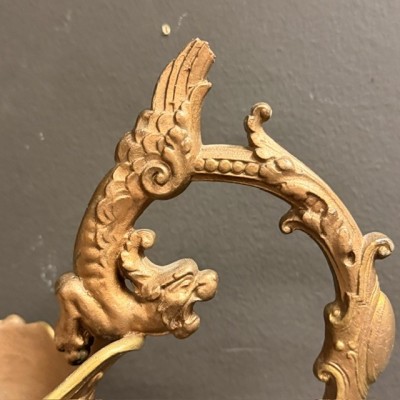
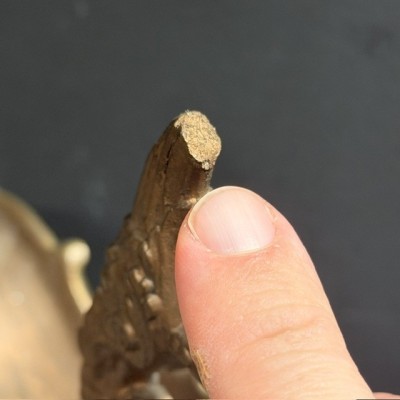
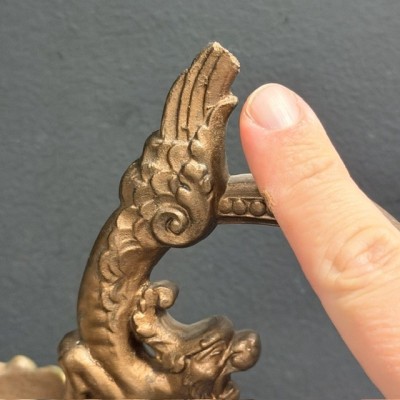
To be noted: an old break on the upper part of the handle. The tip of the chimera's tail is missing. The edge of the fracture has been tinted with gold bronzing powder to tone down the break and blend it naturally into the overall patination.
Large Neo-Renaissance ceremonial ewer in spelter with medal-bronze patination and gilt highlights
Napoleon III period - 19th century
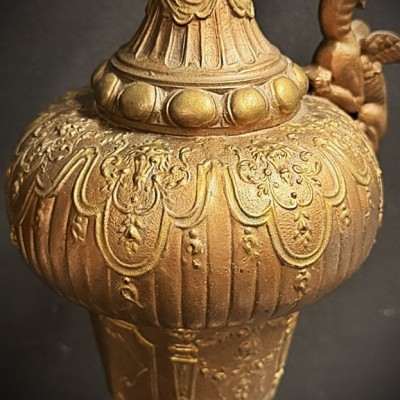
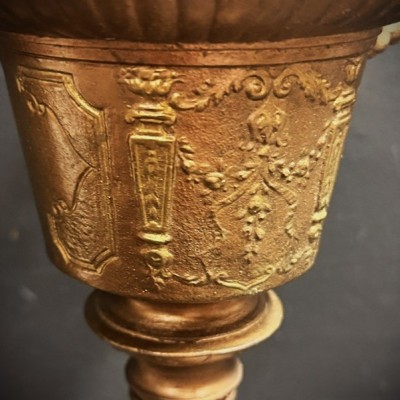
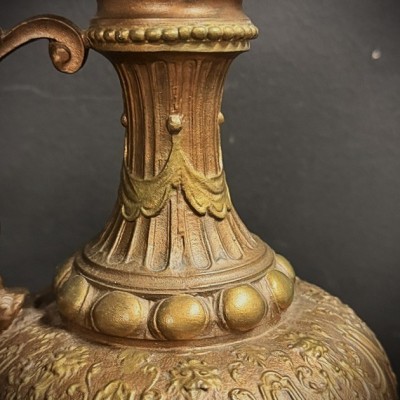
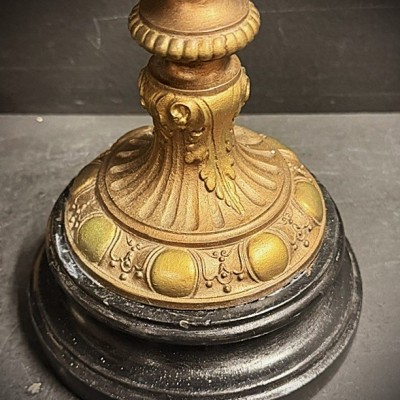
This monumental 56 cm high piece features richly ornamented decoration. The neck is finely fluted and encircled by draperies and rows of piastres, while the gadrooned body is adorned with festoons, culots, and neoclassical bas-reliefs featuring pilasters and cartouche registers.
The most remarkable element lies in its fantastical handle, decorated with mythological creatures: a winged dragon sculpted in relief at the junction of the body, and a monstrous chimera on the upper part, whose sculpted movement accompanies the upward sweep of the object. A fine fantastical gothic or Neo-Renaissance bestiary, revisited in the 19th-century fashion.
Chimeras and fantastical figures, inherited from the Mannerist repertoire of the Italian Renaissance, symbolize the power of the imagination and the virtuosity of 19th-century founders.
Originally, the ewer was a vessel intended to hold water for washing hands during banquets. However, its function changed in the 19th century; it became entirely decorative, with this piece having no utilitarian purpose whatsoever. It constituted a pure object of display, designed to affirm its owner's taste for art and antiquarian culture.
Under the Second Empire and the reign of Napoleon III, the triumphant bourgeoisie sought to display its social success and opulence through lavish eclecticism. The Neo-Renaissance style then experienced a dazzling resurgence in popularity: it allowed them to mimic the splendor of the great princely collections of the Ancien Régime.
Period and Style: Second Empire / Late 19th century, Neo-Renaissance inspiration.
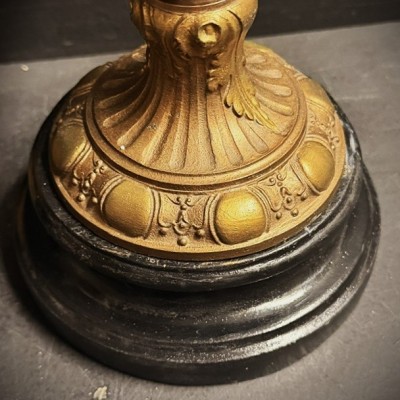
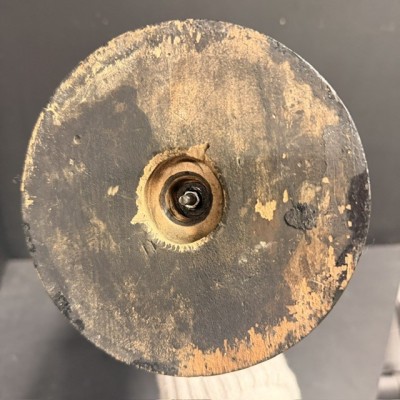
Material & Finish: Molded spelter featuring a remarkable original two-tone patination (warm antique bronze backgrounds and bright gold gilt highlights), resting on its original blackened wood base.
In the codified arrangement of the bourgeois salon, they were displayed in pairs flanking a mantel garniture, for example.
Placed at each end of the marble mantelpiece, they framed the central clock or the pier glass mirror. The ewer's dual bronze and gold patination caught the light of candles or gas to accentuate the relief of the decoration.
Or arranged on reception furniture.
Placed on either side of a large Neo-Renaissance dresser, a two-body buffet, or a pair of pedestals in the dining room, they recalled the prestige of ancient table silverware.
Today presented alone, this large 56 cm ewer constitutes a strong cabinet piece, ideal for theatricalizing a console, a bookcase, a mantelpiece, or a cabinet of curiosities.
Height: 56 cm - It weighs 3.2Kg
Condition: Antique piece with marks of time.
To be noted: an old break on the upper part of the handle. The tip of the chimera's tail is missing. The edge of the fracture has been tinted with gold bronzing powder to tone down the break and blend it naturally into the overall patination.
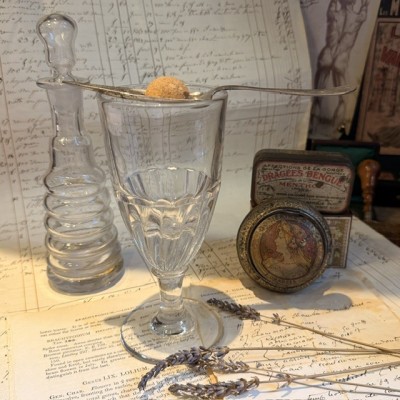
Antique glass for Absinthe
Ref B
The twists on the glass are used to measure out the absinthe liquor and then pour the water over the sugar on the absinthe spoon on the glass to soften the bitterness of the drink.
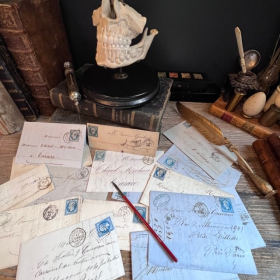
Stamped letter-envelope of the Second Empire
Dated from 1852-1870
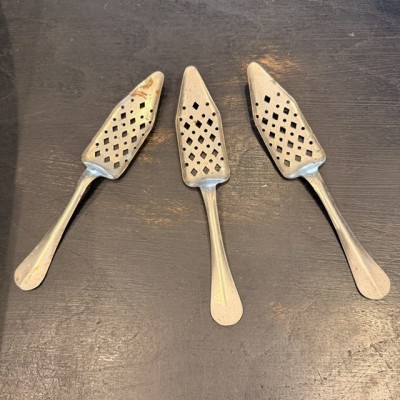
Antique Absinthe Spoon
The spoons have been used, are scratched, badly oxidized, etc.
You buy 1 spoon, not the whole lot
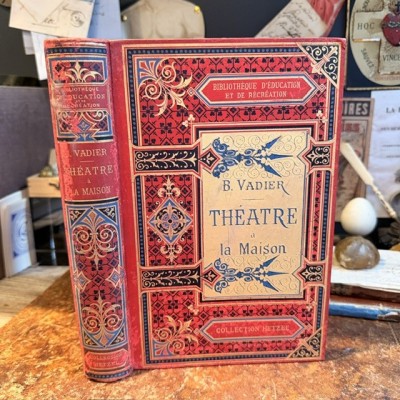
Théâtre à la maison (Theatre at home) by B. Vadier
Circa 1880
Splendid publisher’s binding with cardboard plates from the Hetzel Collection
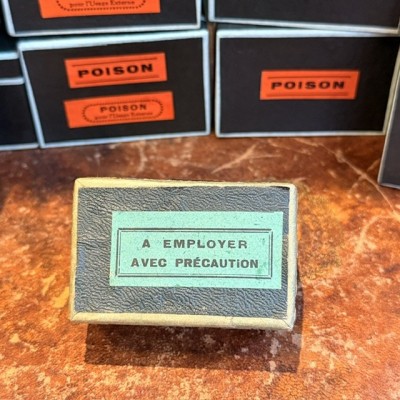
Antique labels in a pharmacy box for cures made of canvas cardboard
To be used with care label
The pharmacist used his boxes of medicine to put away the labels he would then put on the bottles that he would resell to his customers.
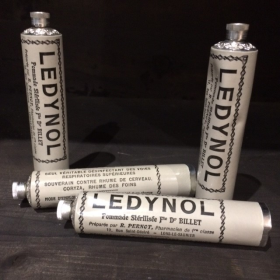
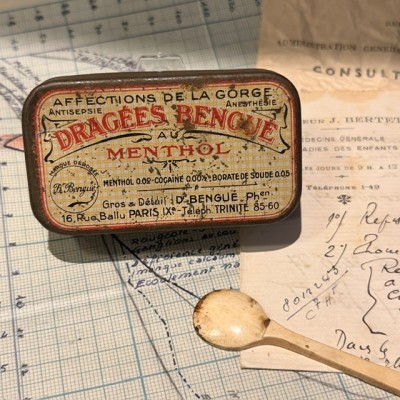
Metal box of breath mints with cocaine
Box of Dr BENGUE Dragees
1920's
It is recommended to suck 8 to 10 lozenges per day, allowing them to melt in the mouth...
EMPTY
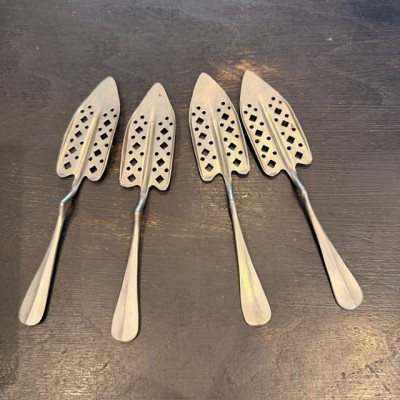
Antique Absinthe Spoon
The spoons have been used, are scratched, badly oxidized, etc.
You buy 1 spoon, not the whole lot
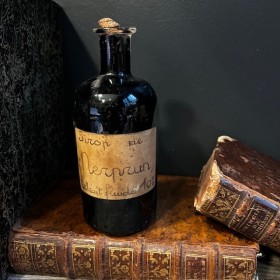
Buckthorns syrup
Antique pharmacy bottle
Apothecary vial
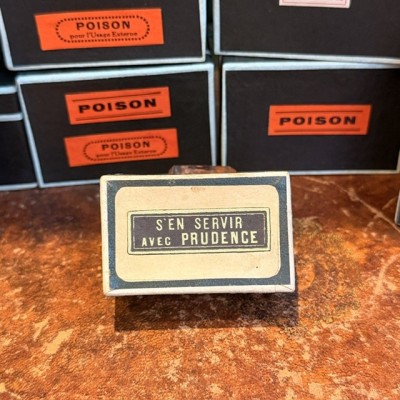
Antique labels in a pharmacy box for cures made of canvas cardboard
Use it with caution label
The pharmacist used his boxes of medicine to put away the labels he would then put on the bottles that he would resell to his customers.
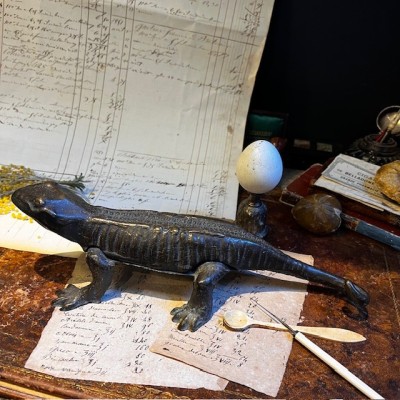
Salamander - Pharmacy corkscrew in bronze
XIXth century
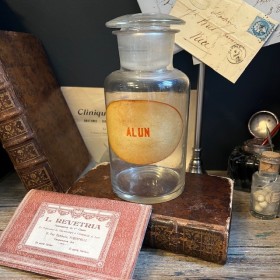
Alum
Antique pharmacy bottle
Apothecary vial
Color pigments have been added to the inside of the jar
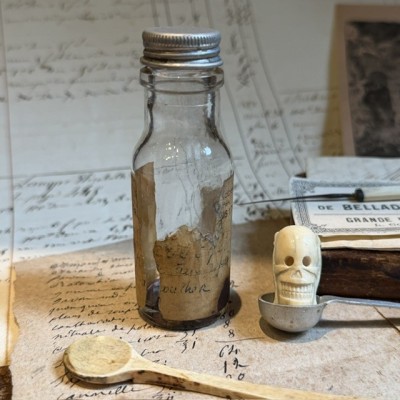
A avaler aux repas To be taken with meals (as far as can be made out from the torn label)
Antique pharmacy bottle
Torn label
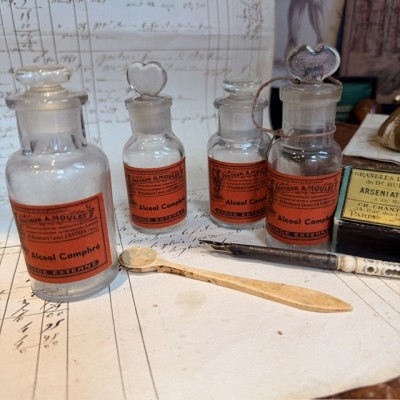
Alcool camphrée
Antique pharmacy bottle
EMPTY
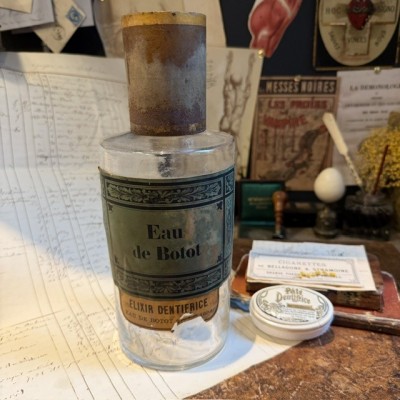
Eau de Botot - Tooth-cleansing Elixir
CODEX 1884
Antique 19th-century pharmacy bottle
EMPTY
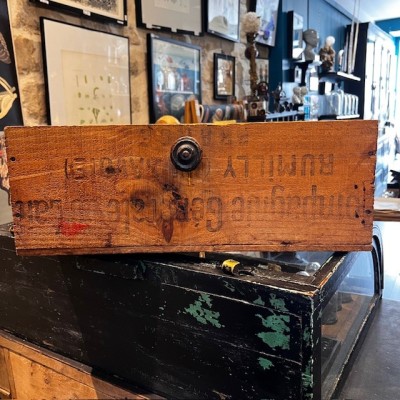
Antique wooden advertising case for Mont Blanc - Rumilly condensed milk - Drawer
Found in Parisian cellars that served as laboratories and storage rooms for pharmacists preparing their masterful concoctions from 1900 to 1950.
It was used to store products, glass bottles, etc.
This box is no longer just a transport container, it has been adopted as a piece of furniture.
Period: Circa 1920–1940
Large Neo-Renaissance ceremonial ewer in spelter with medal-bronze patination and gilt highlights
Napoleon III period - 19th century
High: 56cm - It weighs 3.2Kg
To be noted: an old break on the upper part of the handle. The tip of the chimera's tail is missing. The edge of the fracture has been tinted with gold bronzing powder to tone down the break and blend it naturally into the overall patination.