
- New
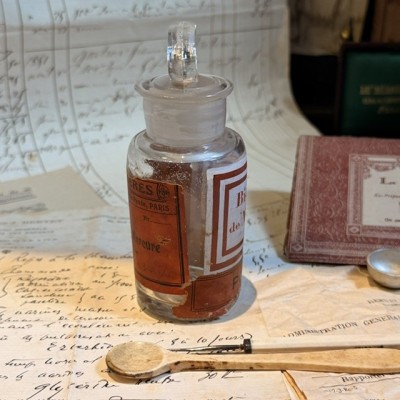
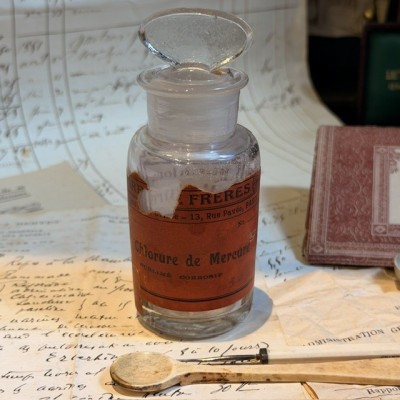
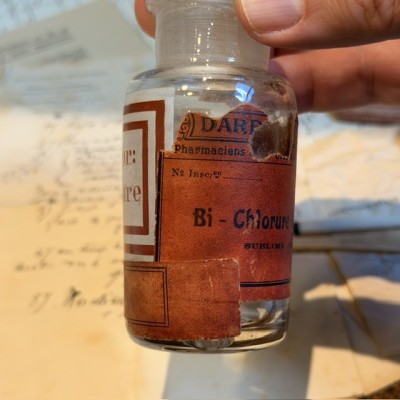
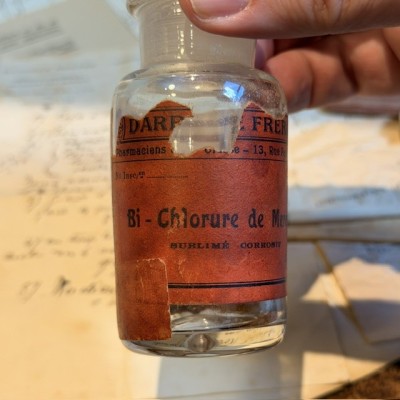
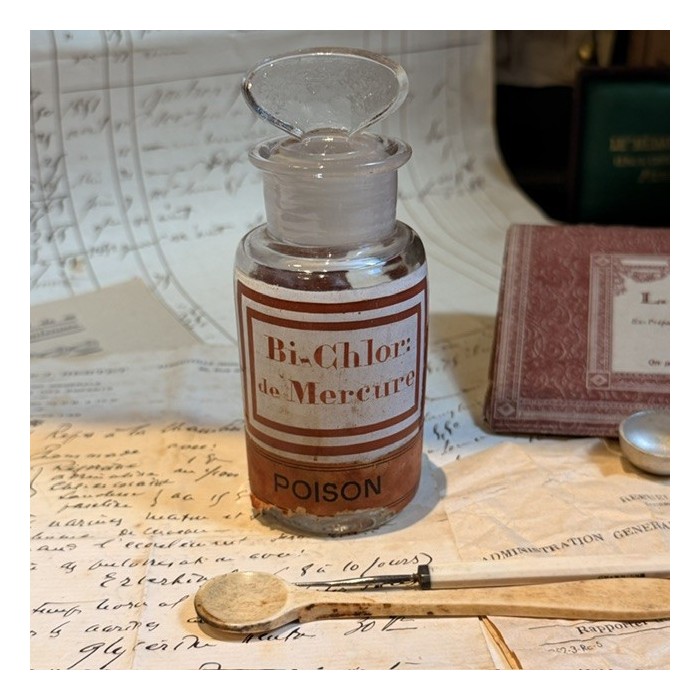
Corrosive sublimate - Bichloride of mercury
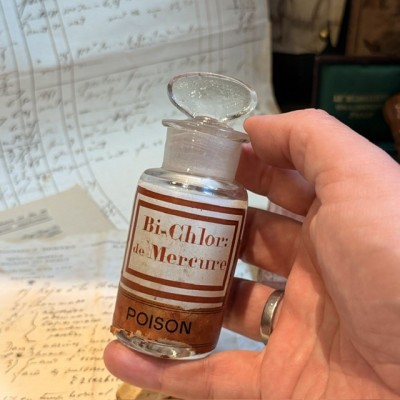
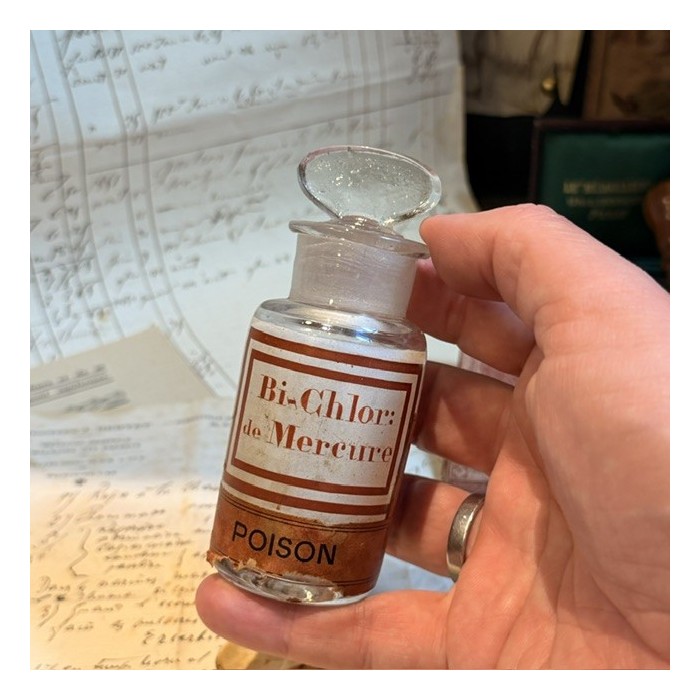
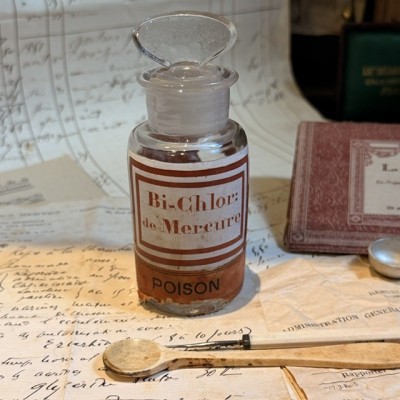
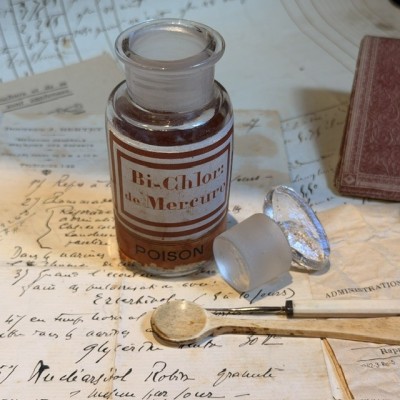
Antique pharmacy bottle made of blown glass and enameled painted label.
Red POISON label
Signaling to the pharmacist that it is imperative to keep apart the other substances in the cabinet of toxic substances, the famous poison cabinet.
Dating: 19th century
EMPTY
Corrosive sublimate - Bichloride of mercury
Antique pharmacy bottle made of blown glass and enameled painted label.
Red POISON label
Signaling to the pharmacist that it is imperative to keep apart the other substances in the cabinet of toxic substances, the famous poison cabinet.
Laboratory or pharmaceutical dispensary bottle, typical of the late nineteenth or early twentieth century.
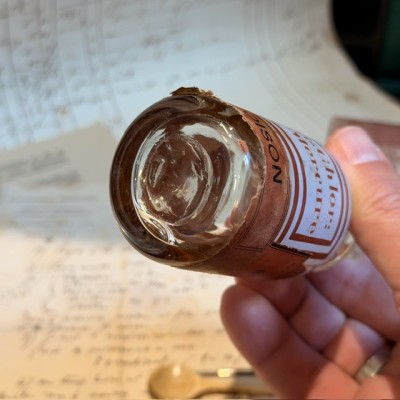
Made of blown transparent glass, it has a trace of pontil visible on the bottom, reflecting traditional artisanal manufacturing. It has its original cap honed with emery.
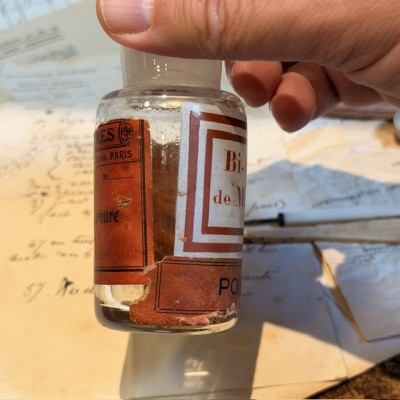
Beautiful enamelled label stenciled surrounded by a brown/red border. This baked enamel technique guaranteed great resistance to handling and chemicals in the pharmacy. A red regulatory label marked "POISON" is applied at the bottom, indicating the poisonous nature of the substance.
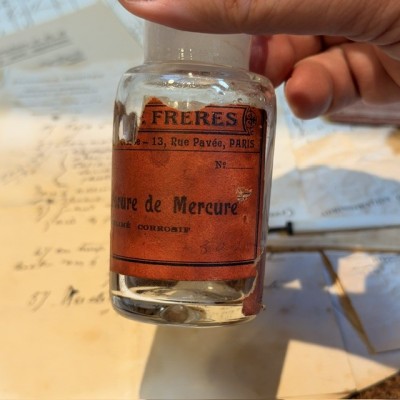
The bottle features a double vintage labeling: on the front face, the enameled label, and on the back, the red paper label from the supplier pharmacy (Darper Frères, 13 rue Pavée in Paris) explicitly bearing the mention "Sublimé Corrosif" and the "POISON" banner.
Corrosive sublimate, its other name, was one of the most powerful and feared antiseptics and disinfectants of the 19th century and early 20th century.
While it was used to sterilize surgical equipment, it was also applied in solution directly on patients to disinfect wounds or skin conditions.
In cases of overdose or overly concentrated application, it caused violent chemical burns, instantly "cooking" and necrosing living tissues and mucous membranes.
This caustic power came with a lethal risk: mercury crossed through damaged skin to irremediably destroy the kidneys and induce fatal renal failure.
Height of the bottle: 11cm with blown glass cap - Diameter at the base: 4cm
Dating: 19th century
EMPTY
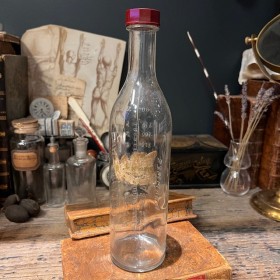
Horseradish syrup
Grams / Tablespoons - Graduated bottle
in French: Grammes / Cuillères à soupe
Antique medicine bottle
Apothecary

Grams / Tablespoons - Graduated bottle
in French: Grammes / Cuillères à soupe
Antique medicine bottle
Apothecary

Sparteine sulphate
Used as a tonic for nervous syndromes at the very beginning of the 20th century, sparteine was also used to facilitate morphine withdrawal.
Antique pharmacy bottle
Apothecary vial
Some product left inside
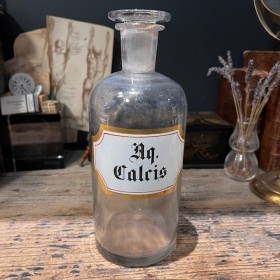
Aqua Calris - Hot water
Antique pharmacy jar
Apothecary

Lower part of the lower mandible of a horse jaw
Antique model from Maison Auzoux in Paris
Paper-mâché pedagogical model
Model B - 1 year

Aqua Piris - Pear water
Antique pharmacy jar
Apothecary
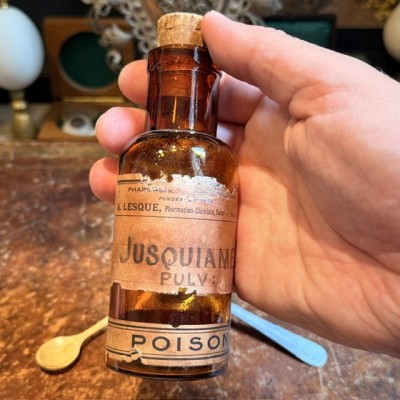
Jusquiame - Henbane
Antique pharmacy bottle.
Red ‘POISON’ label
Indicating to the pharmacist that it must be stored separately from other substances in the cabinet for toxic substances, the famous ‘poison cabinet’.
It comes from the former cellar-laboratory of a Parisian pharmacy. The bottles had not been moved from the shelves since the late 1950s. The cellar had served as a medical analysis laboratory and a laboratory for the pharmacy’s compounded preparations from 1900 until around 1950.
Date: Begining of 20th century
EMPTY
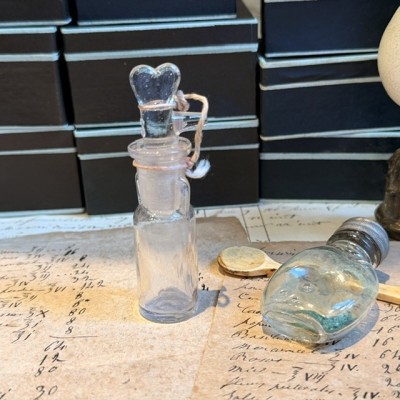
Dropper bottle
Antique pharmacy bottle - 1920-30's
Glass stopper honed in the shape of a heart for better grip
EMPTY
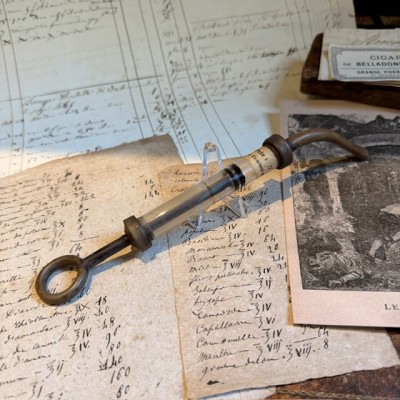
Ebonite and glass laryngeal syringe
For intra-laryngeal injections.
Marketed between May 1939 and sometime in 1940
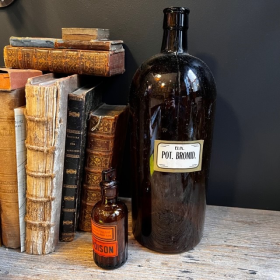
Potassium Bromide Elixir
Antique and large brown English pharmacy bottle
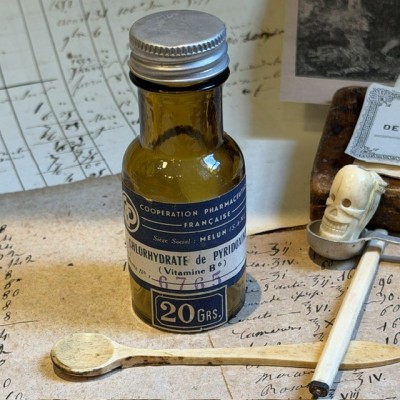
Pyridoxine hydrochloride - Vitamin B6
Antique pharmacy bottle
EMPTY
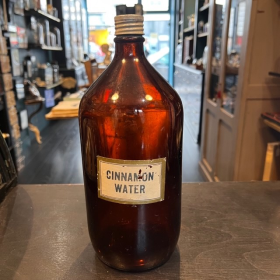
Cinnamon Water
Antique and large brown English pharmacy bottle
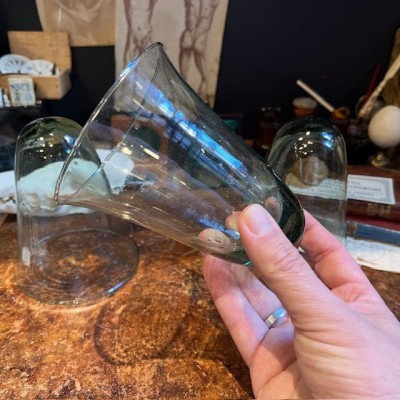
Antique glass bell jar
Apothecary / Laboratory
Thin glass, light green in color and darker at the top, with bubbles
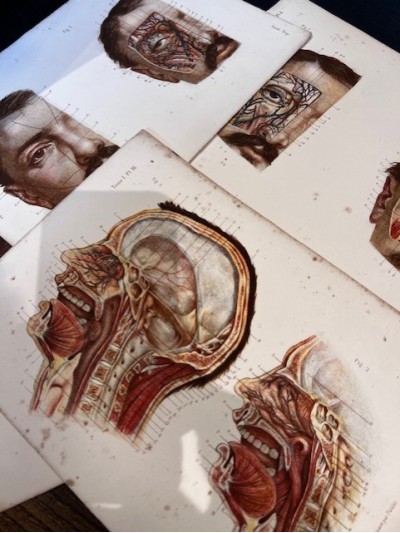
Anatomical chart by Paulet and Sarazin
From the Traité d'anatomie topographique (Treatise on topographical anatomy)
Published in 1867-1870
Chromolithography
You buy 1 plate, not the whole set
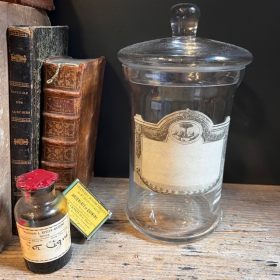
Herbalist's or Pharmacist's jar
Antique blank label of the XVIIIth century
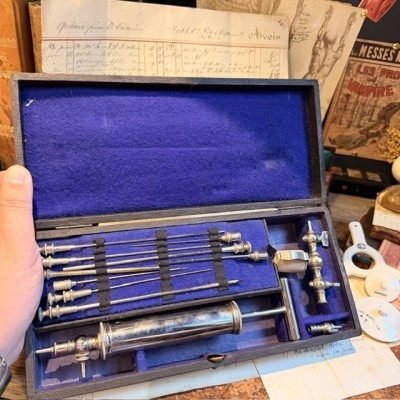
Dr. Potain’s aspirator set in its felt-lined box
Late 19th century, circa 1880
Antique medical instrument maker without manufacturer marking
non-functional
Corrosive sublimate - Bichloride of mercury
Antique pharmacy bottle made of blown glass and enameled painted label.
Red POISON label
Signaling to the pharmacist that it is imperative to keep apart the other substances in the cabinet of toxic substances, the famous poison cabinet.
Dating: 19th century
EMPTY