

- New
Mercuric cyanide
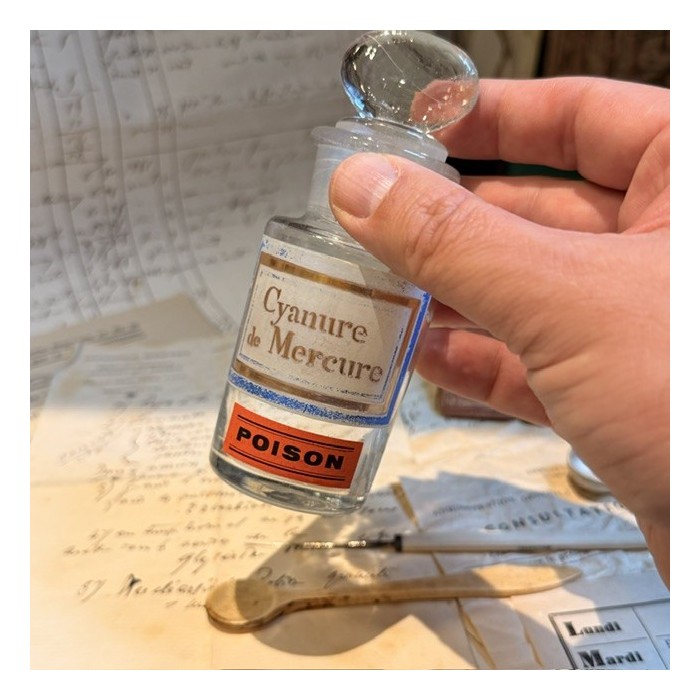
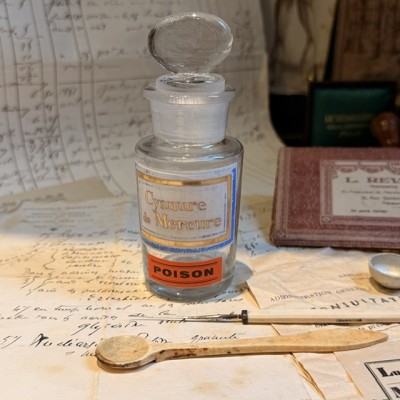
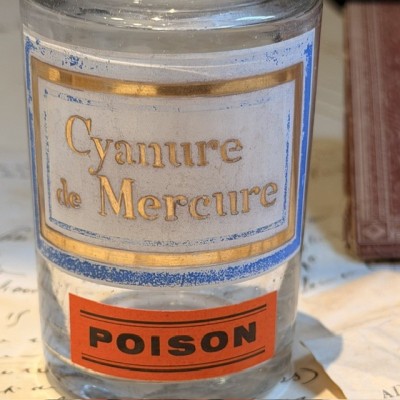
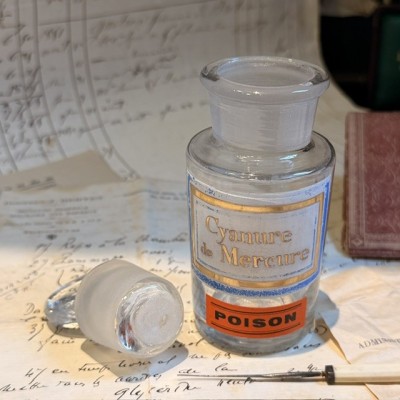
Antique pharmacy bottle made of blown glass and enameled painted label with golden blue threads
Red POISON label
Signaling to the pharmacist that it is imperative to keep apart the other substances in the cabinet of toxic substances, the famous poison cabinet.
Dating: 19th century
EMPTY
Mercuric cyanide
Antique pharmacy bottle made of blown glass and enameled painted label with golden blue threads
Red POISON label
Signaling to the pharmacist that it is imperative to keep apart the other substances in the cabinet of toxic substances, the famous poison cabinet.
Laboratory or pharmaceutical dispensary bottle, typical of the late nineteenth or early twentieth century.
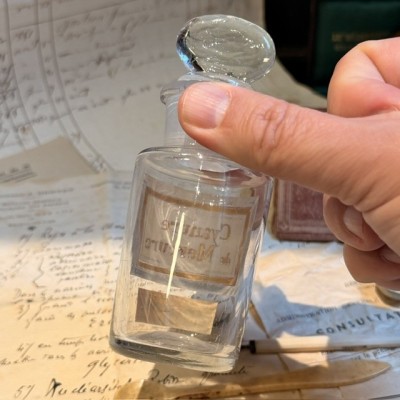
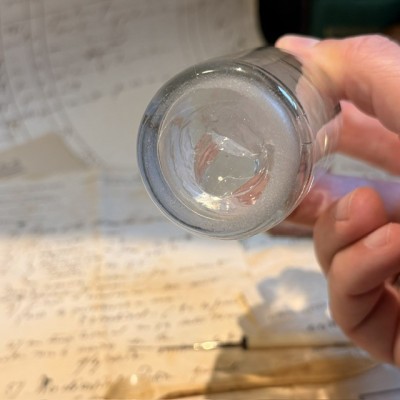
Made of blown transparent glass, it has a trace of pontil visible on the bottom, reflecting traditional artisanal manufacturing. It is equipped with its original cap honed with emery, ensuring a perfect fit with the neck of the bottle.
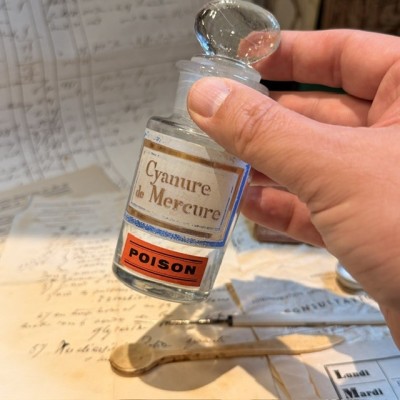
Beautiful enamelled label stenciled with golden highlights, framed by a blue and gold net. This baked enamel technique guaranteed great resistance to handling and chemicals in the pharmacy. A red regulatory label marked "POISON" is applied at the bottom, indicating the poisonous nature of the substance.
At the turn of the twentieth century, this bottle contained one of the most formidable compounds in pharmacopoeia.
Combining the deadly violence of cyanide, an absolute poison immortalized by the masters of the noir novel and notably by Agatha Christie, with the toxicity of mercury.
This product was used in preparations intended to treat the cutaneous manifestations of syphilis.
In reality, it was a real "deadly placebo": the most clairvoyant doctors of the time knew the ineffectiveness of these treatments, but continued to prescribe them for lack of alternatives, subjecting patients to terrible toxicity.
Handled by the pharmacist with absolute rigor to the nearest milligram, the product remained extremely dangerous: an application poorly dosed on a lesion or an ingestion error led to a violent and sudden death in a few minutes.
Height of the bottle: 12cm with blown glass cap - Diameter at the base: 4cm
Dating: 19th century
EMPTY
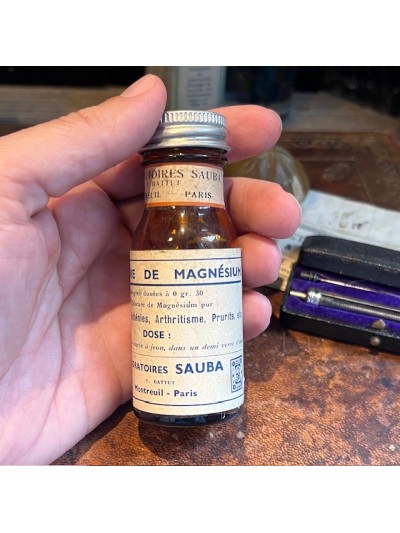
Chlorure de magnésium
Antique pharmacy bottle
Apothecary vial
EMPTY
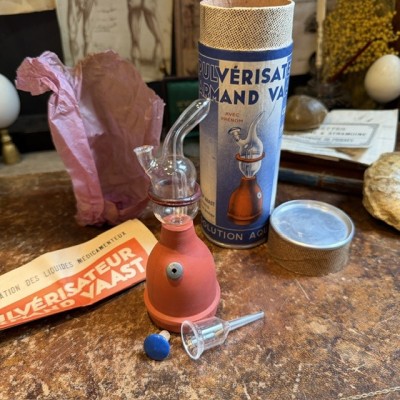
Armand Vaast nasal spray - Oil vaporizer - Antique remedy
In its box
Used in otolaryngology, it was intended for nasal or oral sprays in the treatment of colds and antiseptic treatment of the respiratory tract.
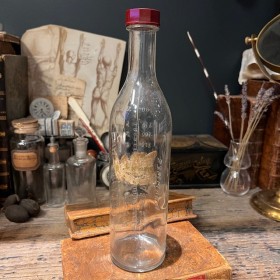
Horseradish syrup
Grams / Tablespoons - Graduated bottle
in French: Grammes / Cuillères à soupe
Antique medicine bottle
Apothecary
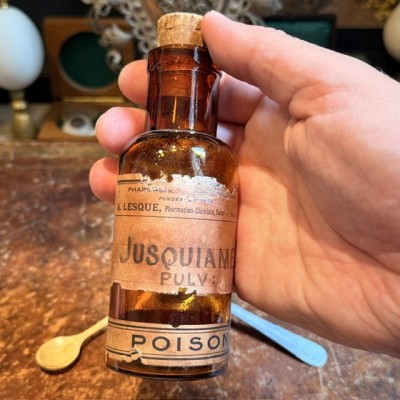
Jusquiame - Henbane
Antique pharmacy bottle.
Red ‘POISON’ label
Indicating to the pharmacist that it must be stored separately from other substances in the cabinet for toxic substances, the famous ‘poison cabinet’.
It comes from the former cellar-laboratory of a Parisian pharmacy. The bottles had not been moved from the shelves since the late 1950s. The cellar had served as a medical analysis laboratory and a laboratory for the pharmacy’s compounded preparations from 1900 until around 1950.
Date: Begining of 20th century
EMPTY
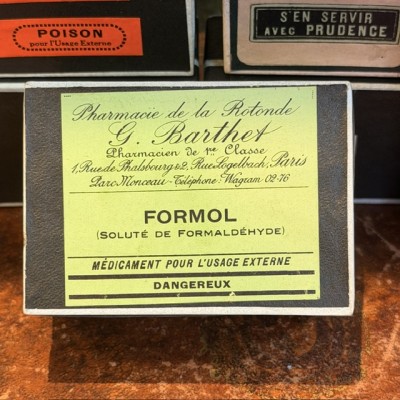
Antique labels in a pharmacy box for cures made of canvas cardboard
Formalin label
The pharmacist used his boxes of medicine to put away the labels he would then put on the bottles that he would resell to his customers.
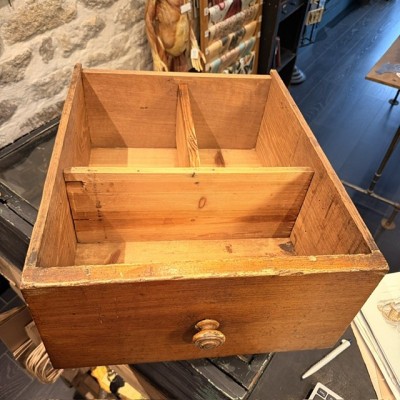
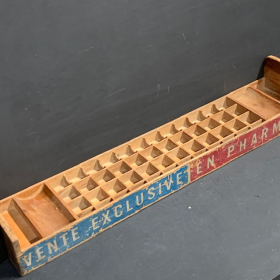
Large antique wooden pharmacy drawer with compartments - From a pharmacy or herbalist's cabinet
3 compartments
Ref C - 39.5x50cm
Can be used as a storage box
Weight: 4.1kg !
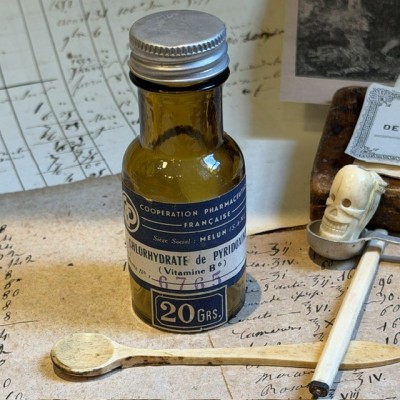
Pyridoxine hydrochloride - Vitamin B6
Antique pharmacy bottle
EMPTY

Carbonate de Potasse
Antique pharmacy bottle
Early 20th century (circa 1910 - 1920)
EMPTY
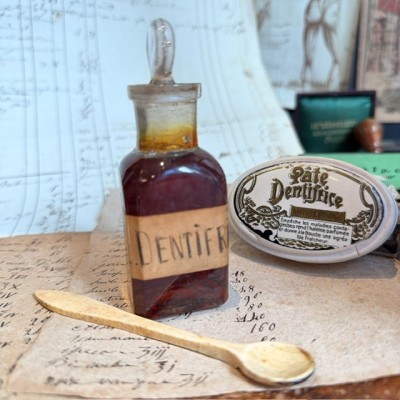
Toothpaste elixir
Antique pharmacy bottle
Handwritten label with pen
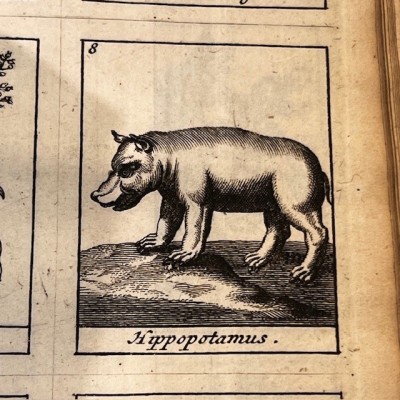
Dictionnaire Universel des Drogues Simples
Universal dictionnary of Simple Drugs
By Nicolas Lemery
An antique illustrated pharmacopoeia from 1727 - A Dutch pirated edition
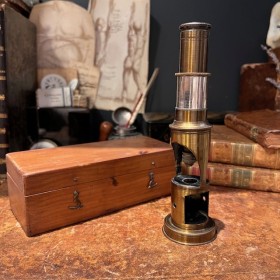
Antique drum microscope for botanist, entomologist
Mirror missing
Late 19th century, early 20th century

Solution N°153
Antique pharmacy bottle
Apothecary vial
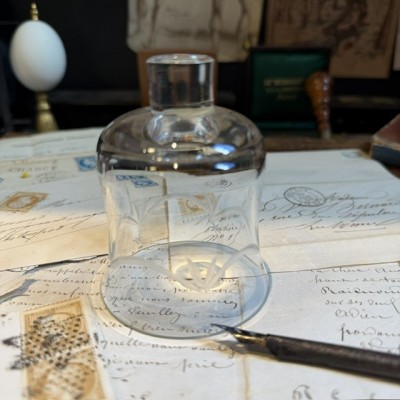
Small antique engraved glass bell
I believe these are antique glass pieces that were originally intended to be placed on a stand.
Repurpose them as small bells to showcase your small objects, such as a small skull, as shown here.
Sold individually
EMPTY
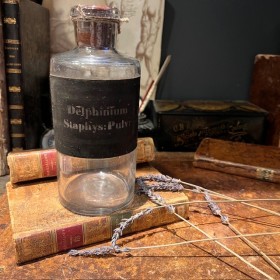
Delphinium staphisagria - Stavesacre
Pharmacy jar - Herbalism - Apothecary bottle
Late 19th century, early 20th century.

Chloroform
Pharmacy jar - Herbalism - Apothecary bottle
Late 19th century - Beginning of the 20th
Mercuric cyanide
Antique pharmacy bottle made of blown glass and enameled painted label with golden blue threads
Red POISON label
Signaling to the pharmacist that it is imperative to keep apart the other substances in the cabinet of toxic substances, the famous poison cabinet.
Dating: 19th century
EMPTY