

- New
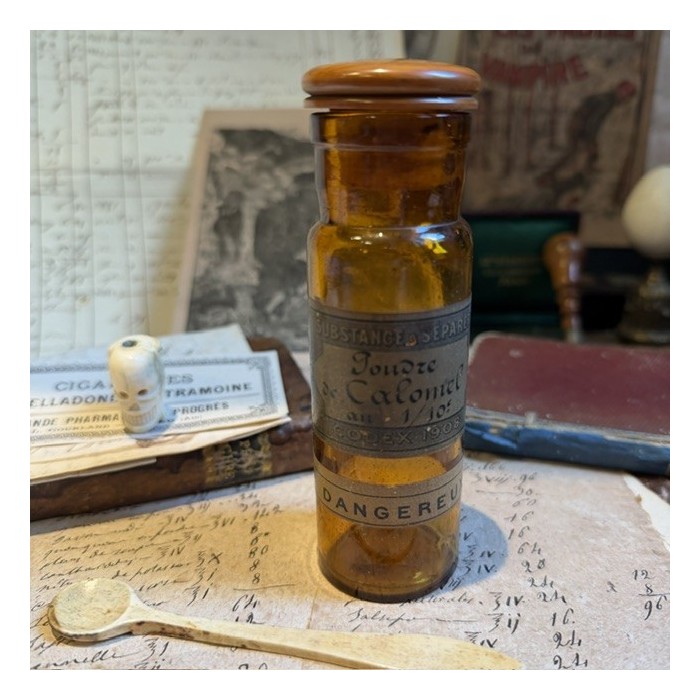
1/10th Calomel Powder – Mercury
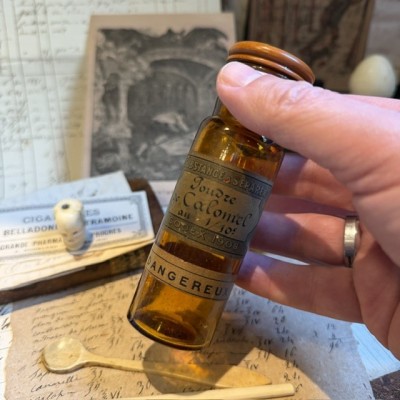
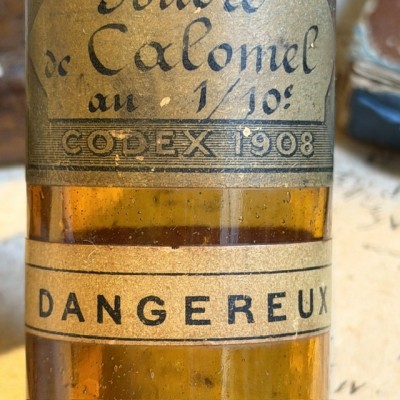
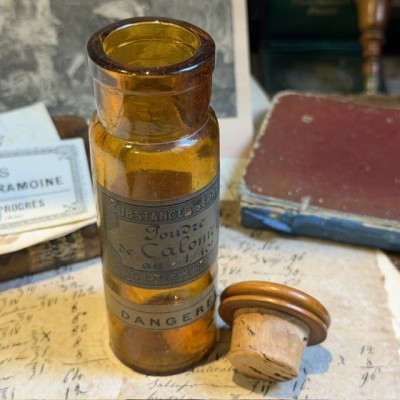
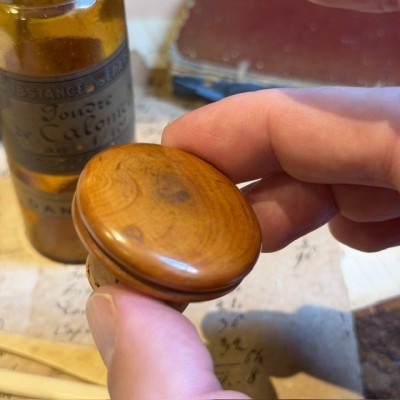
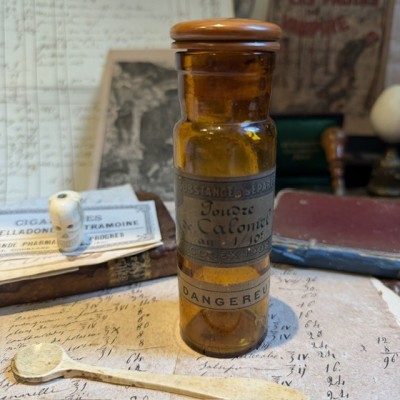
Antique amber glass bottle, with a boxwood and cork stopper.
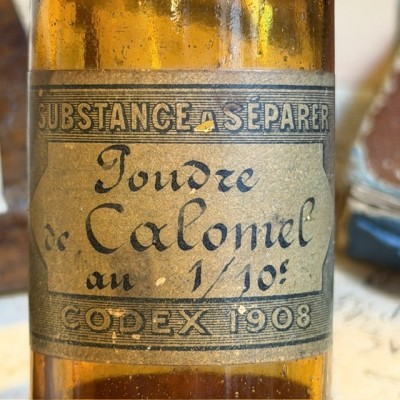
Green label: SUBSTANCE TO BE SEPARATED – CODEX 1908
Indicating to the pharmacist that it must be stored separately from other substances in the cabinet for toxic substances, the famous poison cabinet.
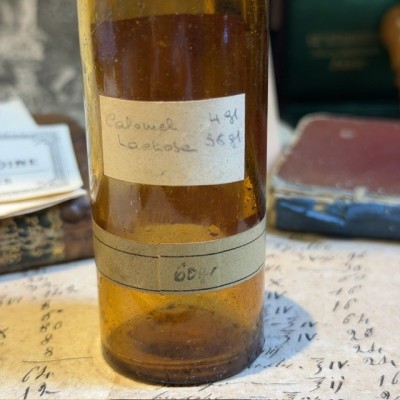
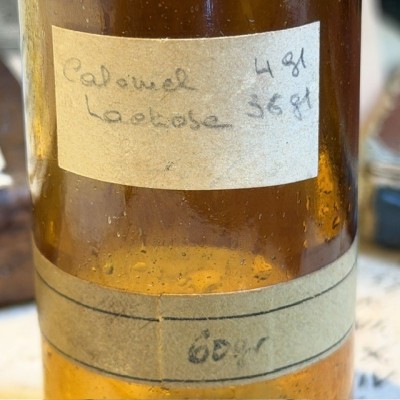
Handwritten label, pen inscription, neat calligraphy, with its thick and thin strokes.
A bottle of medical impotence, beautifully calligraphed!
EMPTY
1/10th Calomel Powder – Mercury
Antique amber glass bottle, with a boxwood and cork stopper.
Green label: SUBSTANCE TO BE SEPARATED – CODEX 1908
Indicating to the pharmacist that it must be stored separately from other substances in the cabinet for toxic substances, the famous ‘poison cabinet’.
Handwritten label, inscribed in pen, with neat calligraphy, featuring both thick and thin strokes.
Calomel – mercuric protochloride – was one of the most widely used agents in the ancient pharmacopoeia, prescribed as a purgative, to treat fevers, or as a (futile) treatment for syphilis.
Although its use persisted until the early 20th century, it had no real efficacy against serious conditions. The illusion of a cure rested on the severity of the bodily reactions it provoked...
Repeated use inevitably led to mercury poisoning (hydrargyrism). Patients suffered from intense pain, uncontrollable salivation, tooth loss and, in the most severe cases, necrosis of the jawbone. This bottle bears witness to a dogmatic form of medicine where the potency of a remedy was measured by the severity of its side effects and by habit...
A beautifully calligraphed vial of medical impotence!
It comes from the former cellar-laboratory of a Parisian pharmacy. The bottles had not been moved from the shelves since the late 1950s. The cellar had served as a medical analysis laboratory and a laboratory for the pharmacy’s compounded preparations from 1900 until around 1950.
Height of the bottle: 12cm with stopper
EMPTY
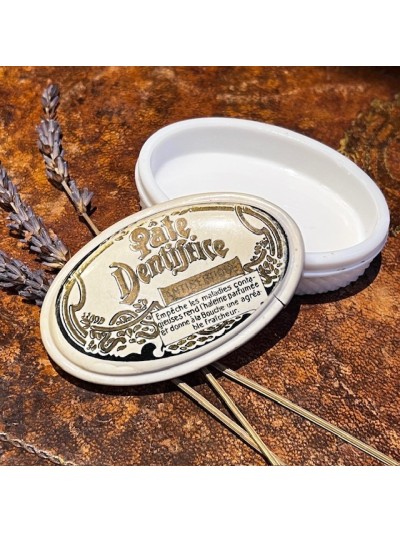
Toothpaste - Antique apothecary
Porcelain pot with illustrated plastic lid
Antiseptic
Early 20th century - Caution the lid is cracked
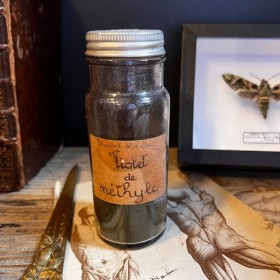
Violet de Méthyle
Antique pharmacy bottle - Droguerie - Apothicaire
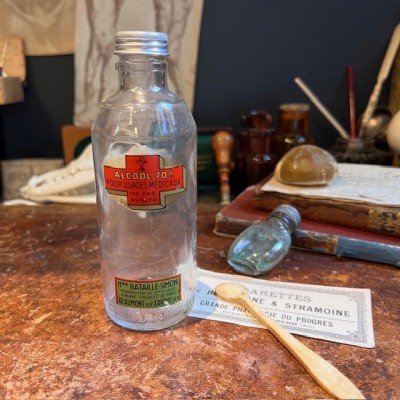
70° alcohol
Antique pharmacy bottle - Apothecary
Mrs Bataille-Simon, First Class Pharmacist in Beaumont sur Sarthe - Tel 9

Solution N°153
Antique pharmacy bottle
Apothecary vial
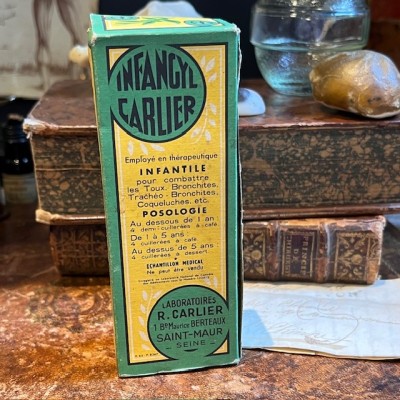
Infangyl Carlier
Antique pharmacy bottle - Apothecary
The box still contains its full, sealed bottle and instructions
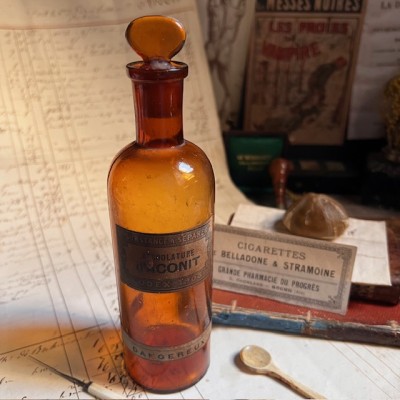
Aconite tincture
Antique pharmacy bottle
Green label: SUBSTANCE A SEPARER - CODEX 1908
This means that this bottle had to be kept separate from the others because it was dangerous in high doses- POISON
EMPTY
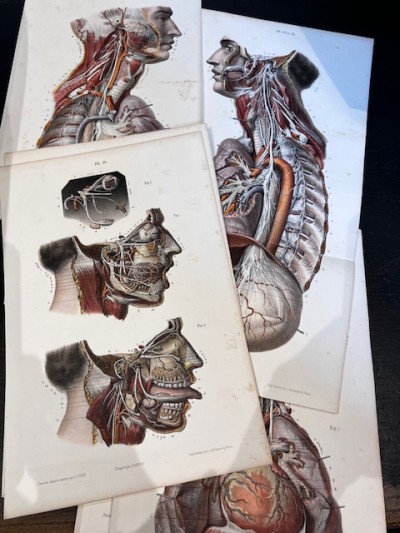
Anatomical chart by Ludovic Hirschfeld drawn by Léveillé
From Traité et iconographie du système nerveux et des organes des sens de l'homme avec leur mode de préparation
Published in 1866
Lithography
You buy 1 plate, not the whole set
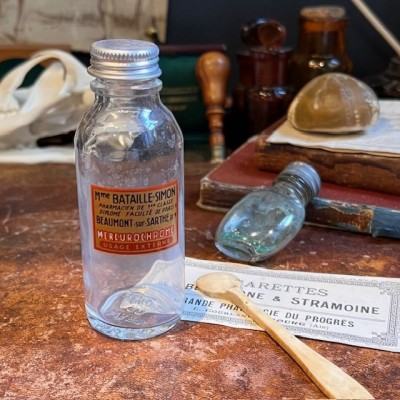
Mercurochrome
Antique pharmacy bottle - Apothecary
Mrs Bataille-Simon, First Class Pharmacist in Beaumont sur Sarthe - Tel 9
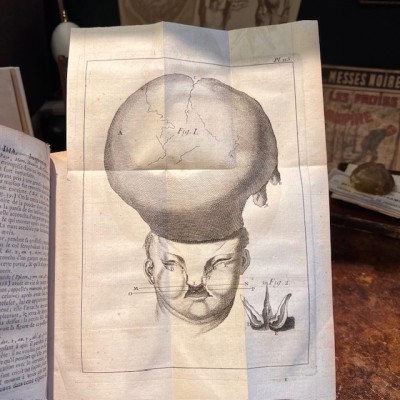
Bibliothèque Choisie de Médecine - Volume 16
Selected Library of Medicine
By François PLANQUE - 1761
Complete original edition with 10 fold-out plates
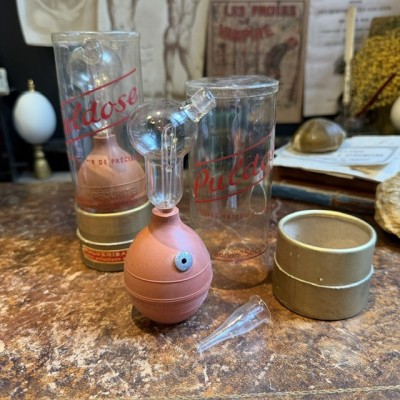
Puldose Nasal Spray for aqueous solutions - Antique remedy
In its Plastic box
Used in otolaryngology, it was intended for nasal or oral sprays in the treatment of colds and antiseptic treatment of the respiratory tract.
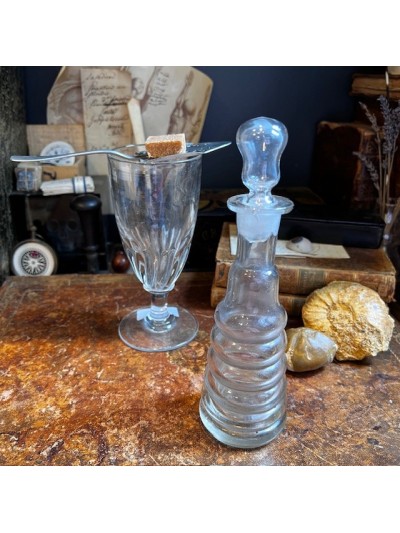
An antique absinthe topette (decanter)
6 Beaded Topette
Residue in the bottom of the carafe
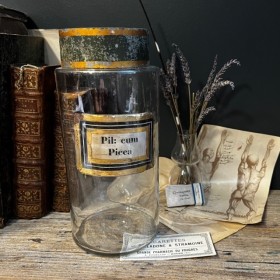
Cumin Epicea Pill - Pil: Cum Picea
Antique blown glass pharmacy jar
Apothecary
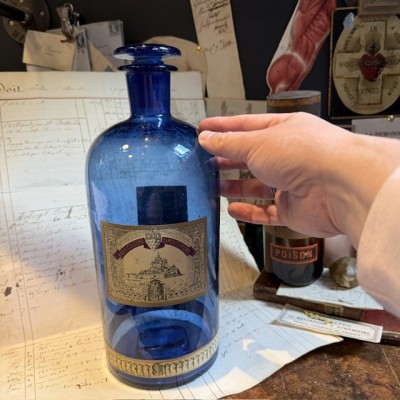
Eau de Cologne du Mont St Michel
Antique BLUE glass pharmacy bottle
EMPTY
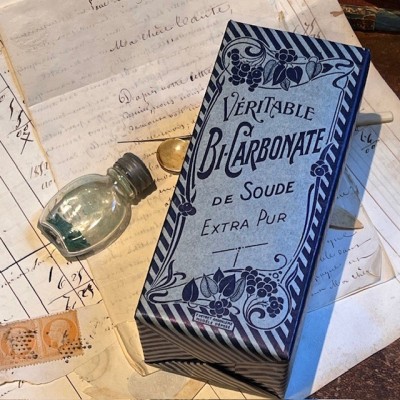
Bi-Carbonate de Soude - Sodium bicarbonate
Antique cardboard pharmacy box
Beautiful typography typical of the Belle Époque: circa 1910-1920

Dry sodium iodide
Antique pharmacy bottle - drugstore - apothecary
1/10th Calomel Powder – Mercury
Antique amber glass bottle, with a boxwood and cork stopper.
Green label: SUBSTANCE TO BE SEPARATED – CODEX 1908
Indicating to the pharmacist that it must be stored separately from other substances in the cabinet for toxic substances, the famous poison cabinet.
Handwritten label, pen inscription, neat calligraphy, with its thick and thin strokes.
A bottle of medical impotence, beautifully calligraphed!
EMPTY