

- New
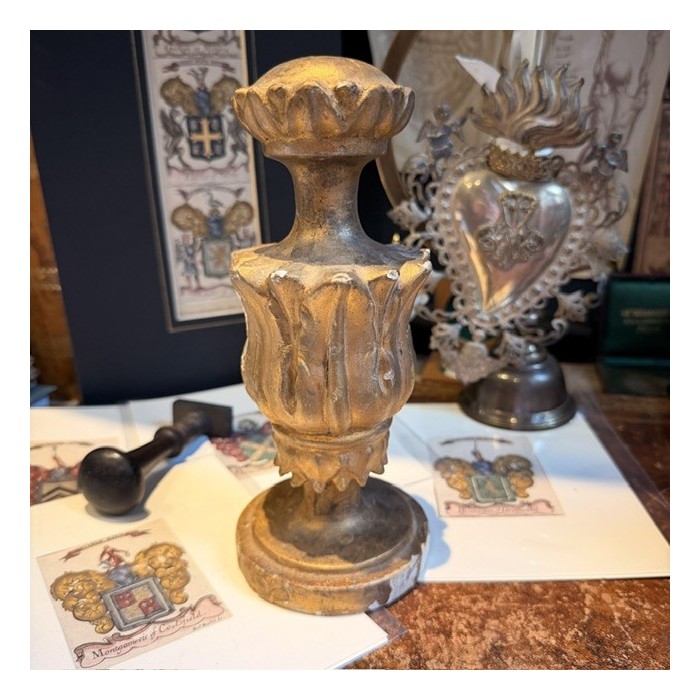
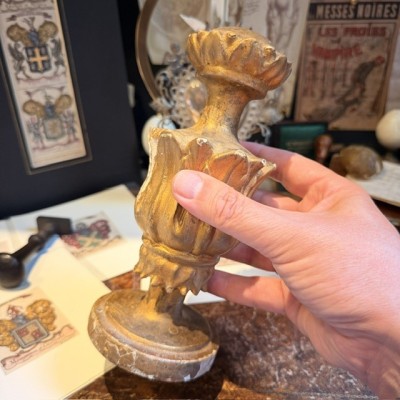
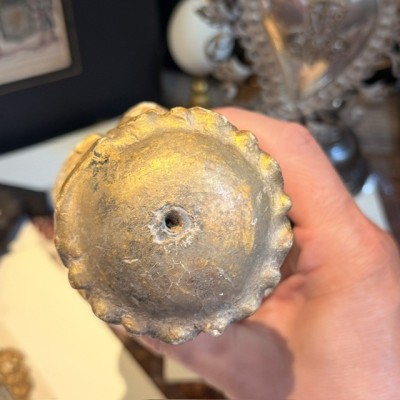
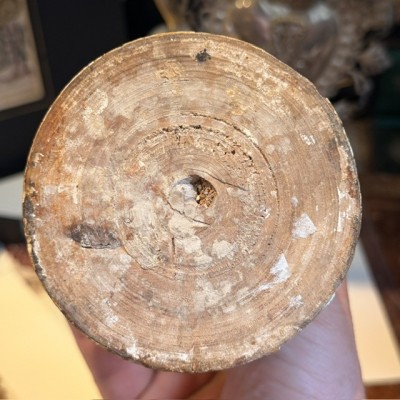
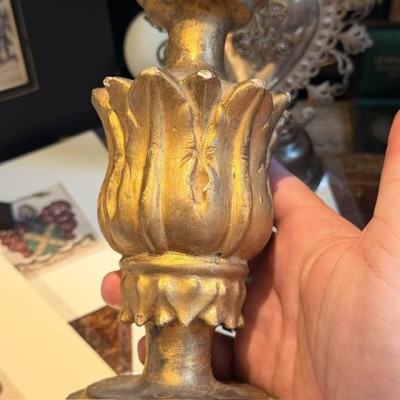
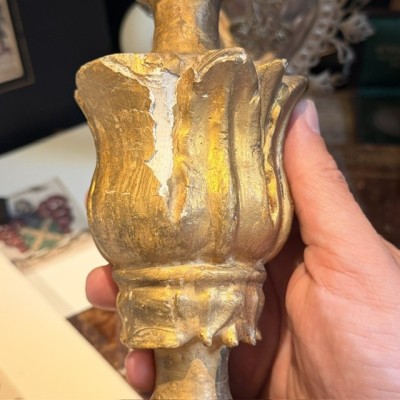
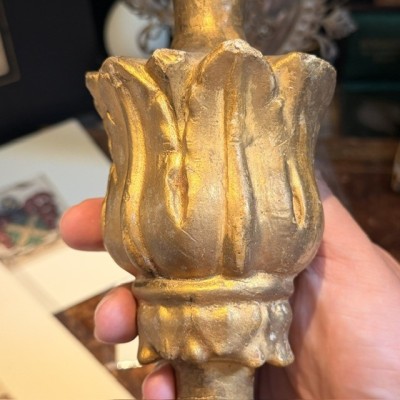
Stem - Baroque base in turned wood and gilded stucco - Italy (Tuscany), 19th century
Italian Giltwood Altar Floral Stand
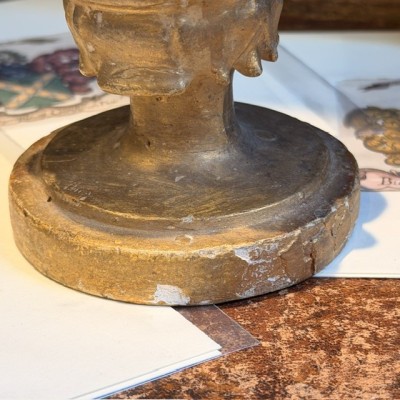
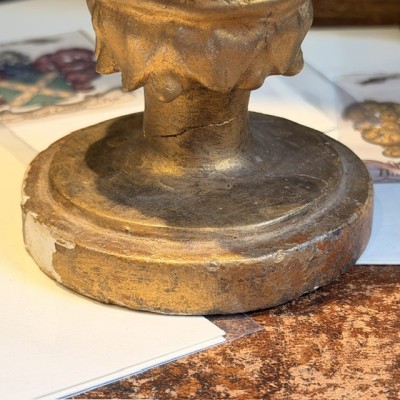
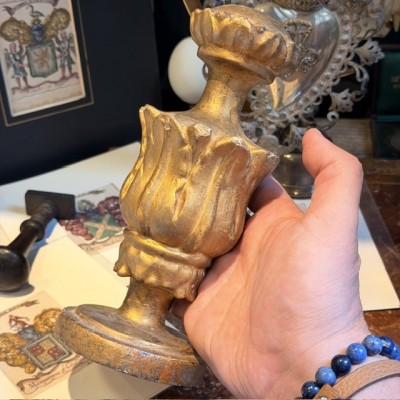
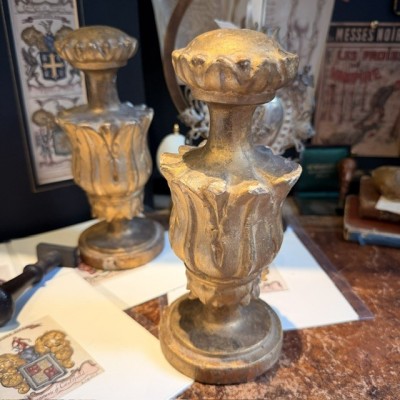
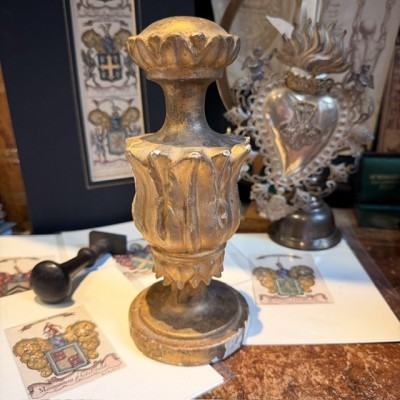
Antique religious altar bouquet stem made of turned and carved wood, covered with a stucco undercoating (gesso) and gilded.
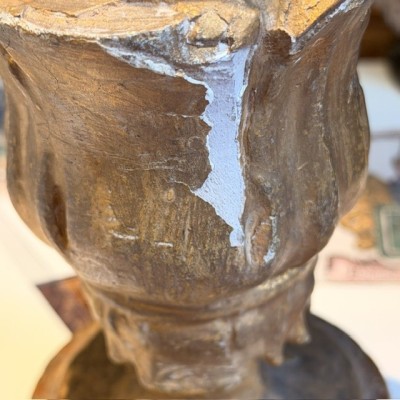
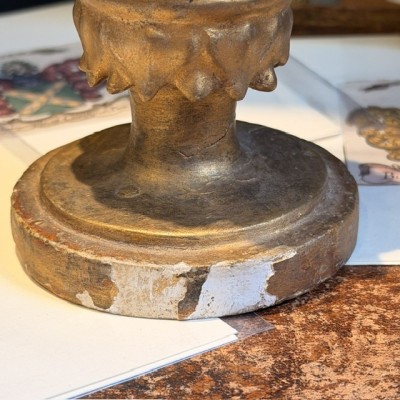
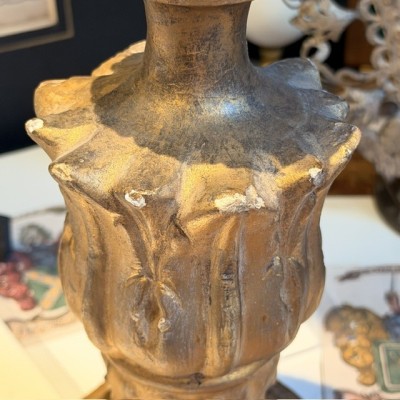
Lack of gesso and gilding in some places, which is precisely why the white gesso appears under the gilding.
Traces of use and visible gaps in stucco
Stem - Baroque base in turned wood and gilded stucco - Italy (Tuscany), 19th century
Italian Giltwood Altar Floral Stand
Antique religious altar bouquet stem made of turned and carved wood, covered with a stucco undercoating (gesso) and gilded.
The central knot features a decoration carved in a corolla of stylized acanthus foliage, resting on a circular molded base.
Originally intended to maintain compositions of church flowers in painted sheet metal and glassware, this base has a beautiful patina of time with its wear and small jumps of gilding characteristic.
Wooden and gilded metal chancel bouquets (often called altar bouquets or bouquets of fervor) are objects of sacred art typical of the Counter-Reformation and the Baroque period, particularly widespread in Tuscan churches.
These pieces, fixed on the altar or near the tabernacle, were used to glorify the divine permanently at a time when fresh flowers were rare and expensive in winter.
Here, it is only thestem that supported the metal flowers.
Lack of gesso and gilding in some places, which is precisely why the white gesso appears under the gilding.
Origin: Tuscany, Italy
Period: 19th century
Materials: Turned wood, priming stucco, gilding
Dimensions: Height 20cm - Diameter of the base: 8.5cm
Condition: Traces of use and visible gaps in stucco, indicating its authenticity.
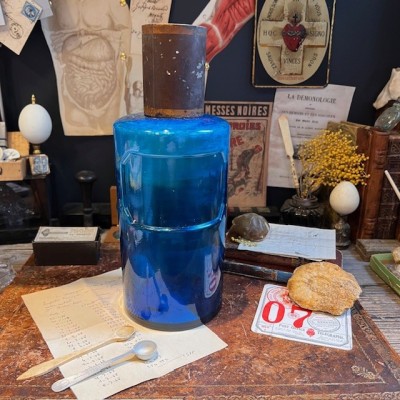
Very Large cobalt blue glass pharmacy bottle - Apothecary - Shouldered - H27.5cm - 19th century
Shouldered apothecary bottle - Antique pharmacy bottle
Mouth-blown glass - Cobalt blue color tinted throughout
This large-capacity jar was a storage jar intended for stockpiling
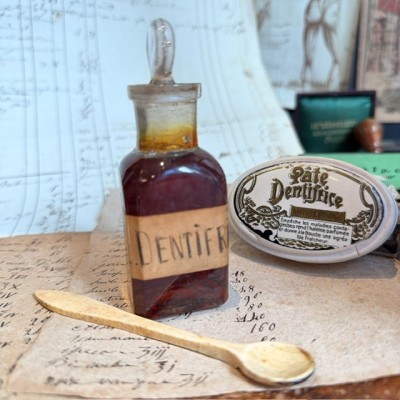
Toothpaste elixir
Antique pharmacy bottle
Handwritten label with pen
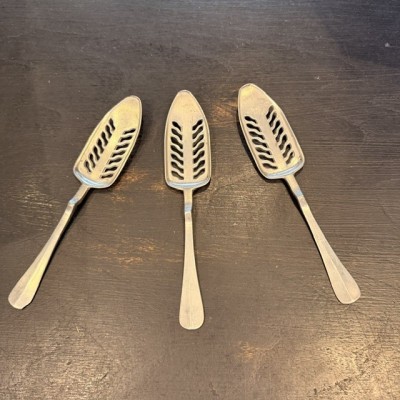
Antique Absinthe Spoon
The spoons have been used, are scratched, badly oxidized, etc.
You buy 1 spoon, not the whole lot
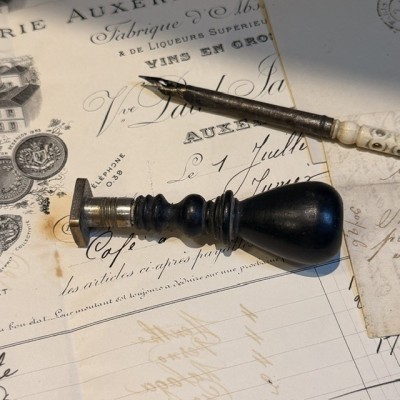
Wax Seal - Seal - Antique Stamp - PF
Frame with a turned, blackened wooden baluster-style handle featuring fluted detailing
Engraving: Initials PF
Estimated period: Late 19th – Early 20th century

Anatomy - Antique chart by D'Orbigny - 1869
In colors
Atlas of the Universal Dictionary of Natural History
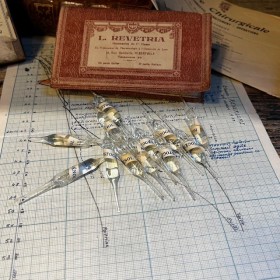
Antique ampoule for hypodermic injection
Histogénol - (circa 1900)
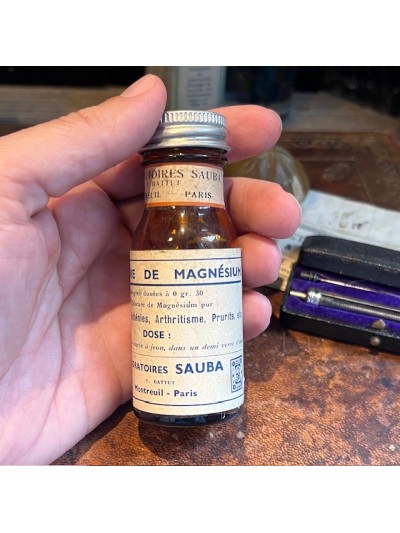
Chlorure de magnésium
Antique pharmacy bottle
Apothecary vial
EMPTY
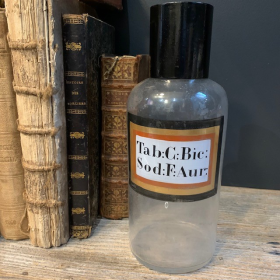
Antique pharmacy jar: Sodium bicarbonate and Gold Flower tablets
Glass pharmacy bottle - XIXth century
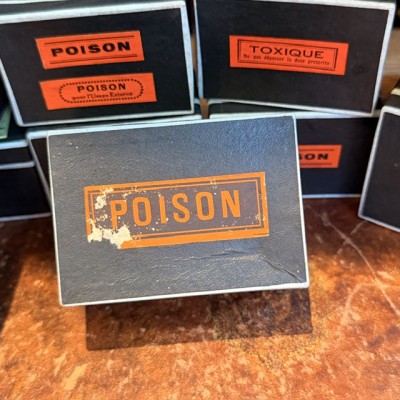
Antique labels in a pharmacy box for cures made of canvas cardboard
Poison label - Ref A
The pharmacist used his boxes of medicine to put away the labels he would then put on the bottles that he would resell to his customers.
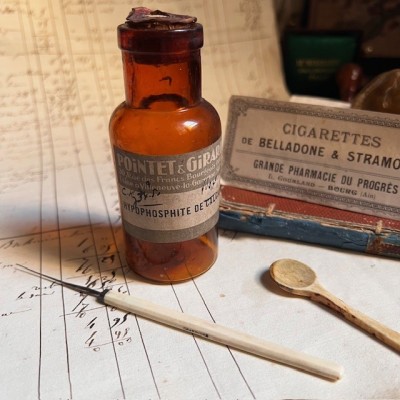
Hypophosphite de Calcium
Antique pharmacy bottle
EMPTY

Lower part of the lower mandible of a horse jaw
Antique model from Maison Auzoux in Paris
Paper-mâché pedagogical model
Model B - 1 year
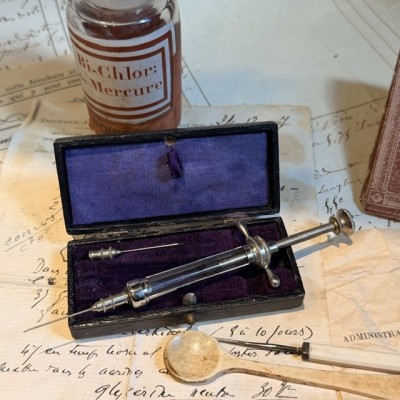
Antique hypodermic Pravaz syringe with ear cups - 19th century
Syringe in it's case
The small difference is that here it is the model with earbuds for a better grip during injection.
not functional
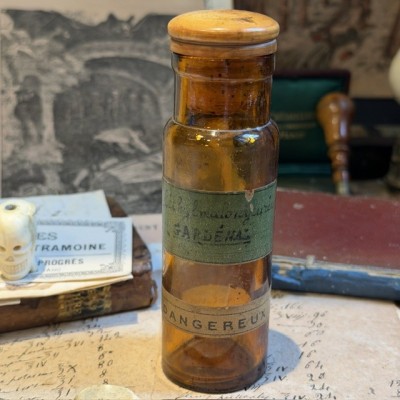
Gardénal - Phenobarbital - Barbiturates
Phényléthylmalonylurée
Antique amber glass bottle, with a boxwood and cork stopper.
Label: DANGEROUS
Indicating to the pharmacist that it must be stored separately from other substances in the cabinet for toxic substances, the famous ‘poison cabinet’.
It comes from the former cellar-laboratory of a Parisian pharmacy. The bottles had not been moved from the shelves since the late 1950s. The cellar had served as a medical analysis laboratory and a laboratory for the pharmacy’s compounded preparations from 1900 until around 1950.
EMPTY
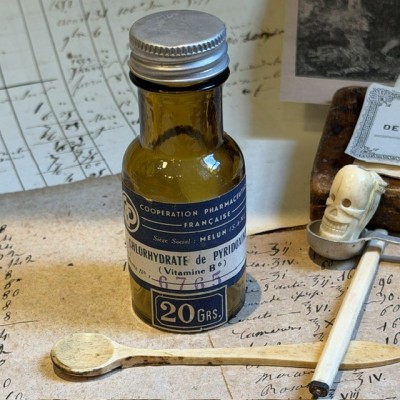
Pyridoxine hydrochloride - Vitamin B6
Antique pharmacy bottle
EMPTY
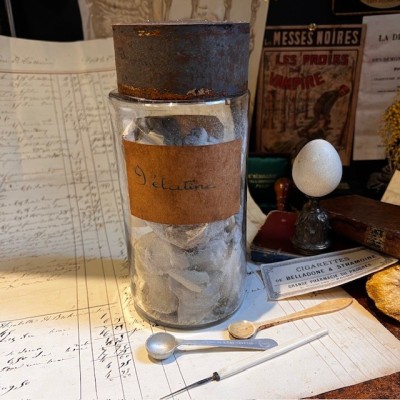
Gelatine
Antique pharmacy bottle - Wide-mouth apothecary jar.
19th-century mouth-blown glass
There is still some product left inside
A fascinating artifact from the history of pharmacology
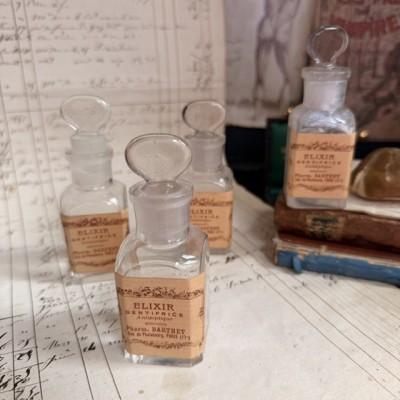
Toothpaste elixir
Antique pharmacy bottle
EMPTY
Stem - Baroque base in turned wood and gilded stucco - Italy (Tuscany), 19th century
Italian Giltwood Altar Floral Stand
Antique religious altar bouquet stem made of turned and carved wood, covered with a stucco undercoating (gesso) and gilded.
Lack of gesso and gilding in some places, which is precisely why the white gesso appears under the gilding.
Traces of use and visible gaps in stucco