Antique Absinthe Spoon - Ref D
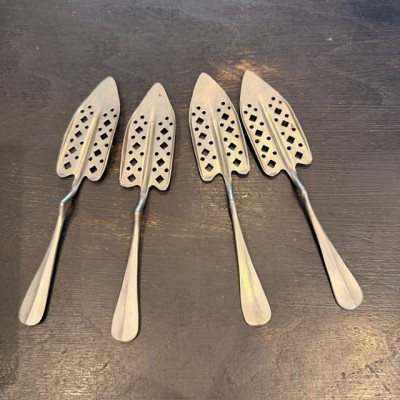
Antique Absinthe Spoon
The spoons have been used, are scratched, badly oxidized, etc.
You buy 1 spoon, not the whole lot
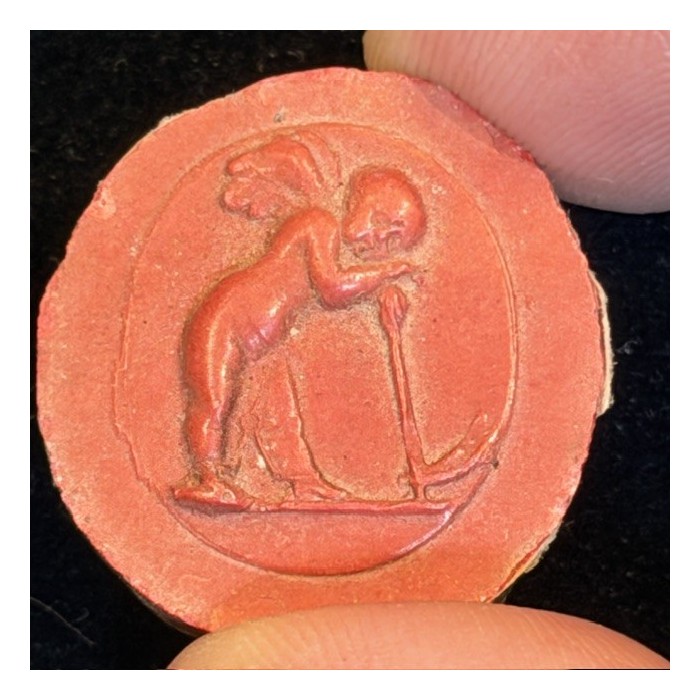
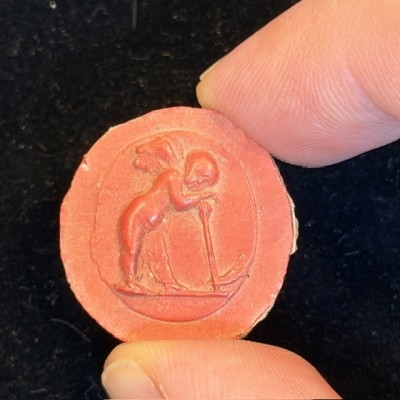
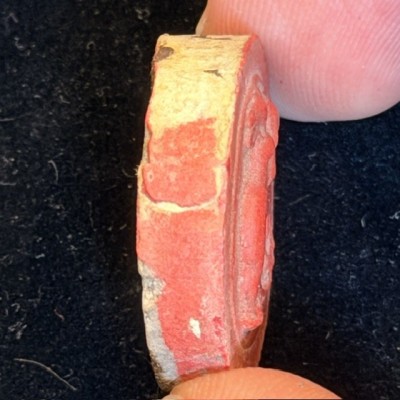
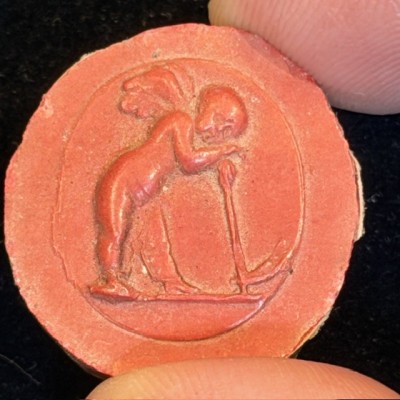
Antique intaglio and cameo print from the Grand Tour of the 19th century
In Red Sulfur
True testimony of the Grand Tour carried out by the aristocrats in the 19th century
Profiles in the antique style, mythological scenes or Greco-Roman deities
Antique intaglio and cameo print from the Grand Tour of the 19th century
In Red Sulfur
A true testimony of the Grand Tour, this journey of aristocratic education undertaken by the enlightened European youth from the 18th century and the beginnig of the 19th century (travel which also gave rise to the word "tourist").
During their stay in Italy, these wealthy travelers acquired, according to their means, pieces of art and antiques or reproductions such as here these prints, medals and cameos in the antique style being very popular.
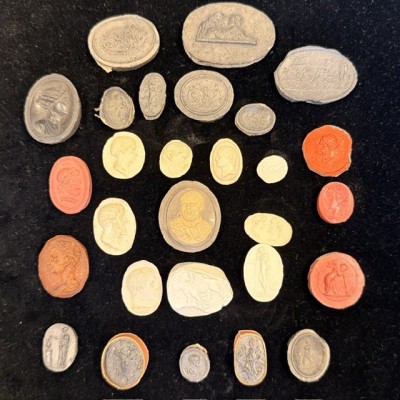
These prints were part of dactyliothèques: collections of prints that reproduce the most beautiful engraved gems of antiquity.
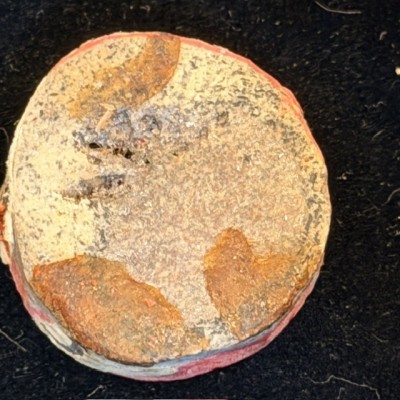
This print is made of liquid sulfur tinged with ochre or cinnabar. Sulfur was the material of choice for molders in Italy because, melting at low temperature, it infiltrated into the smallest details of the engraved ancient stone, freezing the sculpture with precision.
Intaglio or Cameo:
The Intaglio is an engraved fine stone. When plaster is poured inside, the material fills the cavity: the resulting print therefore emerges in relief. This is the case of these prints, which allow you to admire the original design of the gem.
The Cameo: A gem sculpted in relief. An impression taken from a cameo will, on the contrary, give a debossed print.
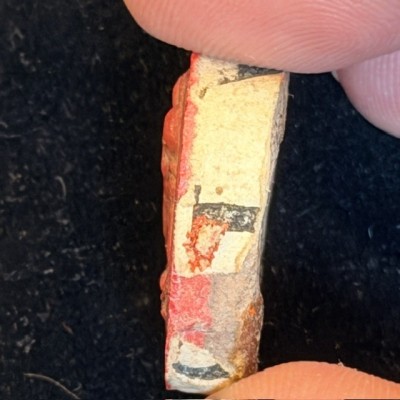
The prints were often lined with a thin strip of two-tone paper enhanced by a golden border on the edge. This banding was intended to protect by holding the edge of the plaster to prevent chipping.
The prints presented here no longer have this banding.
Subject: Profiles in the antique style, mythological scenes or Greco-Roman deities.
When handled, its composition retains a slight sulphur olfactory signature from the era.
The prices range from 22€ to 32€
The footprints are all in very different sizes, from 2cm to 2.6cm
A:2.5cm B:2cm C:2.6cm

Antique Absinthe Spoon
The spoons have been used, are scratched, badly oxidized, etc.
You buy 1 spoon, not the whole lot
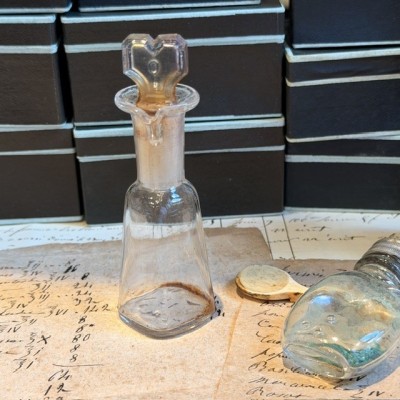
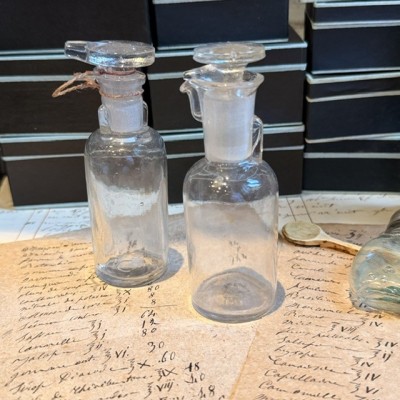
Square Section Dropper Bottle
Antique pharmacy bottle - 1920-30's
Glass stopper honed in the shape of a heart for better grip
EMPTY
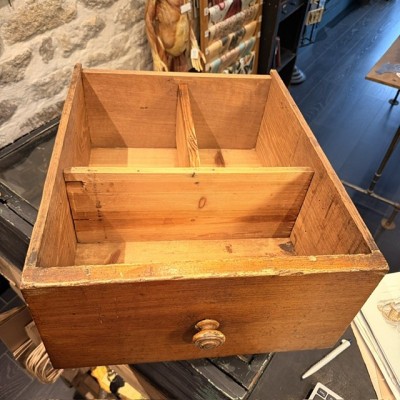
Large antique wooden pharmacy drawer with compartments - From a pharmacy or herbalist's cabinet
3 compartments
Ref C - 39.5x50cm
Can be used as a storage box
Weight: 4.1kg !
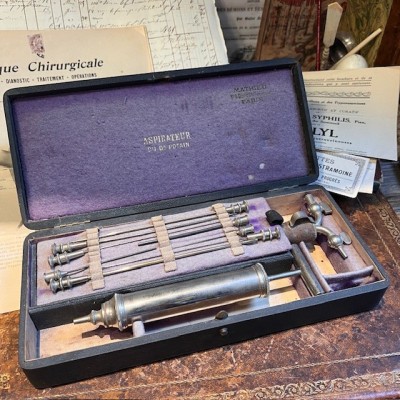
Dr Potain vacuum cleaner in its case
Late 19th century - 1885-1894
Antique medical instrument from manufacturer MATHIEU in Paris
non-functional
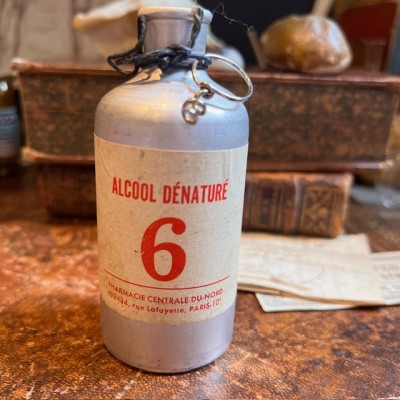
Alcool dénaturé - Alcool à brûler
Denatured alcohol - Methylated spirits
Antique pharmacy bottle - Apothecary
Empty
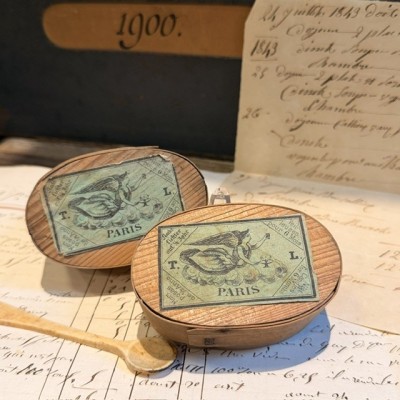
T.L. Paris Night Lights Made of Spruce Wood - Circa 1860–1880
Wick night light
A box of oil-filled night lights made of bent spruce wood slats, dating from the second half of the 19th century (circa 1860–1880): Napoléon III Second Empire.
You are purchasing 1 box
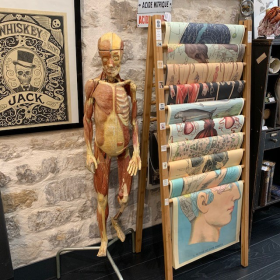
Clastic Mannequin - Dr. Auzoux's anatomical skinned
Dropper Bottle
Antique pharmacy bottle - 1920-30's
EMPTY
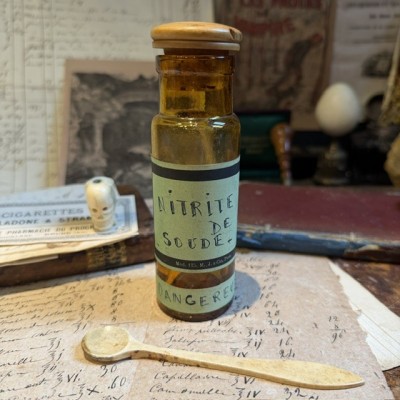
Sodium Nitrite
Antique amber glass bottle, with a boxwood and cork stopper.
Label: DANGEROUS
Indicating to the pharmacist that it must be stored separately from other substances in the cabinet for toxic substances, the famous ‘poison cabinet’.
It comes from the former cellar-laboratory of a Parisian pharmacy. The bottles had not been moved from the shelves since the late 1950s. The cellar had served as a medical analysis laboratory and a laboratory for the pharmacy’s compounded preparations from 1900 until around 1950.
EMPTY
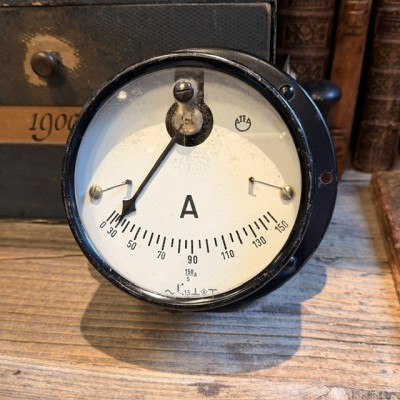
ATEA Panel-Mount Ammeter
Vintage industrial electrical panel dial, circa 1920–1950
Function: Panel-mount ammeter measuring AC currents up to 150 amps.
Chloroform
Pharmacy jar - Herbalism - Apothecary bottle
Late 19th century - Beginning of the 20th
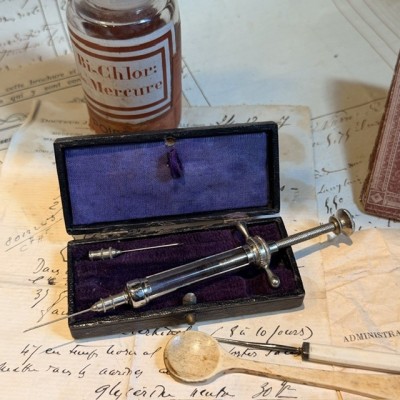
Antique hypodermic Pravaz syringe with ear cups - 19th century
Syringe in it's case
The small difference is that here it is the model with earbuds for a better grip during injection.
not functional
Tétra-chlorure de Carbone - Carbon Tetrachloride
Antique pharmacy bottle with old label POULENC FRERES circa 1928
It comes from an old cellar-laboratory in a Parisian pharmacy. The bottles had not moved since the late 1950s on the shelves. The cellar had served as a laboratory for medical analyses and a laboratory for magistral preparations of the pharmacy from 1900 until around 1950.
EMPTY
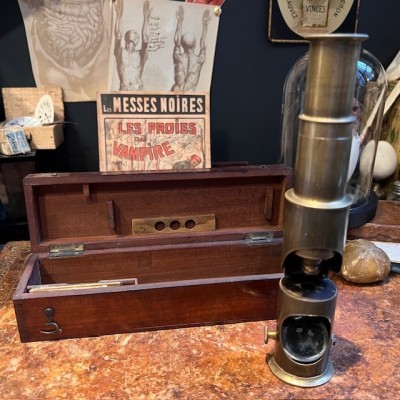
Antique and large drum microscope
In it's mahogany wooden box
For botanist, entomologist - XIXth century
This is a larger model than those usually found on the market
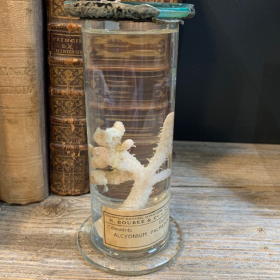
Museum jar - Wet specimen
Soft coral Alcyonium palmatum
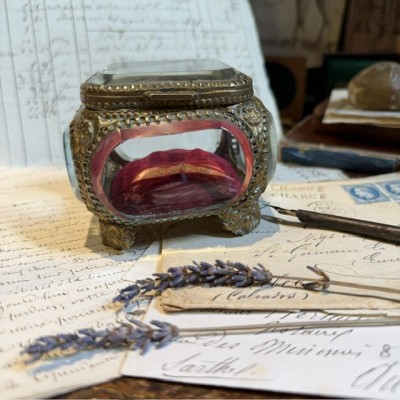
Reliquary box - 19th century
Jewelry box
Antique intaglio and cameo print from the Grand Tour of the 19th century
In Red Sulfur
True testimony of the Grand Tour carried out by the aristocrats in the 19th century
Profiles in the antique style, mythological scenes or Greco-Roman deities