

- New
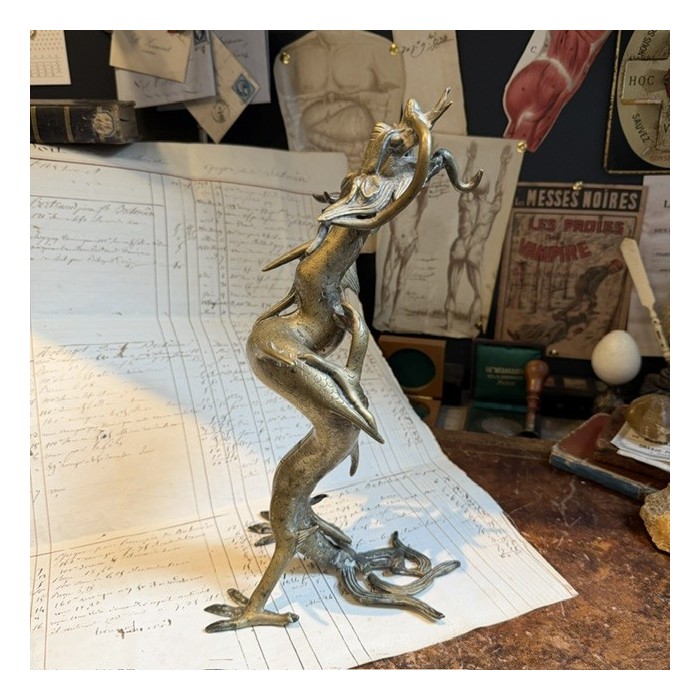
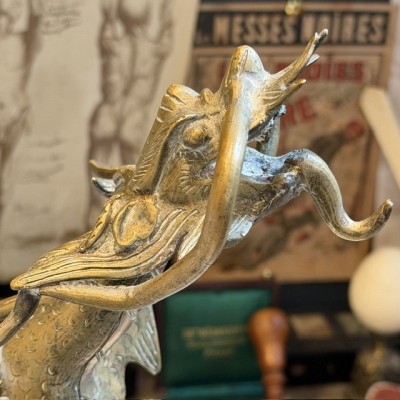
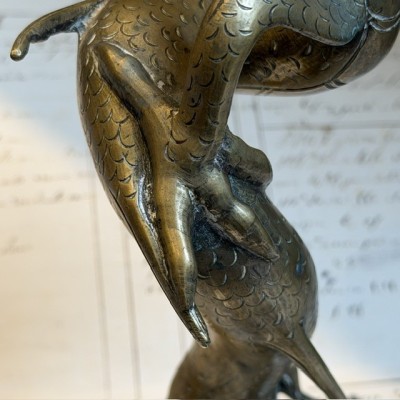
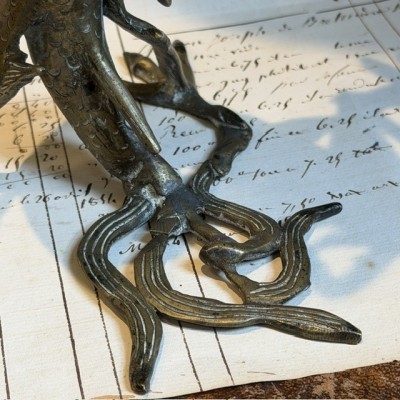
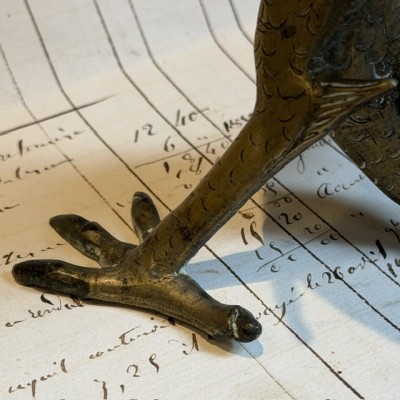
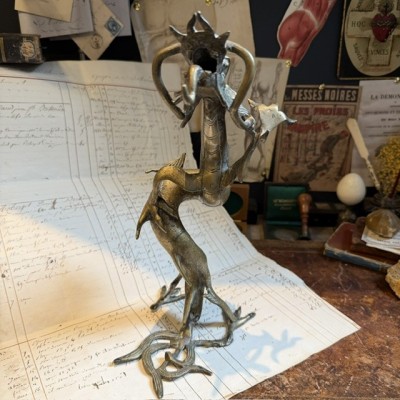
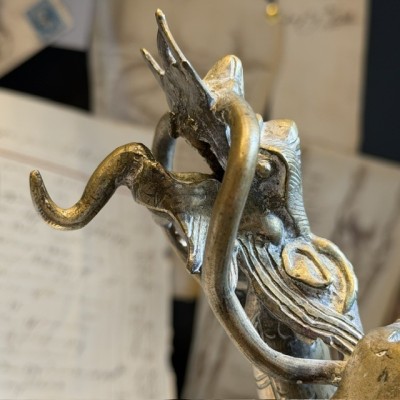
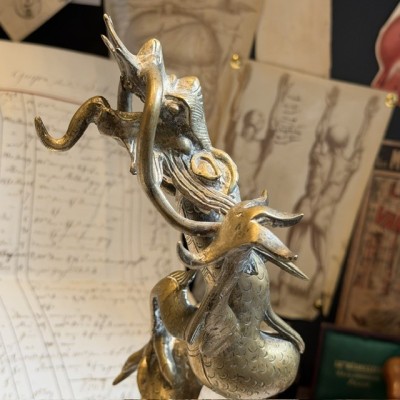
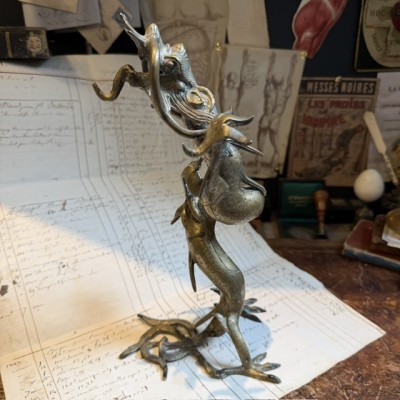
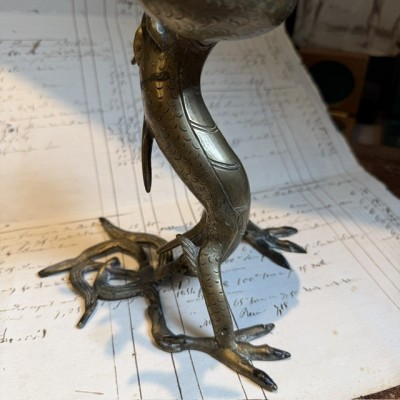
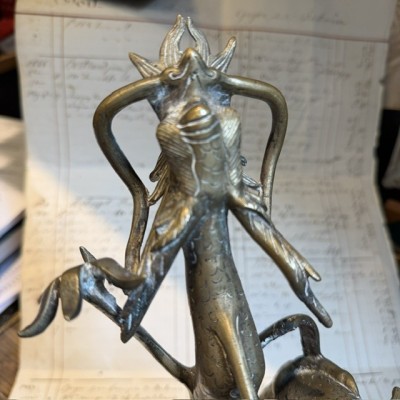
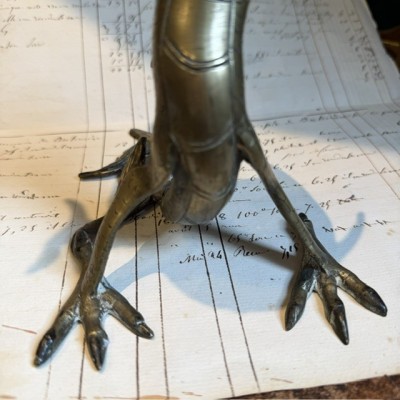
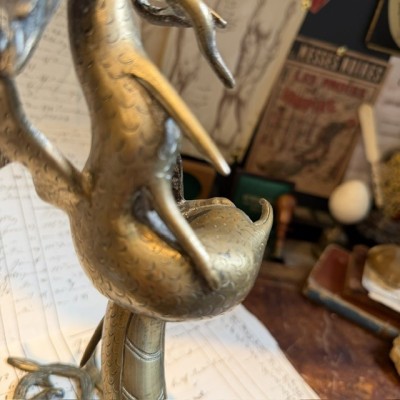
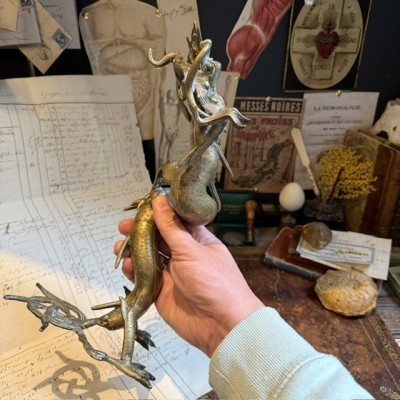
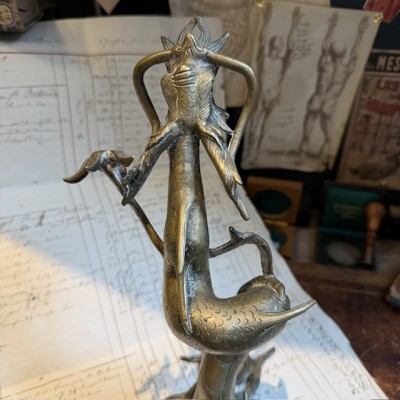
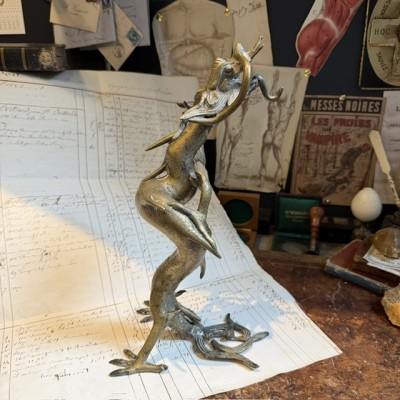
Chinese Dragon with 4 claws
Known as the Mang Dragon to distinguish it from the Long Dragon with 5 claws, which was reserved for the Emperor of China and his family.
Solid brass sculpture
Mid-20th century
Four-clawed Chinese dragon
Known as the ‘Mang’ dragon to distinguish it from the five-clawed ‘Long’ dragon, which was reserved for the Emperor of China and his family.
Solid brass sculpture
Mid-20th century
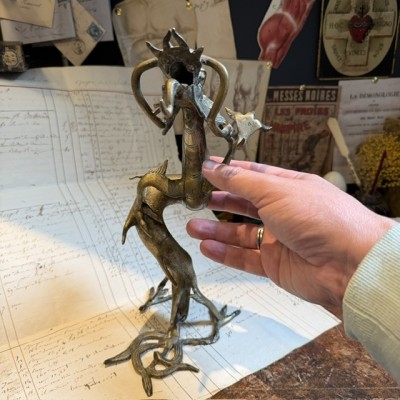
An impressive vertical sculpture, this solid brass dragon is a prime piece for a cabinet of curiosities.
The Chinese dragon is a composite of mythical creatures
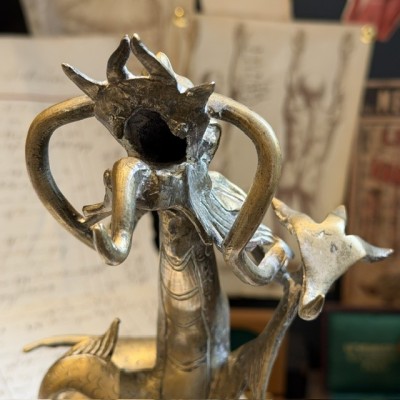
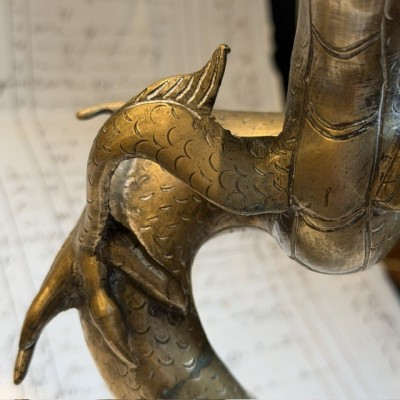
According to tradition, the Chinese dragon is a sacred chimera whose unique appearance stems from the combination of different animals, each chosen for its particular qualities. This piece features the following characteristics:
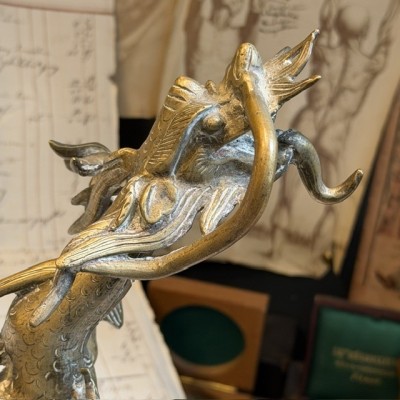
-Camel’s head and deer antlers (strength and longevity).
-Rabbit’s eyes (vigilance)
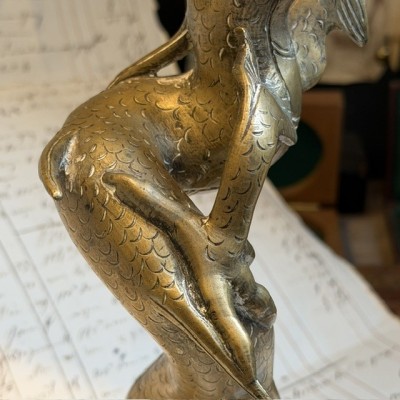
-Snake’s body (infinite flexibility)
-Fish scales linking the creature to the water element and fertility
-Powerful, sharp eagle’s talons
Note that Chinese dragons have no wings, yet they can still fly through the sky and ride the clouds, thus demonstrating their supernatural power.
This complex design reflects the ancient belief that the dragon controls both earth and water, earth and sky, making it a true master of all the elements.
This dragon has four claws on each paw. Historically known as the ‘Mang’ dragon, it was the heraldic symbol reserved for princes and high-ranking court officials, distinguishing its owner from the Emperor and the imperial family. Its ascending posture evokes spiritual elevation and success.
Height: 28.5 cm Weight: 1.1 kg
A particularly striking piece due to its vertical design. Unlike the more common horizontal models, this dragon rises with a dynamic grace that makes it a beautiful display piece.
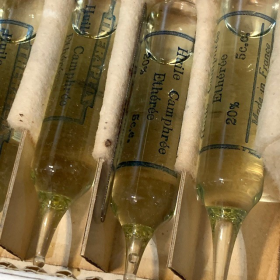
Bulb for hypodermic injection - Camphor (circa 1920)
THERAPLIX

Lower part of the lower mandible of a horse jaw
Antique model from Maison Auzoux in Paris
Paper-mâché pedagogical model
Model B - 1 year
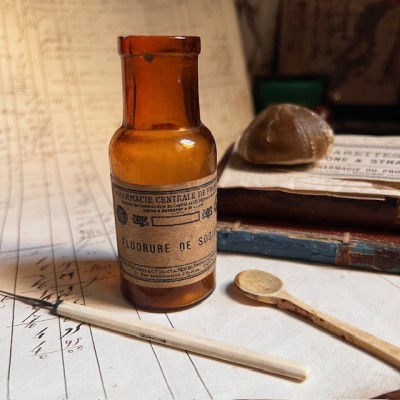
Fluorure de sodium - sodium fluoride
Antique pharmacy bottle
EMPTY
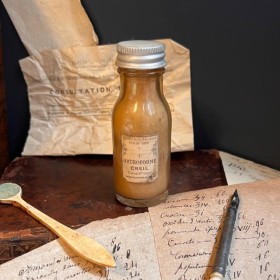
Orthoforme
Antique pharmacy bottle - Droguerie - Apothicaire
Silver medal at Paris 1889
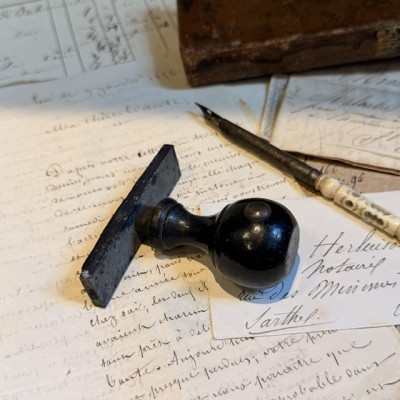
Antique manual pharmacy stamp - BERTHIER Pharmacy
The rubber base, engraved in relief, reads: ‘Pharmacie de BERTHIER / rue de Phalsbourg / PARIS’.
Sturdy metal frame and ergonomic handle made from turned blackened wood

Racine de Ratanhia - Para Rhatany
Pharmacy jar - Herbalism - Apothecary bottle
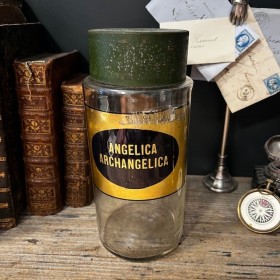
Angelica Archangelica
Pharmacy jar - Herbalism - Apothecary bottle
Late 19th century, early 20th century
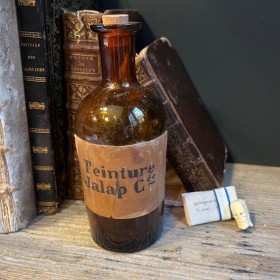
Tincture of Jalap Compound also known as German brandy
A purgative powder is extracted from the Jalap plant.
Antique pharmacy bottle
Apothecary vial
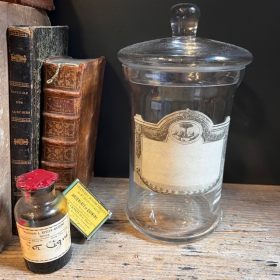
Herbalist's or Pharmacist's jar
Antique blank label of the XVIIIth century
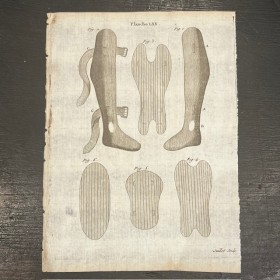
Antique surgical board
From Benjamin Bell's Complete Course in Surgery, published in 1796
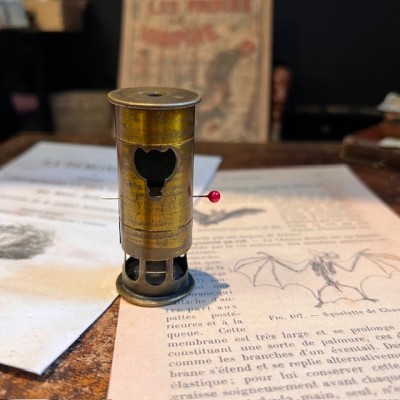
Pocket microscope
Floroscope - Insectoscope in brass
1850's - 1930's
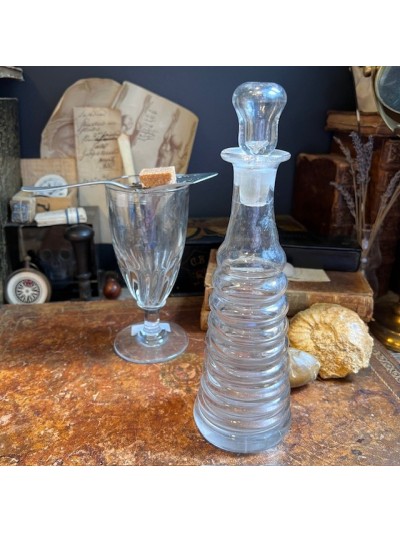
An antique absinthe topette (decanter)
10 Beaded Topette
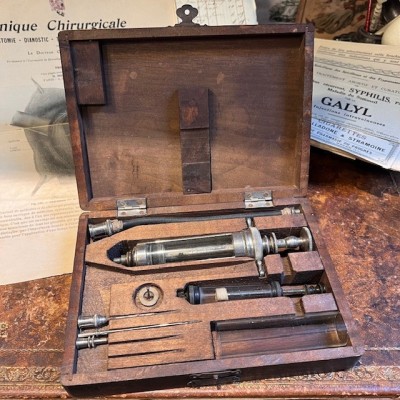
Syringe for diphtheria serum – Dr Roux method
Wooden box
Label from instrument manufacturer H. Hauptner in Berlin on the box and marking on the large syringe

Brass plate number per unit
Numbered oval brass plate
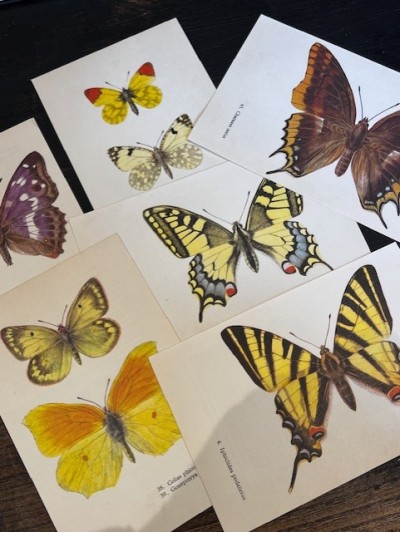
Butterfly - Natural History color plate
Entomology
You buy 1 plate, not the whole set
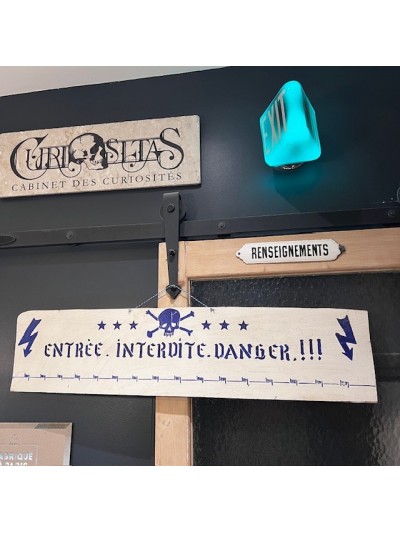
Antique painted plywood panel
ENTREE INTERDITE - DANGER ENTRY FORBIDDEN - DANGER
Skull and crossbones with barbed wire
Chinese Dragon with 4 claws
Known as the Mang Dragon to distinguish it from the Long Dragon with 5 claws, which was reserved for the Emperor of China and his family.
Solid brass sculpture
Mid-20th century