APOTHECARY - ANTIQUE PHARMACY
The alchemist's lair — Apothecary bottles, medical instruments and antique laboratory objects imbued with the charm and mystery of ancient sciences. A selection inspired by alchemy and medicine of yesteryear, ideal for enthusiasts of ancient sciences and medical curiosities.
Sort by:
Date added, newest to oldest
Showing 1-12 of 218 item(s)
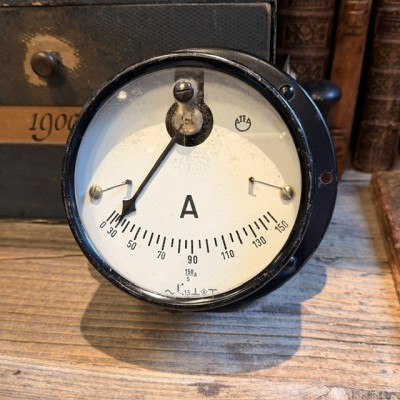
Vintage industrial electrical panel dial, circa 1920–1950
Function: Panel-mount ammeter measuring AC currents up to 150 amps.
Price
€35.00
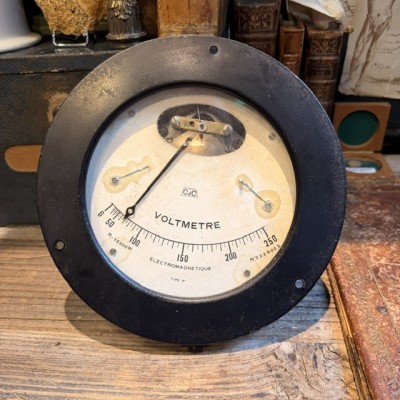
Table CdC voltmeter with apparent mechanism
Dial for vintage industrial electrical panel, circa 1920/1950
Function: Electromagnetic panel voltmeter measuring electrical voltage up to 250 Volts. Manufactured by the Compagnie des Compteurs de Montrouge, it was built into factory control cabinets, municipal transformer stations, public building machinery rooms or onto vintage railway rolling stock. The upper brass skylight reveals the pivot and the return spring of the mechanism.
Price
€40.00
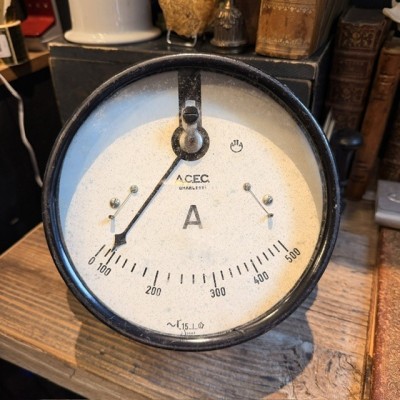
Large ACEC Industrial Ammeter (0–500 A)
Industrial Dial for Vintage Industrial Electrical Panel, circa 1920/1950
Function: Ferromagnetic ammeter with a circular dial that measures high-current alternating current (up to 500 A). It was used to monitor the load drawn by very large power lines or electrical machinery.
Price
€50.00
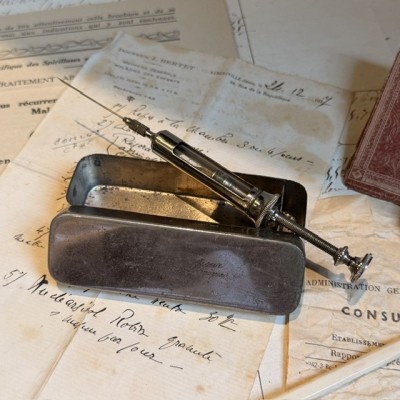
Antique Pravaz hypodermic syringe
Early 20th century
A glass and metal syringe in its metal case, the lid of which is engraved with the inscription: Syringe for hypodermic injections
not functional
Price
€75.00
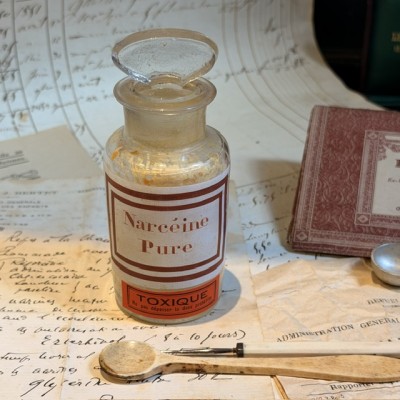
Narceine - Opium Derivative
Antique pharmacy bottle made of blown glass and enameled painted label.
Red TOXIC label
Signaling to the pharmacist that it is imperative to keep apart the other substances in the cabinet of toxic substances, the famous poison cabinet.
Dating: 19th century
EMPTY - T he bottle is blocked and does not open, sealed by time
Price
€35.00
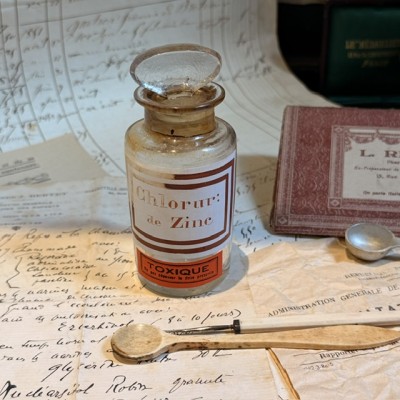
Zinc chloride
Antique pharmacy bottle made of blown glass and enameled painted label.
Red TOXIC label
Signaling to the pharmacist that it is imperative to keep apart the other substances in the cabinet of toxic substances, the famous poison cabinet.
Dating: 19th century
EMPTY
Price
€35.00
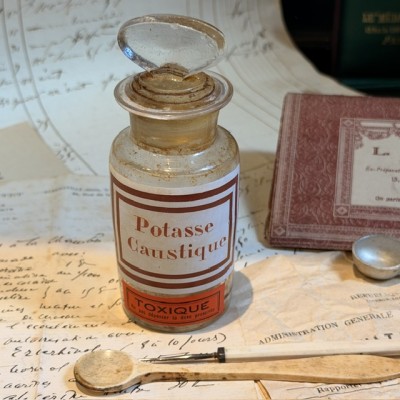
Caustic Potash
Antique pharmacy bottle made of blown glass and enameled painted label.
Red TOXIC label
Signaling to the pharmacist that it is imperative to keep apart the other substances in the cabinet of toxic substances, the famous poison cabinet.
Dating: 19th century
EMPTY
Price
€35.00
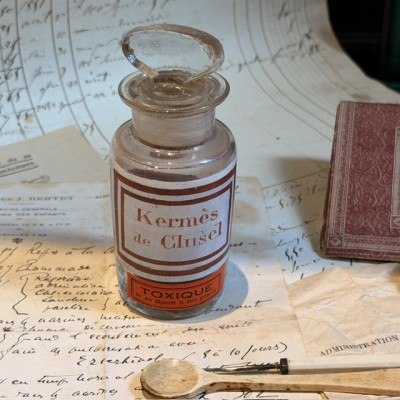
Kermes de Clusel - Antimony Sulfide
Antique pharmacy bottle made of blown glass and enameled painted label.
Red TOXIC label
Signaling to the pharmacist that it is imperative to keep apart the other substances in the cabinet of toxic substances, the famous poison cabinet.
Dating: 19th century
EMPTY
Price
€35.00
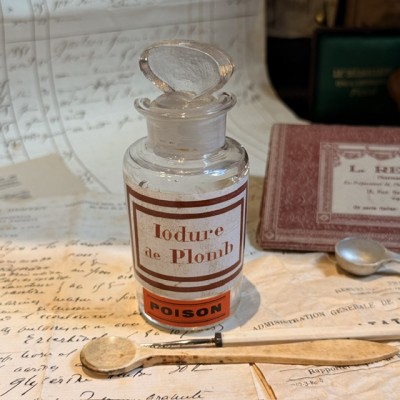
Lead iodide
Antique pharmacy bottle made of blown glass and enameled painted label.
Red POISON label
Signaling to the pharmacist that it is imperative to keep apart the other substances in the cabinet of toxic substances, the famous poison cabinet.
Dating: 19th century
EMPTY
Price
€29.00
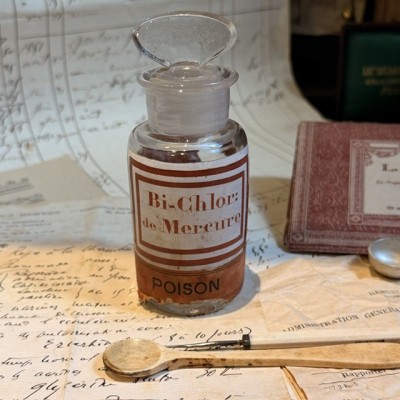
Corrosive sublimate - Bichloride of mercury
Antique pharmacy bottle made of blown glass and enameled painted label.
Red POISON label
Signaling to the pharmacist that it is imperative to keep apart the other substances in the cabinet of toxic substances, the famous poison cabinet.
Dating: 19th century
EMPTY
Price
€45.00
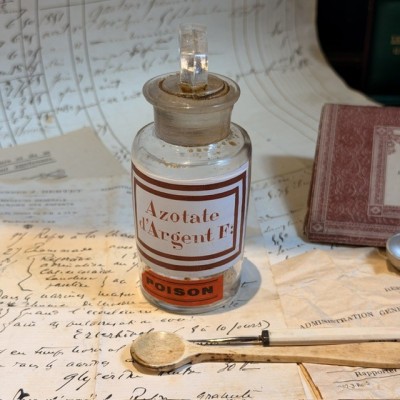
Silver nitrate
Antique pharmacy bottle made of blown glass and enameled painted label.
Red POISON label
Signaling to the pharmacist that it is imperative to keep apart the other substances in the cabinet of toxic substances, the famous poison cabinet.
Dating: 19th century
There is still some product inside but the cap is blocked and does not open.
Price
€35.00
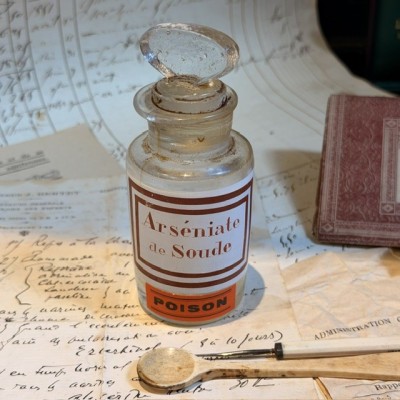
Arsenic - Sodium arsenate
Antique pharmacy bottle made of blown glass and enameled painted label. Yes, it is indeed the arsenic you know!
Red POISON label
Signaling to the pharmacist that it is imperative to keep apart the other substances in the cabinet of toxic substances, the famous poison cabinet.
Dating: 19th century
EMPTY but the cap is blocked and does not open.
Price
€35.00
Best
Seller
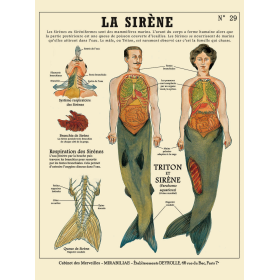
Postcard
Fantastic creatures and Metamorphoses by Camille Renversade
Price
€3.00
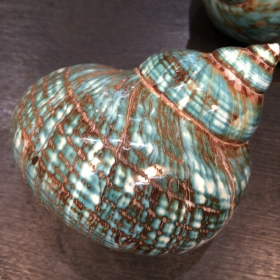
Green turbo (or burgo) from Madagascar - Turbo imperialis
Illustrative photos
Price
€16.00
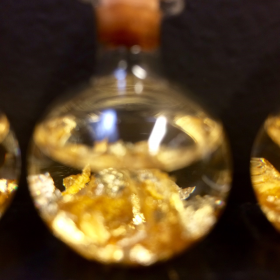
Golden Vial - Vial of 22 carat gold
A glass vial containing fragments of 22-carat gold leaf.
Price
€14.00
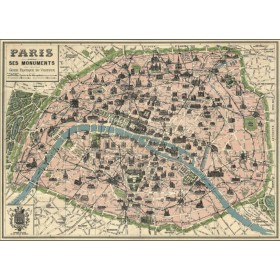
vintage poster: Old Paris map
Price
€14.00
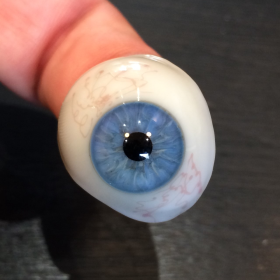
Antique glass eye
Real antique eye prosthesis
Price
€55.00
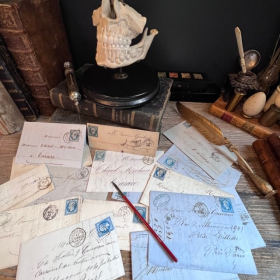
Stamped letter-envelope of the Second Empire
Dated from 1852-1870
Price
€6.00
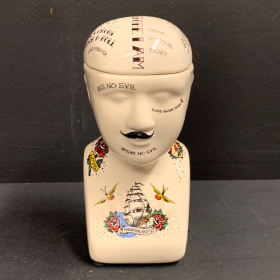
Tatooed phrenology Head - Storage box - Vase
Cute little tattooed and mustachioed head with a removable skull cap that can be used to hide small objects!
It can also be used as a vase.
Price
€25.00