



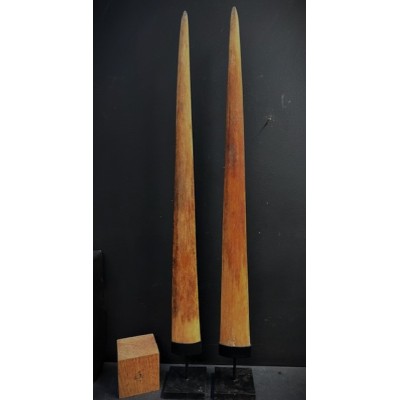
Rostrum of swordfish - Large
Xiphias gladius
approximately 93-95cm
Swordfish Rostrum L - Xiphias gladius
The swordfish (from the Latin Gladius) owes its name to the appearance of its rostrum (or beak), which resembles a sword blade, and its ability to cut through water with ease and speed. Swordfish rostrums are traditionally used to make weapons in New Guinea.
Material: polished bone
Origin: Indonesia
Total height with base: approximately 93-95cm

Shark tooth fossil
Otodus Obliquus dating from the Ypresian: 50 million years ago
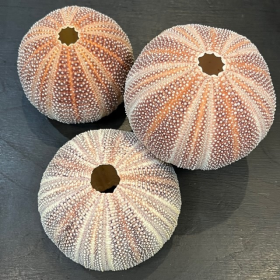
Echinus esculentus
Cold Sea Urchin Test (North Sea)
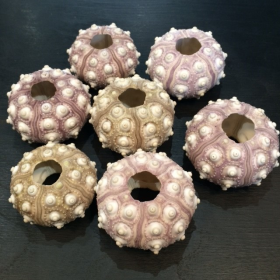
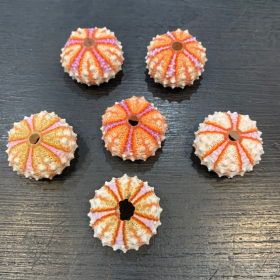
Test of sea urchin pencil
Species: phyllacanthus imperialis Indian Ocean
5/7cm
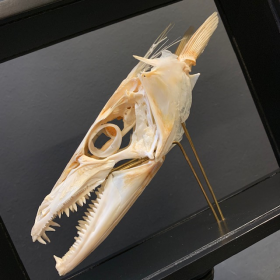
barracuda in it's glass reliquary box - Sphyraena barracuda
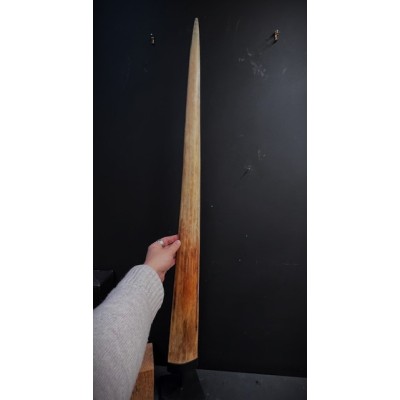
Rostrum of swordfish XXL size
Xiphias gladius
Dimensions: 111.5cm - EXCEPTIONAL SIZE
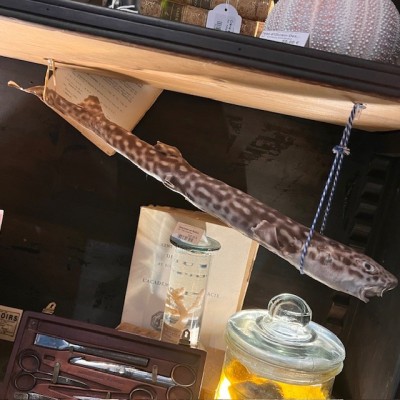
Naturalized Small-spotted catshark
Scyliorhinus canicula
Unprotected species - Old taxidermy: visible suture under the belly and on the left side near the mouth
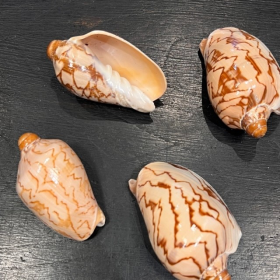
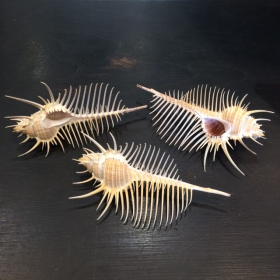
Venus Comb: Murex Pecten shell
Some teeth of the famous comb may be missing
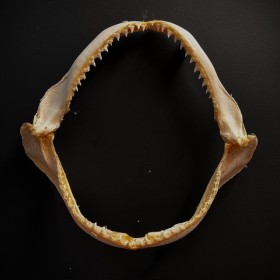
Hardnose shark jaw - Carcharhinus macloti
Approximately 33cm high and 35cm wide
Pre-CITES Convention Capture - Can only be sold in the European Union - Schengen space
It will be provided a document proving the anteriority of the catch pre-CITES convention
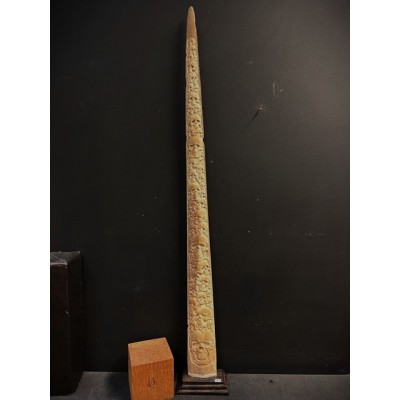
Carved swordfish rostrum: Unique piece
Skulls motifs
Indonesian craftsmanship
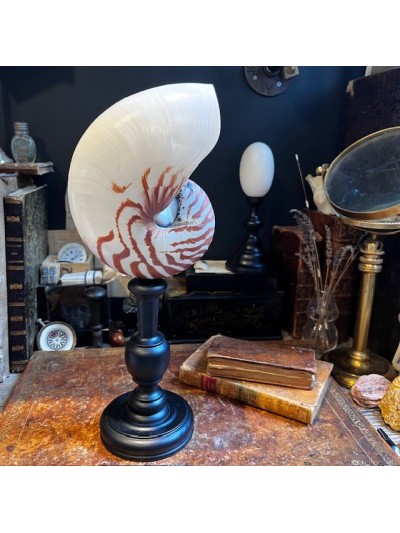
Nautilus on turned wooden base
Nautilus pompilius - Size L
Pre-CITES Convention Capture - Can only be sold in the European Union - Schengen space
All shells are different - Illustration photo
It will be provided a document proving the anteriority of the catch pre-CITES convention
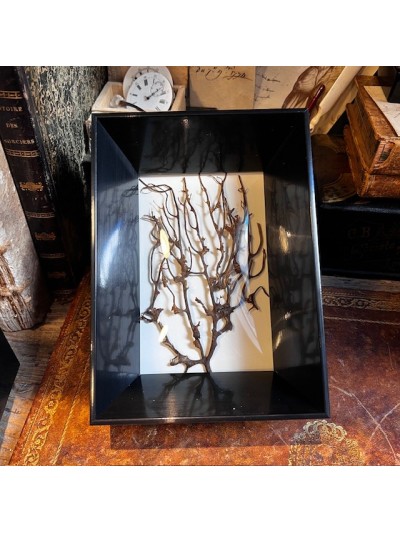
Sea fan branch
The sea fan is presented in a thick-bottomed box with curved glass.
Rostrum of swordfish - Large
Xiphias gladius
approximately 93-95cm