
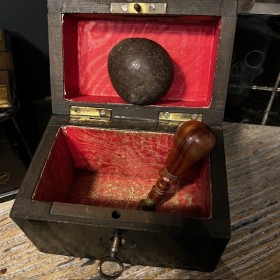
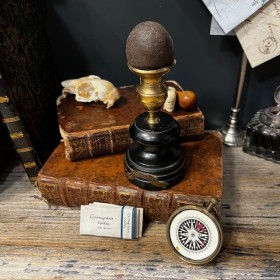
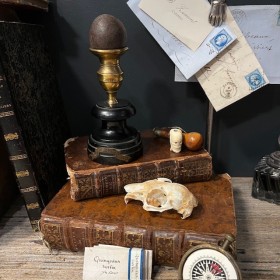
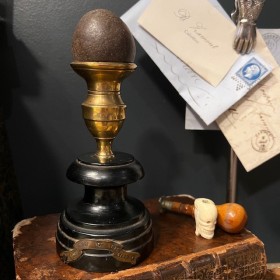
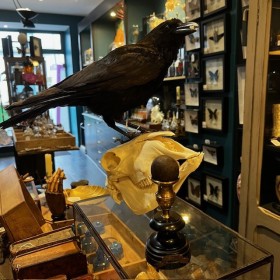
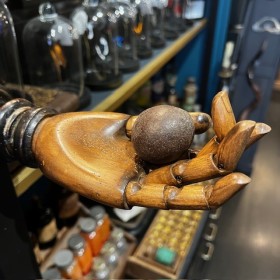
Antique bezoar - Antipoison - Antidote
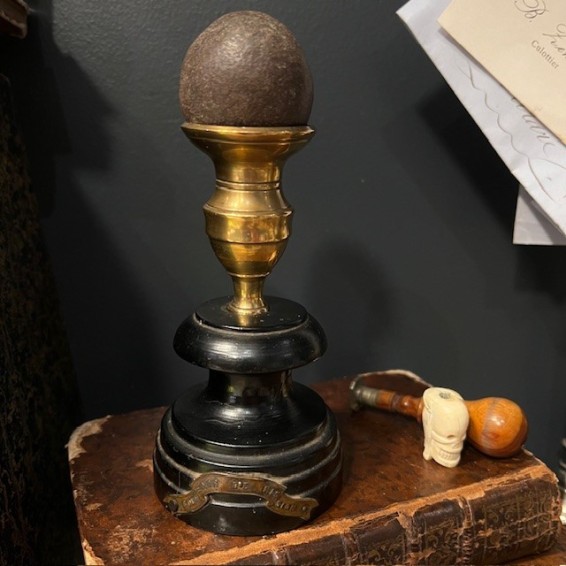
Once sold by the apothecary, bezoar, also known as gallstone, was reputed to have the same anti-poison properties as the legendary unicorn's horn, hence its excessively high price, also due to its great rarity.
An important piece in a cabinet of curiosities
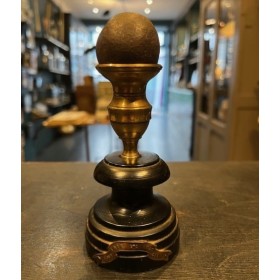
Sold alone - Without stand, sold separately
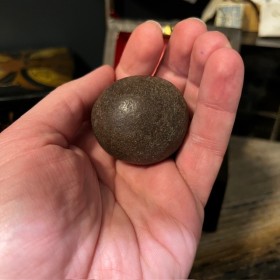
Antique Bezoar
Bezoar is a Persian word that protects against poison. According to Arab tradition, this stone was the product of the tears of a deer-goat.
In reality, it is a foreign body, a calcareous concretion resembling an extremely light stone that is most often found in the stomachs of ruminant animals and cannot be digested. An amalgam of fibres, plant debris and licking hairs bound together by resin ingested at the same time as conifer bark. Humans can also sometimes get it.
Once considered a universal antidote against venoms and poisons as early as the 15th century, it was also used as a decorative object by curiosity collectors in the 17th and 18th centuries.
Once sold by apothecaries, bezoars, also known as gallstones, were reputed to have the same anti-poison properties as the legendary unicorn's horn, which explains their extremely high price, also due to their great rarity. Legend has it that a Moorish king of Andalusia gave a doctor a sumptuous palace in Cordoba in exchange for a single bezoar.
In the event of poisoning, the bezoar was grated and powdered in wine to be swallowed.
Also effective against melancholy, the great princely families of Europe, notably the Habsburgs, who were prone to melancholy, collected them, transforming them into objets d'art, mounted on pedestals of gold and jewels.
Bezoars were important objects in cabinets of curiosity and in natural-history collections.
Simply possessing it warded off bad luck, and even the smallest stones could be found mounted in rings or pendants.
Provenance: Former collection. Origin: West Africa, circa 1950, from a return trip.
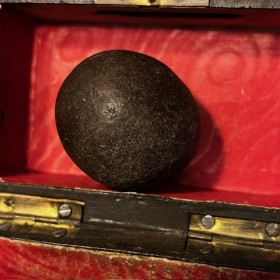
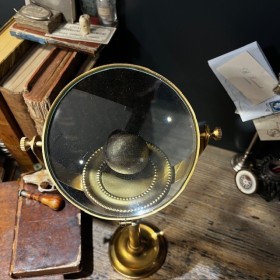
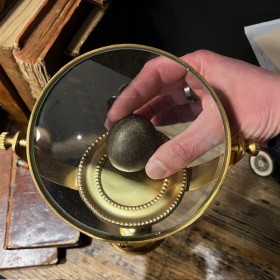
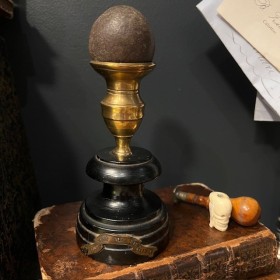
Dimensions: This is a not entirely round ball measuring approximately 4.5x4cm
The Bezoar is sold alone
You can also buy the base seen in the photos by typing bézoard in the search box
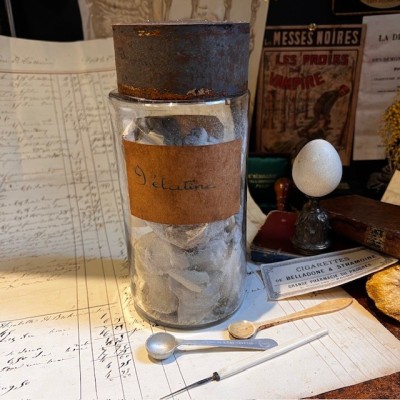
Gelatine
Antique pharmacy bottle - Wide-mouth apothecary jar.
19th-century mouth-blown glass
There is still some product left inside
A fascinating artifact from the history of pharmacology
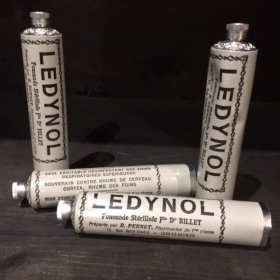
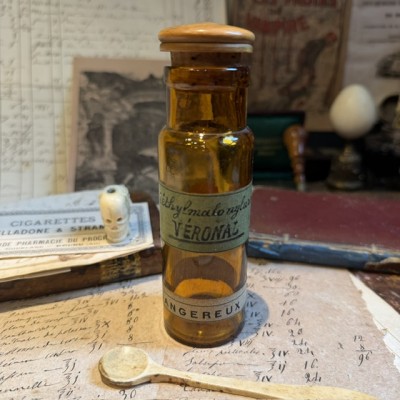
Veronal - Barbiturates - Diethylmalonylurea
Antique amber glass bottle, with a boxwood and cork stopper.
Label: DANGEROUS
Indicating to the pharmacist that it must be stored separately from other substances in the cabinet for toxic substances, the famous ‘poison cabinet’.
It comes from the former cellar-laboratory of a Parisian pharmacy. The bottles had not been moved from the shelves since the late 1950s. The cellar had served as a medical analysis laboratory and a laboratory for the pharmacy’s compounded preparations from 1900 until around 1950.
EMPTY
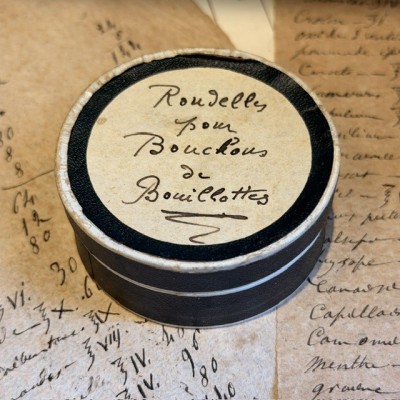
Box of rubber washers for hot water bottles
In its original cardboard box
1939/1940
New Old Stock
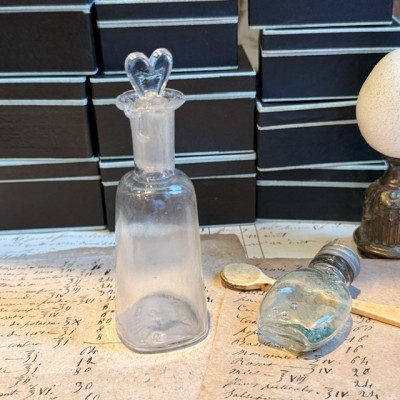
Square Section Dropper Bottle
Antique pharmacy bottle - 1920-30's
Glass stopper honed in the shape of a heart for better grip
EMPTY
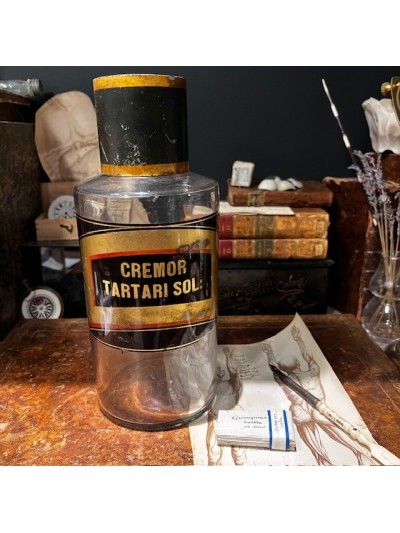
Cremor tartari sol - Cream of tartar
Potassium bitartrate
Pharmacy jar - Herbalism - Apothecary bottle
Late 19th century
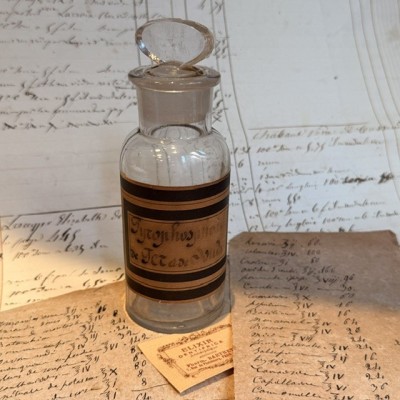
Iron & Soda Pyrophosphate
Antique pharmacy bottle
EMPTY
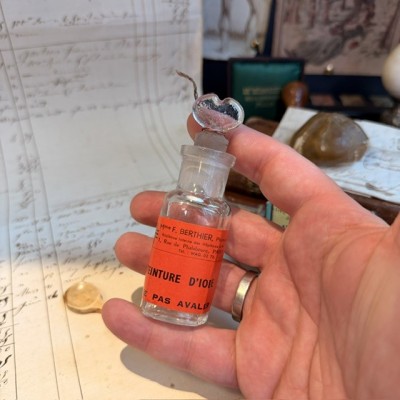
Iodine dye
Antique pharmacy bottle
With the inscription Teinture d'Iode molded in glass
EMPTY
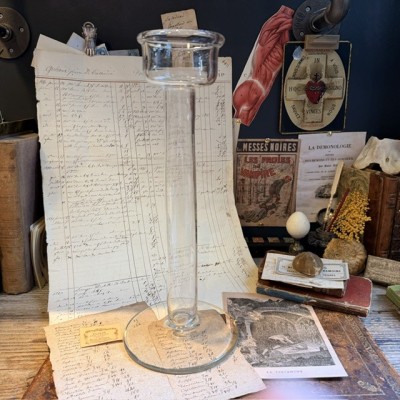
Test Tube with Special Bulb for Mercury Ureometer - 1900 - Pharmacy - Apothecary
Period: 1900 - Pharmacy - Apothecary
To be diverted into a soliflore vase
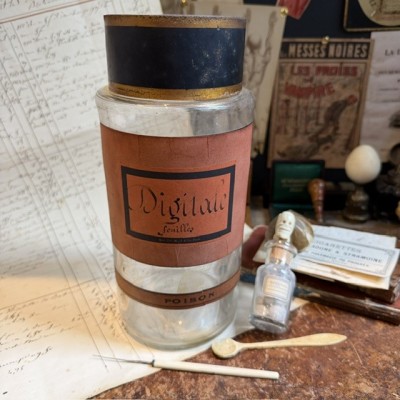
Foxglove leaves - POISON
Antique pharmacy bottle - 19th-century mouth-blown glass
Red POISON label
Signaling to the pharmacist that it is imperative to keep apart the other substances in the cabinet of toxic substances, the famous poison cabinet.
A fascinating testimony to pharmacology
It comes from an old cellar-laboratory in a Parisian pharmacy. The bottles had not moved since the late 1950s on the shelves. The cellar had served as a laboratory for medical analyses and a laboratory for magistral preparations of the pharmacy from 1900 until around 1950.
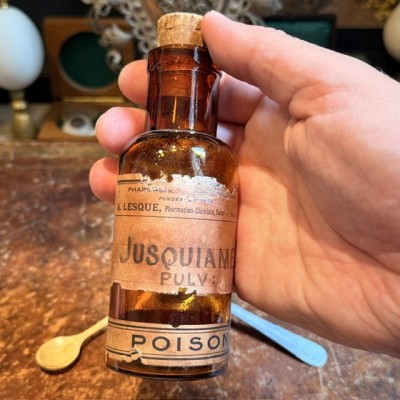
Jusquiame - Henbane
Antique pharmacy bottle.
Red ‘POISON’ label
Indicating to the pharmacist that it must be stored separately from other substances in the cabinet for toxic substances, the famous ‘poison cabinet’.
It comes from the former cellar-laboratory of a Parisian pharmacy. The bottles had not been moved from the shelves since the late 1950s. The cellar had served as a medical analysis laboratory and a laboratory for the pharmacy’s compounded preparations from 1900 until around 1950.
Date: Begining of 20th century
EMPTY
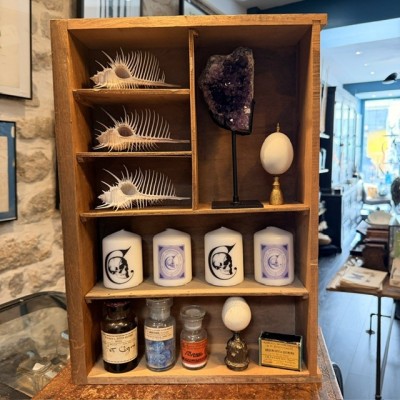
Large antique wooden pharmacy drawer with compartments
6 compartments
Curiosity shelf
Ref C - 48x34.5cm - Thickness 9.5cm
Can be used as a presentation furniture
SOLD EMPTY WITHOUT ACCESSORIES
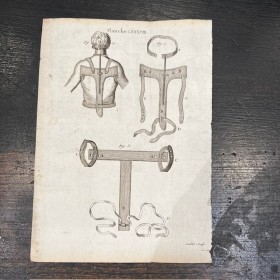
Antique surgical board
From Benjamin Bell's Complete Course in Surgery, published in 1796
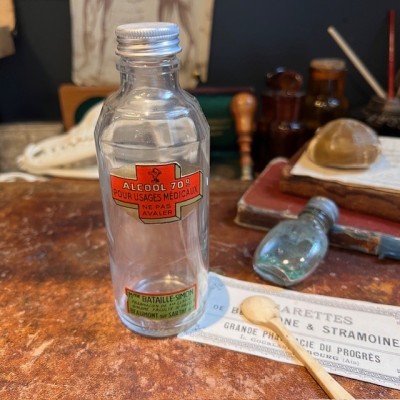
70° alcohol
Antique pharmacy bottle - Apothecary
Mrs Bataille-Simon, First Class Pharmacist in Beaumont sur Sarthe - Tel 9
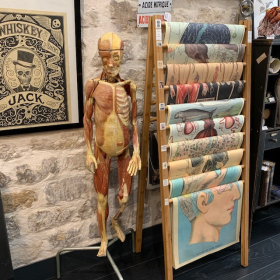
Clastic Mannequin - Dr. Auzoux's anatomical skinned
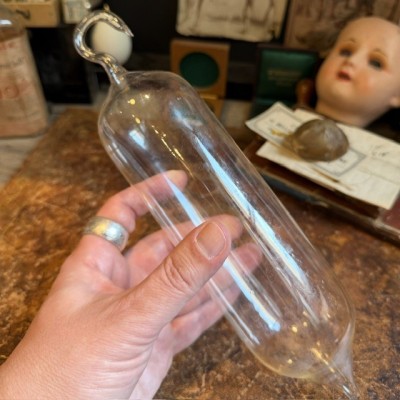
Antique sodium chloride infusion bulb
500cm3
in its original box - Still full
Antique bezoar - Antipoison - Antidote
Once sold by the apothecary, bezoar, also known as gallstone, was reputed to have the same anti-poison properties as the legendary unicorn's horn, hence its excessively high price, also due to its great rarity.
An important piece in a cabinet of curiosities
Sold alone - Without stand, sold separately