

- New
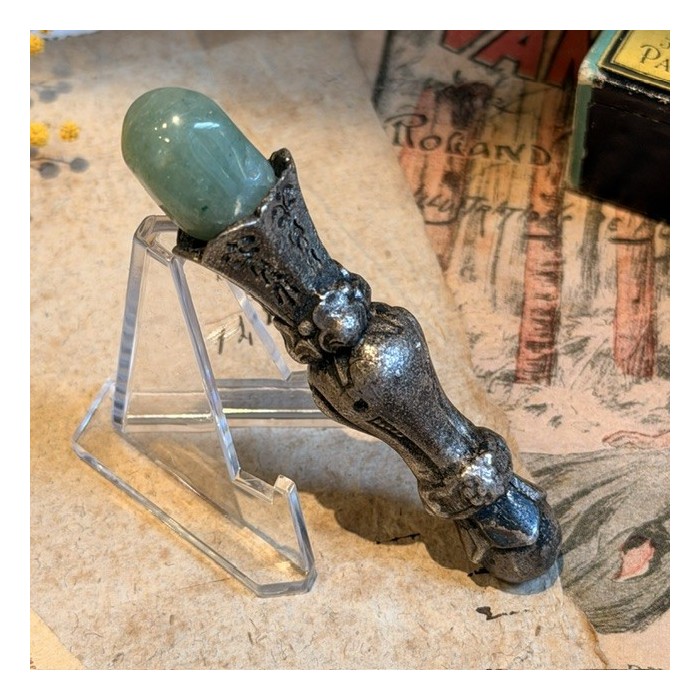
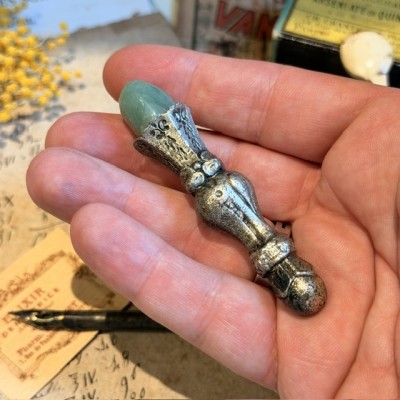
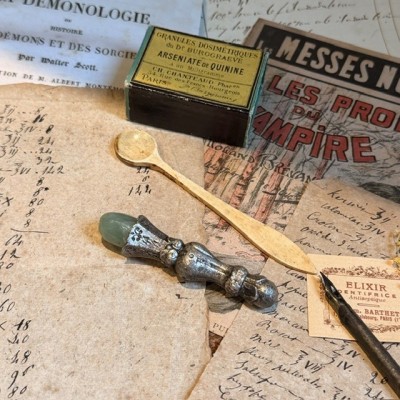
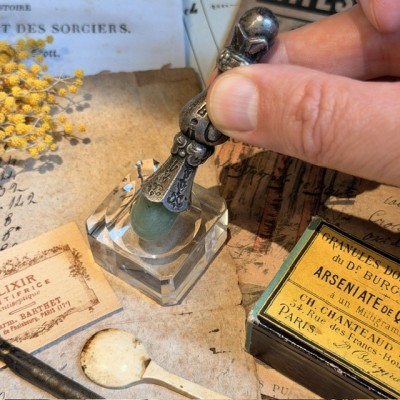
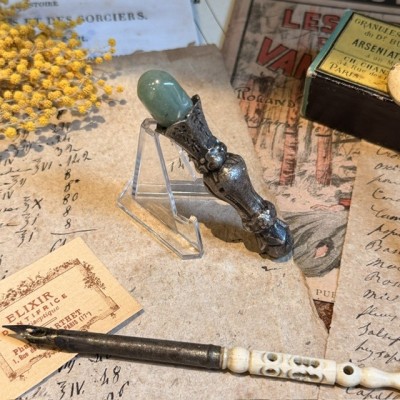
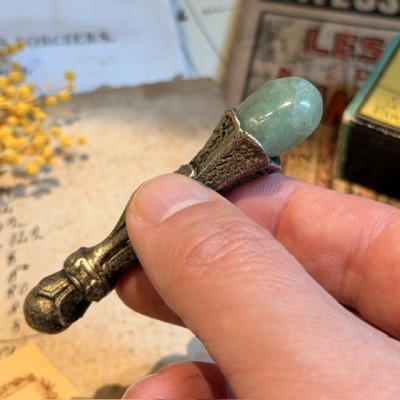
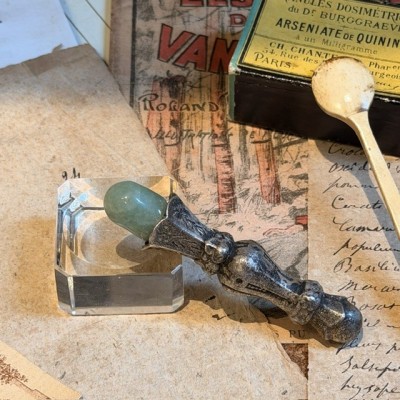
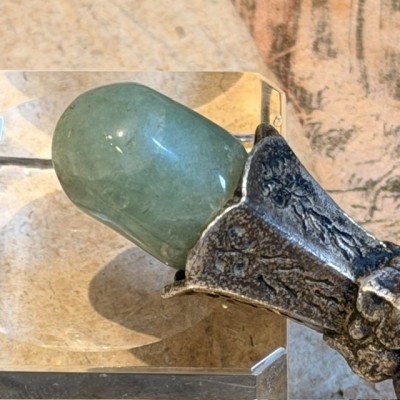
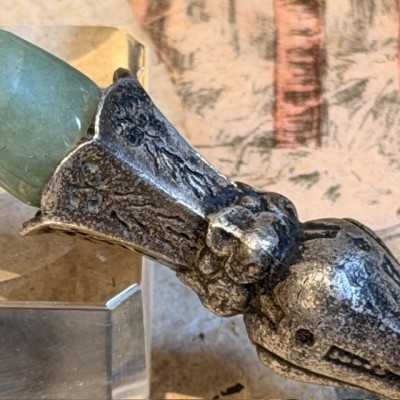
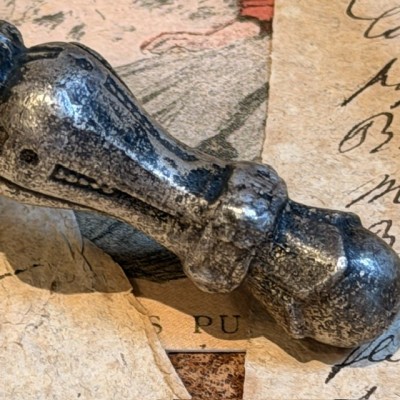
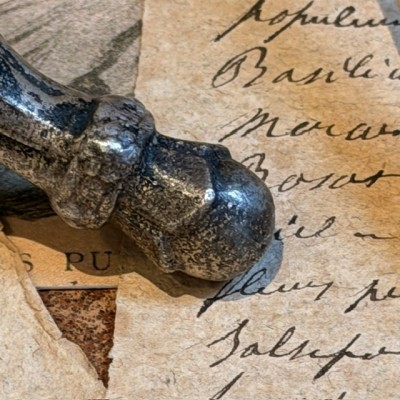
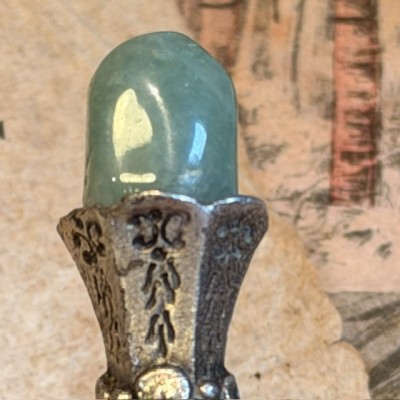
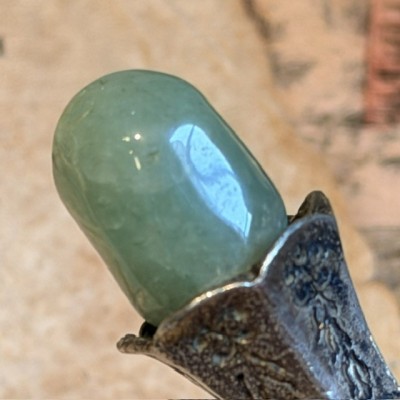
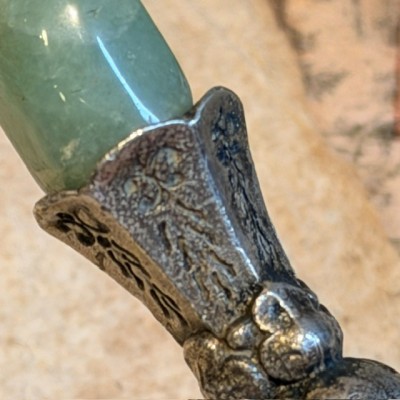
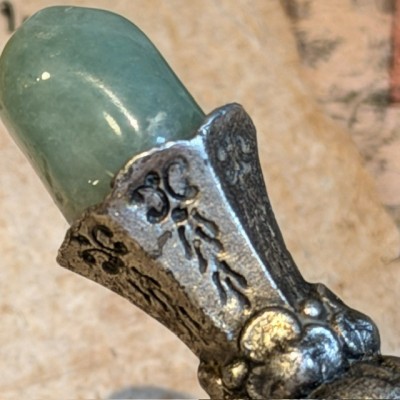
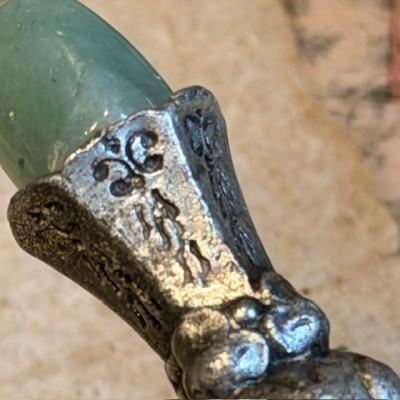
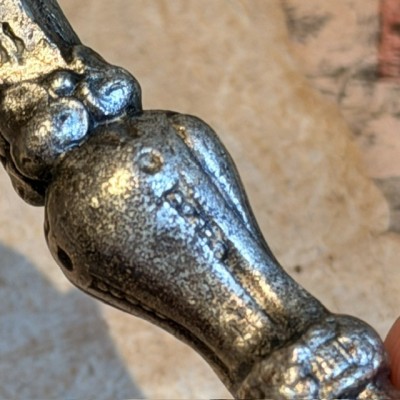
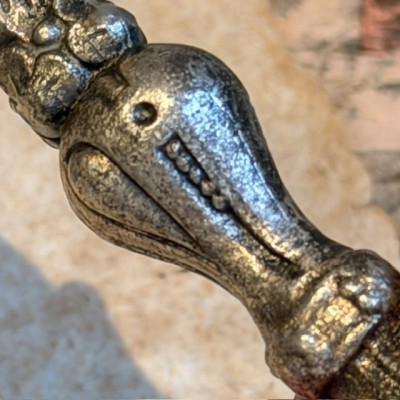
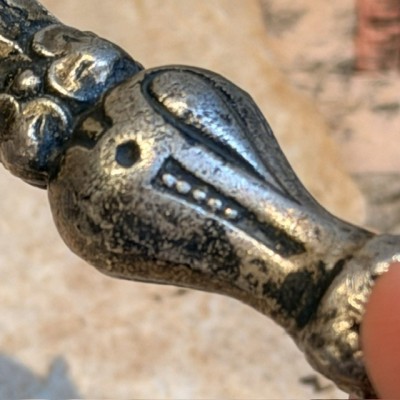
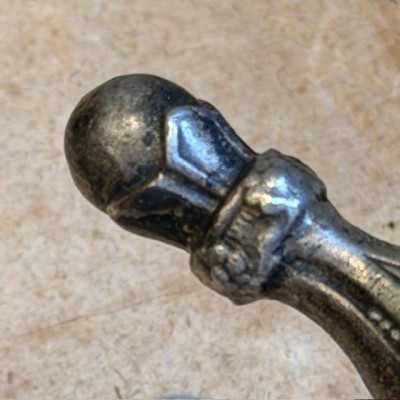
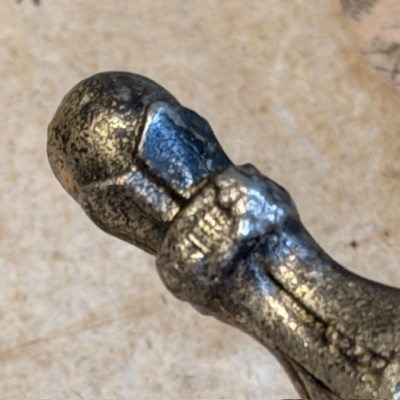
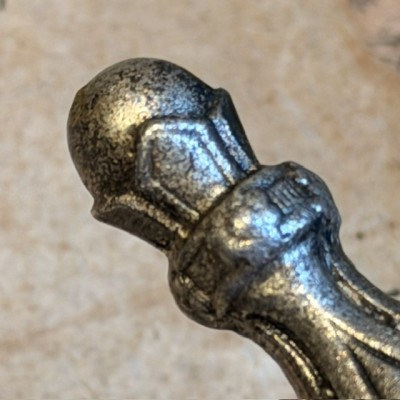
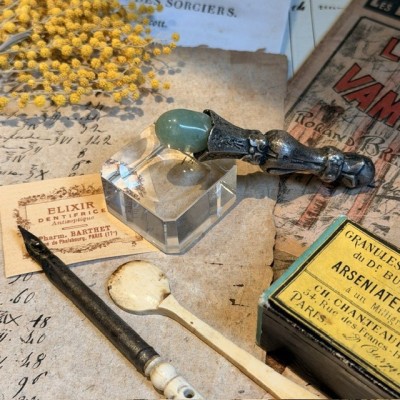
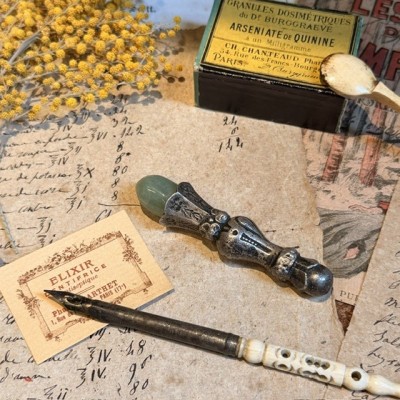
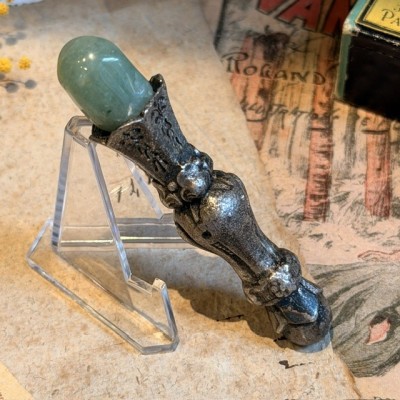
Laboratory pestle in chiseled metal and apothecary hard stone
Possibly an agate or jade
Dating: Belle Époque (Circa 1890 - 1910)
Laboratory pestle in chiseled metal and hard stone
Possibly an agate or jade.
Small pestle used by the apothecary or pharmacist.
Its ergonomic shape and rounded pommel allowed a firm grip to exert an effective rotary pressure, probably in small miniature mortars.
In herbalism, pharmacy, or chemistry, the choice of a hard stone for the end of the pestle met strict technical laboratory requirements:
Chemical inertia: Unalterable, does not react with acids or corrosive substances and does not pollute formulas.
Zero porosity: Its impermeable surface prevents the encrustation of deadly poisons (arsenic, strychnine), ensuring a perfect cleaning without risk of cross contamination.
Grinding: Its hardness allows to reduce into extra-fine powders the plants, resistant crystals and valuable resins.
Homogenization: It is ideal for smoothing and emulsifying very small volumes of ointments or ophthalmic ointments in order to eliminate any irritating grains, for example.
Dating: Belle Époque (Circa 1890 - 1910) The arabesques, foliated and floral reliefs and the flowing lines of the metal handle are typical of this pivotal period, long before the geometric simplification of Art Deco in the 1920s.
Materials: Chiseled heavy metal handle (beautiful dark old patina), green hard stone matrix (maybe jade or agate).
Dimensions: Length 7.5 cm / Maximum diameter: 1.5 cm
Weight: 70 g (very nice mass effect in hand)
A witness of the magistral preparations of the pharmacist of yesteryear: This is the golden age when the practitioner still carries out his formulations and custom analyses in his laboratory. After the First World War, the massive industrialization of medicine will make these small high-precision tools obsolete, making this object a rare witness to a bygone era.

Human jaws in porcelain mounted on a blackened wooden base
Anatomical dental model for dentists
19th century
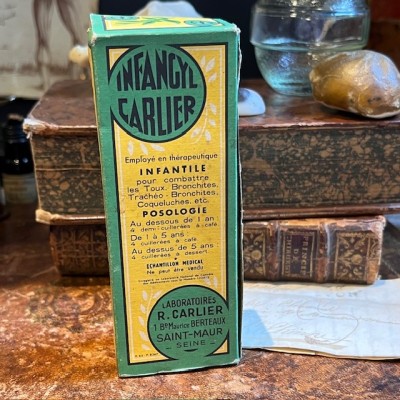
Infangyl Carlier
Antique pharmacy bottle - Apothecary
The box still contains its full, sealed bottle and instructions
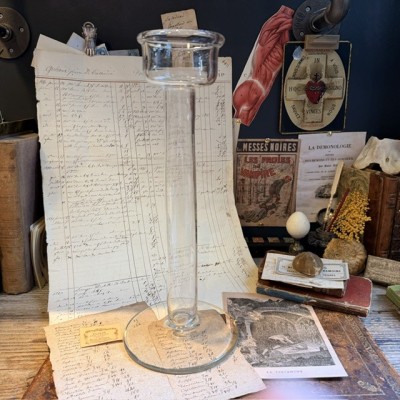
Test Tube with Special Bulb for Mercury Ureometer - 1900 - Pharmacy - Apothecary
Period: 1900 - Pharmacy - Apothecary
To be diverted into a soliflore vase

Racine de Ratanhia - Para Rhatany
Pharmacy jar - Herbalism - Apothecary bottle
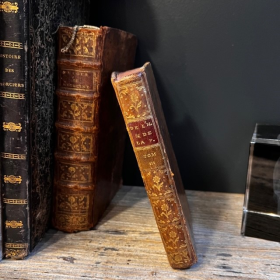
De l'Homme et de la Femme (Of Man and Woman)
By M. de Lignac - Volume 3
Anatomy of procreation - 1779
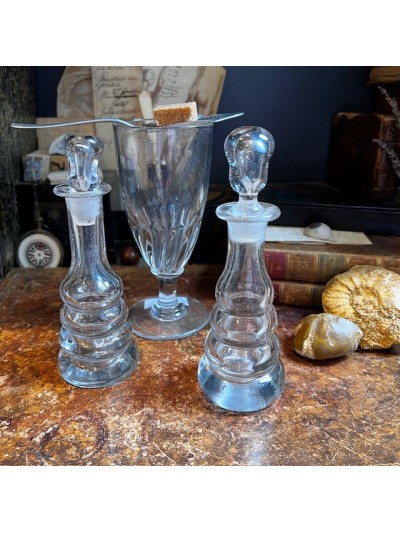
An antique absinthe topette (decanter)
4 Beaded Topette
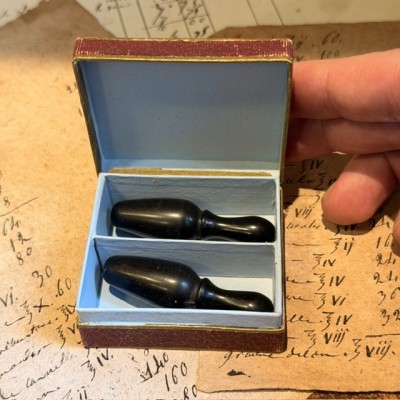
Pair of ebonite medical cannulas in their original cardboard box
Circa 1920–1930
Original stock from that period

Antique medicine box in canvas cardboard
Size L
EMPTY
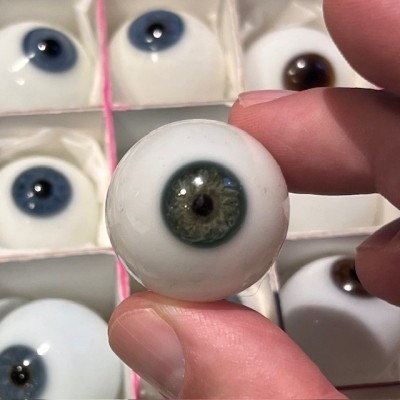
Antique glass eye - Semi-finished
Genuine antique ocular prosthesis
Color variations and irises of different sizes
The price is per unit, for one eye only
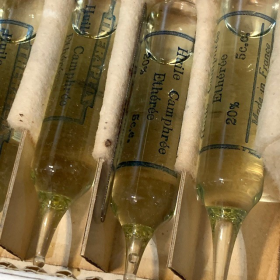
Bulb for hypodermic injection - Camphor (circa 1920)
THERAPLIX
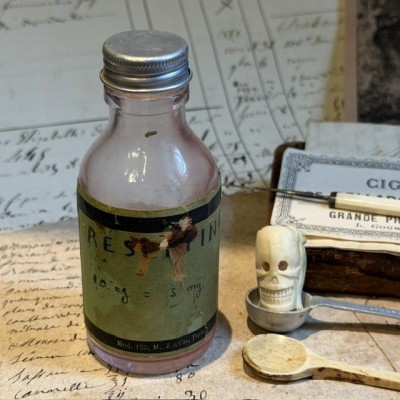
Reseptine
Antique pharmacy bottle
EMPTY
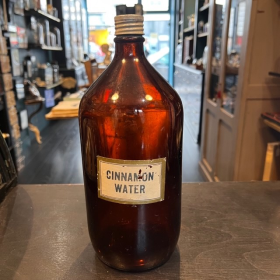
Cinnamon Water
Antique and large brown English pharmacy bottle
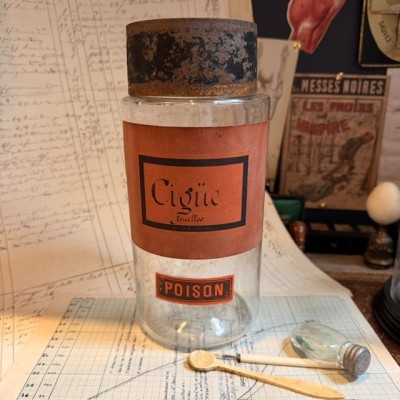
Hemlock leaves - POISON
Antique pharmacy bottle - Wide-mouth apothecary jar.
19th-century mouth-blown glass
Red POISON label
Signaling to the pharmacist that it is imperative to keep apart the other substances in the cabinet of toxic substances, the famous poison cabinet.
A fascinating testimony to pharmacology
It comes from an old cellar-laboratory in a Parisian pharmacy. The bottles had not moved since the late 1950s on the shelves. The cellar had served as a laboratory for medical analyses and a laboratory for magistral preparations of the pharmacy from 1900 until around 1950.
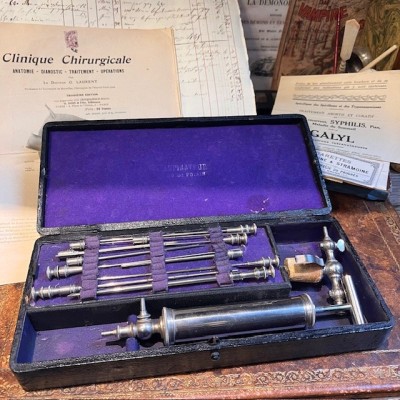
Dr Potain vacuum cleaner in its case
Late 19th century - 1870-1895
Antique medical instrument
However, the box comes from the Hôpital de la Charité in Paris, as indicated by the inscription on the top of the box, from the Bouillaud ward of the hospital.
non-functional
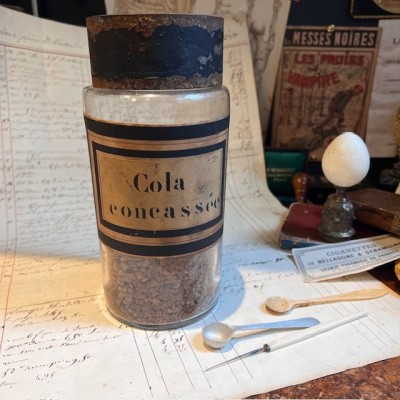
Crushed cola nuts
Antique pharmacy bottle - Wide-mouth apothecary jar.
19th-century mouth-blown glass
There is still some product left inside
A fascinating artifact from the history of pharmacology
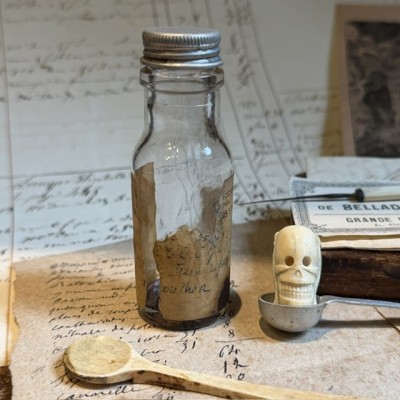
A avaler aux repas To be taken with meals (as far as can be made out from the torn label)
Antique pharmacy bottle
Torn label
Laboratory pestle in chiseled metal and apothecary hard stone
Possibly an agate or jade
Dating: Belle Époque (Circa 1890 - 1910)