

- New
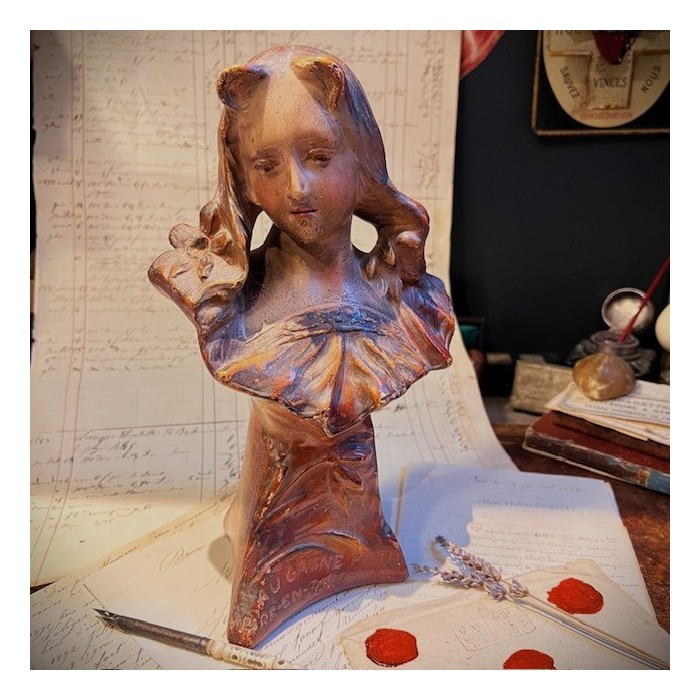
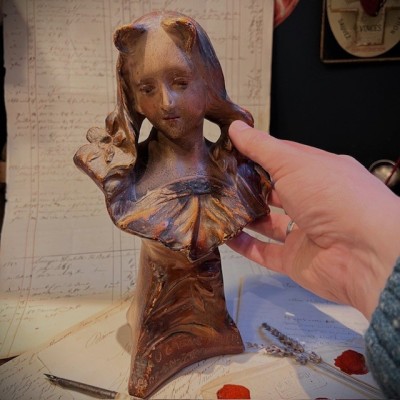
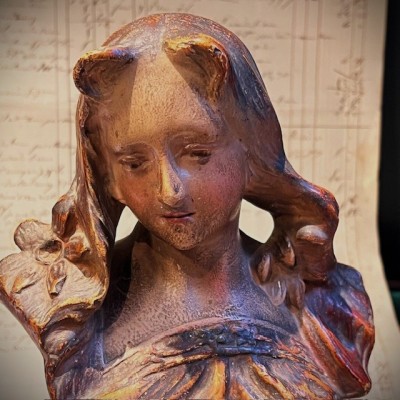
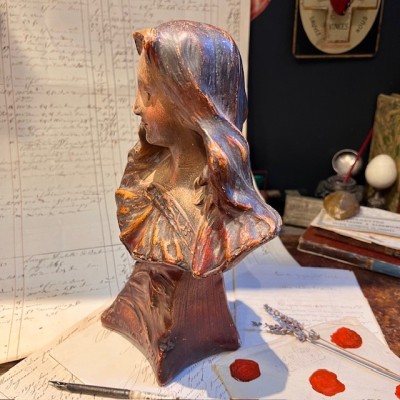
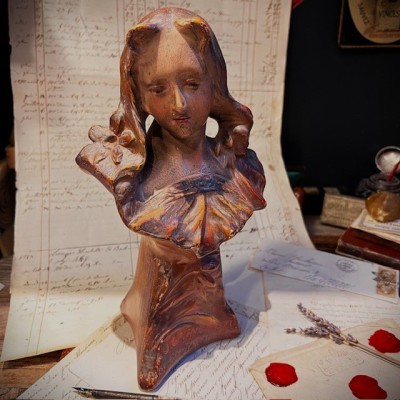
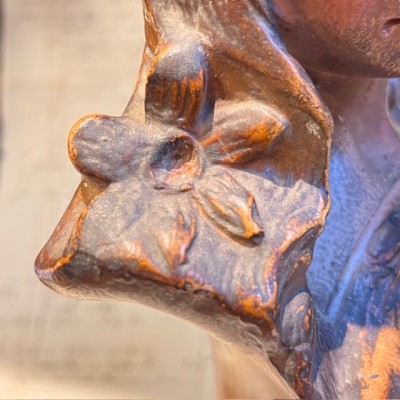
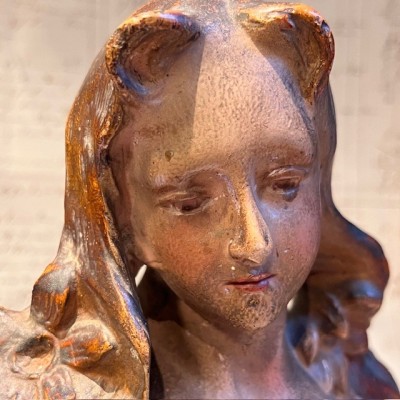
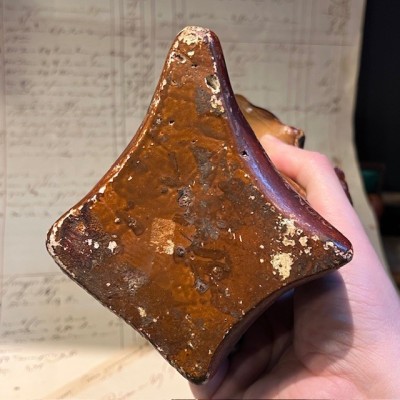
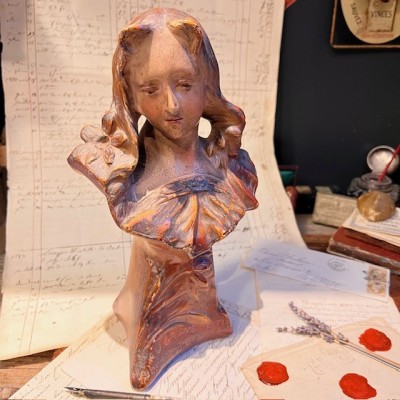
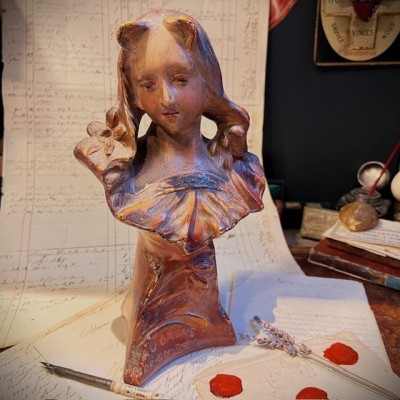
Advertising bust in plaster - Au Gagne Petit - Art Nouveau style
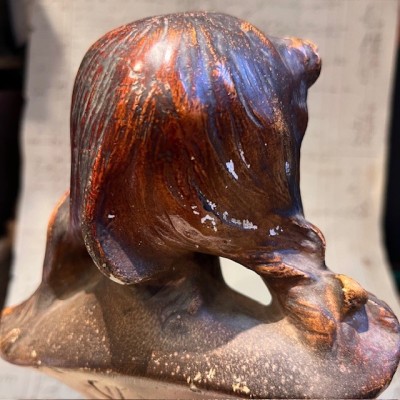
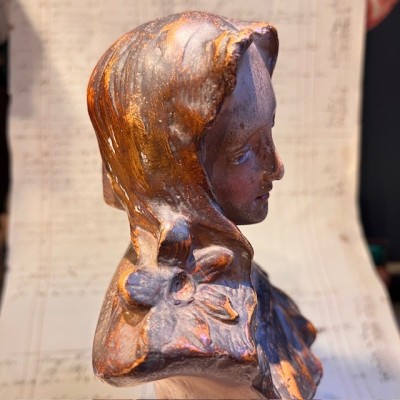
Plaster with terracotta-effect patina
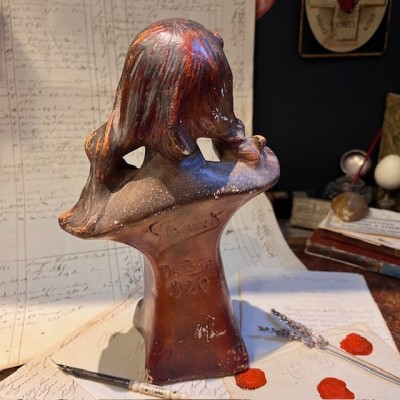
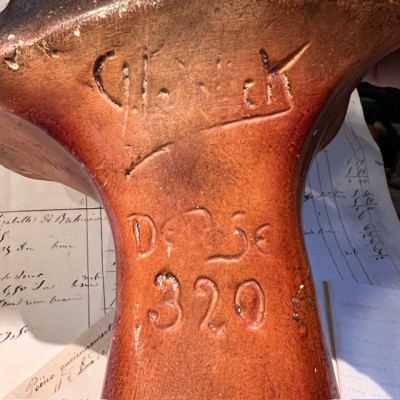
Signed C. Habock
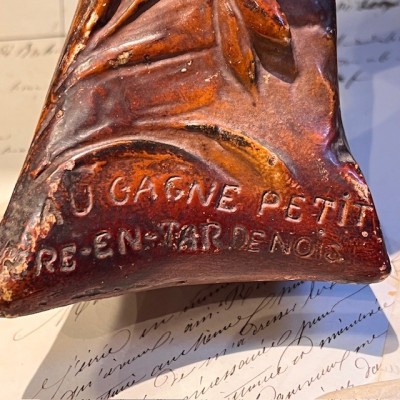
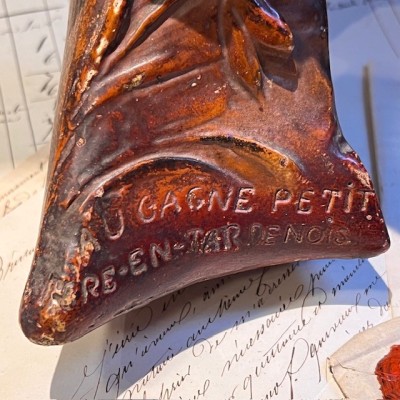
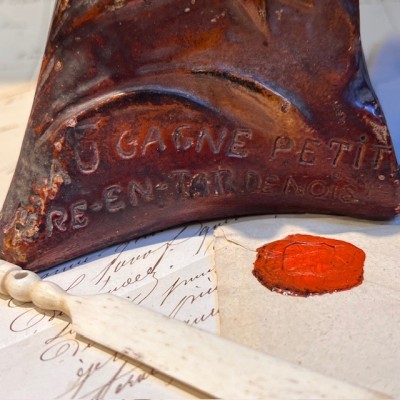
The bust was used as advertising for the Gagne Petit store in Château-Thierry in the warehouse in Fère en Tardenois, as indicated on the base. Intended to decorate counters or shop windows
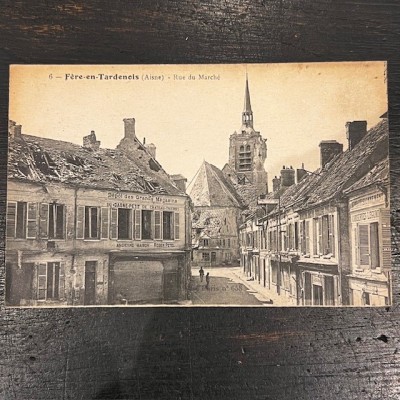
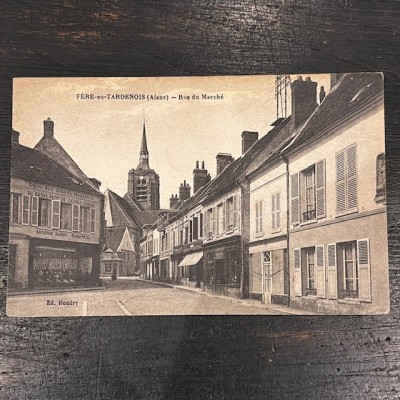
Supplied with two postcards showing this Gagne-Petit depot in Fère-en-Tardenois in 1917 and then in 1918.
Advertising plaster bust - Au Gagne Petit - Art Nouveau style
Elegant painted plaster female bust, typical of the charm of Art Nouveau, with its soft curves and dreamy face.
This type of bust was intended to decorate counters or shop windows, playing an advertising role before lithographed posters became widespread.
It served as an advertising medium for the ‘Au Gagne Petit’ store in Château-Thierry, a large Parisian chain that had a warehouse in Fère-en-Tardenois, as shown in these two old postcards, on which the following can be read on the façade:
‘Warehouse of the Gagne Petit department stores of Château-Thierry’
The first postcard shows the shop in 1917, while the second shows the shop in 1918 after the damage inflicted by the First World War during the Second Battle of the Marne. The village was on the front line, and the shop suffered greatly. It reopened after the war and later became Les Nouvelles Galeries. Today, it is still a shop, but a florist has taken the place of the galleries.
This two postcards are included with the bust.
Formerly placed on a counter or in a shop window, this type of object attracted the attention of passers-by and gave the shop an elegant and modern image.
Signed C. Habock, the sculpture retains its original paintwork, with warm colours and a beautiful patina of age to give the illusion of terracotta.
C. Habock was a sculptor/decorative modeller from the late 19th and early 20th centuries, specialising mainly in decorative sculptures and commercial subjects.
Dimensions: Height 26 cm – Width 17 cm
An object steeped in poetry, combining art, history and commerce
History of the shop:
Before 1900:
Maison Roger Petel – independent shop specialising in duvets, bedding and feather products.
Around 1900–1917/18:
Transformed into a warehouse for the Gagne-Petit department store in Château-Thierry.
The façade still bears the words ‘ancienne Maison Roger Petel’ (former Maison Roger Petel), signalling local continuity.
Between the wars (1920–1930):
Modernisation and change of name to Nouvelles Galeries au Gagne-Petit, adopting the model of the provincial department store.
1938:
Postcard confirms that only Nouvelles Galeries is mentioned on the façade on antique potscards.
After the Second World War – 1970s–1990s:
Like many small provincial branches, the store gradually disappeared, a victim of the restructuring of the Nouvelles Galeries chain and modern commerce.
Today:
The building houses a florist, continuing the tradition of local commerce on the site for over 120 years.

Human jaws in porcelain mounted on a blackened wooden base
Anatomical dental model for dentists
19th century
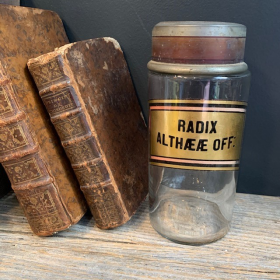
Antique 19th century pharmacy bottle
Radix althaeae Off - Marshmallow
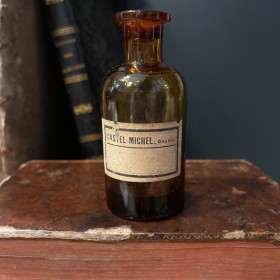
Castel - Michel perfumers
Antique perfume bottle
Apothecary vial

Solution N°153
Antique pharmacy bottle
Apothecary vial

Botany plate by Édouard-Adolphe Duchesne
From the Atlas du Répertoire des plantes utiles et des plantes du globe published in 1846
19th-century color lithograph
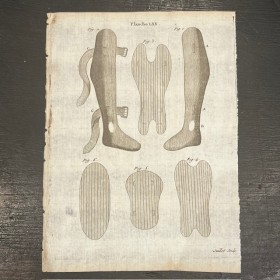
Antique surgical board
From Benjamin Bell's Complete Course in Surgery, published in 1796
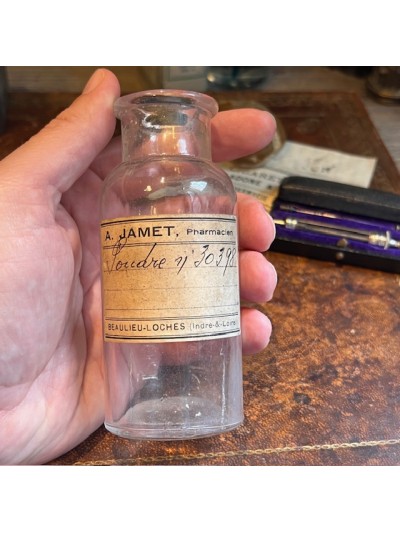
Poudre N°30398 - Medicinal powder
Antique pharmacy bottle
Apothecary vial
EMPTY

Lower part of the lower mandible of a horse jaw
Antique model from Maison Auzoux in Paris
Paper-mâché pedagogical model
Model B - 1 year
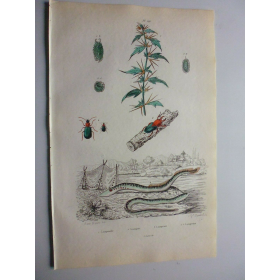
Ancient engraving -board of Natural History in colour nineteenth century
In color. birds.
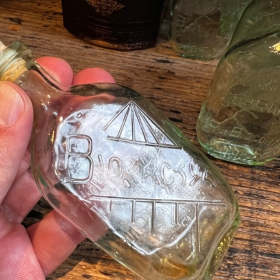
Antique pharmacy bottle
BIOLACTYL Ferment Fournier - Early 1900
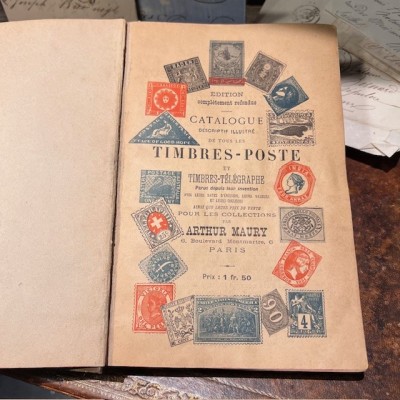
Antique ARTHUR MAURY postage stamp catalog
for collections of all postage stamps from the beginning to 1900
Published in 1904/1905

Antique Guyon bladder syringe in bakelite
Beginning of XXth century
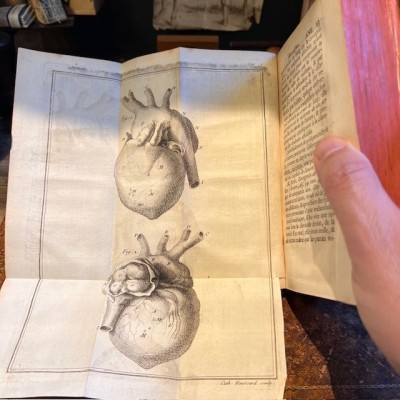
Bibliothèque Choisie de Médecine - Volume 6
Selected Library of Medicine
By François PLANQUE - 1749
Complete original edition with 5 fold-out plates
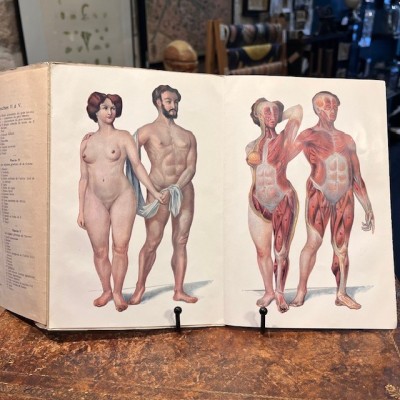
Man and Woman
Anatomy booklet with removable boards
Around 1930's
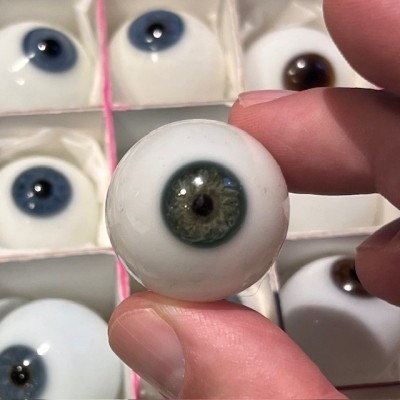
Antique glass eye - Semi-finished
Genuine antique ocular prosthesis
Color variations and irises of different sizes
The price is per unit, for one eye only

Bibliothèque Choisie de Médecine - Volume 8
Selected Library of Medicine
By François PLANQUE - 1750
Complete original edition with 10 fold-out plates
Advertising bust in plaster - Au Gagne Petit - Art Nouveau style
Plaster with terracotta-effect patina
Signed C. Habock
The bust was used as advertising for the Gagne Petit store in Château-Thierry in the warehouse in Fère en Tardenois, as indicated on the base. Intended to decorate counters or shop windows
Supplied with two postcards showing this Gagne-Petit depot in Fère-en-Tardenois in 1917 and then in 1918.