

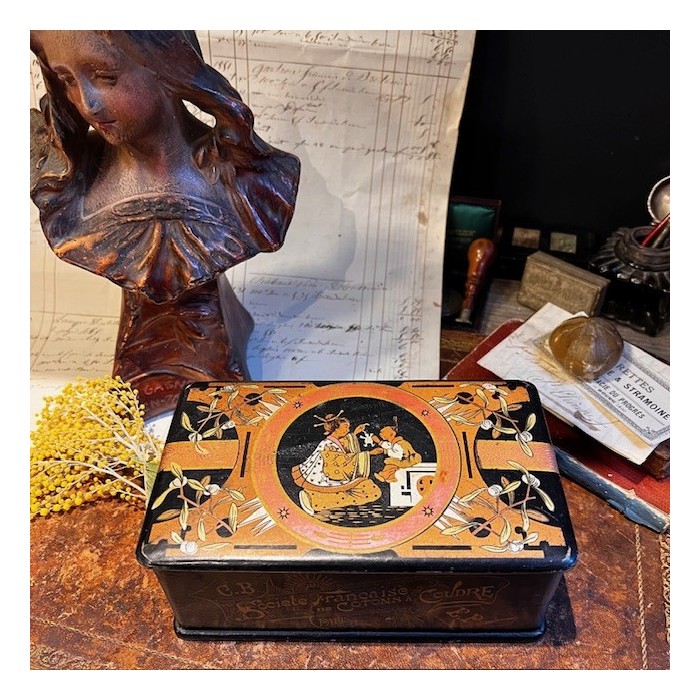
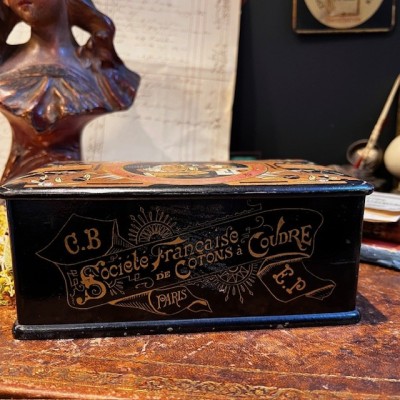
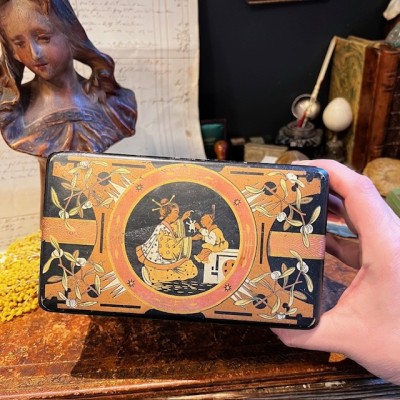
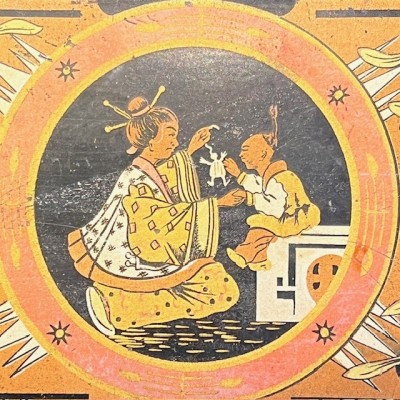
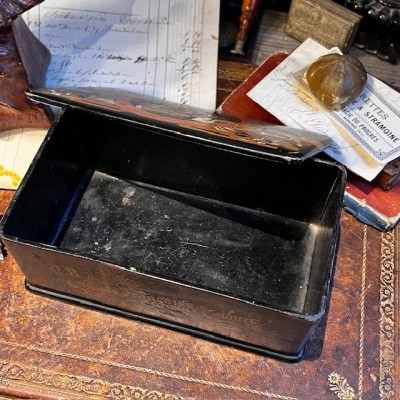
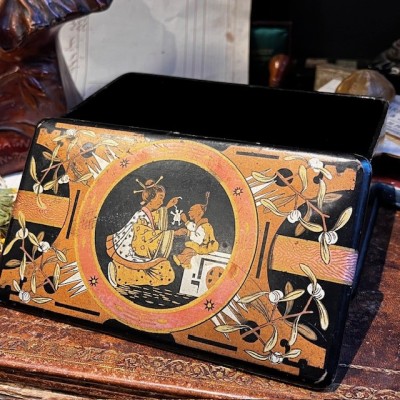
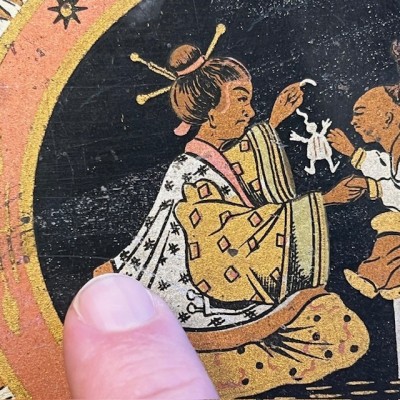
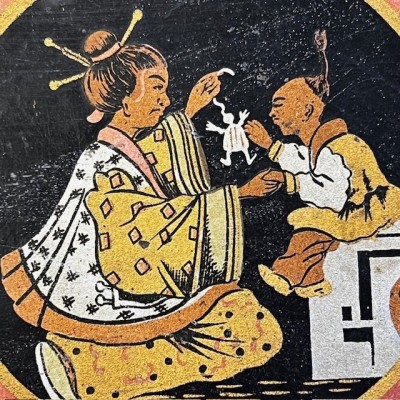
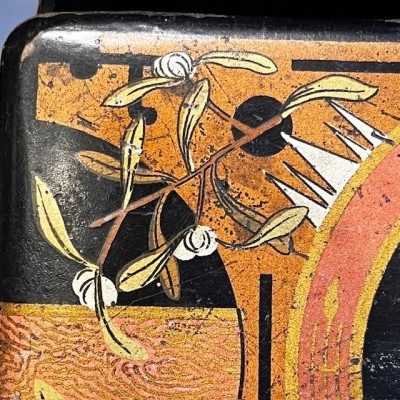
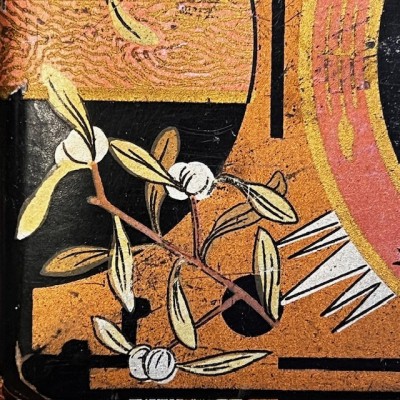
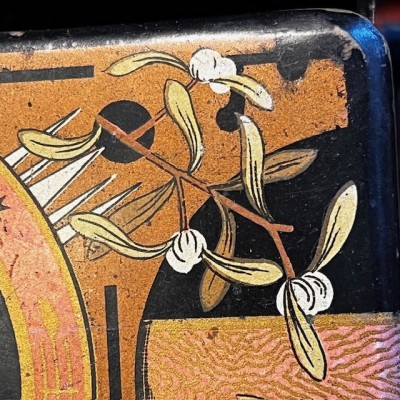
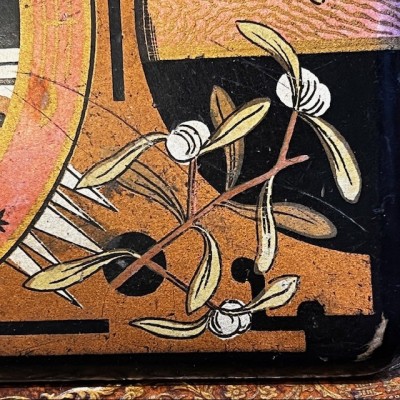
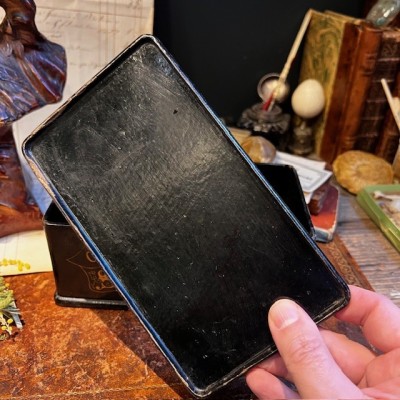
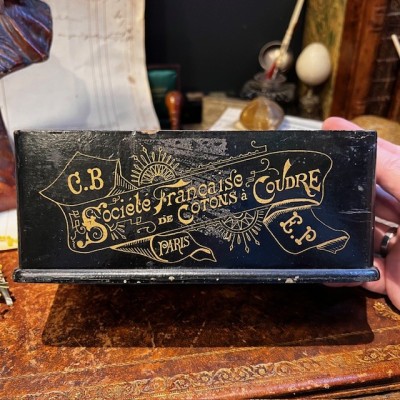
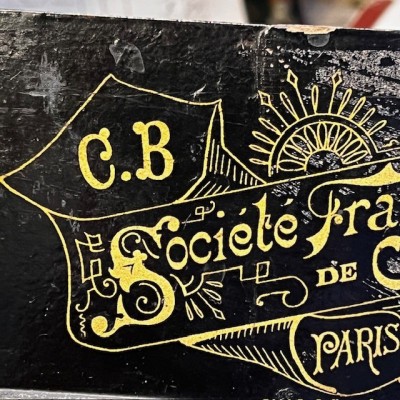
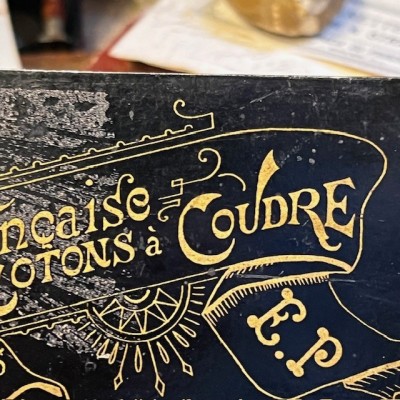
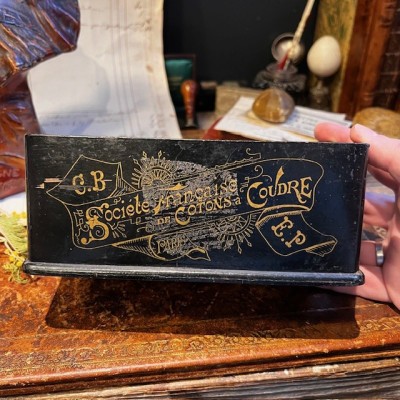
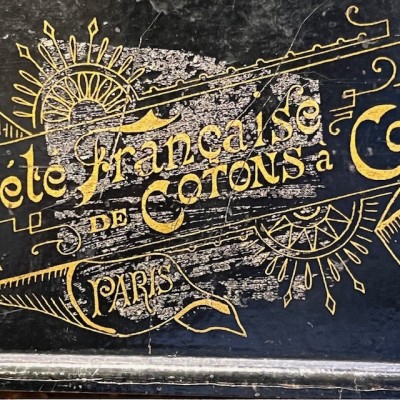
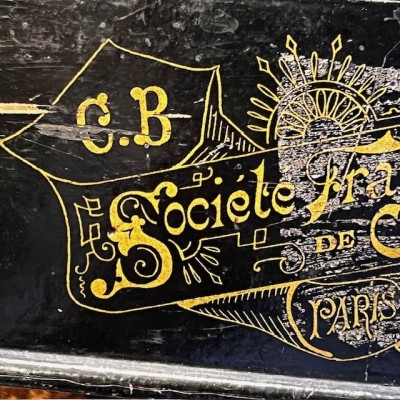
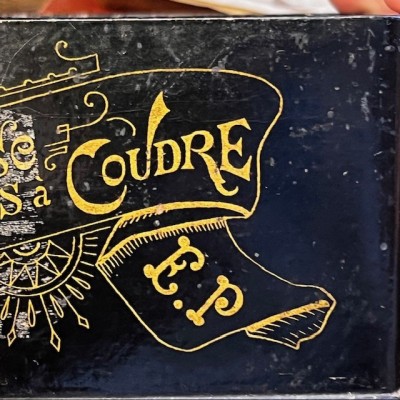
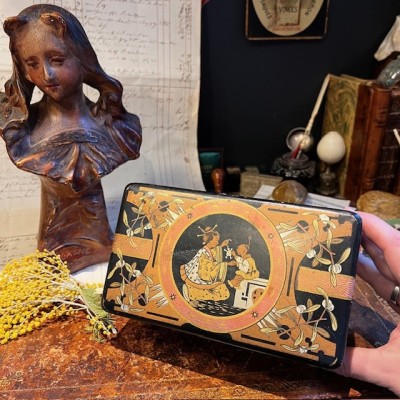
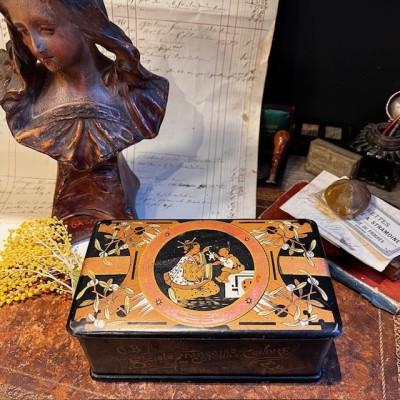
Black lacquered boiled cardboard sewing box with Japanese-inspired decoration circa 1860-1880
From the Société Française des Cotons à Coudre
19th century - Napoleon III era - Japonism period
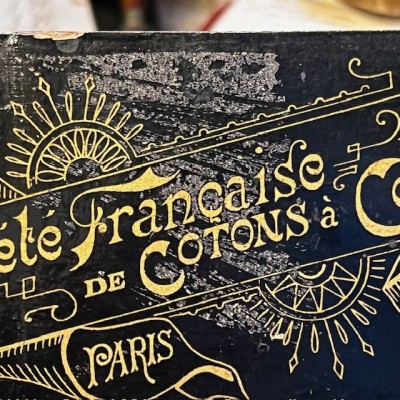
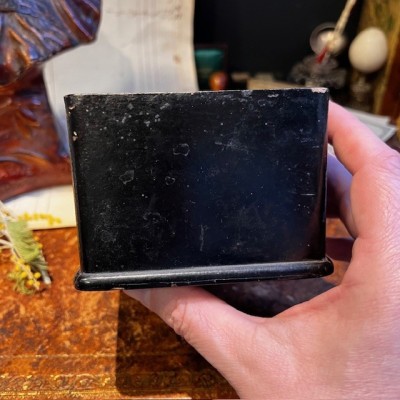
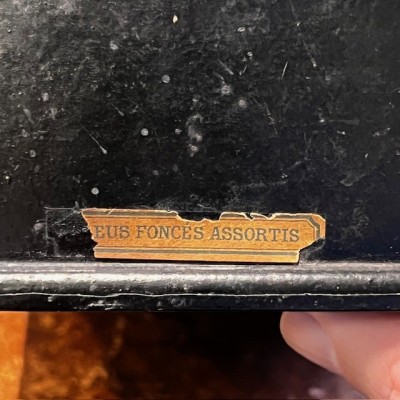
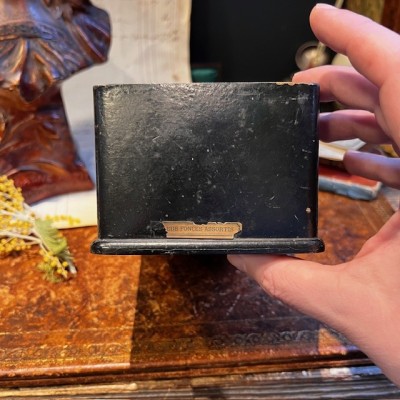
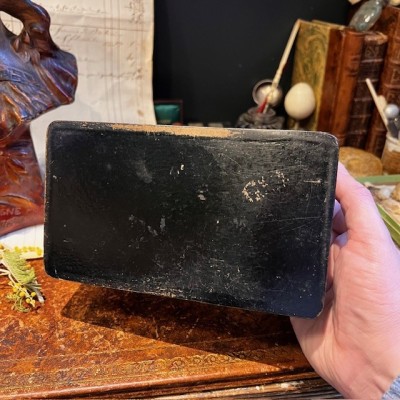
Flaw: traces of ancient adhesive residue as seen in the photos
Black lacquered boiled cardboard sewing box with Japanese-inspired decoration, circa 1860-1880 - Société Française des Cotons à Coudre
Period: Napoleon III - Period of Japonism, which swept through French decorative arts after Japan opened up (1850s-1860s)
This is not a Japanese object but a Western view of Japan, often fantasized about, which was very fashionable under Napoleon III. This style was perceived as modern, refined, and exotic during the Second Empire.
This box was designed to hold spools of sewing thread produced by the Société Française de Cotons à Coudre, a major Parisian manufacturer founded in 1848. The company was renowned for the quality of its threads, but also for the care taken in its packaging, which was ahead of its time in terms of advertising.
Boiled cardboard, like papier-mâché, was very fashionable at the time and remained so until the early 20th century. Its malleability and strength made it possible to create small objects as well as furniture, as it could be molded and thus produced in small series. The lacquer coating gives these objects great durability over time.
A fine example of a utilitarian object that has become decorative, representative of 19th-century French industrial arts.
Dimensions: 19x11cm
Flaw: traces of ancient adhesive residue as seen in the photos
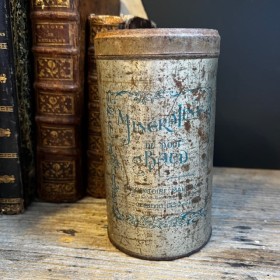
Mineraline by Dr C. Baud
Antique tin pharmacy box
Powder or talcum powder for children's toiletries
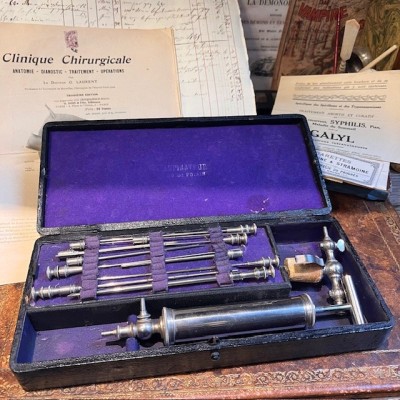
Dr Potain vacuum cleaner in its case
Late 19th century - 1870-1895
Antique medical instrument
However, the box comes from the Hôpital de la Charité in Paris, as indicated by the inscription on the top of the box, from the Bouillaud ward of the hospital.
non-functional
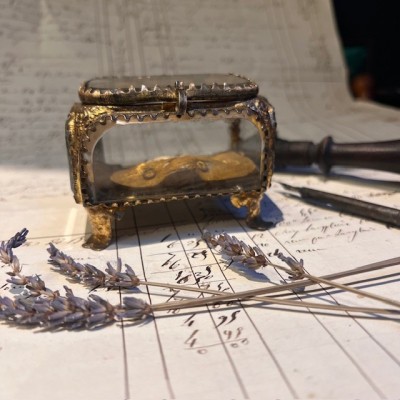
Reliquary box - 19th century
Jewelry box
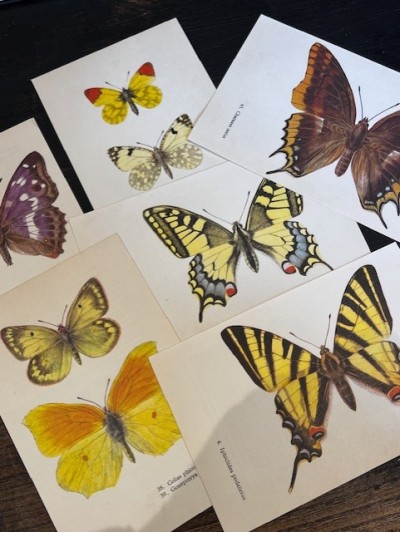
Butterfly - Natural History color plate
Entomology
You buy 1 plate, not the whole set
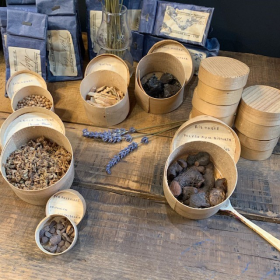
Antique wooden box for herbal medicine - Samples of plants, seeds, bark etc.
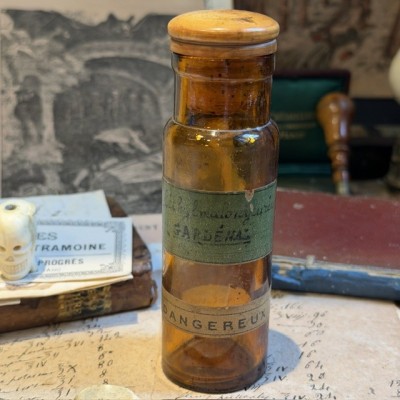
Gardénal - Phenobarbital - Barbiturates
Phényléthylmalonylurée
Antique amber glass bottle, with a boxwood and cork stopper.
Label: DANGEROUS
Indicating to the pharmacist that it must be stored separately from other substances in the cabinet for toxic substances, the famous ‘poison cabinet’.
It comes from the former cellar-laboratory of a Parisian pharmacy. The bottles had not been moved from the shelves since the late 1950s. The cellar had served as a medical analysis laboratory and a laboratory for the pharmacy’s compounded preparations from 1900 until around 1950.
EMPTY
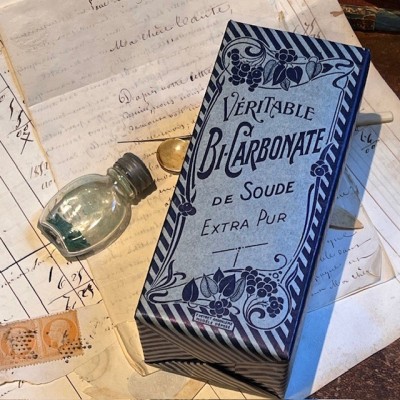
Bi-Carbonate de Soude - Sodium bicarbonate
Antique cardboard pharmacy box
Beautiful typography typical of the Belle Époque: circa 1910-1920
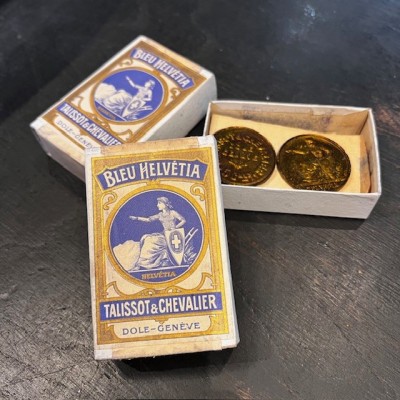
Antique Laundry blue box - Helvetia Blue from Talissot & Chevalier in Dôle and Geneva
Period: 1890-1905
Box containing 6 gold-plated “coins” made of blue wash, resembling the iconography of Swiss coins and medals from the late 19th and early 20th centuries.
Beautiful blue and gold illustration on the box.
Your box will be sealed: never opened in 120 years

Essence of star anise
Antique pharmacy bottle
Apothecary vial
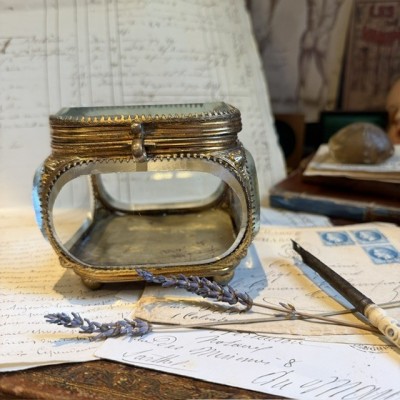
Large Reliquary box - 19th century
Jewelry box
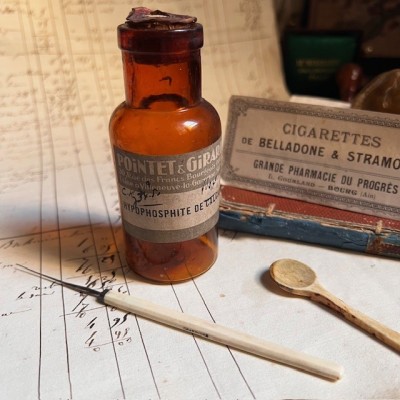
Hypophosphite de Calcium
Antique pharmacy bottle
EMPTY
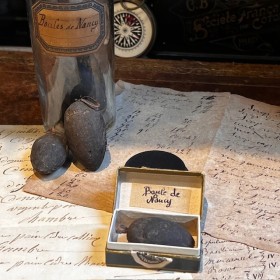
Boule de Nancy - Genuine Mars Vulnerary Ball - Steel Ball
This iron-containing ball was once considered a miracle cure for many ailments and injuries.
The Boule de Nancy is sold individually in a small antique drugstore box
Unavailable today
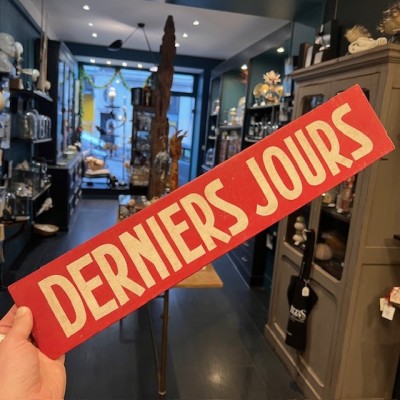
DERNIERS JOURS - LAST DAYS
Antique Cinema painted plywood sign
Cinema sign announcing the final days of a film's run
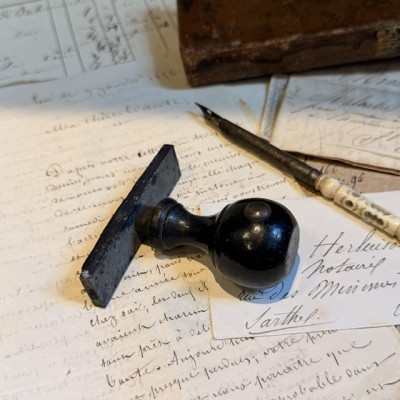
Antique manual pharmacy stamp - BERTHIER Pharmacy
The rubber base, engraved in relief, reads: ‘Pharmacie de BERTHIER / rue de Phalsbourg / PARIS’.
Sturdy metal frame and ergonomic handle made from turned blackened wood
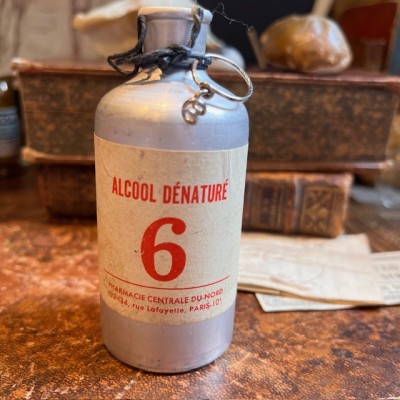
Alcool dénaturé - Alcool à brûler
Denatured alcohol - Methylated spirits
Antique pharmacy bottle - Apothecary
Empty
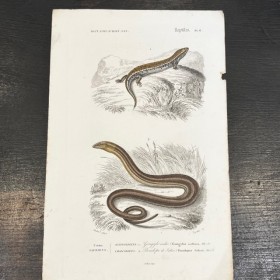
Fish - Antique chart by D'Orbigny - 1869
In colors
Atlas of the Universal Dictionary of Natural History
Black lacquered boiled cardboard sewing box with Japanese-inspired decoration circa 1860-1880
From the Société Française des Cotons à Coudre
19th century - Napoleon III era - Japonism period
Flaw: traces of ancient adhesive residue as seen in the photos