Objects imbued with soul, history and memory, witnesses to many lives, ready to whisper their stories to those who know how to listen. Perfect for collectors and lovers of authentic, vintage décor.
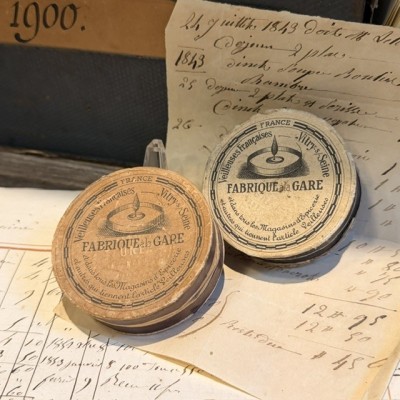
Box of Night Lights Fabriqué à la Gare / Jeunet - 1890–1920
Wick night light
A round box for oil night lights made of molded cardboard, produced by the Veilleuses Françaises factory at the Vitry-sur-Seine train station.
It contains the system patented by Jeunet—winner of a silver medal at the 1891 Exposition du Travail.
All boxes are unique, showing varying degrees of wear from the passage of time, with varying amounts of oil remaining, and varying degrees of yellowing.
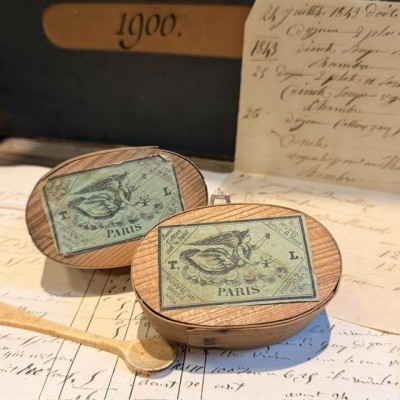
T.L. Paris Night Lights Made of Spruce Wood - Circa 1860–1880
Wick night light
A box of oil-filled night lights made of bent spruce wood slats, dating from the second half of the 19th century (circa 1860–1880): Napoléon III Second Empire.
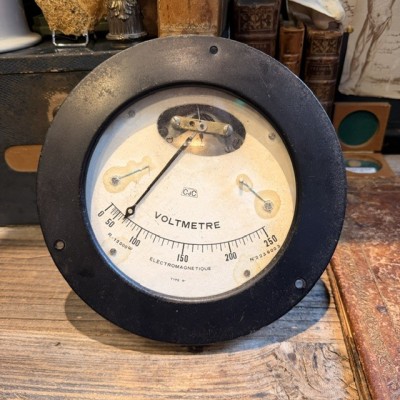
Dial for vintage industrial electrical panel, circa 1920/1950
Function: Electromagnetic panel voltmeter measuring electrical voltage up to 250 Volts. Manufactured by the Compagnie des Compteurs de Montrouge, it was built into factory control cabinets, municipal transformer stations, public building machinery rooms or onto vintage railway rolling stock. The upper brass skylight reveals the pivot and the return spring of the mechanism.
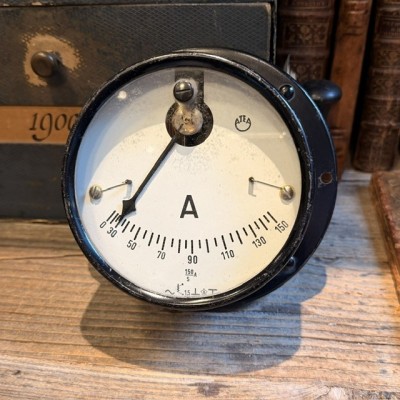
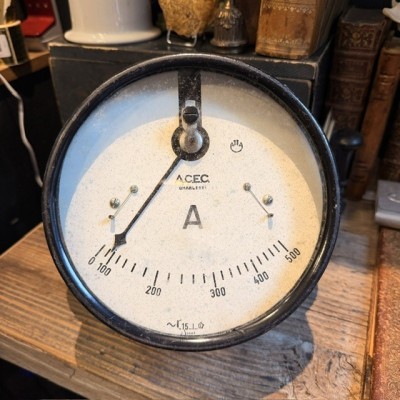
Industrial Dial for Vintage Industrial Electrical Panel, circa 1920/1950
Function: Ferromagnetic ammeter with a circular dial that measures high-current alternating current (up to 500 A). It was used to monitor the load drawn by very large power lines or electrical machinery.