
Dissection of a Common Cuttlefish in a Museum Jar - 1900
Wet specimen in preservative fluid
Sepia officinalis
Dissection of a Common Cuttlefish in a Museum Jar—Wet Specimen Preserved in Fluid—Sepia officinalis
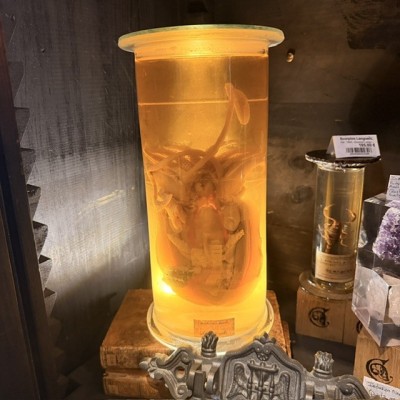
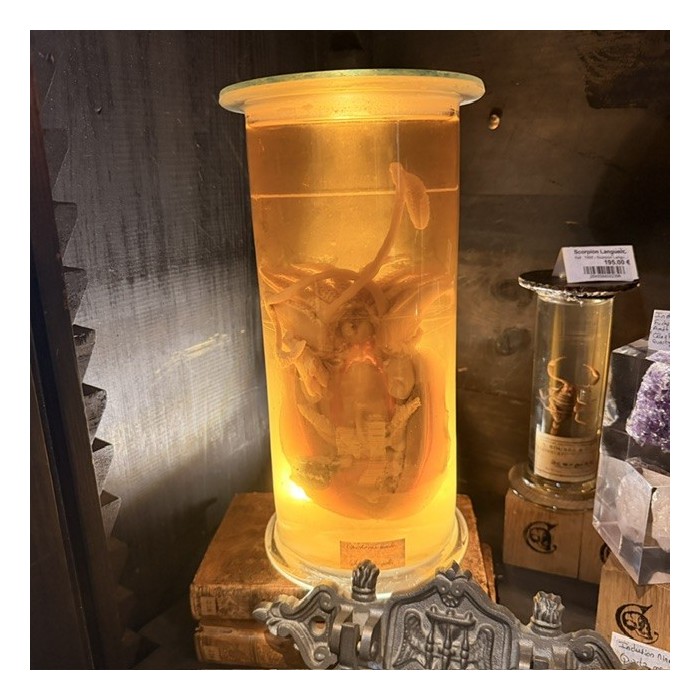
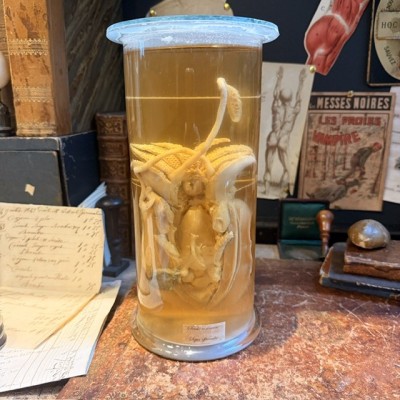
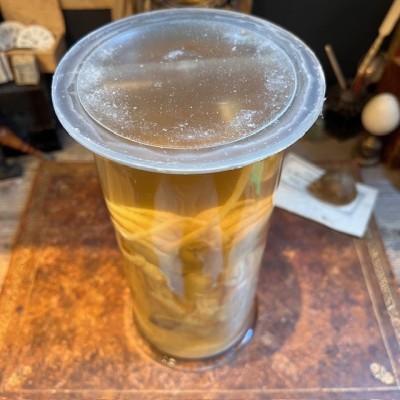
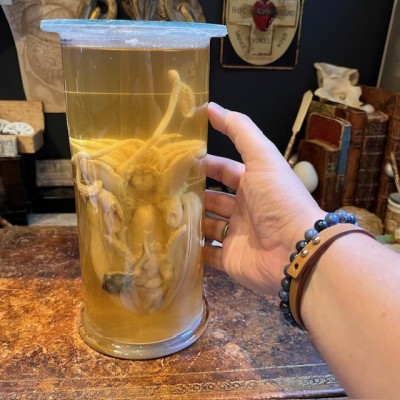
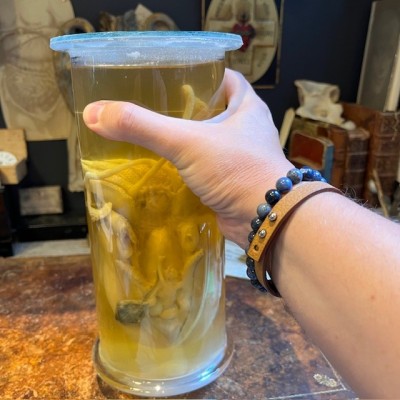
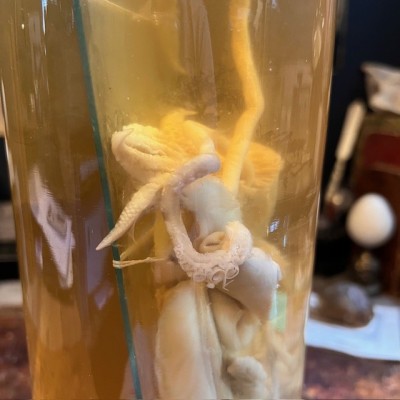
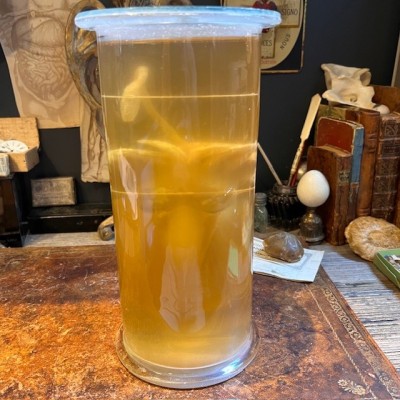
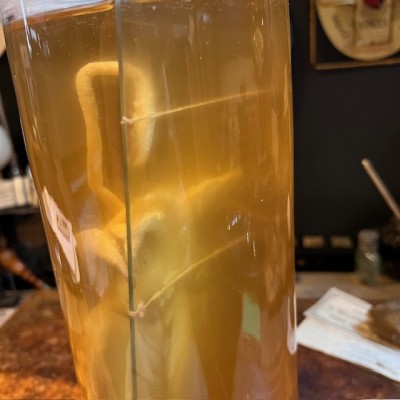
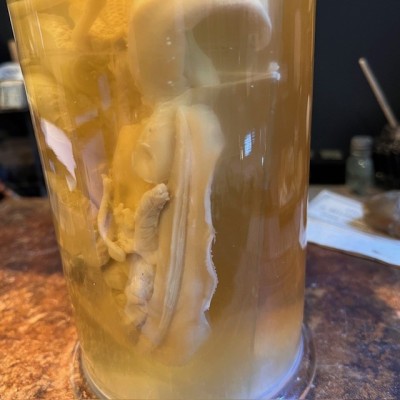
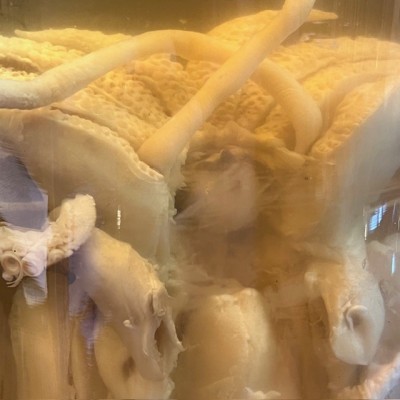
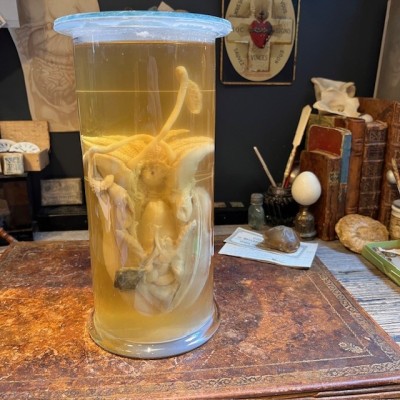
Large vintage scientific glass jar, circa 1900, containing a complete educational dissection of a common cuttlefish (Sepia officinalis).
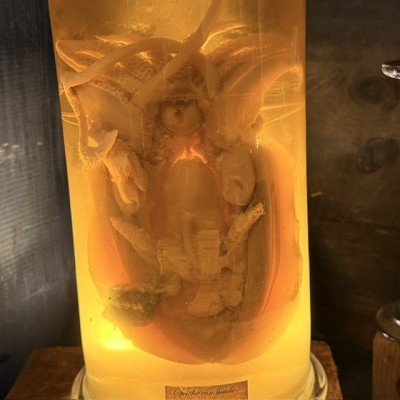
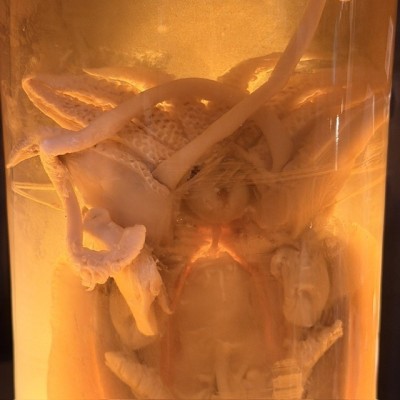
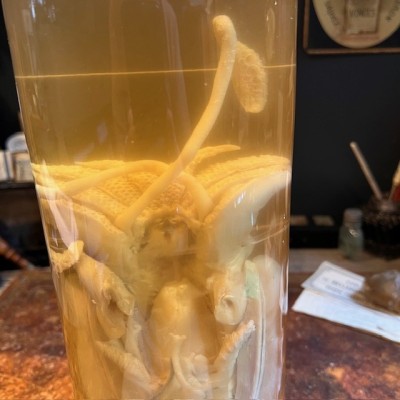
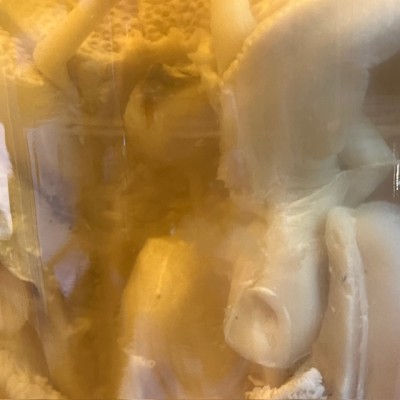
A remarkable display revealing the cephalopod’s internal anatomy, the crown of sucker-bearing arms, and the extended prehensile tentacle.
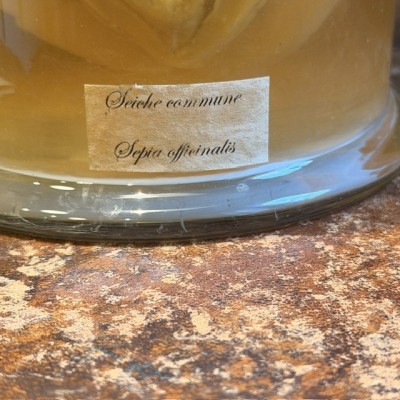
Sealed jar with original glass stopper and a label added at the base of the jar indicating the scientific name.
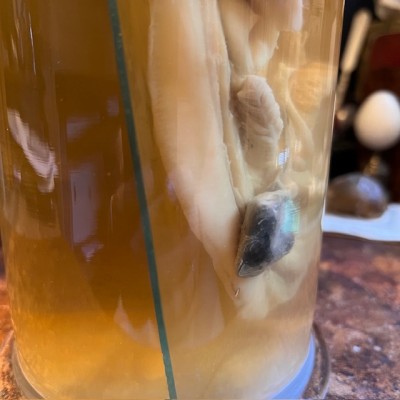
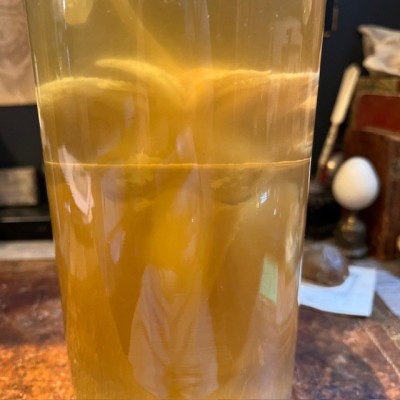
An antique specimen mounted in a tube typical of such preparations, featuring an inclined glass slide inside on which the specimen rests.
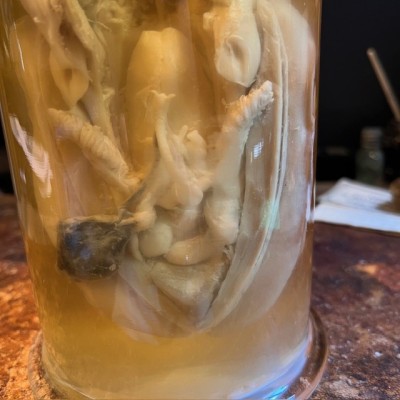
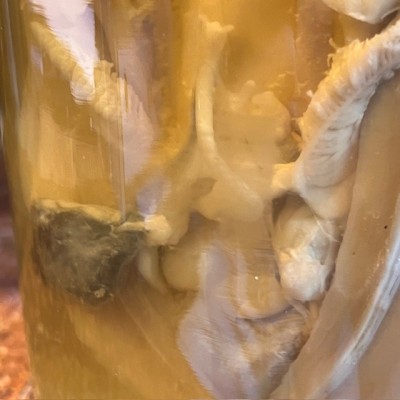
The cuttlefish’s mantle is incised and opened along the ventral side to precisely reveal the arrangement of the internal organs, while the crown of arms is spread out and a long prehensile tentacle rises toward the top of the tube. The mount is stabilized by very fine ligatures on a plate.
Unlike the flutes containing wet specimens from Deyrolle or Boubée, this large jar is intended for higher education (science faculties, medical schools, preparatory high schools).
This is not a simple display of a whole animal, but a complex surgical dissection intended to teach the comparative anatomy and physiology of cephalopod mollusks.
Dimensions: Height 26 cm; Diameter at the base: 13.2 cm
No delivery
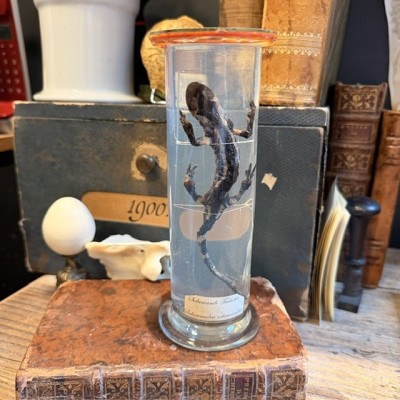
Specimen: Fire Salamander - Salamandra salamandra
Museum jar, also known as a Museum specimen tube.
Wet specimen
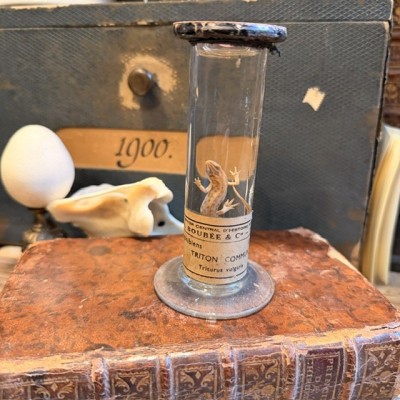
Specimen: Common Newt - Triturus vulgaris
Museum jar, also known as a Museum specimen tube.
Wet specimen
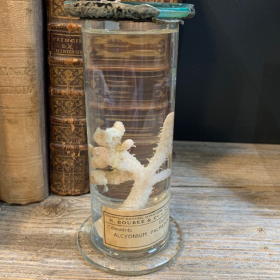
Museum jar - Wet specimen
Soft coral Alcyonium palmatum
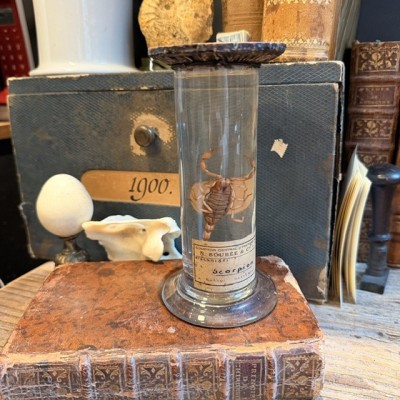
Specimen: Languedoc Scorpion - Buthus occitanus
Museum jar, also known as a Museum specimen tube.
Wet specimen
Dissection of a Common Cuttlefish in a Museum Jar - 1900
Wet specimen in preservative fluid
Sepia officinalis