

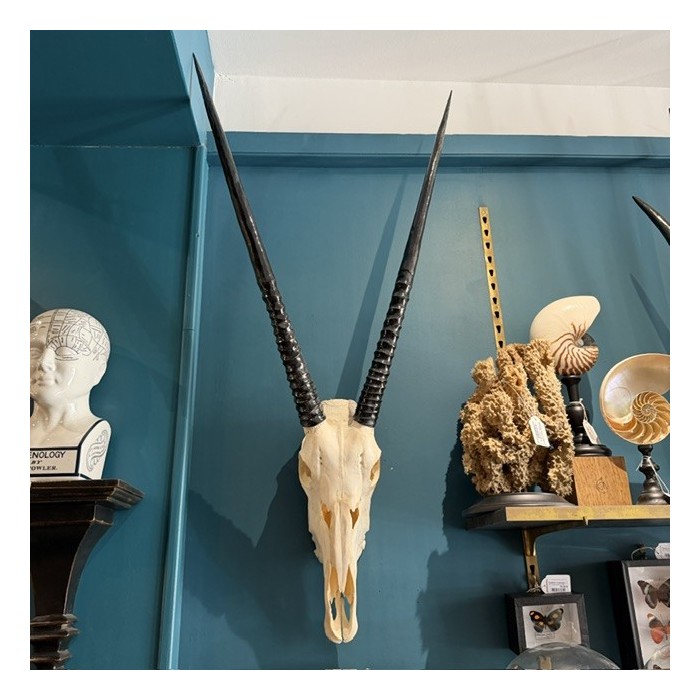
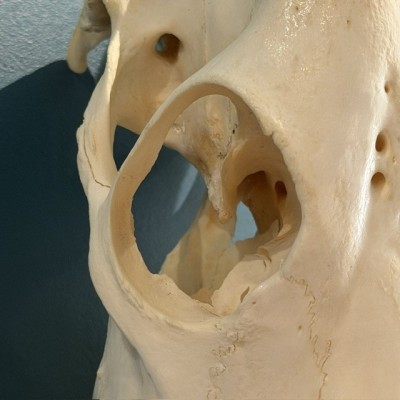
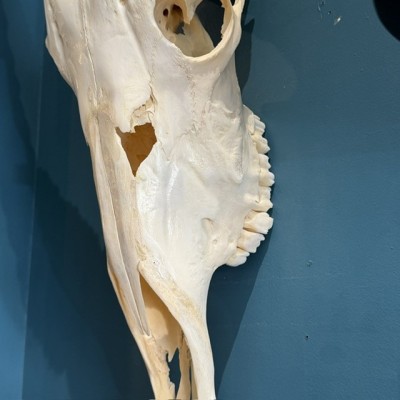
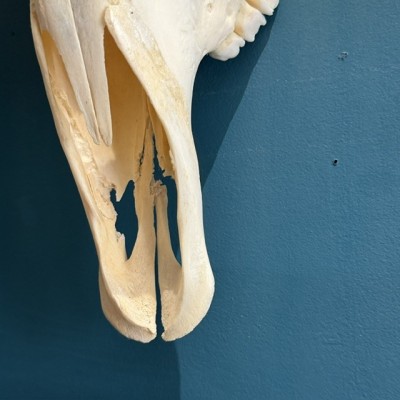
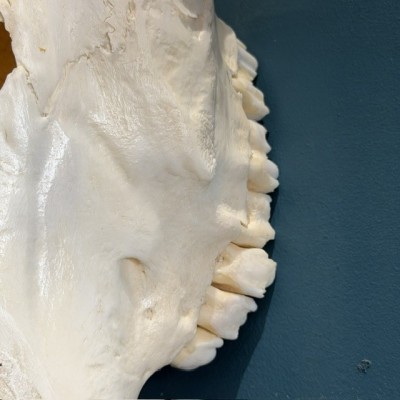
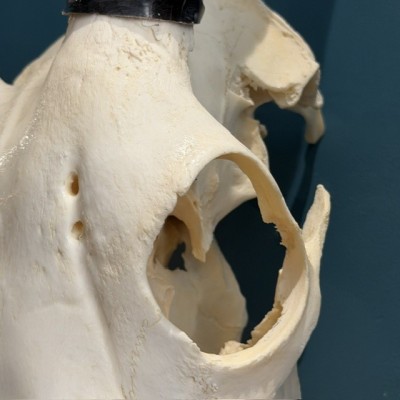
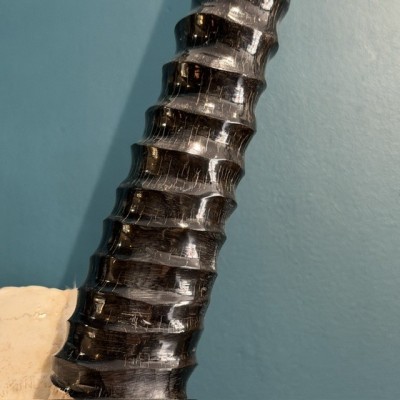
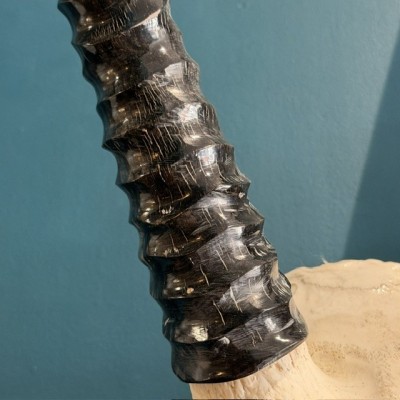
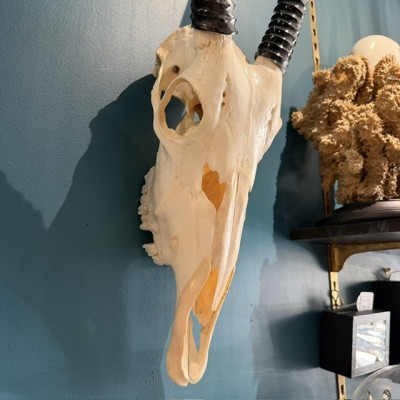
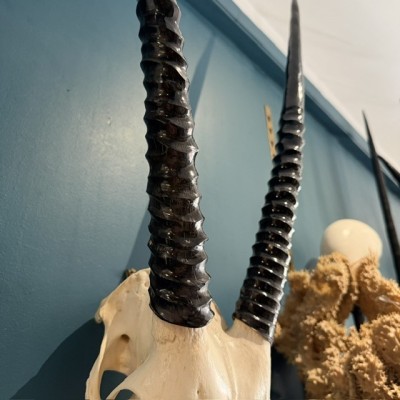
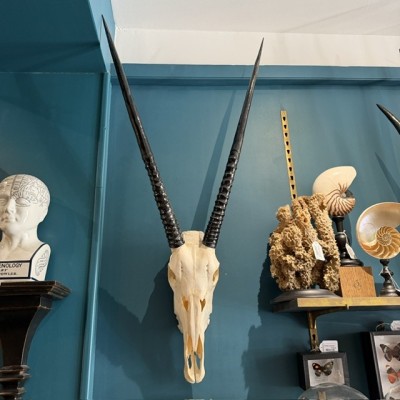
Polished Oryx Skull for Hanging
South African Oryx gazella
Wall Trophy
Polished Oryx Skull for Hanging - Wall Trophy
South African Oryx gazella
The skull and horns have been fully polished.
Sourced from reserves in South Africa where herds must be managed.
This large bovid with a light coat is one of the "true unicorns" of the Middle Ages.
Indeed, seen in profile, the long horns of the oryx are superimposed, which perhaps explains the confusion of the unicorn.
In the Middle Ages, when northern merchants offered narwhal teeth, caravans from the East and Africa brought back these long straight horns from white animals, sold at a high price in the cabinets of wonders as authentic proof of the existence of the white unicorn!
Although the population declined in the 20th century, the species is no longer endangered today. On the contrary, conservation efforts have been so successful that the oryx now competes with domestic livestock for access to pastures and water sources.
Oryxes typically have long, straight horns, ringed at the base, pointing backward.
This species is not endangered and is not listed on the CITES list of the Washington Convention.
Total height: About 1.10m
Wingspan: Approximately 50cm
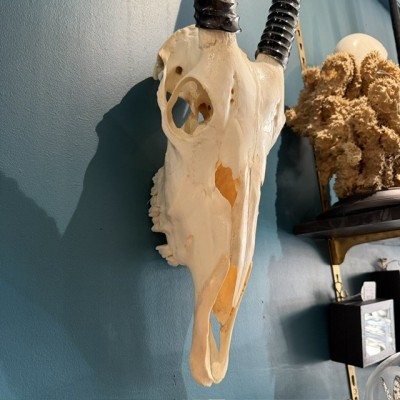
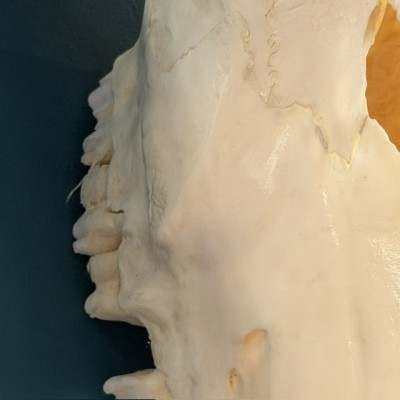
Missing teeth: see photos - The horns are not attached and can be removed from the skull
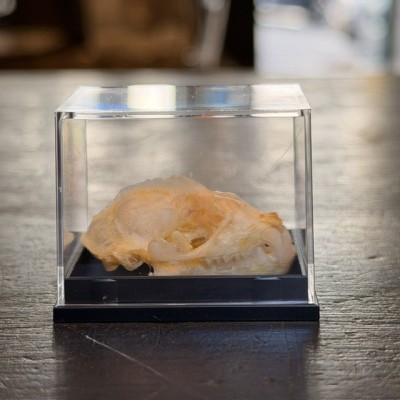
Bat skull - Hipposideros diadema under box
From Indonesia
Plexiglass box
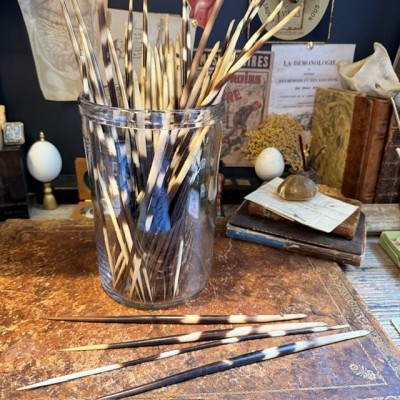
Cape Porcupine peak - Hystrix africaeaustralis
Length from about 18 to 30 cm
Shorter peaks are thicker and more rigid, longer ones are thinner and more flexible.
Provenance: South Africa - CITES Status: Unprotected species, not listed in the CITES: sale and possession free and legal.

Coyote skull from Canada - Canis latrans
The Coyote is a canine species native to North America.
He is smaller than his close relative, the wolf who is closely related to him, but larger than a jackal.
Size: 18/20cm
All skulls are different - Illustration photo
All skulls are different in size, color, teeth etc... They are wild animals that have lived in freedom, so some skulls may have missing teeth or teeth that are worn, cracked or broken.
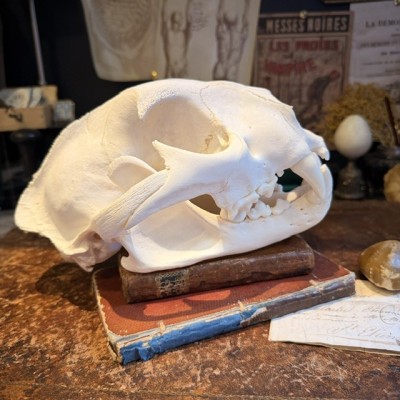
Canadian Cougar Skull - Puma Skull
puma concolor
You must live in the European Union to buy this skull - Not for sale outside the European Union
Sold with its CITES import permit
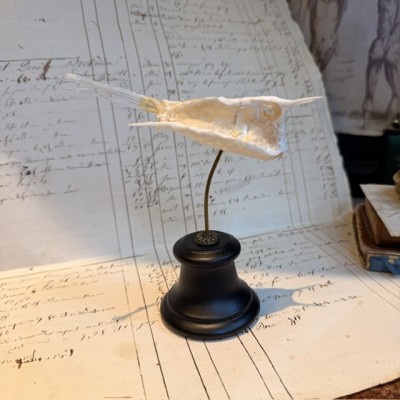
Exoskeleton of Longhorn cowfish - Boxfish on base
Lactoria cornuta
Mounted on a blackened wooden base in the naturalist manner of the 19th century.
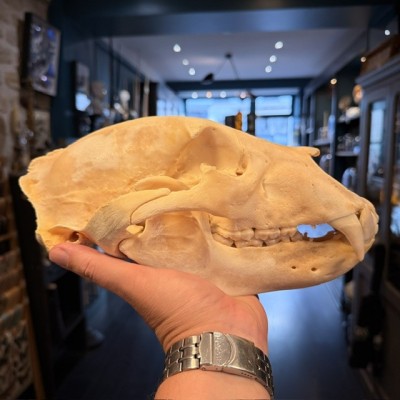
Black Bear Skull from Canada
Ursus americanus
You must live in the European Union to buy this skull
Not for sale outside the European Union
Sold with its CITES import permit
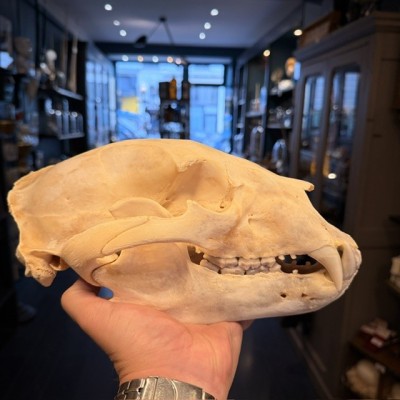
Black Bear Skull from Canada
Ursus americanus
You must live in the European Union to buy this skull
Not for sale outside the European Union
Sold with its CITES import permit
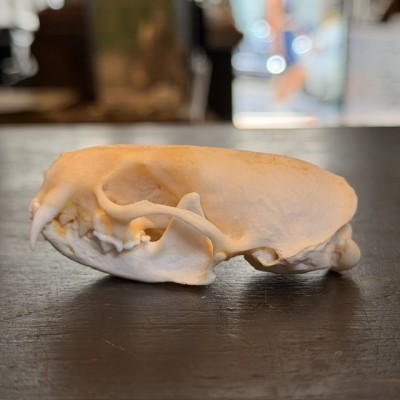
American mink Skull - Neovison vison
Illustration pictures
All skulls are different in size, color, teeth etc...
Some skulls may have missing, worn, cracked or broken teeth, holes etc...
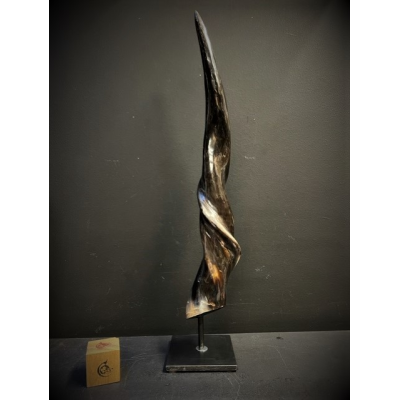
Southern eland polish horn
Horn on pedestal - Taurotragus oryx
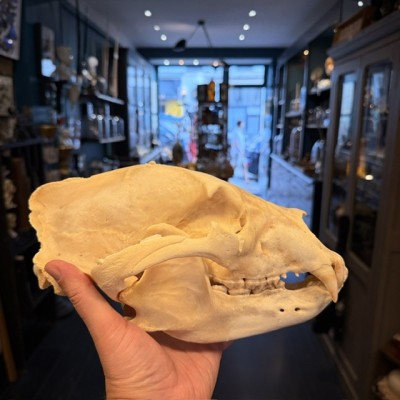
Black Bear Skull from Canada
Ursus americanus
You must live in the European Union to buy this skull
Not for sale outside the European Union
Sold with its CITES import permit
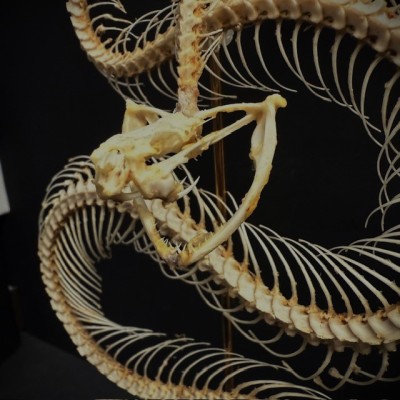
Skeleton of an Indonesian pit viper under a globe
Species: Trimeresurus insularis
Bell height: 38 cm
No shipping
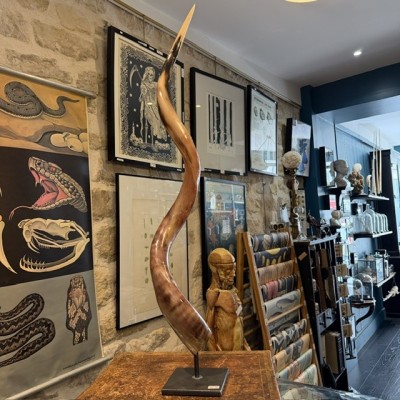
Kudu polished horn on pedestal - Antelope
Species: Greater kudu: South African Tragelaphus strepsiceros antelope
See the photos for minor imperfections in the polish
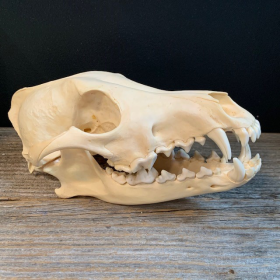
Coyote skull from Canada - Canis latrans
The Coyote is a canine species native to North America.
He is smaller than his close relative, the wolf who is closely related to him, but larger than a jackal.
Variable size, approx. 21-22cm.
All skulls are different - Illustration photo
All skulls are different in size, color, teeth etc... They are wild animals that have lived in freedom, so some skulls may have missing teeth or teeth that are worn, cracked or broken.
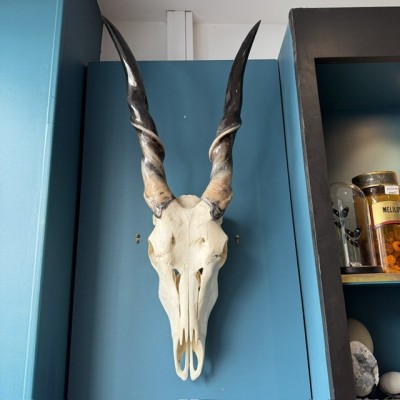
Polished Southern Eland Skull for Hanging - Wall Trophy
South African Antelope - Taurotragus oryx
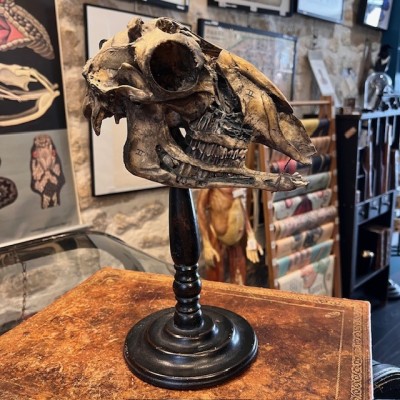
Medicalized sheep skull on a base
Ovis aries
Ancient skull whose teeth were discovered under the bone and above the eye socket, with Roman numerals written in places. It may have been a skull used for study in a school.
Original patina, the skull is not young, there may be some missing pieces! It looks like it came out of the reserves of an old museum.
Polished Oryx Skull for Hanging
South African Oryx gazella
Wall Trophy