
- New
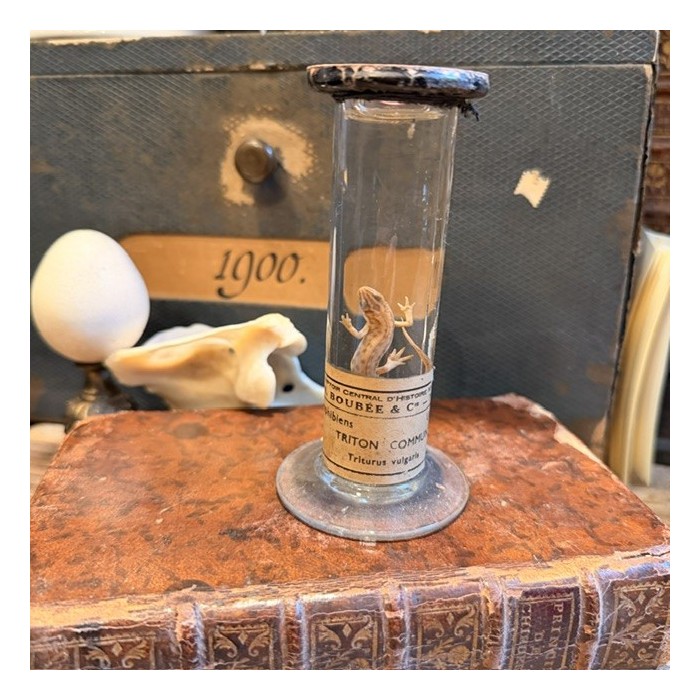
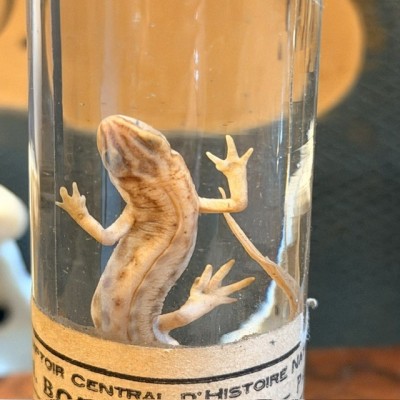
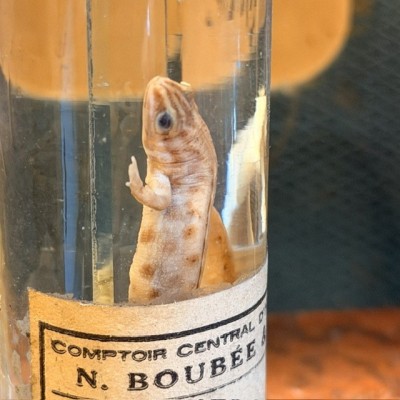
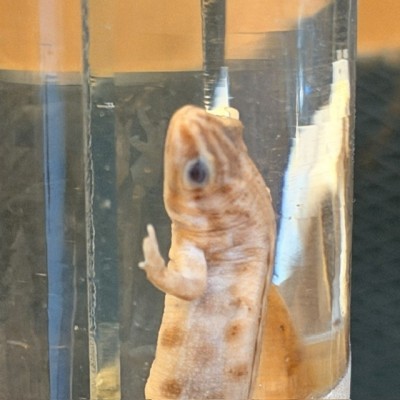
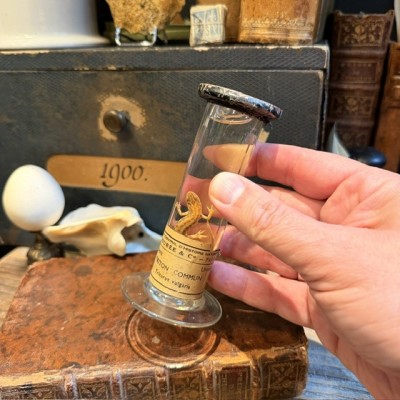
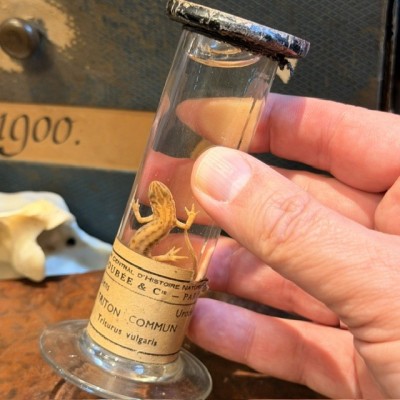
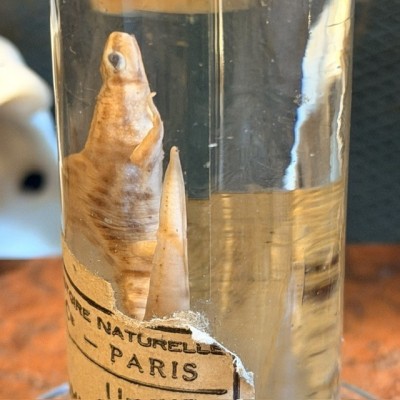
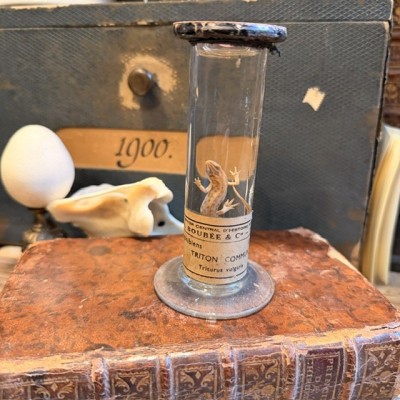
Specimen: Common Newt - Triturus vulgaris
Museum jar, also known as a Museum specimen tube.
Wet specimen
Specimen: Common Newt - Triturus vulgaris
Museum jar, also known as a Museum specimen tube. Wet specimen.
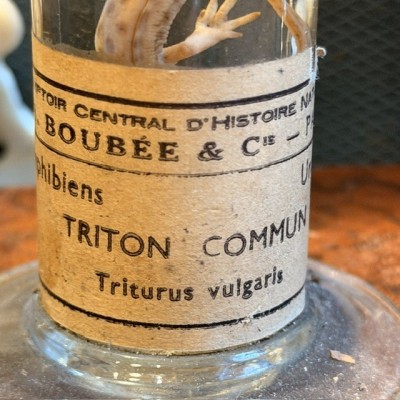
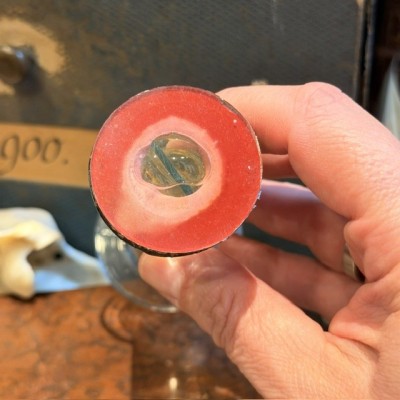
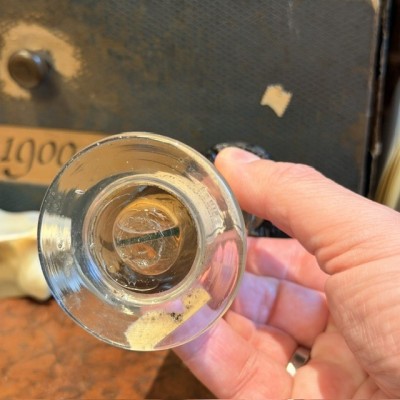
The specimen is mounted on a transparent slide in the center of the tube. The jar is originally wax-sealed along the rim and retains its period label made of paper with a double black border. There is a tear in the label.
Specimen from the Comptoir Central d’Histoire Naturelle—N. Boubée & Cie (Paris), a company founded in the 19th century by Nérée Boubée, an accredited supplier listed in the catalogs of educational supplies for public schools. The company ceased operations permanently in 2014.
This specimen jar dates from the 1900s–1920s and was used as teaching material in schools, for example.
In fact, this type of liquid specimen became widespread in French schools and universities following the educational reforms of the late 19th century. The introduction of “object lessons” made the direct observation of animals in the classroom mandatory. The sealed, tube-like format allowed amphibians to be handled and studied from all angles without damaging the tissue.
Antique glass jar filled with formalin or alcohol. Hermetically sealed. No leaks; liquid level at maximum.
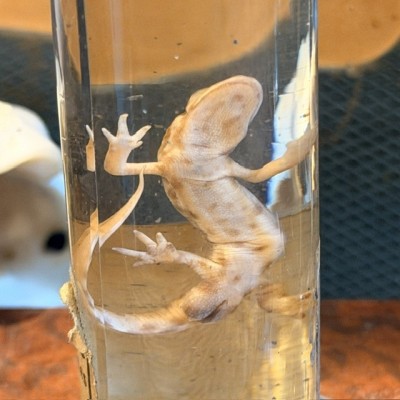
Very fine specimen of a common newt
A glass plate inside the jar prevents the specimen from floating and also allows for better examination by pressing the specimen against the walls.
Height: 11 cm
NO SHIPPING
Base diameter 5.5cm. Tube diameter: 3cm
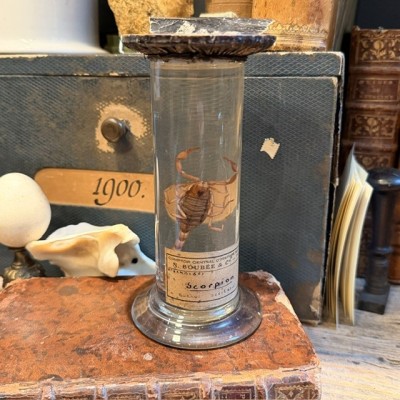
Specimen: Languedoc Scorpion - Buthus occitanus
Museum jar, also known as a Museum specimen tube.
Wet specimen

Common cuttlefish
Wet specimen in fluid
Sepia officinalis
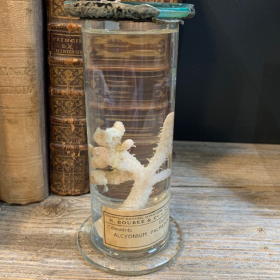
Museum jar - Wet specimen
Soft coral Alcyonium palmatum
Specimen: Common Newt - Triturus vulgaris
Museum jar, also known as a Museum specimen tube.
Wet specimen