
- New
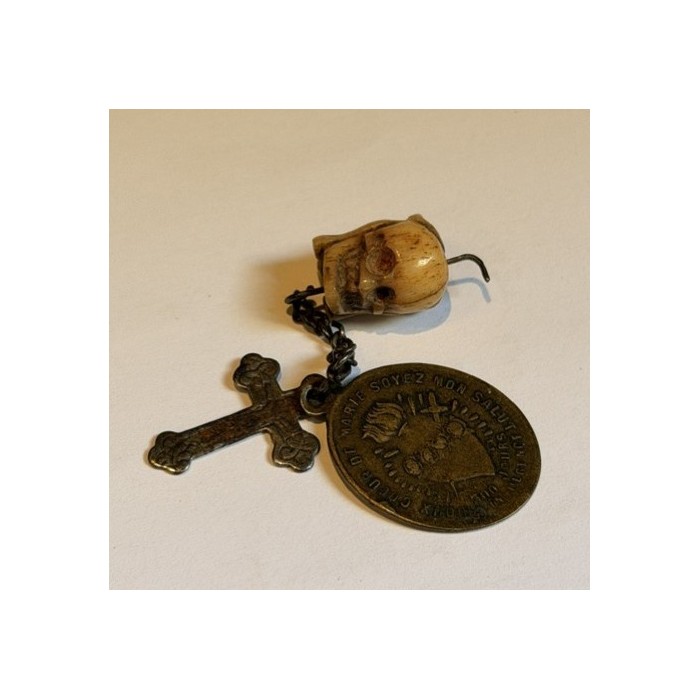
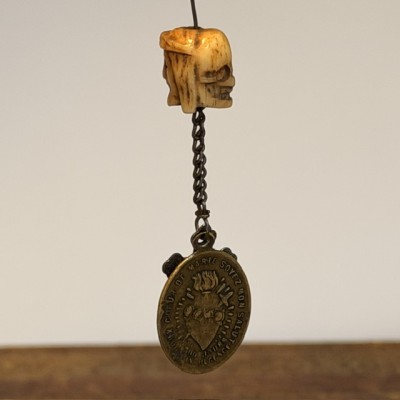
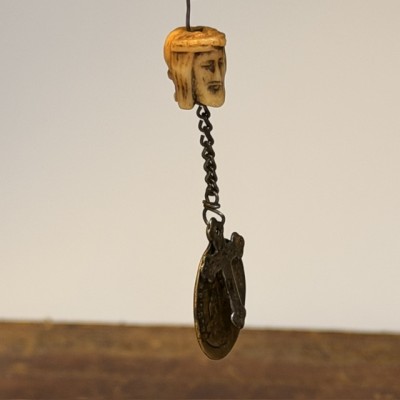
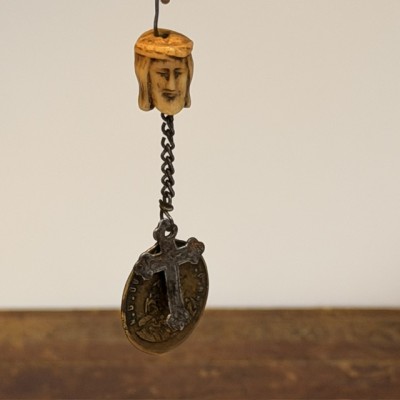
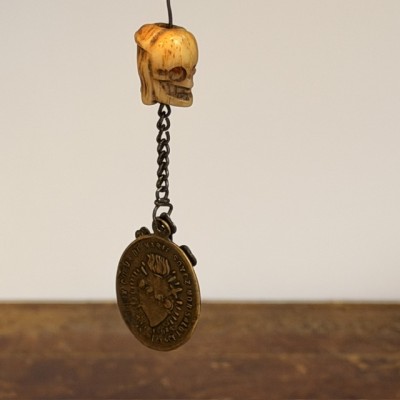
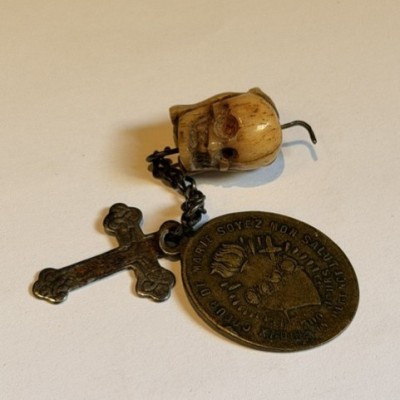
Pocket Memento mori - Two-sided rosary bead wrapped in bone with indulgence medal
Intimate Devotion Charm and Pocket Mori Memento
Religious folk art of the 19th century, very small in size.
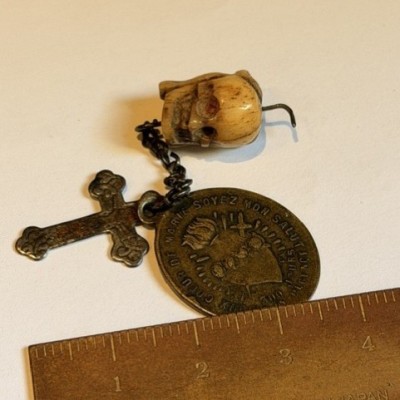
Constituted:
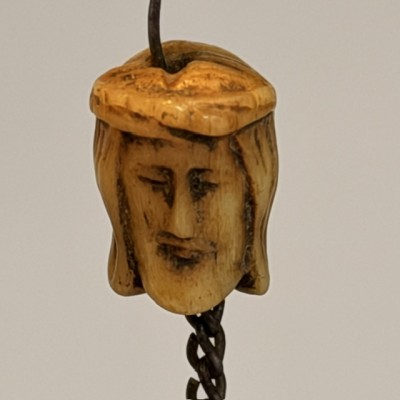
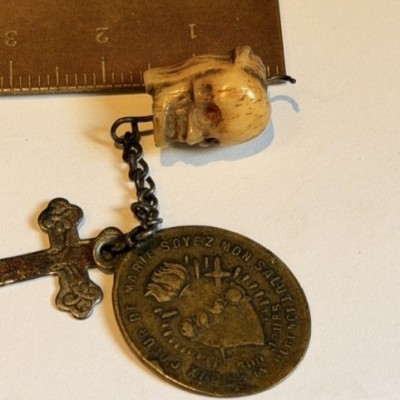
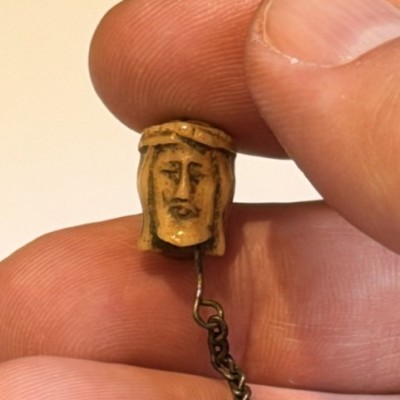
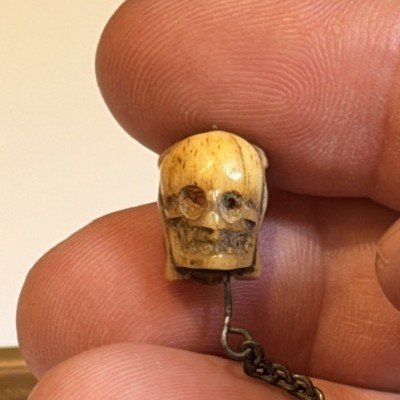
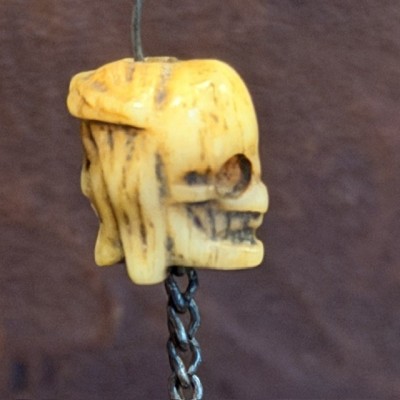
- A bone bead engraved on two sides: the suffering Christ and a skull
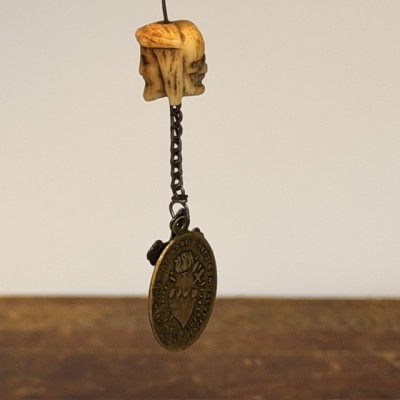
- An indulgence medal for 300 days
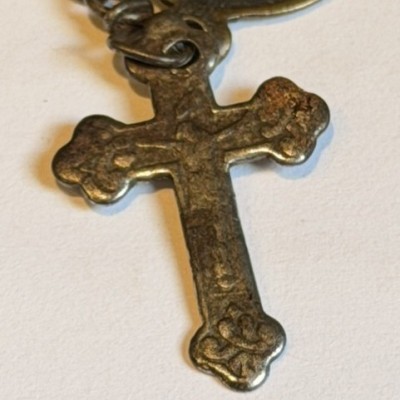
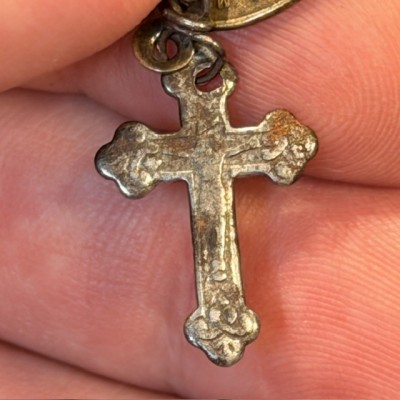
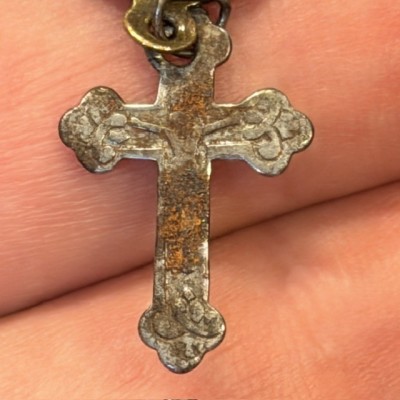
- A trilobed double-sided crucifix
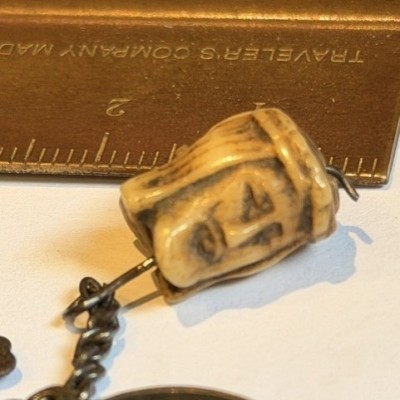
The sculpted memento-mori is 1.2cm and the set with the chain is 6cm
Pocket Memento mori - Two-sided rosary bead wrapped in bone with indulgence medal
Intimate Devotion Charm and Pocket Mori Memento
Religious folk art of the 19th century, very small in size.
This moving portable object of piety is a testimony to the spirituality and anxieties of the 19th century.
Conceived from the beginning as a complete and independent pocket memento (and not as a fragment of a broken rosary), it brings together three elements of perfect thematic coherence around death, salvation and the dreaded accounting of the beyond.
- The Double-sided Bead in Bone: The Mori Memento - A naive sculpture of popular art
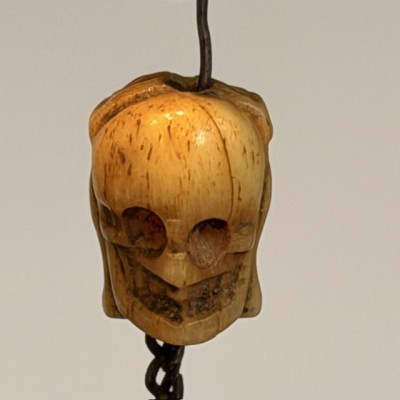
This micro-sculpture presents two opposite faces. On one side, the face of the suffering Christ wearing the crown of thorns and on the other, a bare skull.
She embodies the Latin formula Memento Mori "Remember that you are going to die". This striking contrast reminds the believer of his sinful condition, the brevity of earthly life and the urgency to prepare his salvation.
Real carved bone with a beautiful natural patina. The pearl measures 1.2 cm.
The raw charm of popular art: Far from academic works, this piece presents a resolutely naive and rustic workmanship.
The work, probably derived from rural crafts or convent work, is characterized by simple and expressive lines: the features of Christ and his hair are incised in a refined way, while the skull offers geometric and rough shapes. (hollow orbits, simply notched teeth). This technical simplicity reinforces the touching and deeply human aspect of this object of daily devotion.
- The Brass Medal: Accounting in Purgatory
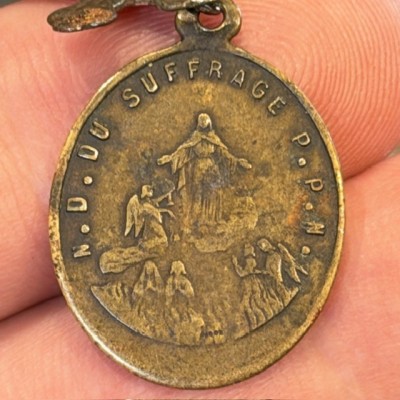
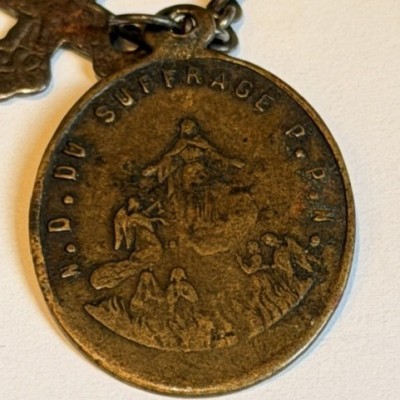
Envers: The iconography of flames and Purgatory:
Inscription: N. D. DU SUFFRAGE P. P. N. (Our Lady of Suffrage, Pray for Us).
The doctrine of the time: According to the theology of the 19th century, the human being is fundamentally sinful.
Even after receiving forgiveness for mistakes, a temporal sentence must be served.
Except for rare saints, the passage through Purgatory is then considered a painful and almost mandatory stage for all.
The iconography shows Our Lady of Suffrage interceding above the flames of Purgatory, from where the souls captured by the flames stretch their hands towards her, while an angel guides a liberated soul to heaven.
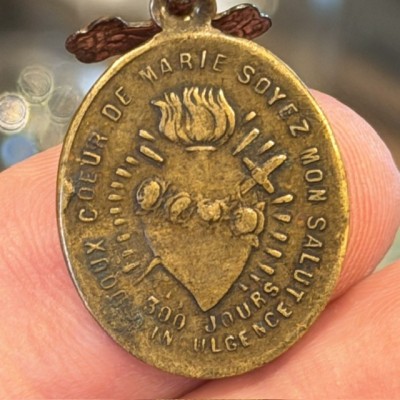
Reverse: The Immaculate Heart and the System of Indulgences:
Inscription: SWEET HEART OF MARY BE MY SALVATION / 300 DAYS INDULGENCE.
A simple letter to the faithful facing centuries of punishment: If the Church has never set an official duration, devotional manuals and sermons from the 19th century presented terrifying figures to strike people’s minds: an ordinary Christian should expect to spend several decades, or even several centuries in the flames of Purgatory (a single sin not expiated being symbolically worth 7 years of punishment).
Faced with this immense debt, the 300 days of indulgence indicated on the medal are nothing but a pecadilla. The faithful therefore carried this object constantly to repeat the invocation and accumulate small remissions of punishment, day after day.
The history of financial embezzlement: In the Middle Ages, the direct purchase of indulgences for money had provoked the anger of Martin Luther and triggered the schism of the Protestants.
To abolish this financial traffic while retaining its influence, the Church relied in the nineteenth century on a huge private industry. These medals were sold for a few cents of the time. The Church did not receive direct money on the metal object, but this system of anxiety encouraged the faithful to multiply donations to the brotherhoods and to pay the parish to have suffrage masses (paying masses) held to relieve the deceased. A highly effective financial bypass.
Deciphering of the symbols of the Heart: In the center, it is the Heart of Mary which is represented with a symbolism:
The two daggers: They cut through the heart, materializing the biblical prophecy of Simeon ("And a sword will pierce your soul") and symbolizing the unspeakable pain of Mary in the face of her son’s sacrifice.
The flame at the summit: It represents the fire of divine love and its ardent charity to help souls.
The crown of roses: Unlike the heart of Jesus surrounded by thorns, that of Mary is surrounded by a crown of flowers recalling her perfect purity (echoing the dogma of the Immaculate Conception proclaimed in 1854).
The brass medal is 2cm
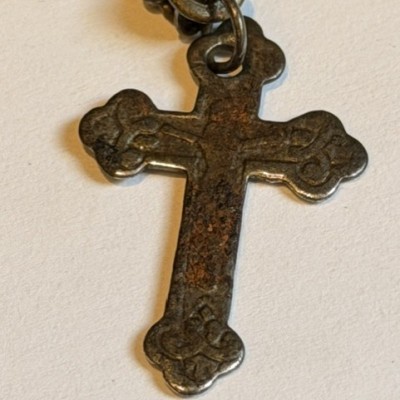
- The Trilobate Crucifix at "Double Christ"
Copper alloy with an old silvering worn by repeated rubbing of the fingers (devotion patina), measuring 2 cm.
This neo-Gothic style crucifix has trilobed ends (in the shape of a clover), symbol of the Holy Trinity.
Its particularity lies in its two-sided design: the figure of the crucified Christ is molded in relief on each side.
Thus, no matter the direction in which the object turns into the hand or pocket, the image of the savior sacrifice remains visible, perfectly matching the bone pearl also double-sided.
Total length (suspended with its chain): 6 cm
Diameter of the brass medal: 2 cm
Height of the crucifix: 2 cm
Bone grain height: 1.2 cm
Period: second half of the 19th century (circa 1860-1890)
Condition: Very beautiful condition of use with a superb period patina.
The prowess of micro-sculpture:
Cutting a pearl of only 1.2 cm high is an extremely meticulous task.
Unlike boxwood or ivory, which are softer and more homogeneous materials, bone is a particularly hard, fibrous and brittle material.
To succeed in precisely carving two opposite faces with the details of the crown of thorns and the features of Christ on one side, and the orbital cavities as well as the dentition of a skull on the other side required remarkable artisanal dexterity and engraving tools of absolute finesse.
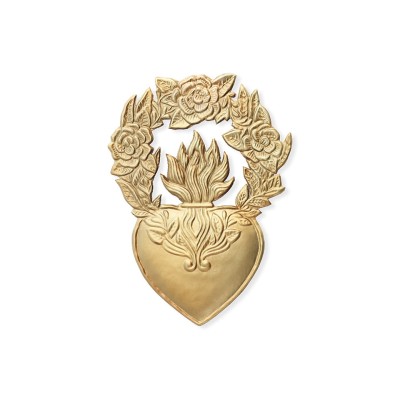
Golden Ex-voto - Votive Offering - Sacred Art - Religious Art by Boncoeurs
An ex-voto (from the Latin ex voto suscepto, “according to the vow made”) is an offering made to a deity or saint in gratitude for a favor received or in request of protection. This offering can take many forms.
These offerings in the form of objects can take many forms and be made from a variety of materials.
Model: Sacred Heart ROSIER
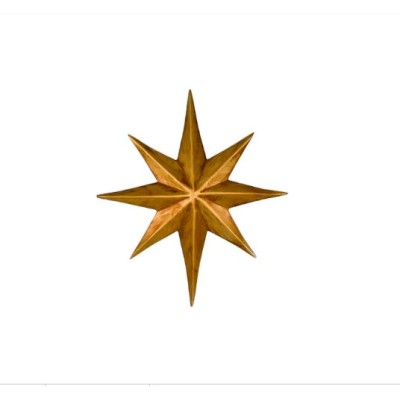
Golden Ex-voto - Ornament - Votive Offering - Sacred Art - Religious Art by Boncoeurs
An ex-voto (from the Latin ex voto suscepto, “according to the vow made”) is an offering made to a deity or saint in gratitude for a favor received or in request of protection. This offering can take many forms.
These offerings in the form of objects can take many forms and be made from a variety of materials.
Model: Evening Star
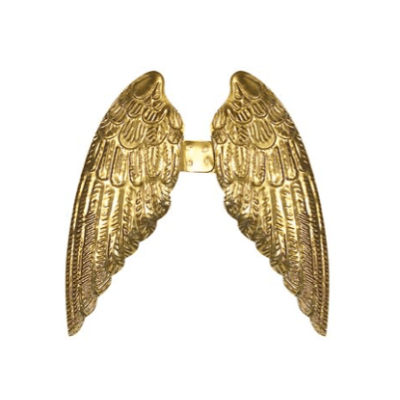
Golden Ex-voto - Votive Offering - Sacred Art - Religious Art by Boncoeurs
An ex-voto (from the Latin ex voto suscepto, “according to the vow made”) is an offering made to a deity or saint in gratitude for a favor received or in request of protection. This offering can take many forms.
These offerings in the form of objects can take many forms and be made from a variety of materials.
Model: Wings
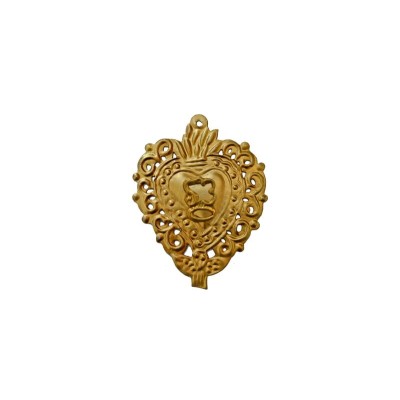
Golden Ex-voto - Votive Offering - Sacred Art - Religious Art by Boncoeurs
An ex-voto (from the Latin ex voto suscepto, “according to the vow made”) is an offering made to a deity or saint in gratitude for a favor received or in request of protection. This offering can take many forms.
These offerings in the form of objects can take many forms and be made from a variety of materials.
Model: Heart Giorgio
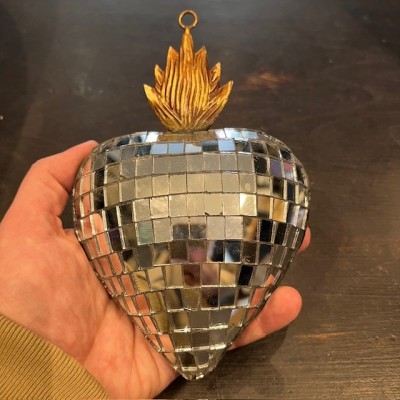
Heart Mirror Ball by Boncoeurs by Boncoeurs
Ex-voto
Model: Medium size
Sold separately without mount
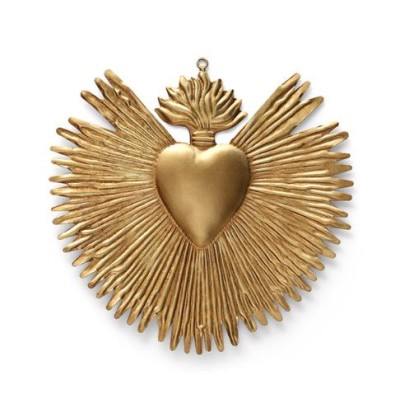
Golden Ex-voto - Votive Offering - Sacred Art - Religious Art by Boncoeurs
An ex-voto (from the Latin ex voto suscepto, “according to the vow made”) is an offering made to a deity or saint in gratitude for a favor received or in request of protection. This offering can take many forms.
These offerings in the form of objects can take many forms and be made from a variety of materials.
Model: Radiant Heart
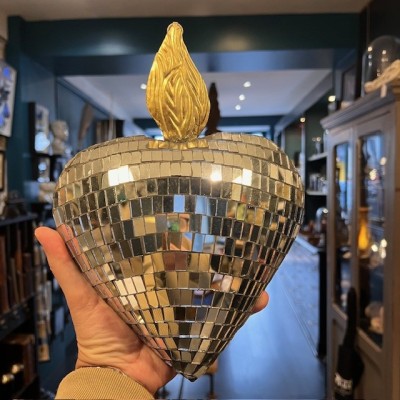
Heart Mirror Ball by Boncoeurs by Boncoeurs
Ex-voto
Model: Large
Sold separately without mount
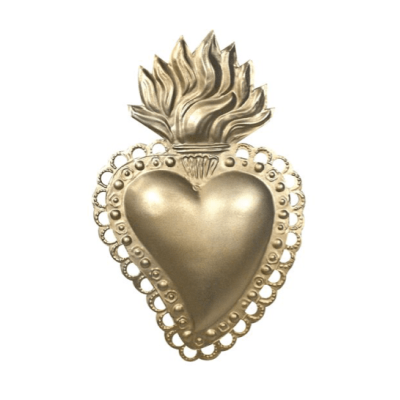
Silver Ex-voto - Votive Offering - Sacred Art - Religious Art by Boncoeurs
An ex-voto (from the Latin ex voto suscepto, “according to the vow made”) is an offering made to a deity or saint in gratitude for a favor received or in request of protection. This offering can take many forms.
These offerings in the form of objects can take many forms and be made from a variety of materials.
Model: Sacred Heart Eligia
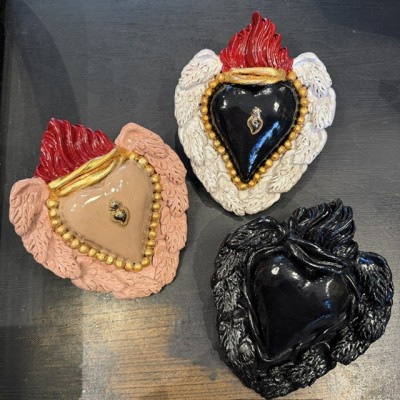
Ex-Voto heart in clay by Cuore di Argilla
Italy crafts - Made in Venice
Small model
A contemporary reinterpretation of the traditional ex-voto, originally a votive offering made to a god in request of a grace or in thanks for a grace obtained after a vow.
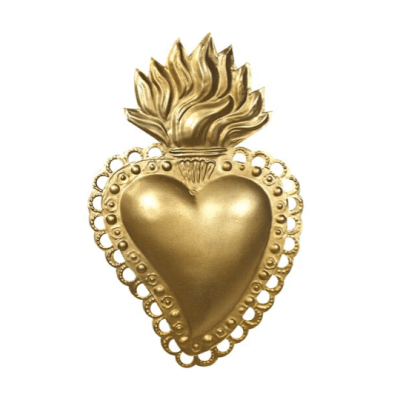
Golden Ex-voto - Votive Offering - Sacred Art - Religious Art by Boncoeurs
An ex-voto (from the Latin ex voto suscepto, “according to the vow made”) is an offering made to a deity or saint in gratitude for a favor received or in request of protection. This offering can take many forms.
These offerings in the form of objects can take many forms and be made from a variety of materials.
Model: Sacred Heart Eligia
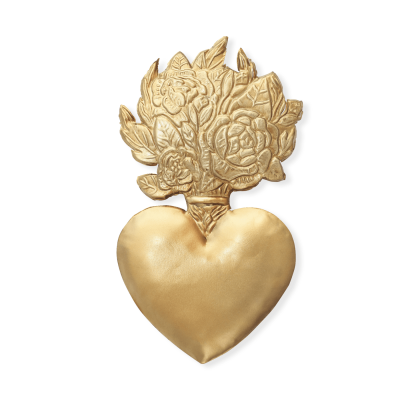
Golden Ex-voto - Votive Offering - Sacred Art - Religious Art by Boncoeurs
An ex-voto (from the Latin ex voto suscepto, “according to the vow made”) is an offering made to a deity or saint in gratitude for a favor received or in request of protection. This offering can take many forms.
These offerings in the form of objects can take many forms and be made from a variety of materials.
Model: Sacred Heart BOUQUET
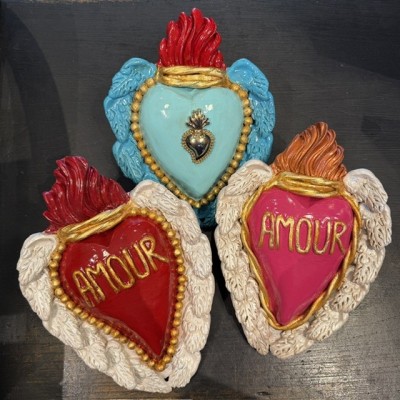
Ex-Voto heart in clay by Cuore di Argilla
Italy crafts - Made in Venice
A contemporary reinterpretation of the traditional ex-voto, originally a votive offering made to a god in request of a grace or in thanks for a grace obtained after a vow.
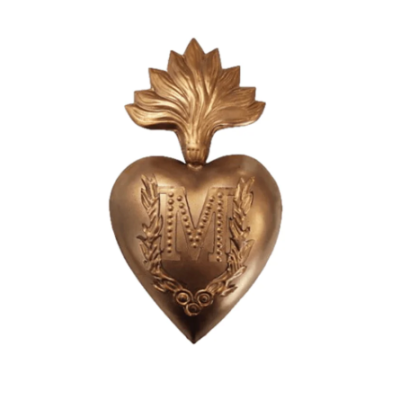
Golden Ex-voto - Votive Offering - Sacred Art - Religious Art by Boncoeurs
An ex-voto (from the Latin ex voto suscepto, “according to the vow made”) is an offering made to a deity or saint in gratitude for a favor received or in request of protection. This offering can take many forms.
These offerings in the form of objects can take many forms and be made from a variety of materials.
Model: MONA
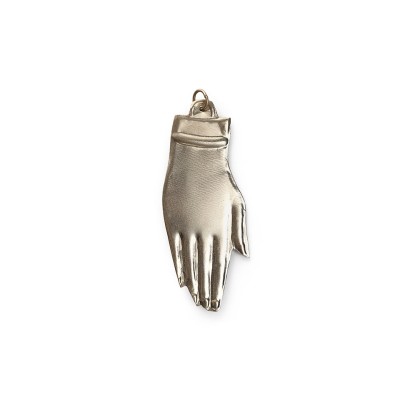
Silver Ex-voto - Votive Offering - Sacred Art - Religious Art by Boncoeurs
An ex-voto (from the Latin ex voto suscepto, “according to the vow made”) is an offering made to a deity or saint in gratitude for a favor received or in request of protection. This offering can take many forms.
These offerings in the form of objects can take many forms and be made from a variety of materials.
Model: Anatomy - Hand
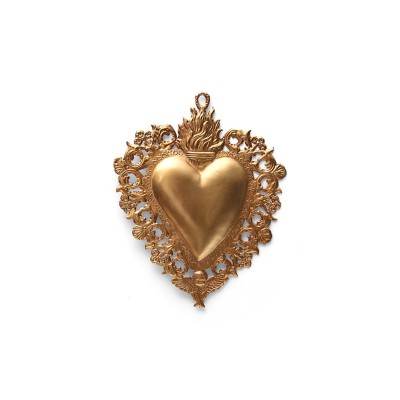
Golden Ex-voto - Votive Offering - Sacred Art - Religious Art by Boncoeurs
An ex-voto (from the Latin ex voto suscepto, “according to the vow made”) is an offering made to a deity or saint in gratitude for a favor received or in request of protection. This offering can take many forms.
These offerings in the form of objects can take many forms and be made from a variety of materials.
Model: Sacred Heart Maria (Large)
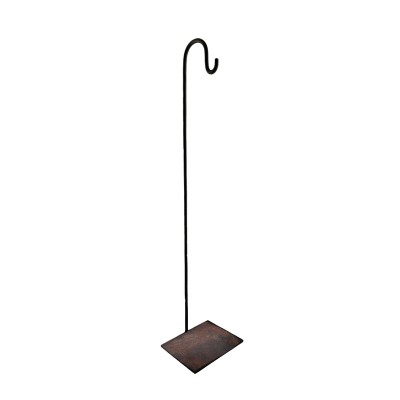
Support pole - Le Glorifieur
for Boncoeur mirror ball ex-voto, for example
Sold separately
Pocket Memento mori - Two-sided rosary bead wrapped in bone with indulgence medal
Intimate Devotion Charm and Pocket Mori Memento
Religious folk art of the 19th century, very small in size.
Constituted:
- A bone bead engraved on two sides: the suffering Christ and a skull
- An indulgence medal for 300 days
- A trilobed double-sided crucifix
The sculpted memento-mori is 1.2cm and the set with the chain is 6cm